
Charentais Cantaloupe melon seeds
Regular price
3,90 €
Regular price
Sale price
3,90 €
Unit price
/
per
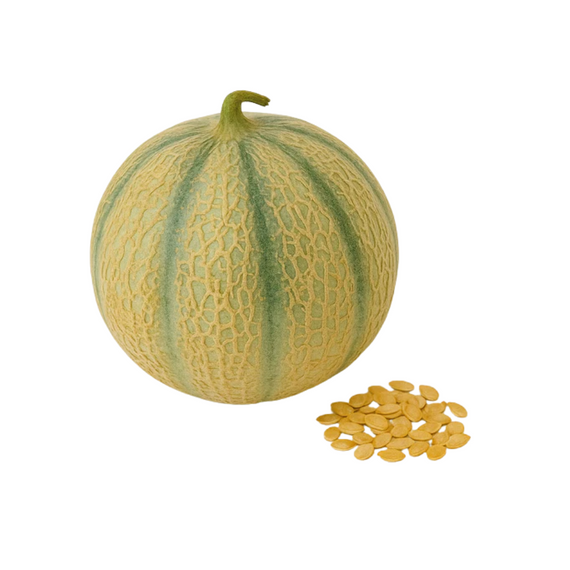
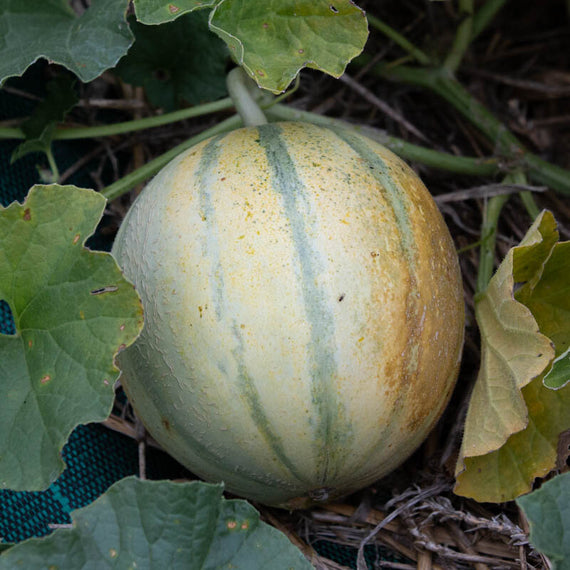
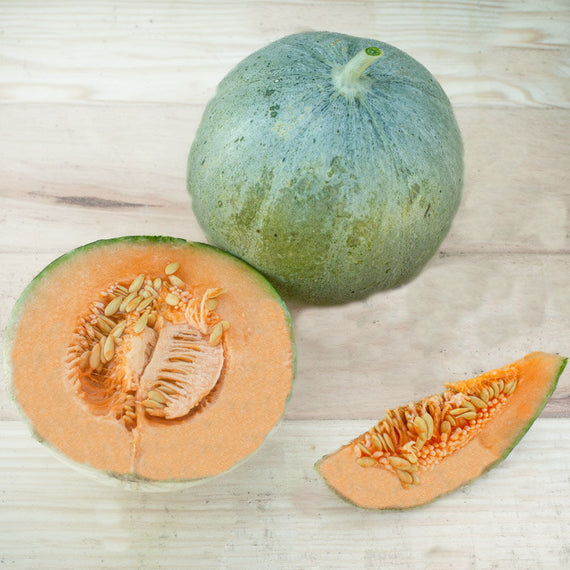
An old variety originating from Charente, the Cantaloup Charentais produces round melons with smooth, pale green skin and juicy, sweet orange flesh, weighing 500 g to 1 kg.
The packet contains 25 organic seeds from which you can save your own. Sowing is done under heated cover from March to May, harvesting runs from July to October, and each plant needs 1 m in every direction.
 Customer support 7 days a week by email
 Delivery within 2 to 15 business days
100 % secure payment
The summary
- What you receive: 25 organic, open-pollinated Cantaloup Charentais melon seeds.
- Sowing: in a heated shelter from March to May, in a pot, at 2 to 3 cm, at 20 to 25 °C.
- Germination: 7 to 10 days, provided the growing medium stays warm day and night.
- Space needed: 1 m in every direction between plants, for a trailing plant.
- Harvest: from July to October, when the cracking rings the stalk and the fruit is fragrant.
- In aquaponics: a large grow bed filled with clay pebbles, with a net under each fruit.
Full-sun Charentais melon, 25 heirloom seeds, one plant per square metre
Cantaloup Charentais melon seeds, from the Kokopelli association, produce a traditional Charente melon, round, with sweet orange flesh, weighing 500 g to 1 kg. The packet contains 25 organic, open-pollinated seeds. A trailing, full-sun plant, it needs 1 m in every direction between two plants, with sowing under heated cover from March to May.
The Cantaloup Charentais is an heirloom variety originating from Charente, which produces round melons with smooth pale green skin and juicy, sweet orange flesh. Each fruit weighs from 500 g to 1 kg and measures 15 to 20 cm across. It is a plant that loves full sun and heat, which starts slowly and then speeds up once nights stay above 15 °C. It also needs room, which you should consider before sowing.
☀️ A start under heated cover
Sow in pots under cover from March to May, at a temperature between 20 and 25 °C, about 6 weeks before planting out. Lay the seed flat and cover it with 2 to 3 cm of compost; germination then takes 7 to 10 days. You then transplant the whole root ball, without breaking it up, after the last frosts, into a planting hole enriched with compost. Direct sowing in open ground remains possible in April and May, but only when the soil has warmed up well and temperatures no longer drop below 15 °C.
Sow
Lay the seeds flat in a pot, at between 20 and 25 °C, 6 weeks before planting.
Transplant
Plant the whole root ball after the last frosts, in a hole enriched with compost.
Train
Pinch out the main stem after a few leaves to make the plant branch.
📏 Floor space
Allow 1 m in every direction between plants, because the melon is a trailing plant whose stems creep along the ground and spread widely. If your space is limited, sow fewer plants rather than crowding them: two well-lit, well-fed melons yield more than six that shade one another. Its water needs remain high until harvest, and a thick mulch at the base limits evaporation.
Melon in a water-based system
Melon is possible in aquaponics, but it is one of the most demanding crops you can set up: it needs a system that has already cycled, a deep grow bed and a support to hold the fruit. Give it a large grow bed filled with clay pebbles, provide a net to support each melon, and keep the floating rafts for leafy greens and herbs. The guide to plants to grow in aquaponics explains why a melon placed in a system that is too young stagnates.
Plant only when night temperatures stay above 15 °C
A melon planted out too early, in soil that is still cold, stops growing and takes several weeks to get going again, so it fruits no earlier than a plant set out later. Wait until nights stay above 15 °C before taking the pots outside, and harden the plants off outdoors for a few hours a day during the preceding week.
🍈 The sign of ripeness
A melon that has been picked gains no more sugar, which is why the harvest date is read from the fruit itself. You are looking for two signs that appear together: a crack running all the way round where the stalk attaches, and a distinct fragrance a few centimetres from the fruit. The melon then comes away almost by itself in your hand. Picked a few days too early, it stays firm and not very sweet; left too long, its flesh turns mealy. The harvest runs from July to October depending on the sowing date and the summer.
✂️ The fruit load
Once the first fruits have set, limit the load to 4 to 6 fruits per plant and remove the later ones, then in September remove the melons that have just set, as they will no longer have time to ripen before the cold nights. Slip a small board, a tile or a handful of straw under each fruit resting on the ground, so that its underside does not rot, and reduce watering in the week before harvest, which avoids a waterlogged, bland melon.
Technical specifications
The sachet
- Number of seeds
- 25Enough to plant around ten specimens, including germination losses.
- Seed origin
- Kokopelli associationOrganic seeds, royalty-free.
- Seed type
- Open-pollinated, non-hybridReproducible: seed from your own harvest will give the same variety.
- Seed storage
- Approximately 5 yearsStore in a dry, cool, dark place.
The plant
- Botanical name
- Cucumis melo var. cantalupensisThe cantaloupe group, to which the Charentais belongs.
- Shipping
- RunnerThe stems trail along the ground, spreading 1 m in every direction.
- Fruit
- Round, 500 g to 1 kgSmooth pale green skin, sweet orange flesh.
- Harvest
- July to OctoberWhen the cracking runs all the way round the stalk.
Sowing and planting
- Seedlings under cover
- March to May, in pots6 weeks before planting out.
- Seedling depth
- 2 to 3 cmSeed laid flat, then covered.
- Germination temperature
- 20 to 25 °COn a heat mat or in a warm room.
- Germination time
- 7 to 10 days
- Installation
- After the frostsNights above 15 °C, root ball intact.
- Spacing
- 1 m in every directionIn a hole enriched with compost.
To budget for separately
- Start-up heat
- 1 heated seedling mat
- Growing medium
- Clay pebbles or coco fibre
8 further specifications are available in the detailed view.
In the box
- 1 paper sachet of 25 Cantaloup Charentais melon seeds, harvested from organic farming
- 1 variety label: botanical name, sowing period, and year of seed harvest
Contents, sowing calendar and spacings checked on 11/10/2026 on the seed supplier's sheet. Depths, temperatures and germination times checked on 20/09/2026 on two growing calendars. Heights and storage periods are approximate figures for mainland France.
Manufacturer and product safety
- Manufacturer
- Association Kokopelli (SIREN 433481124, TVA FR80433481124)
- Postal address
- 7 route de Sabarat, Forêt de Castagnès, 09290 Le Mas-d'Azil, France
- Contact
- Formulaire de contact : https://kokopelli-semences.fr/fr/faq/ (aucune adresse e-mail publique) ; téléphone 05 61 67 69 87
- Website
- kokopelli-semences.fr
Information provided under Regulation (EU) 2023/988 on general product safety.
Estimate your
delivery time
Your estimate
Delivery
Estimated time
It covers preparing your order and then the transit time quoted by the carrier, counted in working days.
It is not a guaranteed delivery date: public holidays, peak periods, customs or a carrier delay can extend it. The exact amount, in your currency, is worked out in the cart once your address is entered.
A packet of seeds ships as a small parcel. It can be grouped at no extra cost with the rest of your order, and the exact amount is calculated at checkout.
Frequently asked questions
6 questions
6 key questions
Growing calendar
Guidelines for mainland France, to be shifted by about 2 weeks depending on your region.
| Stage | ||||||||||||
|---|---|---|---|---|---|---|---|---|---|---|---|---|
| Seedlings under heated cover3 months | Seedlings under heated cover: no | Seedlings under heated cover: no | Seedlings under heated cover in March | Seedlings under heated cover in April | Seedlings under heated cover in May | Seedlings under heated cover: no | Seedlings under heated cover: no | Seedlings under heated cover: no | Seedlings under heated cover: no | Seedlings under heated cover: no | Seedlings under heated cover: no | Seedlings under heated cover: no |
| Installation2 months | Installation: no | Installation: no | Installation: no | Installation: no | Installation in May | Installation in June | Installation: no | Installation: no | Installation: no | Installation: no | Installation: no | Installation: no |
| Pruning and training2 months | Pruning and training: no | Pruning and training: no | Pruning and training: no | Pruning and training: no | Pruning and training: no | Pruning and training in June | Pruning and training in July | Pruning and training: no | Pruning and training: no | Pruning and training: no | Pruning and training: no | Pruning and training: no |
| Harvest4 months | Harvest: no | Harvest: no | Harvest: no | Harvest: no | Harvest: no | Harvest: no | Harvest in July | Harvest in August | Harvest in September | Harvest in October | Harvest: no | Harvest: no |
KeySeedlings under heated coverInstallationPruning and trainingHarvest
This month
October
Growing guidance
- Seedling depth
- 2 to 3 cmSeed laid flat, then covered over
- Germination temperature
- 20 to 25 °CBelow this, germination becomes uneven
- Germination time
- 7 to 10 days
- Spacing
- 1 m in every directionIn a hole enriched with compost
- Shipping
- RunnerThe stems creep along the ground
- Harvest period
- July to OctoberDepending on the sowing date and aspect
- Fruits per plant
- 4 to 6Beyond that, the last ones don't have time to ripen
- Aspect
- Full sunPlenty of light and warmth until harvest
- pH in aquaponics
- 6.5 to 7.5The usual balance between fish, bacteria and plants
- Seed storage
- Around 5 yearsCommon reference point for melon, kept dry and away from light
What you need to know
- Sow the seed lying flat, not upright. Set on its edge, it more often emerges with its seed coat stuck to the cotyledons, and the seedling exhausts itself trying to shed it.
- Melons dislike being transplanted bare-root. Sow directly in pots and transplant the whole root ball, because a broken root delays establishment by several weeks.
- Slip a small board, a tile or a handful of straw under each fruit lying on the ground. The underside of a melon in direct contact with damp soil rots before it is ripe.
- Reduce watering in the week before harvesting a fruit. A melon swollen with water at the end of ripening is often bland despite looking good.
- In aquaponics, give it a deep grow bed and a support net for each melon. Deep water culture can carry neither the spread of the plant nor the weight of the fruit.
- Keep 4 to 6 fruits per plant. A plant carrying more ripens them all only halfway, whereas six melons reach maturity with the same leaf area.
You may also like




Related articles

Guide
Successful spring seedlings in aquaponics
When to start seedlings, at what temperature, and how to move from cell to grow bed without losing plants.
Read the article

Equipment
Setting up an indoor seedling space
Heat mat, lighting, humidity: setting up a reliable propagation corner at home and making it pay.
Read the article

Understanding
Which plants can be grown in aquaponics?
What makes a plant easy or difficult to grow without soil: root depth, water requirements, fruit weight.
Read the article

Understanding
The nitrogen cycle in aquaponics
Why a hungry plant yields nothing on a new system, and how to tell when the cycle is properly established.
Read the article

Maintenance
Maintaining your aquaponic system in summer
Heat, evaporation, dropping oxygen: the seasonal adjustments that save a crop in July.
Read the article

Cooking
Summer recipes from the kitchen garden
What to do with a glut harvest — without throwing anything away or freezing half of it.
Read the article
Let us talk about your project
A question about this product or your setup? Our team will answer and advise you.

Interest-free instalment payments
Offered depending on the cart amount, at checkout.

Delivery in 2 to 15 working days
Depending on the products and shipping sites. Estimate by destination in the estimator on this page.

After-sales service 7 days a week by email or chat
Our team answers all your questions.

Shop responsibly
Become part of the change.
