

Prima Belle Pepper Seeds
Regular price
3,90 €
Regular price
Sale price
3,90 €
Unit price
/
per
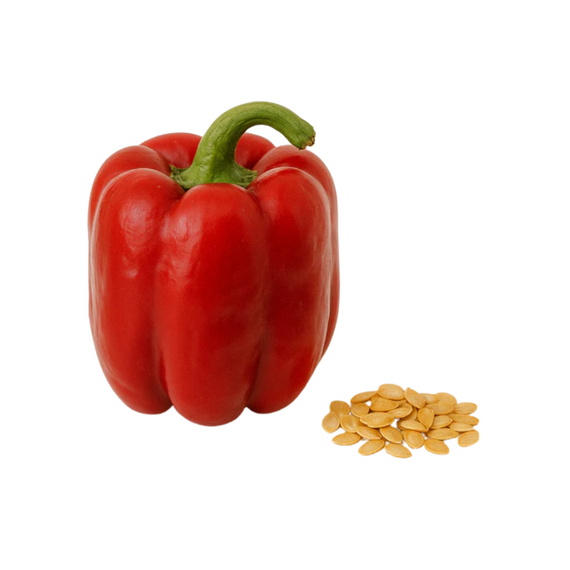
A traditional sweet pepper for stuffing, the Prima Belle produces large 4-lobed fruits with very thick flesh, picked green for crunch or red for sweetness.
The packet contains 25 organic, open-pollinated seeds. Sow under cover at 20 to 25 °C, and plant out in May.
 Customer support 7 days a week by email
 Delivery within 2 to 15 business days
100 % secure payment
The summary
- What you receive: a packet of 25 Prima Belle pepper seeds, organic and open-pollinated.
- Sowing: under cover from February to April, at 20 to 25 °C, 8 to 10 weeks before planting out.
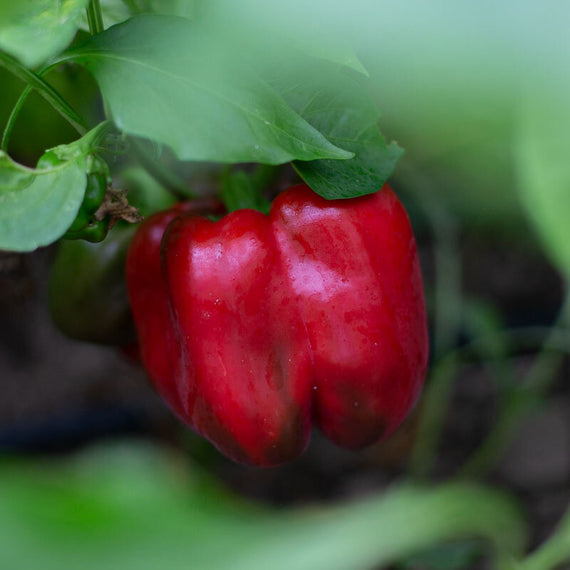
- The fruit: a large sweet pepper with 4 lobes, dark green then bright red.
- Choosing when to pick: green for crunch, red for sweetness.
- Space in the ground: one plant every 50 cm, for a plant of 60 cm to 1 m.
- Harvest: first ripe fruit 4 to 5 months after sowing, until October.
Sweet pepper for stuffing, very thick flesh, for cool climates
Prima Belle pepper seeds, from the Kokopelli Association, are a traditional sweet pepper for stuffing, selected for cool climates. It produces large, 4-lobed fruits with very thick flesh, picked green for crunchiness or red for sweetness. The packet contains 25 organic seeds, to be sown under cover from February to April.
Prima Belle is a traditional sweet pepper, for stuffing, selected for cool climates. Its large, 4-lobed, dark green fruits turn bright red when ripe and have very thick flesh. The plant reaches 60 cm to 1 m in height, crops mid-season and is not very susceptible to viruses, two qualities that matter if your summer stays short.
Sow the pepper in a light compost
A pepper seed spends 8 to 10 weeks in a pot before planting out, so the quality of the plant depends first of all on the grow medium in that pot. The light peat-free compost at pH 6 gives young roots an airy, lightly fertilised medium that does not compact with watering. You then keep control of nutrition from transplanting into an individual pot, instead of relying on the reserves of a multipurpose compost.
🫑 Green or red
The same fruit is picked at two stages, and that choice changes what ends up on your plate. Picked green, as soon as it has reached its size, it keeps a firm flesh and a clean flavour; left on the plant until it turns red, it becomes softer and sweeter. Regular picking encourages further flowering, whereas a fruit ripening on the plant slows the production of those that follow. Harvested peppers keep for 1 to 2 weeks in a cool place.
Picked green
Its flesh is firm and crunchy, its flavour more distinct, and the plant regrows straight away.
Picked red
Its flesh is more tender and sweeter, at the cost of a few extra weeks on the plant.
The compromise
Pick the first green fruits and let the last ones of the season turn red.
🗓️ A plant's timeline
A pepper occupies its place for a long time: sown from February to April, at 20 to 25 °C, it spends 8 to 10 weeks in the nursery, then gives its first ripe fruit 4 to 5 months after sowing. Do not put your plants out until the nights stay above 15 °C, even if the days are fine, as its growth slows markedly below that. Allow 50 cm between plants, and put in a stake when the plant reaches 30 cm. The Syrian Stuffing aubergine follows a similar calendar.
In aquaponics, this long calendar calls for a system that is already stable, with the nitrogen cycle established. The pH should sit between 6.4 and 7.5, preferably in the lower part of that range, since above 7.2 iron, manganese and phosphorus become hard for the plants to absorb. At flowering, your plants need potassium and phosphorus, which are often limiting in the water of a fish tank, as well as calcium, which prevents blossom end rot in the fruit. The guide to growing peppers in aquaponics covers these inputs in detail.
🐝 Flowers and fruit set
The pepper is self-pollinating: each flower carries the pollen that fertilises it, and in your vegetable garden the wind or insects are enough to release it in the open air. Under a closed shelter, however, this movement is missing, and you replace it by shaking the plants every day or by running a small brush through the flowers every 2 to 3 days. Heat also plays a part: above 32 °C, the pollen becomes sterile and the flowers drop without setting fruit. The method is described step by step in the guide to pollinating your plants indoors.
Technical specifications
The sachet
- Capacity
- 25 seedsEnough to plant around ten specimens, including germination losses.
- Seed origin
- Kokopelli associationOrganic seeds, royalty-free.
- Seed type
- Open-pollinated, non-hybridReproducible: seed from your own harvest will give the same variety.
- Seed storage
- Around 3 yearsStore in a dry, cool, dark place.
The variety
- Botanical name
- Capsicum annuum
- Type
- Sweet pepper for stuffingNo prickles, very thick flesh.
- Fruit
- Cube-shaped, with 4 lobesDark green, then bright red when ripe.
- Adult height
- 60 cm to 1 m
- Earliness
- Mid-season
- Variety origin
- United States, 1987Selected for cool climates.
Seedling and harvest
- Seedlings under cover
- February to AprilIn pots or in cell trays, under a bright shelter.
- Germination temperature
- 20 to 25 °C
- Time in the nursery
- 8 to 10 weeks
- Installation
- Nights above 15 °CAfter the last frosts, with the stem buried up to the first leaves.
- Spacing
- 50 cmStake to be put in place when the plant reaches 30 cm.
- First ripe fruits
- 4 to 5 months after sowing
To budget for separately
- Seedling grow medium
- Light potting compost in small pots
- Growing medium
- Clay pebbles or coir
10 further specifications are available in the detailed view.
In the box
- 1 packet of 25 organic Prima Belle sweet pepper seeds
Pack size, fruit, height and sowing: Kokopelli seed supplier data sheet (ref. P5063), checked on 11/10/2026. Harvest times and temperature thresholds: the shop's pepper growing guide, guidelines for mainland France.
Manufacturer and product safety
- Manufacturer
- Association Kokopelli (SIREN 433481124, TVA FR80433481124)
- Postal address
- 7 route de Sabarat, Forêt de Castagnès, 09290 Le Mas-d'Azil, France
- Contact
- Formulaire de contact : https://kokopelli-semences.fr/fr/faq/ (aucune adresse e-mail publique) ; téléphone 05 61 67 69 87
- Website
- kokopelli-semences.fr
Information provided under Regulation (EU) 2023/988 on general product safety.
Estimate your
delivery time
Your estimate
Delivery
Estimated time
It covers preparing your order and then the transit time quoted by the carrier, counted in working days.
It is not a guaranteed delivery date: public holidays, peak periods, customs or a carrier delay can extend it. The exact amount, in your currency, is worked out in the cart once your address is entered.
A packet of seeds ships as a small parcel. It can be grouped at no extra cost with the rest of your order, and the exact amount is calculated at checkout.
Frequently asked questions
6 questions
6 key questions
Growing calendar
Reference points for mainland France, to be shifted by approximately two weeks depending on your region.
| Stage | ||||||||||||
|---|---|---|---|---|---|---|---|---|---|---|---|---|
| Seedlings under cover3 months | Seedlings under cover: no | Seedlings under cover in February | Seedlings under cover in March | Seedlings under cover in April | Seedlings under cover: no | Seedlings under cover: no | Seedlings under cover: no | Seedlings under cover: no | Seedlings under cover: no | Seedlings under cover: no | Seedlings under cover: no | Seedlings under cover: no |
| Installation2 months | Installation: no | Installation: no | Installation: no | Installation: no | Installation in May | Installation in June | Installation: no | Installation: no | Installation: no | Installation: no | Installation: no | Installation: no |
| Harvest green3 months | Harvest green: no | Harvest green: no | Harvest green: no | Harvest green: no | Harvest green: no | Harvest green: no | Harvest green in July | Harvest green in August | Harvest green in September | Harvest green: no | Harvest green: no | Harvest green: no |
| Harvest when red3 months | Harvest when red: no | Harvest when red: no | Harvest when red: no | Harvest when red: no | Harvest when red: no | Harvest when red: no | Harvest when red: no | Harvest when red in August | Harvest when red in September | Harvest when red in October | Harvest when red: no | Harvest when red: no |
KeySeedlings under coverInstallationHarvest greenHarvest when red
This month
October
Growing guidance
- Germination temperature
- 20 to 25 °CBelow 20 °C, germination becomes erratic
- Germination time
- 10 to 15 days
- Time in the nursery
- 8 to 10 weeks
- Minimum planting threshold
- Nights above 15 °CGrowth slows markedly below this
- Spacing
- 50 cmBetween two plants, in the row as well as in the grow bed
- Adult height
- 60 cm to 1 m
- First ripe fruits
- 4 to 5 months after sowing
- Harvest period
- July to October
- pH in aquaponics
- 6.8 to 7Above 7.2, iron becomes difficult to absorb
- Seed storage
- Around 3 yearsDry and away from light
What you need to know
- A pepper seedling written off as a failure is almost always one that was sown too cold. Between 20 and 25 °C, germination already takes 10 to 15 days: give it that time before drawing conclusions.
- Decide by the night, not the day, when planting out. Below 15 °C at night, pepper growth slows markedly.
- Picking green restarts flowering, while letting the fruit turn red slows it. On a small number of plants, pick the first green fruits and keep the last ones of the season for red.
- Remove the first flower, the one that appears in the fork, if the plant is still small. A young plant that sets fruit too early stops growing.
- Under glass, shake the plants every day during flowering. The pepper is self-pollinating, but its pollen needs some movement to be released.
- In aquaponics, this crop ties up a growing space from February through to October. On a small system, that is the space three successive batches of lettuce could have used one after another.
You may also like


Related articles

Crops
Growing peppers in aquaponics
A species that is slow to set fruit and benefits greatly from extra light.
Read the article

Technique
Pollinating your plants indoors
What light cannot do: carry pollen from one flower to another.
Read the article

Equipment
Setting up an indoor seedling space
Heat mat, lighting, humidity: setting up a reliable propagation corner at home and making it pay.
Read the article

Guide
Getting started with an aquaponic system
The six weeks between a tank filled with water and a system capable of feeding a plant.
Read the article

Understanding
The nitrogen cycle in aquaponics
Why a hungry plant yields nothing on a new system, and how to tell when the cycle is properly established.
Read the article

Schedule
What to grow in hydroponics, season by season
What to sow in January, April and September to keep a grow bed in constant production.
Read the article

Cooking
Summer recipes from the kitchen garden
What to do with a glut harvest — without throwing anything away or freezing half of it.
Read the article
Let us talk about your project
A question about this product or your setup? Our team will answer and advise you.

Interest-free instalment payments
Offered depending on the cart amount, at checkout.

Delivery in 2 to 15 working days
Depending on the products and shipping sites. Estimate by destination in the estimator on this page.

After-sales service 7 days a week by email or chat
Our team answers all your questions.

Shop responsibly
Become part of the change.
