
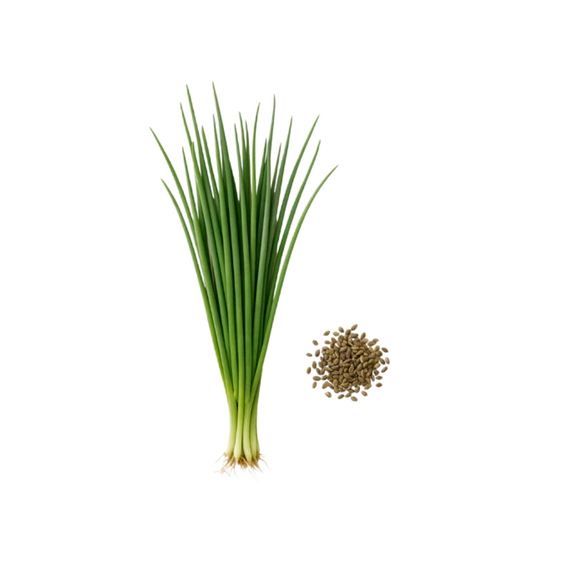
Common chive seeds
Regular price
3,90 €
Regular price
Sale price
3,90 €
Unit price
/
per
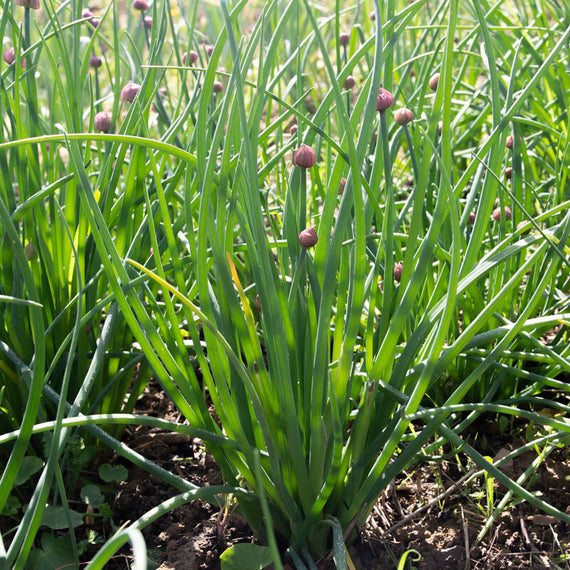
A perennial forming a tight clump, common chives produce fine, hollow leaves of 15 to 25 cm with a garlicky taste, which you cut with shears from April to November.
The packet contains 1 g of organic, open-pollinated farmers' seed. Sow from March to July; a clump takes up 15 cm, and the plant regrows by itself every spring.
 Customer support 7 days a week by email
 Delivery within 2 to 15 business days
100 % secure payment
The summary
- What you receive: 1 g of organic, open-pollinated seeds of common chives.
- Sowing: in trays in March and April, or in place from April to July.
- Germination: 10 to 20 days, in several waves, then transplanting 7 to 8 weeks later.
- Space needed: one clump every 15 cm, 15 to 25 cm tall.
- How much effort: a snip with scissors whenever you need some.
- Lifespan: perennial plant, harvested all year round under cover.
Aromatic perennial forming a clump 15 to 25 cm tall, for a trough, pot or windowsill
Kokopelli Association common chive seeds (Allium schoenoprasum) are organic, open-pollinated seeds, sold in 1 g packets. This perennial forms a clump 15 to 25 cm tall, to be planted every 15 cm in a pot, a tray or an aquaponic system. It is sown from March to July and harvested from April to November.
Common chives belong to the same genus as the onion and garlic. They form clumps of fine, hollow leaves, round in cross-section, 15 to 25 cm long, with a garlicky flavour, which you cut as needed without ever pulling up the plant. A perennial, it dies back in winter outdoors and regrows by itself in spring.
🌱 Sow in trays, transplant in clumps
Sowing is done in March and April, in a tray placed in a very bright, sheltered spot, or directly in place from April to July, in rows spaced 15 cm apart. Emergence is slow and uneven, taking 10 to 20 days depending on the temperature, and the seedlings stay as thin as threads for a long time. Prick them out 7 to 8 weeks after emergence, in small clumps of several seedlings rather than one by one, because chives grow as a clump. Then allow 15 cm in every direction between two clumps, in pots as in beds.
A slotted basket for each clump
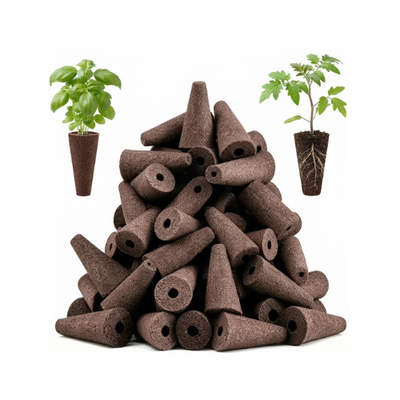
To set up your clumps in a water-based system, transplant each root ball into a 5 cm hydroponic growing pot, wedged in place with a few clay pebbles. The roots pass through the slots into the water, and the basket lifts out in one movement on the day you divide the clump. One basket per clump is enough, since chives spread slowly.
💧 In an aquaponic bed
Chives are among the easiest crops for a water-based system. Their nitrogen needs are low, their roots stay short, and they will accept a system that is still young, with no stake or deep bed. Once established, the clump stays in place for several years and you can cut it without moving it, as often as you need it in the kitchen. The guide to 15 plants to grow in aquaponics covers the herbs that share these modest needs.
Under cover, chives can be harvested all year round: the clump does not die back in winter as long as it stays warm and in the light. A system set up in a conservatory, a greenhouse or a bright room will therefore supply you with fresh leaves in December as in June. Indoors, light becomes the limiting factor from November to February, and a grow lamp keeps production going, as explained in the guide to getting started with indoor hydroponics.
On a raft
The clump, transplanted into a basket, floats above the water and is cut on the spot.
In a tub
The plug is wedged between the clay pebbles, at the edge of the tray where it gets in the way least.
In a tower
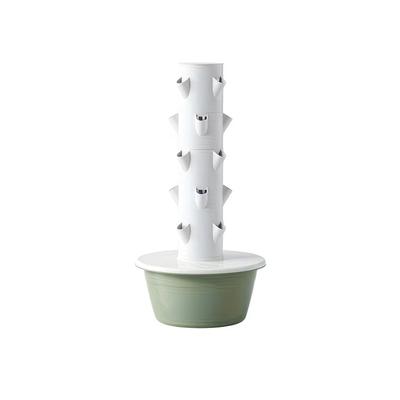
Its small size allows it to occupy a middle tier, less well lit than the top.
✂️ Cut without uprooting
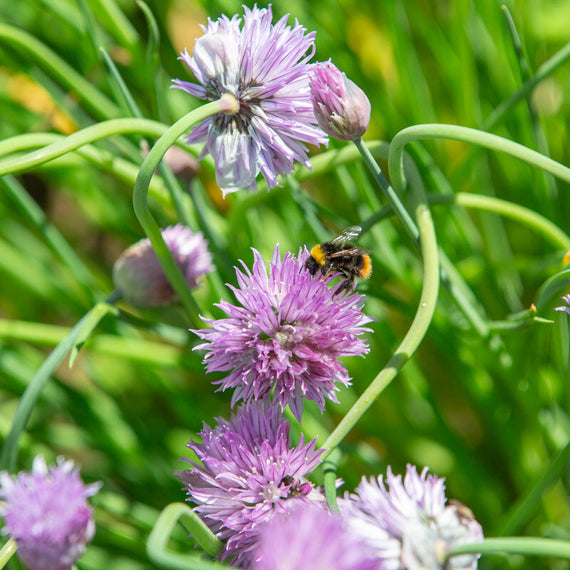
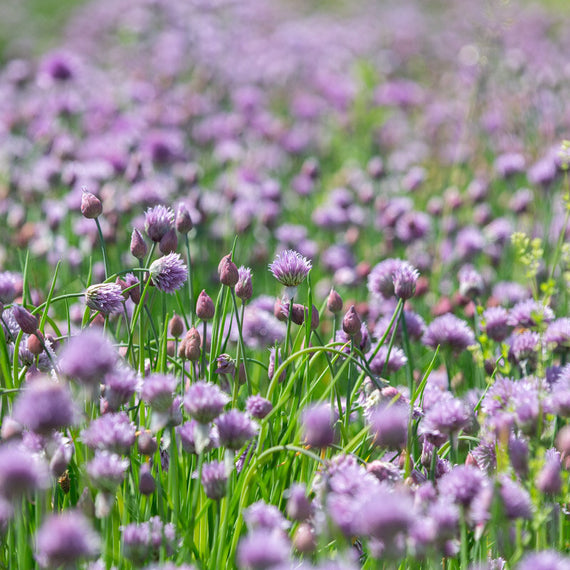
Outdoors, the harvest runs from April to November. Cut the clump with shears, 3 cm above the ground, rather than pulling on the leaves, which loosens the base. The purple pompom flowers can be eaten in salads, but the stem that carries them toughens: cut the flower stalks at the base if you want tender leaves. After 3 or 4 years, the clump thins out in the centre; divide it in September and replant the offsets. Genovese basil can be grown in the same bed and is also harvested continuously.
Technical specifications
The sachet
- Capacity
- 1 g of seedsEnough to sow several trays.
- Seed origin
- Kokopelli associationOrganic seeds, royalty-free.
- Seed type
- Open-pollinated, non-hybridOpen-pollinated: the seed from your harvest gives the same plant again.
- Treatment
- NoneNo GMOs, no coating, no chemical treatment.
The plant
- Botanical name
- Allium schoenoprasumSame genus as onion and garlic.
- Cycle
- PerennialThe foliage dies back in winter outdoors and returns in spring.
- Adult height
- 15 to 25 cm
- Aspect
- Sun to partial shade
Seedling and harvest
- Seedlings under cover
- March to AprilIn a tray, under bright cover.
- Direct seedling
- April to JulyIn rows spaced 15 cm apart.
- Germination time
- 10 to 20 daysIt comes out in waves.
- Transplanting
- 7 to 8 weeks after emergenceIn small clumps of several seedlings.
- Spacing
- 15 cm in every direction
- Harvest period
- April to NovemberAll year round under cover.
To budget for separately
- Seedling medium
- Fine compost and vermiculite
- Container
- 1 basket or a 15 cm pot
8 further specifications are available in the detailed view.
In the box
- 1 paper packet of 1 g of common chive seeds, harvested from organic farming
- 1 variety label: botanical name, sowing period, and year of seed harvest
Variety sheet from the seed supplier Kokopelli (contents, sowing, harvest, sizes), checked on 11/10/2026; the number of seeds may vary from one batch to another. Temperatures, germination times and storage periods are approximate figures for mainland France.
Manufacturer and product safety
- Manufacturer
- Association Kokopelli (SIREN 433481124, TVA FR80433481124)
- Postal address
- 7 route de Sabarat, Forêt de Castagnès, 09290 Le Mas-d'Azil, France
- Contact
- Formulaire de contact : https://kokopelli-semences.fr/fr/faq/ (aucune adresse e-mail publique) ; téléphone 05 61 67 69 87
- Website
- kokopelli-semences.fr
Information provided under Regulation (EU) 2023/988 on general product safety.
Estimate your
delivery time
Your estimate
Delivery
Estimated time
It covers preparing your order and then the transit time quoted by the carrier, counted in working days.
It is not a guaranteed delivery date: public holidays, peak periods, customs or a carrier delay can extend it. The exact amount, in your currency, is worked out in the cart once your address is entered.
A packet of seeds ships as a small parcel. It can be grouped at no extra cost with the rest of your order, and the exact amount is calculated at checkout.
Frequently asked questions
6 questions
6 key questions
Growing calendar
Guidelines for mainland France, to be shifted by about 2 weeks depending on your region.
| Stage | ||||||||||||
|---|---|---|---|---|---|---|---|---|---|---|---|---|
| Seedlings under cover2 months | Seedlings under cover: no | Seedlings under cover: no | Seedlings under cover in March | Seedlings under cover in April | Seedlings under cover: no | Seedlings under cover: no | Seedlings under cover: no | Seedlings under cover: no | Seedlings under cover: no | Seedlings under cover: no | Seedlings under cover: no | Seedlings under cover: no |
| Direct seedling4 months | Direct seedling: no | Direct seedling: no | Direct seedling: no | Direct seedling in April | Direct seedling in May | Direct seedling in June | Direct seedling in July | Direct seedling: no | Direct seedling: no | Direct seedling: no | Direct seedling: no | Direct seedling: no |
| Harvesting with shears8 months | Harvesting with shears: no | Harvesting with shears: no | Harvesting with shears: no | Harvesting with shears in April | Harvesting with shears in May | Harvesting with shears in June | Harvesting with shears in July | Harvesting with shears in August | Harvesting with shears in September | Harvesting with shears in October | Harvesting with shears in November | Harvesting with shears: no |
| Clump dormancy3 months | Clump dormancy in January | Clump dormancy in February | Clump dormancy: no | Clump dormancy: no | Clump dormancy: no | Clump dormancy: no | Clump dormancy: no | Clump dormancy: no | Clump dormancy: no | Clump dormancy: no | Clump dormancy: no | Clump dormancy in December |
KeySeedlings under coverDirect seedlingHarvesting with shearsClump dormancy
This month
October
Growing guidance
- Seedling
- In a tray, just coveredIn a bright shelter
- Germination time
- 10 to 20 daysIt comes out in waves
- Transplanting
- 7 to 8 weeks after emergenceIn small clumps
- Spacing
- 15 cmIn every direction, in a container or in open ground
- Adult height
- 15 to 25 cm
- Harvest
- April to NovemberAll year round under cover
- Cycle
- PerennialDies back in winter outdoors, regrows in spring
- Aspect
- Sun to partial shade
- pH in aquaponics
- 6.5 to 7.5The usual balance between fish, bacteria and plants
- Division
- Every 3 to 4 yearsIn September, divisions replanted
What you need to know
- Sow several seeds in the same spot and transplant in small clumps: chives grow in tufts, and a single isolated seedling takes longer to form a usable plant.
- Never pull on a leaf to harvest it: you loosen the base and the regrowth comes up crooked. A pair of scissors and a clean cut 3 cm above the ground settle the matter.
- The first summer remains modest, and this is not a sowing fault. The clump fills out year after year, and it is the second year that gives the most abundant cuttings.
- Cut the flower stalks back to the base if you want tender stems. The purple flowers are perfectly good in a salad, but a clump that flowers fully toughens for the rest of the season.
- In aquaponics, chives are happy in a system that is still young. Their nitrogen needs are low, their roots stay short, and they need neither a stake nor a deep bed.
- Divide the clump every 3 or 4 years, in September. An old plant thins out from the centre, and the divisions replanted around the edge restart with the vigour of a young plant.
You may also like


Related articles

Guide
Getting started with indoor hydroponics
Growing indoors, without a garden: light, space, watering, and what it really demands each week.
Read the article

Guide
Successful spring seedlings in aquaponics
When to start seedlings, at what temperature, and how to move from cell to grow bed without losing plants.
Read the article

Troubleshooting
Germination failure: causes and solutions
Seeds that fail to germinate, patchy germination, leggy seedlings: the six real causes and how to correct them.
Read the article

Selection
The 15 plants to grow in aquaponics
A ranking of crops by nitrogen appetite, and which ones thrive on a young system.
Read the article

Guide
The Kratky method: passive hydroponics without a pump
A jar, a basket, a solution: pumpless growing that suits short-cycle plants.
Read the article

Schedule
What to grow in hydroponics, season by season
What to sow in January, April and September to keep a grow bed in constant production.
Read the article
Let us talk about your project
A question about this product or your setup? Our team will answer and advise you.

Interest-free instalment payments
Offered depending on the cart amount, at checkout.

Delivery in 2 to 15 working days
Depending on the products and shipping sites. Estimate by destination in the estimator on this page.

After-sales service 7 days a week by email or chat
Our team answers all your questions.

Shop responsibly
Become part of the change.
