
Dwarf pak choi (Chinese cabbage) seeds
Regular price
3,90 €
Regular price
Sale price
3,90 €
Unit price
/
per
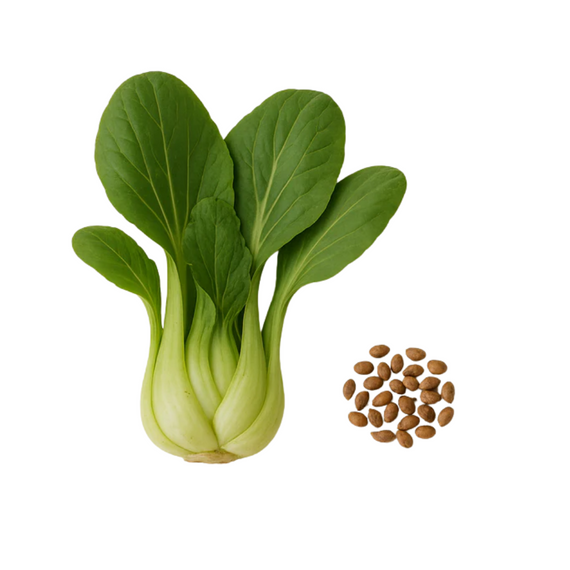
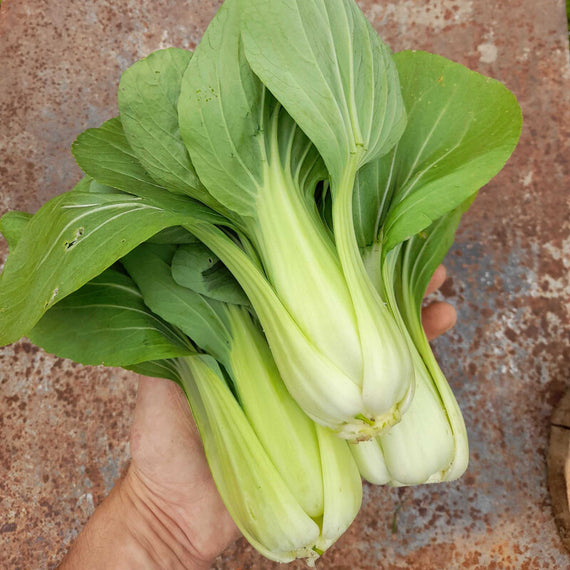
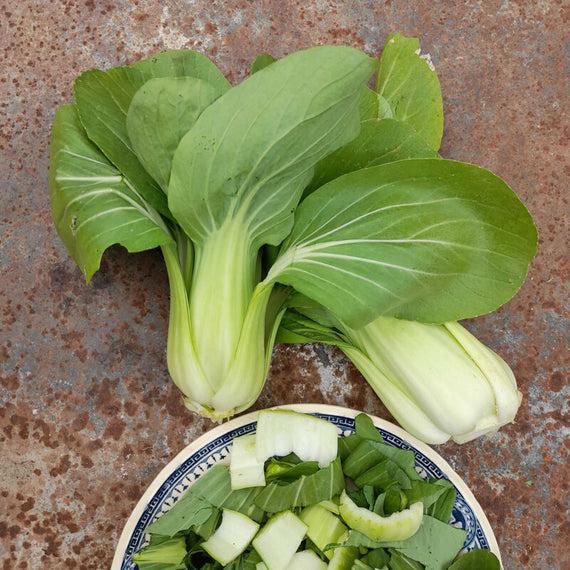
A dwarf, loose-headed Chinese cabbage, Shanghai pak choi forms a rosette 12 to 15 cm across, with smooth green leaves borne on long, pale, fleshy stalks.
The packet contains 300 seeds, organic and open-pollinated. Sowing is done where the plants are to grow, from May to August, in stations 30 cm apart, and the autumn crop is the most reliable.
 Customer support 7 days a week by email
 Delivery within 2 to 15 business days
100 % secure payment
The summary
- What you receive: 300 organic, open-pollinated seeds of dwarf pak choi.
- Sowing: sown in position from May to August, in stations of 2 to 3 seeds.
- Recommended season: autumn, with a sowing in July or August.
- Harvest: from July to October, with the rosette cut at the base.
- Space needed: one plant every 30 cm, for a rosette of 12 to 15 cm.
- What makes the difference: the sowing date, which avoids bolting in the long days.
Dwarf Shanghai Chinese cabbage with a short cycle, 300 farmer-saved seeds
The dwarf pak choi Chinese cabbage seeds from the Kokopelli Association produce a non-heading cabbage whose rosette reaches 12 to 15 cm. One packet contains 300 organic, open-pollinated seeds, to be sown in situ from May to August. This short cycle is harvested from July to October, and sowing in July or August avoids bolting.
Dwarf pak choy, also known as Shanghai pak choy, is a non-heading Chinese cabbage 12 to 15 cm tall. Its smooth green leaves grow from long, pale, fleshy stalks, rather like denser chard ribs. You can eat the young leaves raw in salads, while the stalks are cooked, stir-fried, steamed or added to soup.
💧 Pak choi in aquaponics
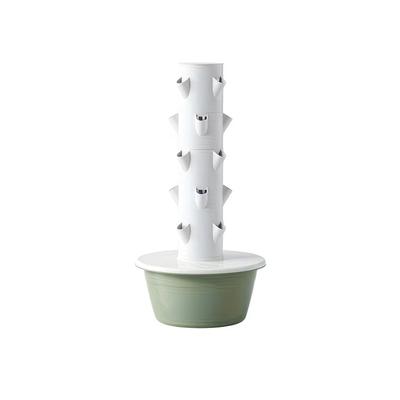
A short-cycle leafy vegetable, pak choi is content with the nitrogen the fish provide and needs neither structure nor a deep bed. It suits a deep water culture raft just as well as a bed filled with clay pebbles or a growing tower, and its height of 12 to 15 cm lets it tuck in between taller plants. In a cycled system, its fast cycle shows you the effect of an adjustment within a few weeks, and you can slip it in between two longer crops. The guide to autumn seedlings in aquaponics presents the crops of this season, the one in which it does best.
A cluster of 2 to 3 seeds per sponge pod
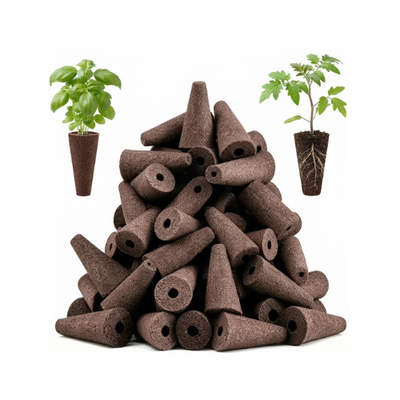
For a seedling destined for a water-based system, place 2 or 3 seeds in each peat sponge pod, as you would for a sowing station in open ground. After germination, keep only the strongest seedling and cut the others off at the base. The pod is then transplanted whole into a basket or a grow bed, with no potting compost to disperse into the fish water.
In the grow bed as in the vegetable garden, harvest when the rosette reaches its adult size of 12 to 15 cm. Cut it whole at the base to free up space for a new pod, or take the outer leaves first if you would rather spread the harvest over several pickings. A rosette left too long eventually flowers, especially in summer; its young flower stalks can then be eaten like broccoli, so the plant remains useful in the kitchen. By transplanting a pod at each cut, you keep the bed continuously productive.
🍂 An autumn crop
Pak choi is a very early variety, but it bolts easily: the long days and heat of midsummer push it to form a flower stalk before it has developed its rosette, which is known as bolting. An autumn crop is therefore the safest. A July or August sowing germinates in soil that is still warm, then the rosette forms as the days shorten, and you harvest from September to October. In spring, sowing is still possible just after the last frosts, so that the plant is harvested before the long days of June. The guide on bolting in summer describes the same mechanism in lettuces.
In spring
Sow just after the last frosts, to harvest before the longest days.
In summer
Sow in May or June in partial shade, watering regularly to limit bolting.
In late summer
Sow in July or August for the most reliable harvest, from September to October.
📏 Sow in clusters, then thin out
In open ground, sow directly in place from May to August, in stations of 2 to 3 seeds spaced 30 cm apart in every direction. After emergence, thin each station to keep the most vigorous plant. The packet of 300 seeds comfortably covers several successions: sow a handful every 2 to 3 weeks rather than the whole packet at once, because a mature rosette keeps only a short time in the garden. The other seeds in the range provide the long-season crops between which these successions fit.
Technical specifications
The sachet
- Number of seeds
- 300Enough to sow in succession over several seasons.
- Seed origin
- Kokopelli associationOrganic seeds, royalty-free.
- Seed type
- Open-pollinated, non-hybridReproducible: seed from your own harvest will give the same variety.
- Seed storage
- Approximately 5 yearsStore in a dry, cool, dark place.
The variety
- Botanical name
- Brassica rapa subsp. chinensisSame species as the turnip, not the same as the head cabbage.
- Type
- Dwarf, non-heartingSmooth green leaves, long pale leaf stalks.
- Adult height
- 12 to 15 cm
- Earliness
- Very earlyAn autumn crop limits bolting.
Seedling and harvest
- Direct seedling
- May to AugustIn spring, just after the last frosts.
- Sowing method
- Stations of 2 to 3 seedsThen thin to a single plant.
- Germination temperature
- 15 to 23 °C
- Germination time
- 5 to 10 days
- Spacing
- 30 cm in every direction
- Harvest period
- July to OctoberThe autumn harvest is the most reliable.
To budget for separately
- Seedling medium
- Foam pods or fine compost
- Container
- A grow bed, a raft or a tower
8 further specifications are available in the detailed view.
In the box
- 1 paper packet of 300 dwarf pak choi Chinese cabbage seeds, harvested from organic farming
- 1 variety label: botanical name, sowing period, and year of seed harvest
Variety sheet from the seed supplier Kokopelli (contents, sowing, harvest, sizes), checked on 11/10/2026; the number of seeds may vary from one batch to another. Temperatures, germination times and storage periods are approximate figures for mainland France.
Manufacturer and product safety
- Manufacturer
- Association Kokopelli (SIREN 433481124, TVA FR80433481124)
- Postal address
- 7 route de Sabarat, Forêt de Castagnès, 09290 Le Mas-d'Azil, France
- Contact
- Formulaire de contact : https://kokopelli-semences.fr/fr/faq/ (aucune adresse e-mail publique) ; téléphone 05 61 67 69 87
- Website
- kokopelli-semences.fr
Information provided under Regulation (EU) 2023/988 on general product safety.
Estimate your
delivery time
Your estimate
Delivery
Estimated time
It covers preparing your order and then the transit time quoted by the carrier, counted in working days.
It is not a guaranteed delivery date: public holidays, peak periods, customs or a carrier delay can extend it. The exact amount, in your currency, is worked out in the cart once your address is entered.
A packet of seeds ships as a small parcel. It can be grouped at no extra cost with the rest of your order, and the exact amount is calculated at checkout.
Frequently asked questions
6 questions
6 key questions
Growing calendar
Guidelines for mainland France, to be shifted by about 2 weeks depending on your region.
| Stage | ||||||||||||
|---|---|---|---|---|---|---|---|---|---|---|---|---|
| Spring seedlings2 months | Spring seedlings: no | Spring seedlings: no | Spring seedlings: no | Spring seedlings in April | Spring seedlings in May | Spring seedlings: no | Spring seedlings: no | Spring seedlings: no | Spring seedlings: no | Spring seedlings: no | Spring seedlings: no | Spring seedlings: no |
| Direct seedling4 months | Direct seedling: no | Direct seedling: no | Direct seedling: no | Direct seedling: no | Direct seedling in May | Direct seedling in June | Direct seedling in July | Direct seedling in August | Direct seedling: no | Direct seedling: no | Direct seedling: no | Direct seedling: no |
| Autumn sowing2 months | Autumn sowing: no | Autumn sowing: no | Autumn sowing: no | Autumn sowing: no | Autumn sowing: no | Autumn sowing: no | Autumn sowing in July | Autumn sowing in August | Autumn sowing: no | Autumn sowing: no | Autumn sowing: no | Autumn sowing: no |
| Harvest4 months | Harvest: no | Harvest: no | Harvest: no | Harvest: no | Harvest: no | Harvest: no | Harvest in July | Harvest in August | Harvest in September | Harvest in October | Harvest: no | Harvest: no |
KeySpring seedlingsDirect seedlingAutumn sowingHarvest
This month
October
Growing guidance
- Germination temperature
- 15 to 23 °C
- Germination time
- 5 to 10 days
- From seedling to harvest
- 45 to 60 days
- Spacing
- 30 cmScattered in all directions, in clusters of 2 to 3 seeds
- Adult height
- 12 to 15 cm
- Sowing schedule
- Every 2 to 3 weeksThe rosette keeps for only a short time at maturity
- Recommended season
- AutumnSowing in July and August
- Aspect
- Sun to partial shadePartial shade limits bolting in high summer
- pH in aquaponics
- 6.5 to 7.5The usual balance between fish, bacteria and plants
- Seed storage
- Around 5 yearsDry and away from light
What you need to know
- Sow in clusters of 2 to 3 seeds, then keep the most vigorous plant. Cut the others off at ground level rather than pulling them out, so as not to disturb the one that remains.
- Sow a pinch at a time, every 2 or 3 weeks. A mature rosette holds up poorly in the garden and bolts within a few days in summer.
- The autumn crop is the safest. The shortening days let the rosette form without pushing the plant to flower.
- Slugs love young rosettes. A seedling raised in a pot or pod and transplanted at the 4-leaf stage shortens the most vulnerable period.
- In aquaponics, pak choi suits deep water culture as well as a clay pebble bed or a tower. Its small size lets it fill the spaces left free between taller plants.
- The young flower stalks can be eaten like broccoli. A plant that has flowered is therefore not lost, it simply changes recipe.
You may also like


Related articles

Schedule
A practical schedule for success with aquaponics
Month by month, the tasks to carry out on the system and on the crops, from the spring restart to overwintering.
Read the article

Equipment
Which grow medium to choose for aquaponics?
Clay pebbles, coco fibre, rockwool: what each grow medium actually holds in terms of root volume.
Read the article

Selection
The 15 plants to grow in aquaponics
A ranking of crops by nitrogen appetite, and which ones thrive on a young system.
Read the article

Guide
Successful spring seedlings in aquaponics
When to start seedlings, at what temperature, and how to move from cell to grow bed without losing plants.
Read the article

Troubleshooting
Controlling pests in aquaponics
Aphids, whitefly, slugs: what can be treated without putting anything into water where fish are living.
Read the article

Schedule
What to grow in hydroponics, season by season
What to sow in January, April and September to keep a grow bed in constant production.
Read the article
Let us talk about your project
A question about this product or your setup? Our team will answer and advise you.

Interest-free instalment payments
Offered depending on the cart amount, at checkout.

Delivery in 2 to 15 working days
Depending on the products and shipping sites. Estimate by destination in the estimator on this page.

After-sales service 7 days a week by email or chat
Our team answers all your questions.

Shop responsibly
Become part of the change.
