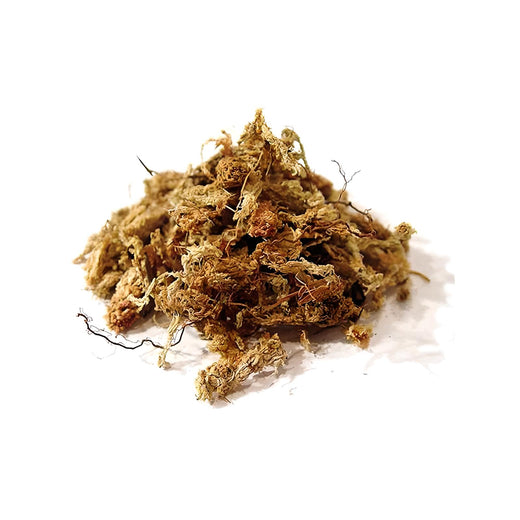
💧 The ideal substrate for your aquaponic seedlings
In aquaponics, seedlings are a delicate stage. Your seeds need constant humidity to germinate, but the system does not yet supply them with water until the roots have developed. Vermiculite solves this problem perfectly thanks to its exceptional retention capacity, able to store up to 470 ml of water per litre of substrate and release it gradually over the following days. Your seedlings stay moist without drowning, germination is even, and your young plants take root in a stable, aerated environment protected from mould.
The icing on the cake, vermiculite comes off the roots very easily at transplanting. Once your plants are developed enough to move into the gutters, grow beds or vertical towers of your aquaponic system, a simple rinse of the roots is enough to remove the substrate without stressing the plant and without polluting the system water. This is what makes it particularly recommended for aquaponists, hydroponic growers and soilless gardeners.
🌋 What is vermiculite?
Vermiculite is a 100% natural mineral obtained from the thermal treatment of mica ore. Heated to high temperature (around 1,000 °C), the mica grains expand rapidly and form small, light, layered flakes, golden to brown in colour, resembling miniature accordions. This honeycomb structure is what gives vermiculite its exceptional properties for storing and gradually redistributing water and nutrients. Chemically inert, non-toxic and non-allergenic, it is safe for plants, fish, pets and users.
🌱 Three benefits for your crops
Vermiculite fulfils three complementary functions that explain its presence in almost all seed mixes and professional growing substrates:
- Stores and redistributes water and nutrients. With a water retention of 430 to 470 ml per litre, vermiculite absorbs water (and any fertilisers it contains) at watering time, then releases it gradually to the roots as they need it. The result: less evaporation, less watering, less water stress for your crops.
- Promotes germination and rooting. By maintaining even humidity around seeds and young roots, it creates an ideal environment for germination. Its aerated structure promotes root oxygenation and its slight alkalinity (pH 6 to 8) limits the development of mould and damping off.
- Lightens and aerates substrates. Very light (it almost floats), vermiculite lightens potting soils, improves their porosity and prevents compaction. It is a valuable ally for potted crops, green roofs, bonsais, palms and all plants sensitive to both excess water and drought.
🐟 Why vermiculite is particularly suited to aquaponics
In aquaponics and hydroponics, the goal is to germinate seedlings in a neutral, easy to moisten substrate that adds no organic load to the system water. Vermiculite ticks all the boxes:
- It is chemically neutral. No added synthetic chemical fertiliser, no residue liable to unbalance the water chemistry or to harm the fish or the biofilter bacteria.
- It keeps seedlings moist without constant watering. Its built-in water reserve reduces trips to the nursery, particularly useful when seedlings are started in a room separate from the tank.
- It comes off the roots easily at transplanting. A simple lukewarm water bath or a gentle rinse loosens the vermiculite flakes without breaking the young roots. Your plants arrive clean in the NFT gutters, on media beds, in rafts or in vertical towers.
- It is compatible with organic farming. Compliant with European regulation EC 834/2007, it fits naturally into a sustainable, wildlife-friendly aquaponic approach.
🌿 Other uses in the garden and at home
Beyond aquaponics, vermiculite has many uses in gardening and indoor growing:
- Seedlings and cuttings in open ground, in pots or in a mini greenhouse, mixed with a seed sowing compost or as a top dressing to keep the surface moist.
- Growing plants sensitive to moisture (bonsais, palms, succulents) as a complement to a free-draining substrate.
- Green roofs, where it lightens the structure while maintaining the water reserve needed by the plants.
- Terrariums and vivariums, as a substrate component or as bedding, thanks to its neutrality and harmlessness for the fauna.
- Storage of bulbs and tubers in winter, in a container filled with lightly moistened vermiculite.
⚙️ Dosage and best practices for use
Vermiculite can be used pure or in a mix, depending on the intended use:
- In a mix with a substrate. 20 to 50% of the total volume depending on water retention needs. For seedlings that require constant humidity, allow 30 to 50% vermiculite. For plants that tolerate drought better, 20 to 30% is enough.
- As a top dressing on seedlings or cuttings. Spread a thin layer of vermiculite (5 to 10 mm) over the surface of the compost after sowing. This layer keeps humidity in contact with the seeds and prevents the appearance of mould.
- As a sole medium for fine seeds. It is well suited to very small seeds that need very even humidity (basil, thyme, lettuce, salad greens).
- Pre-moistening recommended. Lightly moistening the vermiculite before use gives a more homogeneous substrate and avoids dry spots.
- Storage. Non-perishable product. Store in its original packaging, protected from moisture, to prevent it from clumping over time.
📋 Technical specifications
- Composition : expanded vermiculite, obtained by fragmentation and thermal treatment of mica ore.
- Type : mineral substrate, 100% natural product.
- Particle size : 0.5 to 10 mm (for 90% of the product).
- pH : 6 to 8 (close to neutral).
- Water retention : 430 to 470 ml per litre of substrate.
- Conductivity : 2 mS/m.
- Dry matter : 95 to 99%.
- Standard : mineral substrate NFU 44-551.
- Certification : approved for organic farming (regulation EC 834/2007).
- Available pack sizes : 5 L bag, 15 L bag, 100 L bag.
🤝 Vermiculite and perlite, a complementary duo
Vermiculite and perlite are often used together because they complement each other perfectly. Vermiculite stores water and nutrients, perlite (also 100% natural) provides drainage and aeration of the substrate. Combining the two in a single mix (for example 30% vermiculite, 20% perlite, 50% compost) delivers a balanced substrate, moist, free draining and aerated at the same time, suited to the great majority of crops, from delicate seedlings to houseplants and potted market garden crops.