



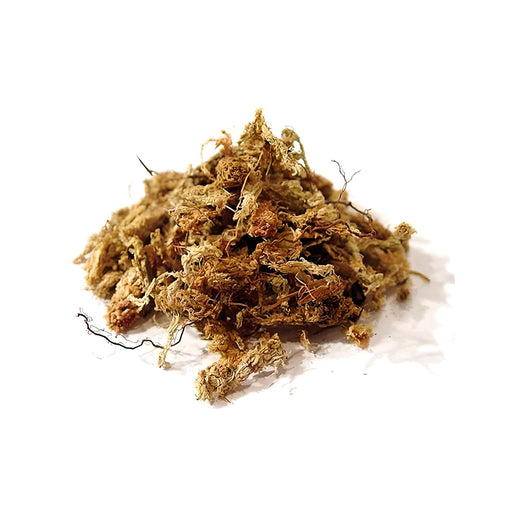


Unfertilised compost for you to feed yourself
Regular price
8,90 €
Regular price
Sale price
8,90 €
Unit price
/
per
| Volume | Price | Price per L | vs 10 L |
|---|---|---|---|
| 10 L | 8,90 € | 0,89 € | — |
| 50 L | 23,90 € | 0,48 € | −46 % |
ZeroMix is an organic potting compost that contains no fertiliser: blonde peat, coco fibre and chips, clay. You therefore decide for yourself what your plants receive, whether in pots, in the vegetable garden or in the greenhouse, with a water retention of 700 ml per litre and a pH of 6.
 Customer support 7 days a week by email
 Delivery within 2 to 15 business days
100 % secure payment
The summary
- Ingredients: a compost made of blond peat, coir fibre and chips, and clay, with no fertiliser, plus added calcium and magnesium.
- Why no fertiliser: the plants' nutrition depends entirely on what you supply, from planting onwards.
- Its values: pH of 6, water retention of 700 ml/L, 92% organic matter on a dry basis.
- With a pond: for the pots and tubs around the system, never in the grow beds.
- Bags: 10 L for a few pots, 50 L for a balcony or a greenhouse.
- Organic farming: a 100% organic compost, to be fed with a fertiliser approved for use in organic farming.
A neutral organic substrate, to be fed according to your own fertiliser programme
Guano Diffusion's ZeroMix is a fertiliser-free compost of blonde peat, coco fibre and clay, with a pH of 6. You feed it from planting onwards, for example with dried blood guano, after sowing in SeedMix. Sold in 10 or 50 L bags, it fills pots and trays, never an aquaponic bed.
Most commercial potting mixes are pre-fertilised: they sustain the plant for several weeks on a reserve of fertiliser whose exact dose and release rate you do not know. ZeroMix from Guano Diffusion takes the opposite approach. This potting mix contains no fertiliser, so everything the plant absorbs comes from what you supply. It is the medium to choose when you follow a precise feeding programme, organic or mineral, and want to avoid an unknown reserve being added on top.
🧱 Four raw materials
The blond sphagnum peat forms the base of the mix and gives it its lightness. The coco fibre retains water, while the coarser coco chips create spaces for air to circulate and prevent compaction over repeated waterings. The clay increases the grow medium's capacity to hold the nutrients you add, which limits their loss in the drainage water. Finally, a supplement of calcium and magnesium corrects the natural acidity of the peat without adding any nitrogen, phosphorus or potassium. Overall, the mix contains 92% organic matter on the dry product and retains about 700 ml of water per litre of compost, or 35 litres for a 50 L bag. With a pH of 6, most elements remain available to the roots, and the conductivity of 10 mS/m, measured in a 1:5 dilution, confirms a grow medium almost empty of salts.
💧 Feeding from planting
Because the grow medium starts from zero, feeding begins with the very first watering, rather than two or three weeks later as with an enriched potting compost. A fertiliser for soil is suitable, as is one formulated for coco fibre, given the proportion of coco in the mix. For a pot-grown vegetable garden run organically, a liquid organic growth fertiliser is added to the watering water at each pass; for closer monitoring, measure the pH of the solution before applying it. For a long crop, the dried blood guano from the same brand, mixed at 10 g per litre at planting, forms a base reserve whose content you know exactly, and the Startrex soil conditioner adds to it, at 25 g per 5 litres, the microbial life that a new compost lacks. You can thus adjust the dose at each stage, from growth to fruiting, with no hidden reserve to throw off your calculations.
Testing your fertiliser on a neutral compost
If you are looking for the right dose for a pot culture, ZeroMix gives you a clean basis for comparison: two pots, two doses, and the difference in growth owes nothing to the potting compost. To read what the plant is actually receiving, a drop-based pH test on the watering water completes the approach.
Without feeding, the plant turns yellow within a few weeks
Planting in this compost without a feeding programme leads to leaves that turn pale and then yellow, starting with the oldest, because of a lack of nitrogen. The grow medium is designed to be fed at almost every watering.
The 10 L bag fills a few houseplant pots or a small herb planter, while the 50 L bag covers a whole balcony or several large vegetable containers. The mix keeps well in its resealed bag, protected from frost and from drying out, so you can keep a reserve for this season's repotting. The article on choosing a grow medium compares this type of potting compost with the inert supports used in soilless growing, clay pebbles and pure coco fibre, which work on the same logic of nutrition supplied entirely by the grower. Seedlings, for their part, germinate in the SeedMix seed compost, which is finer and lightly fertilised, before moving into ZeroMix at the first repotting.
🪴 For which crops
Container vegetable garden
Tomatoes, peppers and herbs grown in containers receive exactly the formula chosen for each stage.
Houseplants
The light mix suits potting on, with a diluted fertiliser applied when watering.
Shrubs and borders
When planting out, it is worked into the soil in place to lighten it and hold water.
Lawn
When overseeding, it covers the seeds with a fine layer that stays moist.
🐟 Around an aquaponic system
Potting compost does not belong in an aquaponic grow bed. Peat and fine fibre break down in the circulating water, cloud the fish tank and clog the inert grow medium, clay pebbles or gravel, that the biofilter bacteria colonise. Seedlings intended for the system are therefore raised in an inert medium: the FAO recommends rockwool or coco coir, followed by transfer into the beds at least two weeks after the first true leaves appear. The rockwool blocks thus go into the baskets in the tank with their own clean root ball.
ZeroMix, on the other hand, finds its place with the crops you keep in pots beside the system: a tomato plant in a large tub, herbs on the greenhouse shelf, strawberries in a planter. As it contains no fertiliser, you apply your own feeding programme, independent of the fish water. Note that its pH of 6 is more acidic than that of an aquaponic system, which is run at around 6.8 to 7.0 to look after the fish, the bacteria and the plants alike: the two environments are managed separately.
Within the system itself, shortages are corrected with products made for fish water. Iron comes first: a DTPA chelated iron is applied at about 2 mg per litre every 3 weeks. Potassium and calcium are topped up by alternating small doses of calcium hydroxide and potash, which bring the pH back towards 7. The article on deficiencies in aquaponics helps you identify the missing element from the leaves, and the one on fertilisers in aquaponics distinguishes what can go into the fish water from what is reserved for pots.
Technical specifications
The compost
- Composition
- Blonde peat, coir, clayBlonde sphagnum peat, coconut fibre and chips, clay, calcium and magnesium supplement
- Fertiliser
- NoneFertilisation begins at planting
- pH
- 6Measured at a 1:5 dilution
- Conductivity
- 10 mS/mMeasured at a 1:5 dilution, almost free of salts
- Origin
- Made in France
- Water retention
- 700 ml/LAround 35 litres retained by a 50 L bag
- Organic matter
- 92% of the dry product
- Dry matter
- 35% of the raw product
Use and sizes
- Crops
- Pots, vegetable garden, shrubs, lawnOutside aquaponic grow beds
- Volumes
- 10 or 50 L
2 further specifications are available in the detailed view.
In the box
- 1 bag of ZeroMix compost, 10 or 50 L, depending on the size chosen
Composition, pH, conductivity, retention, dry and organic matter: manufacturer's datasheet (guano-diffusion.com). Aquaponic benchmarks: FAO, NMSU.
Manufacturer and product safety
- Manufacturer
- Guano Diffusion
- Website
- www.guano-diffusion.com
Information provided under Regulation (EU) 2023/988 on general product safety.
Estimate your
delivery time
Your estimate
Delivery
Estimated time
It covers preparing your order and then the transit time quoted by the carrier, counted in working days.
It is not a guaranteed delivery date: public holidays, peak periods, customs or a carrier delay can extend it. The exact amount, in your currency, is worked out in the cart once your address is entered.
The bag is sent from a distributor's warehouse in France, in a 5 kg parcel for 10 L and a 16 kg parcel for 50 L. The exact shipping cost is shown in your basket.
Frequently asked questions
6 questions
6 key questions
You may also like


Related articles

Grow media
Which grow medium should you choose in aquaponics?
This article sets potting composts against the inert media used in soilless growing.
Read the article

Nutrition
Which fertiliser should you use in aquaponics?
Fertilisers are sorted there according to what they supply to the plant.
Read the article

Diagnosis
Plant deficiencies in aquaponics
A yellowing leaf can be diagnosed with this guide, in a pot as in the system.
Read the article

Seedling
Getting spring seedlings off to a good start in aquaponics
The plants in the system are raised separately, in an inert support.
Read the article

Crops
Growing tomatoes in aquaponics
Tomatoes need steady feeding, from transplanting through to harvest.
Read the article

Understanding
Soilless growing with hydroponics
The logic of a fully supplied nutrition plan is explained there step by step.
Read the article
Let us talk about your project
A question about this product or your setup? Our team will answer and advise you.

Interest-free instalment payments
Offered depending on the cart amount, at checkout.

Delivery in 2 to 15 working days
Depending on the products and shipping sites. Estimate by destination in the estimator on this page.

After-sales service 7 days a week by email or chat
Our team answers all your questions.

Shop responsibly
Become part of the change.
