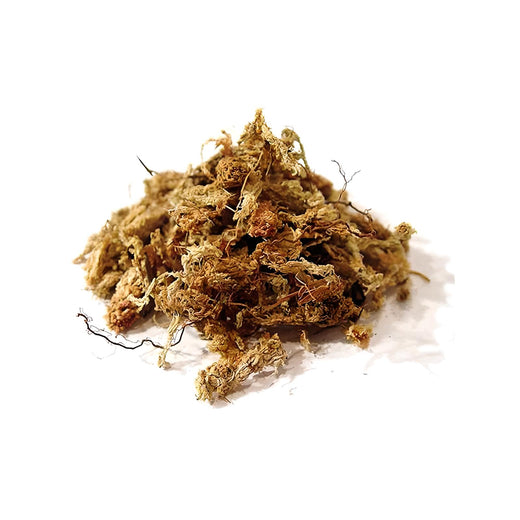


Coconut fiber mat
Regular price
42,90 €
Regular price
Sale price
42,90 €
Unit price
/
per
This coir fibre mat can be cut to fit your planters, hanging baskets, and growing troughs. It retains the grow medium, allows water to drain through, and holds moisture — in aquaponics, hydroponics, and the kitchen garden alike — and it can be composted at the end of its life.
 Customer support 7 days a week by email
 Delivery within 2 to 15 business days
100 % secure payment
The summary
- What it is: a 30 × 300 cm roll of coconut fibre felt, to be cut to the shape of your container.
- What it does: it holds the grow medium in place and lets water pass through.
- Cutting: with scissors or a craft knife, without the edge fraying.
- Before laying it: dampen it, and it becomes pliable and follows curves.
- In aquaponics: laid at the bottom of a grow bed or pot, it holds back the fine particles that would otherwise end up in the pump.
- At end of life: it can be composted, like all the plant material in the garden.
Coco fibre mat to cut to size, for lining a basket or a slatted planter
Coconut fibre matting is a felt about 3 mm thick, sold in a roll of 30 × 300 cm, which you cut to the shape of a basket, an open-sided planter or a bed. It holds the grow medium while letting water pass through. In aquaponics, laid in the bottom of a bed or pot, it also catches fine particles before the pump.
This is a coconut fibre felt about 3 mm thick, supplied in a 30 × 300 cm roll, which you cut to the shape of your container. It does not replace a grow medium; it forms the wall between what you plant and what lies behind it.
Hanging basket
Draw the circle by placing the basket on the felt, then cut it out with scissors.
Open-work planter
A strip can be cut to length and pressed against the walls before pouring.
Tank base
One piece sits at the bottom and holds the grow medium above the drain.
🪣 What a coco wall solves
A hanging basket, a slatted planter or an open-sided tray all let the grow medium escape at every watering. The felt slots in and solves the problem without stopping the water from draining. Its interlaced fibres hold back the material and let the liquid through, while the gaps keep air circulating around the roots. Your watering intervals lengthen, because the fibre absorbs and then redistributes moisture, even in a container holding little grow medium.
🧵 Cutting and fitting
Cutting is done with scissors or a craft knife, and the edge does not fray, so you can trim to size precisely. No specialist tool is needed, and a single roll lines several containers of different sizes, which limits offcuts. Slightly dampen the felt before fitting; it then becomes supple and follows curved shapes without folding or cracking. The same method works in an aquaponics system, where felt placed at the bottom of a tray or pot retains the fines that would otherwise travel to the strainer and the pump, while still letting the nutrient-rich water circulate. The guide to choosing a grow medium shows how poorly retained fines end up clogging a grow bed.
Felt for the wall, fibre for the volume
In a hanging basket, the felt forms the wall and the compressed coco fibre provides the volume in which the roots grow, so the two are best bought together. A handful of clay pebbles at the bottom completes the drainage and prevents the pocket of stagnant water that forms at the low point of a deep basket.
Laid dry, and cut too short
Felt laid dry cracks when folded and leaves open corners through which the grow medium escapes: always dampen it before fitting. Cut generously too, and leave a few centimetres sticking out at the top of the container, trimming it back afterwards if needed. The offcuts can be used to plug the corners of a round basket, where a single piece does not follow the curve.
📅 How long it lasts
The lifespan of the wall depends mainly on its exposure. In sun and through the alternation of wet and dry, the fibre generally breaks down after 2 to 3 seasons on a hanging basket, a little faster on a south-facing wall. The warning sign is an upper edge that crumbles and exposes the grow medium, well before the base gives way. Nothing stops you doubling the thickness in the most exposed spots, or replacing only the upper ring while leaving the base in place, since the felt can be cut to any shape.
🌿 Planting through the wall
A hanging basket looks its best when trailing plants also come out through the sides, and felt does not stand in the way. Cut 3 to 4 cm cross-shaped slits at mid-height, once the lining is in place and the container is half filled, then slide the rootball in from the outside towards the inside, protecting it with a paper cone. Then close the fibre back around the neck of the plant; it falls back into place by itself and closes the opening. Make these slits before finishing the filling, because planting through the sides of a basket that is already full means taking everything out again. Allow 3 to 5 openings spread around the basket for an even result, and choose trailing species for these positions, ones that will put up with growing horizontally for the first few weeks.
Technical specifications
The essentials
- Material
- Interwoven coconut fibreNo plastic lining or synthetic binder.
- Shape
- Roll of 30 × 300 cmAbout 3 mm thick, to be unrolled and cut to size as needed.
- Cutting
- Scissors or craft knifeThe edge does not fray, so you can cut it to the exact size you need.
- Before installation
- A light dampeningThe fibre becomes supple and follows curved walls without breaking.
To budget for separately
- The grow medium
- Coco fibre, compost or clay pebblesThe felt forms the wall; it does not fill the container.
- The container
- Basket, planter or perforated trayIt's the one the felt is there to line.
In the box
- 1 roll of coconut fibre felt, 30 × 300 cm, to be cut to size
Material, roll dimensions, cutting behaviour and wetting before laying: values stated for this product, recorded on 19/09/2026 and 11/10/2026.
Estimate your
delivery time
Your estimate
Delivery
Estimated time
It covers preparing your order and then the transit time quoted by the carrier, counted in working days.
It is not a guaranteed delivery date: public holidays, peak periods, customs or a carrier delay can extend it. The exact amount, in your currency, is worked out in the cart once your address is entered.
The felt ships rolled, in a lightweight but long parcel. The exact postage and final delivery times are shown at checkout once you have entered your address.
Frequently asked questions
8 questions
6 key questions, 8 in the detailed view
You may also like


Related articles

Grow media
Which grow medium to choose for aquaponics?
The fines in a grow medium, and why a growing bed clogs.
Read the article

Diagnosis
Understanding and correcting cloudy water in aquaponics
Bacterial film, fine particles or overload: diagnosing water that stays cloudy.
Read the article

Assembly
Setting up your aquaponic system
The ebb-and-flow bed on clay pebbles, and the fines to rinse off before filling with water.
Read the article

Crops
What to grow in hydroponics, season by season
Lettuces, herbs, strawberries and cherry tomatoes: what to grow in each season.
Read the article

Season
Maintaining your aquaponic system in summer
Evaporation, heat and water level: what to do for a system in summer.
Read the article

Plants
The 15 plants to grow in aquaponics
Lettuces, herbs, strawberries: the crops that thrive in aquaponics.
Read the article
Let us talk about your project
A question about this product or your setup? Our team will answer and advise you.

Interest-free instalment payments
Offered depending on the cart amount, at checkout.

Delivery in 2 to 15 working days
Depending on the products and shipping sites. Estimate by destination in the estimator on this page.

After-sales service 7 days a week by email or chat
Our team answers all your questions.

Shop responsibly
Become part of the change.
