



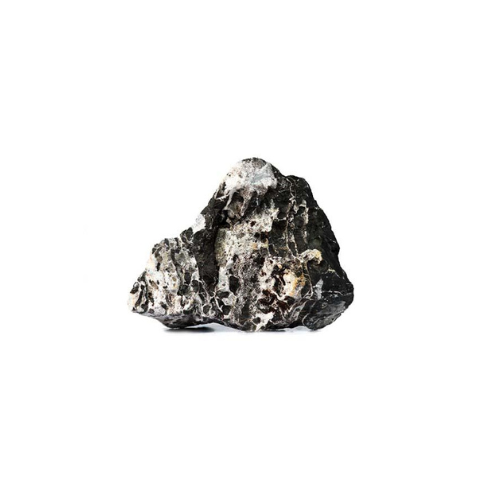
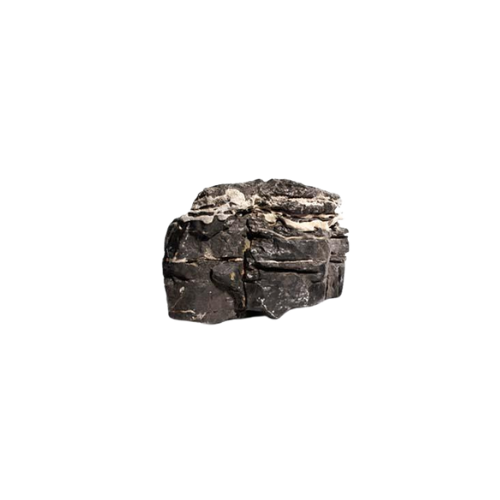
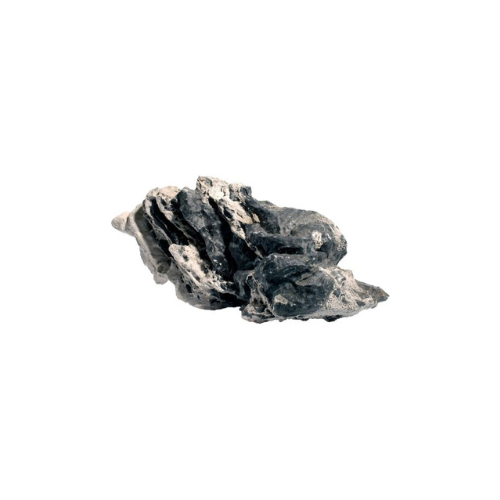
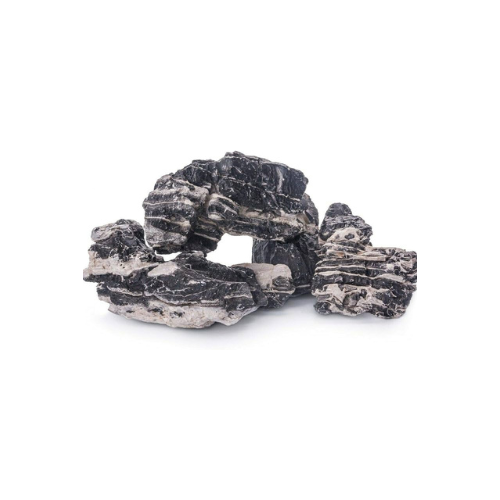
Leopard rock for aquarium, 0.8 to 1.2 kg
Regular price
5,50 €
Regular price
Sale price
5,50 €
Unit price
/
per
This speckled natural stone, with its contrasting tones, is sold individually, weighing between 0.8 and 1.2 kg.
The stone structures a tank floor and defines territories. Shape and veining vary from one stone to the next.
 Customer support 7 days a week by email
 Delivery within 2 to 15 business days
100 % secure payment
The summary
- What you receive: a stone of 0.8 to 1.2 kg, picked from the batch, never identical to the photo.
- What it does: divides up the floor space and gives each territorial fish its own boundary.
- How many to take: the count is made in kilos per metre of frontage, not in number of stones.
- Before filling: a rinse and a scrub, then a vinegar test on a dry face.
- How to place it: directly on the tank floor, before the grow medium, for a layout that holds.
- Shipping: heavy for its size, can be combined with your order.
Speckled stone sold individually, for structuring a substrate and marking out territories.
Leopard rock for aquariums, sold individually in pieces of 0.8 to 1.2 kg, is used to structure the floor of a tank and to mark out territories. A low wall of two stones separates two zones and cuts down chasing in a community tank. Slightly calcareous, it hardens the water a little, which suits Malawi cichlids.
Every stone in this lot is a one-off, since the shape, the marbling and the spread of the spots vary from one piece to the next. The rock is anthracite to black, veined with white, and its colour darkens further underwater. Each stone weighs between 0.8 and 1.2 kg, so you can plan a layout by the kilo rather than by the number of pieces.
This variability is an advantage when you build a layout, because three different stones read as a natural outcrop, whereas three identical stones read as a row of paving slabs. So buy them in an odd-numbered batch and group them into a single cluster. Remember to keep one flat stone for the base, since it will carry the others, and an unstable foundation makes the stack topple at the first pass of the net.
🎨 Dividing the bottom into territories
Many freshwater fish defend a territory rather than a volume of water, and a broken line of sight is worth more than a large empty space. A low wall of two stones is enough to separate two territories and reduce chasing in a community tank. This partitioning of the substrate is one of the points covered in the article on fish welfare in aquaponics.
🍶 A slightly calcareous rock
Leopard rock contains a little limestone, which dissolves slowly and raises the hardness, then the pH, over the weeks. The effect remains slight, and it is no problem in a Malawi cichlid tank, where hard water is precisely what is wanted; it matters more in a shrimp tank or for soft, acidic freshwater species. In soft water, regular water changes limit this rise, and testing the stone you receive tells you what to expect.
Test the stone you received
Rinse and brush the stone, let it dry, then pour a few drops of white vinegar onto it. A strong fizz indicates a stone rich in limestone, best kept for a hard water tank. A weak or absent reaction indicates a stone that will change your water very little. The test takes 10 seconds and tells you about that particular stone.
Monitor the hardness after installation
Vinegar gives a yes or no answer, whereas only a measurement tells you by how much your water has changed. The total hardness test and the carbonate hardness test can be read on the same sample, in a few minutes, and one reading before installation and a second 15 days later are enough to settle the question. This precaution matters above all in a shrimp tank, where moulting depends on the hardness of the water.
🪨 Building a hardscape that holds
A rock placed on sand eventually sinks, and a burrowing fish is enough to undermine a stack that looked stable. So place the load-bearing stones directly on the bottom of the tank, before adding the grow medium, or on a thin sheet of foam that spreads the load and protects the glass. An underwater adhesive then bonds the upper pieces together, which prevents a collapse on cleaning day. Finally, check that every cavity remains reachable with the net and the siphon, otherwise the decor will become the spot where waste builds up and you cannot remove it.
Technical specifications
The essentials
- Weight of the part
- 0.8 to 1.2 kg
- Appearance
- Speckled, rawNo part matches the photo on the product page.
- Colour
- Anthracite veined with whiteThe tint darkens the submerged stone once again.
- Effect on water
- Slightly hard waterIt hardens the water slightly, which is no problem in a hard water tank.
Installation
- Preparation
- Rinsing and brushing
- Support
- On the bottom, under the grow mediumA stack placed on loose ground will eventually topple over.
In the box
- 1 leopard rock of 0.8 to 1.2 kg
Weight and sale by the piece noted on 20/09/2026 from the manufacturer AQUADECO's description of the Leopard Rock size S. Colour and limestone content noted on 11/10/2026 from the aquascaping guides devoted to this rock.
Estimate your
delivery time
Your estimate
Delivery
Estimated time
It covers preparing your order and then the transit time quoted by the carrier, counted in working days.
It is not a guaranteed delivery date: public holidays, peak periods, customs or a carrier delay can extend it. The exact amount, in your currency, is worked out in the cart once your address is entered.
This stone is dispatched in a reinforced small parcel. Its weight is included in the calculation, which is done at the basket stage based on your destination, and it can be grouped with the rest of your order.
Frequently asked questions
6 questions
6 key questions


Related articles

Wellbeing
Is aquaponics suited to animal welfare?
A broken line of sight changes the social dynamic in a tank.
Read the article

Fish
Which fish should you choose for aquaponics?
Territorial species and the space they actually require.
Read the article

pH
Regulating pH in an aquaponics system
What a limestone rock does to pH, and how quickly.
Read the article

Algae

Water
Understanding and fixing cloudy water
The mineral dust from a poorly rinsed stone, and its fallout.
Read the article

Grow medium
Which grow medium should you choose for aquaponics?
The ratio between rock mass and usable water volume.
Read the article
Let us talk about your project
A question about this product or your setup? Our team will answer and advise you.

Interest-free instalment payments
Offered depending on the cart amount, at checkout.

Delivery in 2 to 15 working days
Depending on the products and shipping sites. Estimate by destination in the estimator on this page.

After-sales service 7 days a week by email or chat
Our team answers all your questions.

Shop responsibly
Become part of the change.
