All about Ollas (Guide 2026)

12 April 2026
Tout savoir sur les Ollas (Guide 2026)

Olla irrigation (or Oyas) is a passive hydraulic engineering that redefines autonomy in modern vegetable gardens. Faced with recurring heatwaves and increasingly severe water restrictions in Europe, understanding the physics of microporosity and soil-plant interaction becomes a major strategic advantage.

Underground watering

While traditional automatic watering shows its agronomic and ecological limitations, a millennial technology is making a comeback : the Olla. This porous irrigation pot acts as an intelligent membrane whose flow is regulated in real-time by the plant's biological demand.

We will explore why underground irrigation is the most efficient method for securing your crops, by analyzing granular water transfers, the biology of the rhizosphere, and professional maintenance protocols to guarantee the longevity of your installation.

Legacy : 4,000 Years of Resilience

The origin of Ollas (or "Oyas" in French) dates back to the first sedentary agrarian civilizations. Used in ancient China by the Yangshao culture, then perfected by indigenous populations of the American Southwest and the Near East, these jars made it possible to make deserts bloom where evaporation made any surface agriculture impossible.

Unlike modern systems that consume a lot of plastic and energy, low-temperature ceramics have lasted for millennia because they respect the natural water cycle. This return to basics is now the foundation of resilient permaculture in Europe.

How terracotta regulates water without electronics

Olla science relies on ultra-precise firing temperatures, ranging between 900°C and 1050°C. At this stage, the clay does not reach complete vitrification (like stoneware or porcelain), which leaves a complex network of interconnected micropores.

This is where pressure physics takes over : as long as the soil is saturated, water remains trapped in the pot by surface tension. As soon as the soil dries out, a suction force (matric potential) draws water molecules through the walls.

You no longer water according to an arbitrary schedule, but according to the physical needs of the substrate, eliminating any risk of water stress or waste.

Hydrotropism : when roots become intelligent

Plants are not passive recipients ; they actively practice hydrotropism. Their roots detect humidity signals and surgically orient themselves toward the most stable source. With an Olla, the roots literally envelop the pottery to absorb water directly by osmosis at the point of contact.

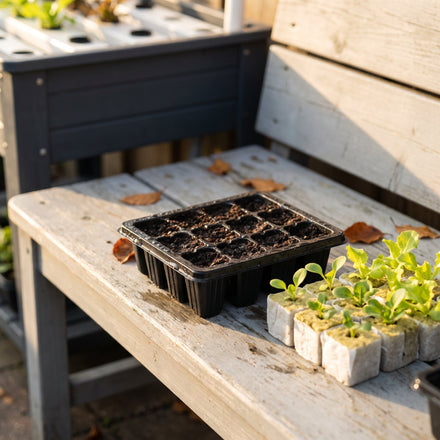
This deep root development replaces the fragile superficial root system of conventional watering, making the plant much more self-sufficient. For this system to be effective from the outset, it is imperative to plant seedlings with an already vigorous root system.

Water saving and record productivity

Agronomic data are conclusive : irrigation with Ollas allows for a real water saving of 50% to 70%.

On the surface, classic watering causes nutrient leaching and creates a "crusting layer" that smothers microbial life in the soil. The Olla, by maintaining constant moisture deep down, stabilizes biomass and promotes uninterrupted growth.

Fruits such as tomatoes or peppers no longer suffer from water stress, which prevents fruit splitting and fungal diseases, as the foliage remains perfectly dry and ventilated.

The influence of soil texture on diffusion

The efficiency of an olla depends on its "hydraulic reach", which varies according to the particle size of your soil. In sandy soil, water descends quickly vertically by gravity, reducing the lateral radius of action to approximately 20 cm.

Conversely, in clayey soil or soil rich in humus, capillary tension is dominant and allows for horizontal diffusion of up to 50 cm for a 5-liter olla.

Performing a texture test (the "sausage test") before installation is crucial to define the strategic spacing of your diffusers and avoid dead dry zones within your cultivation beds.

Preventive maintenance : against limescale

Limescale (carbonates) is the number one enemy of ceramic microporosity. The minerals present in tap water gradually saturate the pores, eventually turning your diffuser into a sealed, useless jar.

Ultimately, this calcification completely stops irrigation and can induce osmotic stress harmful to the rootlets attached to the wall. Using filtered water or demineralization is an essential long-term strategy.

An annual external brushing coupled with a white vinegar filling can dissolve the crystals lodged in the clay and "reactivate" the initial porosity.

Winterization and thermal management

Clay is a "living" material that undergoes mechanical stress during water phase changes. In winter, if an Olla remains full, the volumetric expansion of ice will irreparably break the ceramic, even if it is buried.

The protocol requires emptying the jars at the first nocturnal frosts and covering them with a very thick insulating mulch to protect the structure.

This precaution not only preserves the pottery but also maintains a thermal refuge for the soil microfauna that often colonizes the humid surroundings of the jar during the summer.

The Olla : a driving force behind soil microbiology

The Olla transcends its role as a simple reservoir to become a fertility engine. By maintaining a stable humidity level, it promotes the development of mycelium and beneficial bacteria that break down organic matter into absorbable nutrients.

By automating watering through the universal laws of physics rather than fragile electronic sensors, the gardener's carbon footprint is reduced while optimizing plant health.

This system, coupled with a rigorous selection of your seeds, is the cornerstone of a truly resilient vegetable garden.

Conclusion : The alliance of tradition and high precision


Adopting Ollas means choosing a technology validated by 40 centuries of agronomic experimentation. This precision system, when managed rigorously (monitoring limescale and winter protection), becomes the grower's best ally in the face of current climate challenges.

By respecting the deep biological needs of plants and the laws of capillary physics, you radically transform your vegetable garden into an autonomous, productive, and sustainable ecosystem for decades to come.