What to sow in autumn in aquaponics

Written by Tristan Ulrich · September 19, 2026
Semis d'automne en aquaponie, plateau de godets et jeunes plants de salade

Autumn is not the end of the growing season — it is the start of the most peaceful one. Here is what to sow, when to do it and how to achieve leaf harvests through to the depths of winter in an aquaponic system.

Autumn seedlings: an underrated season

Many aquaponists put their seed packets away at the end of August, convinced the season is over. That is a scheduling mistake. Hardy leafy vegetables sown between mid-August and mid-October benefit from still-warm water to get established, then grow slowly but steadily while the rest of the kitchen garden sleeps. In aquaponics, this period offers a rare advantage: lettuce bolting stops being a problem, and slugs disappear from the grow beds.

This article covers the species that genuinely perform well, sowing dates by month, germination temperatures, time to harvest, choice of grow medium, the question of nutrients as the water cools, and the mistakes that cause a late sowing to fail. All guidance is given as ranges, since a sowing date depends first and foremost on your latitude and whether or not you have a covered growing space.

Raking autumn light over a tray of young lettuce seedlings

What Light Demands of You

The main challenge with a late sowing is not cold but day length. Below around ten hours of daily light, the growth of leafy vegetables slows dramatically, regardless of water temperature. Anglo-Saxon market gardeners sometimes refer to the Persephone period to describe this winter lull — a convenient term, even if it has no official standing.

At our latitudes, this threshold is crossed around the end of October and does not recover until mid-February. Anything that has not reached roughly 70 to 80% of its full size before that date will sit and wait until spring, without dying off entirely.

The practical implication is straightforward: sow early, far earlier than you might expect. A corn salad sown on 20 September gives a harvest in November; the same sowing on 20 October will yield a harvest in February.

Sowing two seeds into a rockwool cube for an autumn seedling

Sowing at the Right Time

The most useful approach is to count backwards from the end of October. Take the growing time shown on the seed packet, add two to three weeks to account for the autumn slowdown, and you have your latest sowing date.

For a winter lettuce with a growing time of around 60 days, this puts the sowing around late August. For lamb's lettuce, which is faster and more forgiving, the window extends to mid-September outdoors and a little later under cover.

Sow two seeds per cell or cube, then thin to the strongest seedling. Fresh seed matters a great deal at this time of year — a three-year-old batch often loses 20 to 30% of its germination rate, and a sparse September sowing cannot be recovered.

The seedling calendar: August to October

These dates apply to a temperate oceanic climate and shift by one to three weeks depending on your region. Under a heated, frost-free cover, you can push each deadline back by a fortnight without significant risk.

The second half of August remains the most productive period of all. The water stays above 18 °C, germination is rapid, and the plants have time to develop a strong root system before growth slows. September still suits fast-growing species perfectly well. October is only worthwhile for lamb's lettuce, rocket, and microgreens, or for seedlings intended to overwinter and restart in February.

Here are the key periods to work to, keeping in mind that staggered sowing every fortnight is always preferable to a single large batch.

  • Mid-August to end of August: winter lettuces, chard, curly kale, spinach, fennel
  • Early to mid-September: lamb's lettuce, spinach, rocket, chicory, spring onion
  • Late September to mid-October: lamb's lettuce, rocket, cut-and-come-again microgreens, watercress
  • After mid-October: under cover only, for a late-winter harvest

Adjusting dates according to your latitude

The one-to-three-week shift mentioned above applies within a single temperate oceanic zone. Across Europe as a whole, the difference is wider: three to five weeks ahead around the Mediterranean, and just as many weeks behind in Scandinavia and central Europe.

Two local reference points are worth more than any fixed date. The first is the average date of the first frost in your area: hardy seedlings should have reached four to six true leaves before it arrives. The second is day length. Below around ten hours of light, growth almost completely stops and plants hold their size without putting on further growth. This threshold is reached as early as the beginning of November in Sweden and Denmark, towards the end of November in northern France, and only in December in Portugal and southern Spain. Sow early enough for the plant to be well established before that threshold arrives.

Rosettes of lamb's lettuce, Valerianella locusta, grown in the cold season

Lamb's lettuce, queen of the cold season

Lamb's lettuce, Valerianella locusta, is the hardiest plant on this list. It tolerates very low temperatures — several sources put its resistance at around minus 15 °C in open ground — and it continues to grow when everything else has stopped.

Its particular trait is that it germinates poorly in warm conditions. Above 20 °C, germination rates drop sharply, which explains many seedling failures in August. Sow it once the water and air temperatures have come back down, around 12 to 18 °C, and allow one to two weeks for germination.

In aquaponics, it gives excellent results in a substrate bed, where its low rosette appreciates staying on the dry side. Allow approximately 70 to 90 days from sowing to harvest, and cut the entire rosette off at the base of the crown.

Spinach grown in a hydroponic basket with visible roots “Gloire du Dauphiné” lettuce seeds

Spinach, hardy and productive

Spinacia oleracea, or spinach, is the natural companion to lamb's lettuce. Sown from mid-August onwards, it yields a first harvest in autumn, takes a pause in the depths of winter, then bounces back vigorously as the cold season draws to a close. This double harvest makes it one of the most productive crops in the growing calendar.

It germinates between 10 and 20 °C, with a preference for cooler conditions, and it cannot tolerate heat, which triggers rapid bolting. This is precisely the opposite of the challenges we describe for summer salad crops.

Choose winter varieties with thick leaves — often referred to as Viroflay types or similar — which are more frost-tolerant than spring varieties. Harvest leaf by leaf rather than pulling the whole plant; it will then regrow from the heart for several months.

Heading winter lettuce on deep water culture in aquaponics

Winter lettuces for hearting

Not all lettuces are equal at this time of year. So-called winter varieties — often with thick leaves and a reddish tint — are considerably more resistant to cold and fungal disease than summer batavias. The red colouration, linked to anthocyanins, is generally associated with greater cold tolerance.

The seed germinates from 5 °C up to around 27 °C, with an optimum between 18 and 22 °C, giving emergence in five to eight days. Sow in August therefore, while conditions are still mild, then transplant as soon as the seedlings have three to four true leaves.

On a deep water culture system, winter lettuce remains very much at ease as long as the water does not drop below 8 to 10 °C. Allow approximately two months between transplanting and harvest — a period that lengthens noticeably once the days shorten.

Young rocket and mustard shoots ready to cut

Rocket and seedlings

If you only sow one thing in October, make it microgreens and baby leaves. Rocket, mustard, mizuna, garden cress, and pak choi can be sown densely, harvested with scissors between 20 and 35 days, and will regrow two or three times after cutting.

This growing method neatly sidesteps the light constraint, since you are not trying to form a heart but simply a few leaves. It also tolerates very high density planting, in the order of several hundred plants per square metre.

Always cut above the growing point, approximately 2 to 3 cm above the growing medium, otherwise regrowth will not occur. Autumn rocket also develops a noticeably sharper heat than in spring, a result of cold temperatures acting on the sulphur compounds.
Chard, kale, and other strong candidates

Beyond the top four, several species are well worth a place in an autumn grow bed. Chard can be sown right up to the end of August and handles cold reasonably well, provided you accept a slow germination that may take two to three weeks. It takes up a good deal of space, but will produce for months if you harvest the outer leaves one by one.

Kale belongs to the same family as summer brassicas and benefits from being sown early — ideally during the first half of August. Cold genuinely improves its flavour, as the plant converts some of its starch into sugars to protect itself from frost. Chicory and escarole are a useful addition to the range for anyone who enjoys a hint of bitterness.

These species integrate well into a rotation, each occupying a different level of the grow bed. Below are the varieties that deliver the most reliable results in home aquaponics.

  • Chard, sow until end of August, harvest leaf by leaf
  • Kale, sow early August, best flavour after the first frosts
  • Chicory and escarole, sow late August, can be blanched towards the end of the growing period
  • Watercress, propagate from cuttings in September, continuous growth in cool water
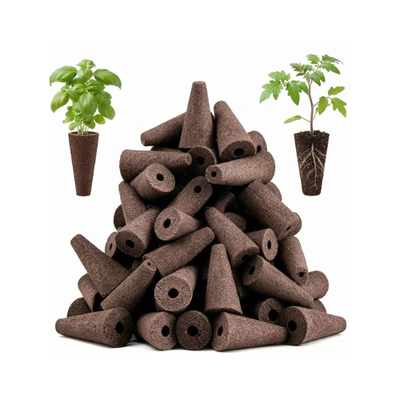
Seed germinating in a coir fibre plug

Successful germination in late summer

An autumn sowing is often decided in the first five days. The main pitfall in August and early September is the residual heat that blocks certain seeds — corn salad and spinach in particular — while causing others to bolt.

Place the seed tray in a cool, shaded spot until germination: a cellar, the north-facing side of the house, or even the bottom of a refrigerator for two days in the case of corn salad. As soon as the cotyledons appear, move the tray immediately into full light — otherwise the stems will draw out within hours.

Keep the grow medium moist but not waterlogged. A cube saturated with water will asphyxiate the radicle and encourage damping off. Our detailed advice can be found in the article on germination failure.

Transplanting a young lettuce plant into a basket filled with clay pebbles

From Pot to Transplanting

The right time to transplant can be read from the roots, not the leaves. As soon as two or three white roots emerge from the cube or pot, the plant is ready. Waiting longer at this time of year is costly, as a plant that becomes root-bound loses one to two weeks of growth it will never recover.

Transplant preferably at the end of the day, when the temperature difference between air and water is at its lowest. Push the cube down to the level of the collar, never above it, or you risk collar rot.

Space generously — around 20 to 25 cm for a winter hearting lettuce, versus 15 to 20 cm in spring. In cold weather, good airflow between plants greatly reduces downy mildew and grey mould, two problems far more common in autumn than in summer.

Grow medium bed and deep water culture compared in an aquaponic greenhouse Chelated iron (iron chelate) EDDHA 6%

Choosing the right support in cold weather

The choice of growing system matters considerably in autumn. A grow medium bed, with clay pebbles or gravel, offers useful thermal inertia and keeps the plant collar out of the water, which suits lamb's lettuce and low-growing rosette plants very well.

Deep water culture, on the other hand, keeps the roots in constant contact with the body of water. This is a real advantage as long as the pond stays warmer than the air, which is the case on most autumn nights. The drawback appears during prolonged frost, when root temperature drops with nothing to buffer it.

Many aquaponics growers combine both methods — deep water culture for lettuces and young shoots, grow medium for low-growing species and root crops. Our comparison of grow media details the differences in thermal behaviour.

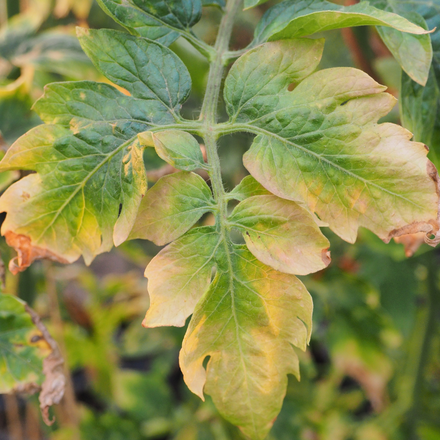
Yellowing lettuce leaf between the veins, a sign of iron deficiency

Nutrients as the water cools

A challenge specific to aquaponics emerges in autumn. The fish eat less, produce fewer waste products as a result, and the nitrifying bacteria slow down. The nutrient solution becomes depleted at exactly the moment your young plants are getting established.

The most visible symptom is yellowing between the veins of young leaves — a classic sign of iron deficiency, made worse by a rising pH when nitrification slows. An EDDHA-type iron chelate remains effective above pH 7, unlike DTPA, which loses efficacy earlier.

Monitor your pH more closely than in summer, and do not hesitate to supplement with iron and potassium. Our article on iron deficiency covers the careful dosages to observe in a system that houses fish.

Protecting your seedlings: fleece, greenhouse or indoors

There are three levels of protection, and they do not come at the same cost. Horticultural fleece, laid directly over crops or over small hoops, typically gains 2 to 3 °C and guards mainly against drying wind and light frosts. It offers the best value for an outdoor growing bed, provided it is removed on mild days to prevent persistent condensation.

A cold greenhouse or polytunnel is a step up entirely. It pushes the seedling window back by about a fortnight, allows harvesting throughout winter across much of France, and also shelters the pond itself. Its main drawback is stagnant humidity, which encourages mildew — hence the importance of ventilating whenever the outside temperature allows. Our guide to outdoor greenhouses and kits will help you size everything correctly.

The third option is to bring production indoors with a small artificially lit indoor system. This is the only approach that removes you entirely from day length constraints, at the cost of an electricity bill you need to be prepared for. It makes most sense for microgreens and herbs, whose value per kilogram offsets the cost of lighting.

Etiolated seedlings with spindly stems caused by lack of light

The mistakes that ruin everything

Etiolation comes first. Long, pale, sprawling stems are a sign that a tray has been left too long in a warm spot too far from the light. An etiolated seedling cannot be rescued — it is better to start again immediately than to transplant plants that will never heart up properly.

The second mistake is sowing too late in the belief that a shelter will compensate. A shelter gains degrees; it does not create light. Three weeks' delay in September typically results in two months' delay at harvest.

The third is more insidious: overwatering. In autumn, evaporation drops and a grow medium stays moist far longer than it would in August. Damping off thrives on this excess moisture — it can be recognised by a blackish constriction at the base of the stem.

Autumn sowing across Europe

The dates given correspond to a temperate oceanic climate, that of north-west France, Belgium or southern Britain. The underlying calculation applies everywhere; only the pivot date for shortening days shifts with latitude.

In southern Europe — Spain, Portugal, Italy or Greece — the window extends considerably. It becomes possible to sow lettuces through to October and harvest without interruption, with sunlight rather than frost being the limiting factor. Mediterranean growers even shift some summer sowings to September, since August heat is a more serious obstacle for them than November cold.

In the north and east — Germany, Poland or Scandinavia — everything compresses. The useful window closes as early as mid-September, and protection becomes essential rather than simply helpful. Scandinavian growers rely heavily on microgreens and artificial lighting, due to insufficient natural light between November and February.

Conclusion: a growing season that carries on

Sowing in autumn requires no specialist equipment or complex techniques — simply a willingness to accept a different pace. Plants grow slowly, harvests spread out over time, and the aquaponics grower intervenes far less than in summer. It is probably the most restful period of the year in a well-prepared system.

If there is one thing to take away, it is to sow earlier than instinct suggests. The sowing date matters more than the variety chosen, and a mid-August sowing almost always succeeds where an October sowing demands shelter and a great deal of patience.

Finally, keep a few pots in reserve. A tray of lamb's lettuce and rocket sown every fortnight until mid-October ensures fresh leaves through to spring, with minimal effort and a grow bed that is never left empty.

Sources

Cornell University CEA Program, Cornell Controlled Environment Agriculture Hydroponic Lettuce Handbook, Sets the target daily light integral for lettuce, the air and water temperatures, and the crop cycle duration used as reference points when days shorten.

MDPI Horticulturae, Spinach Responds to Minimal Nutrient Supplementation in Aquaponics by Up-Regulating Light Use Efficiency, Photochemistry, and Carboxylation, Identifies iron as the limiting factor for spinach in closed-loop aquaponics, supporting the section on deficiencies when nitrification slows.

MDPI Water, Characterizing Nutrient Composition and Concentration in Tomato-, Basil-, and Lettuce-Based Aquaponic and Hydroponic Systems, Quantifies the gap in magnesium, calcium, and nitrate nitrogen between aquaponics and hydroponics, along with its effect on lettuce yield.

MDPI Agronomy, Nutrient Management in Aquaponics: Comparison of Three Approaches for Cultivating Lettuce, Mint and Mushroom Herb, Provides nitrate levels in aquaponic lettuces relative to the European limit, and the water loss during storage cited in the frequently asked questions.

Oklahoma State University Extension, Soilless Growing Mediums (HLA-6728), Compares porosity, water retention, and pH of soilless growing media, as the basis for choosing between a grow bed and deep water culture in cold weather.

Frequently asked questions

Yes, as soon as a windowsill is no longer sufficient. Controlled-environment production benchmarks target a daily light integral of around 17 mol per square metre per day for lettuce — a level that an October windowsill rarely reaches. A horticultural light bar switched on for twelve to fourteen hours a day above the trays prevents etiolated seedlings and shortens the propagation phase.

From a light deficit in the very first hours after germination. Move the light source closer and lower the temperature slightly. Etiolation stops immediately, but it can never be reversed.

This is feasible for large seeds, but far less reliable for small ones. The real obstacle is the surface of the bed, which dries out between two flooding cycles.

  • Fine seeds such as lamb's lettuce or lettuce often dry out before they have produced a radicle
  • A cube or pot maintains constant moisture and can easily be moved into shade during germination
  • Direct sowing remains worthwhile for rocket sown densely and harvested young

In autumn, using a seedling tray followed by transplanting remains the most reliable approach.

Measurements published on aquaponic lettuces grown with varying levels of supplementation place nitrate content between 1500 and 3500 mg per kilogram, well below the European limit of 4000 mg per kilogram. The autumn context actually works in the opposite direction to the usual concern, as the nutrient solution becomes depleted when fish eat less. The real risk in the cold season is deficiency, not excess.

Not systematically. Warmer water benefits nitrifying bacteria and fish above all, whereas lettuce manages perfectly well in water kept below 25 °C. Heat if your species requires it; otherwise, simply accept slower growth and longer cycles.

On balance, yes — provided you harvest early in the morning. A study tracking aquaponic lettuces stored for two weeks recorded water loss of between 21.8 and 24.6 % depending on handling, highlighting how much rapid post-harvest cooling matters. A whole head, cut at the base and unwashed, keeps significantly better than individual detached leaves.

Read next

Preparing your aquaponic system for autumn

Preparing your aquaponic system for autumn

Autumn is the season that determines the health of your system throughout winter, as the water cools faster than the aquaponist's habits tend to change. Here is how to manage this transition without stressing

Read the article
Aquaponics and Summer Holidays

Aquaponics and Summer Holidays

You're going away for two weeks in July and your aquaponics system will be running without you : this thought rightly makes you anxious, because heatwaves, evaporation, and fish feeding raise practical questions. Good

Read the article
Recognizing deficiencies in aquaponics

Recognizing deficiencies in aquaponics

In aquaponics, plants can show signs of weakness even when the system appears balanced. Pale leaves, slowed growth, or deformities are often linked to subtle yet critical micro-deficiencies. These deficiencies involve essential elements such

Read the article
A practical calendar for success in aquaponics

A practical calendar for success in aquaponics

In aquaponics, the success of a season depends mainly on good upstream calendar management : periods of sowing, planting, ramp-up… and times when it is better not to intervene. Unlike a traditional vegetable garden,

Read the article
Controlling pests in aquaponics

Controlling pests in aquaponics

Aquaponics has a reputation for being a clean, ecological, and naturally protective method of cultivation. However, like any living system, it can be affected by pests : aphids, gnats, mites, invasive algae, or unwanted

Read the article
Plant deficiencies in aquaponics

Plant deficiencies in aquaponics

Aquaponics relies on a precise balance between fish, plants and bacteria. When that balance is disrupted, plants can quickly show signs of nutritional deficiencies, even in a system that appears stable. Understanding the cause

Read the article