Aquaponics lettuce : preventing bolting in summer

17 May 2026
Salades en aquaponie : éviter la montée en graine en été

Your aquaponic lettuces suddenly start bolting upwards, their leaves turn bitter, and a flower stalk appears : this is bolting, an almost systematic phenomenon in July and August. Good news, understanding its three causes and applying five simple solutions guarantees you a tender and flavorful harvest all summer long.

Understanding bolting

Bolting is a biological survival reflex in lettuce. When the plant perceives severe stress, it switches to reproduction mode : it shoots up, flowers, and produces seeds before dying. In aquaponics, three factors converge in mid-summer to trigger this alarm signal : air temperature, day length, and the water temperature of the pond.

This guide first explains the mechanism and the three causes in aquaponics, then details five concrete solutions : choosing the right varieties, shading the system, cooling the water, staggering sowings, and switching to alternative leafy greens during heatwaves. You will also find early signs that indicate bolting so you can react in time.

Bolting, a survival reflex

Lettuce is a biennial plant whose full cycle lasts two years : leaves in the first year, bolting in the second. In cultivation, it is harvested before it flowers, but strong heat stress compresses this cycle.

The plant then receives a hormonal signal that shifts its resources from the leaves to the flower stalk and seeds. This is called bolting. Once initiated, it is almost impossible to stop, hence the importance of acting upstream.

Biologically, auxin and gibberellin orchestrate this program change. Understanding this mechanism helps to grasp why heat, day length, and water stress are the real culprits.

Heat above 22°C

Above 22 to 25 °C continuously, most lettuce varieties begin to receive stress signals. Above 30 °C for several days in a row, bolting becomes almost inevitable for sensitive varieties.

This threshold concerns the ambient air but also how the plant perceives it at the leaf level. A closed greenhouse in mid-July can easily reach 35 °C in the afternoon, explosive conditions for your lettuces.

Therefore, summer system maintenance must include careful temperature monitoring, ideally with a maximum-minimum thermometer to detect nocturnal peaks.

Long days and warm water

Lettuce is sensitive to photoperiod. Beyond 14 hours of light per day, many varieties interpret this signal as an end of season and switch to flowering. This is exactly the case from mid-June to mid-August in Europe.

Combined with heat, the effect is devastating. In aquaponics, a third often-ignored factor is added: the water temperature of the tank. Beyond 26 °C, the roots undergo stress that amplifies the bolting signal.

This triad of heat + light + warm water explains why lettuces that grew perfectly in May suddenly bolt in July.

Recognizing early signs

Before the flower stalk is visible, several signs indicate that bolting is underway. The heart of the lettuce elongates vertically, the central leaves appear more taut and upright, and cutting releases a more abundant white latex than usual. The leaf also begins to lose tenderness and a bitter taste appears.

If you spot these signs, two options : harvest immediately even if the head is not fully formed, or try to slow down the process by quickly shading and cooling the water. The first option is almost always the most effective, because once initiated, bolting resumes as soon as stressful conditions return.

Choose tolerant varieties

The first and most effective lever is genetic. Batavian lettuces like Carmen, Canasta, or Kamikaze, romaine lettuces like Romea or Jericho, oak leaf lettuces, and Lollo Rossa are much more heat-resistant than classic butterhead lettuces.

In our catalog, Reine de Mai is an old variety that resists early heat very well. The Gloire du Dauphiné is better suited for spring and autumn sowing.

Avoid winter lettuces like Lamb's Lettuce or Winter Butterhead for summer sowing : they bolt in two weeks as soon as the heat hits.

Shade to gain 5 °C

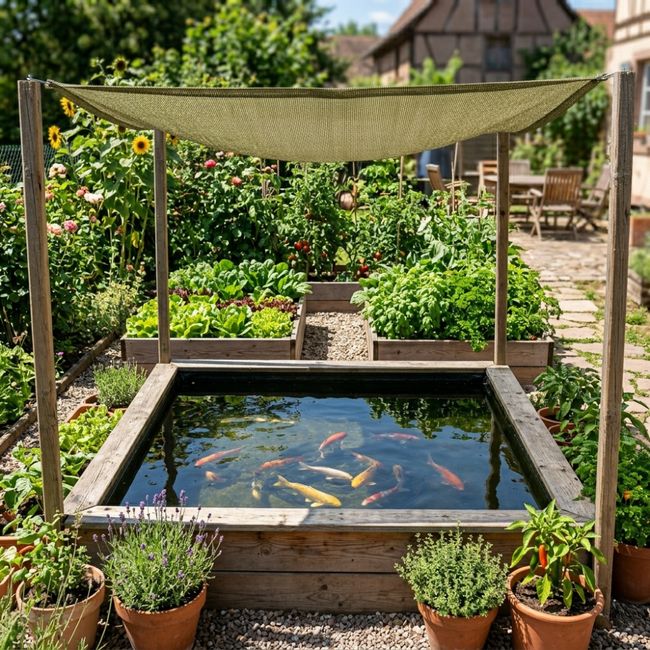
A shade net with a 50-80% density stretched over the system reduces the air temperature by an average of 5 to 8°C, and the surface water temperature by 2 to 3°C. This has an immediate effect on lettuce stress.

Place the net on four wooden stakes or directly on your greenhouse structure. Opt for breathable nets that let some light through ; otherwise, you will also hinder growth.

A natural and aesthetic alternative : grow hops, beans, or passionflower on a trellis placed along the southern edge. The shade becomes living, productive, and removable out of season.

Cool the pond water

The pond water heats up slowly but stays warm for a long time : it's what keeps the roots warm even at night. A thermal cover placed over two-thirds of the surface reduces direct solar radiation by 70%.

For occasional heatwaves, add a few frozen water bottles floating in the pond, never in direct contact with the fish. The water temperature will drop by 2 to 3 °C in a few hours.

Proper summer maintenance prevents most bolting. Stable water around 22-24°C is ideal for lettuce as well as for the majority of aquaponics fish.

Stagger plantings

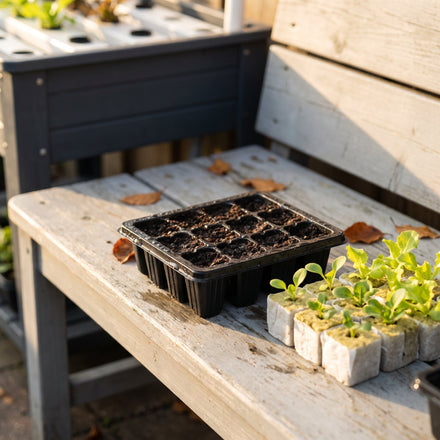
Rather than a single massive sowing in spring, make 4 to 5 waves of small sowings, spaced two weeks apart, from April to the end of August. You will harvest continuously and limit the risk of an entire wave going to seed while you are on vacation.

In aquaponics, growth is significantly faster than in open ground : count 4 to 5 weeks from germination to harvest, compared to 6 to 8 weeks in soil. Take advantage of this shortening to multiply the cycles.

Get inspiration from our guide on spring sowing to calibrate your successive waves smoothly.

Full-sun alternatives

When July and August are really too hot, temporarily abandon lettuce and switch to truly heat-tolerant leafy greens. New Zealand spinach, purslane, amaranth, chard, and Malabar spinach all handle the heat beautifully.

Basil is also a valuable addition : it loves the heat and remains productive all summer. In terms of taste, these alternatives offer true culinary diversity and a refreshing change for the palate.

Resume your classic lettuces from mid-August, when nights become cool again. Our guide to 15 plants details the best species season by season.

A matter of timing and choice

Bolting is not inevitable. By carefully selecting resistant varieties, providing shade from late June, cooling the pond water, staggering sowings every fortnight, and switching to alternative leafy greens during heatwaves, you can ensure a tender and flavorful harvest nine months out of twelve.

Regularity and anticipation are more important than a variety's raw resistance. After two seasons of practice, you'll know exactly when to sow what to never again see your lettuces bolt uncontrollably.