Successfully sowing seeds in spring aquaponics

22 January 2026
Réussir les semis de printemps en aquaponie

The return of spring marks a key stage in aquaponics. While sowing may seem simple, its success depends on a precise balance between preparation, timing, and understanding of living organisms. Water temperature, system maturity, crop selection : every detail counts to ensure vigorous plants and a productive season. This article provides you with the keys to approaching spring sowing methodically and confidently.

What changes in aquaponics this spring


In spring, everything starts up again : the fish become more active and the bacteria regain their strength. The trap is trying to rush planting before the system has regained its absorption capacity. In aquaponics, a system that isn't "ready" doesn't always result in immediate failure : it manifests as small, accumulating signs (cloudy water, nitrites appearing, uneven growth, pale plants).

The key is to understand that sowing and production are not the same phase. Germination requires simple stability (temperature, humidity, light). Aquaponic production requires more complex stability (biofilter, oxygen, circulation, mechanical cleanliness). Mixing the two too early is the number one cause of early-season failures.

Choosing the right crops to start with

In aquaponics, leafy greens are ideal : they recover quickly, stabilize nitrates, and allow for short crop rotations (thus enabling rapid learning). Salads, herbs, arugula, spinach, chard, and microgreens are generally the best suited to less-than-perfect conditions.

Aromatic herbs like basil, parsley, coriander, or chives work very well, especially for adding density without overcrowding. They are also useful because they allow you to fill the growing space while preparing summer seedlings.

Crops that require more heat (tomatoes, peppers, eggplants) shouldn't be avoided, but rather managed differently : they should be started separately under optimal conditions, and then integrated into the system only when the environment is suitable. The problem isn't the plant itself, it's the timing.

Sow separately, then integrate.

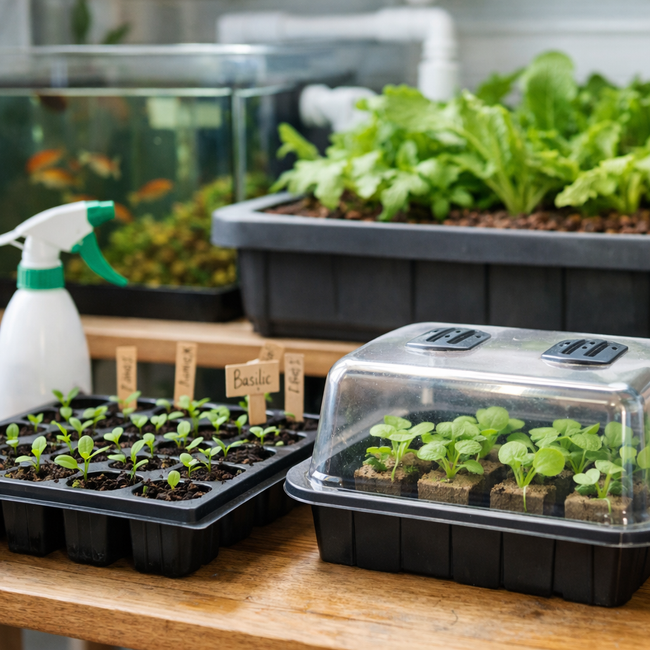
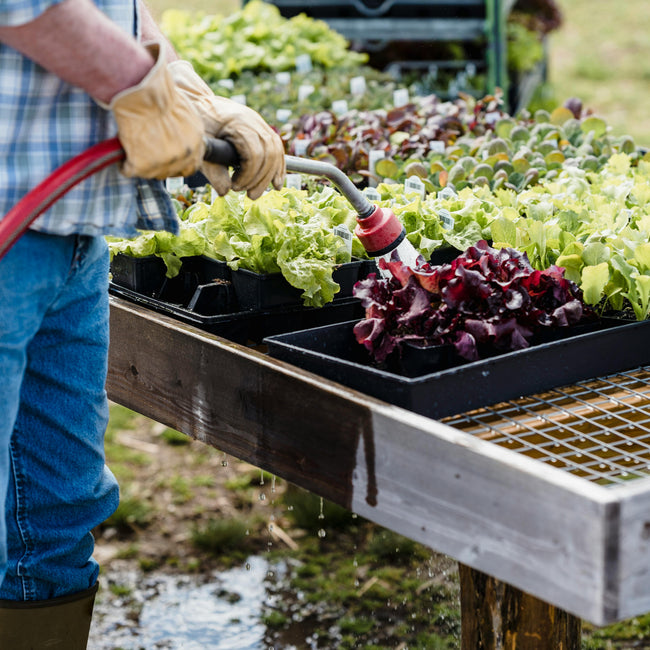
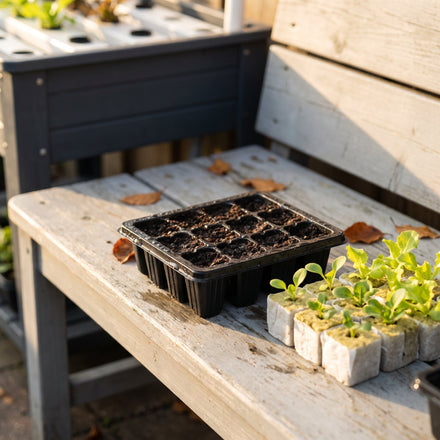
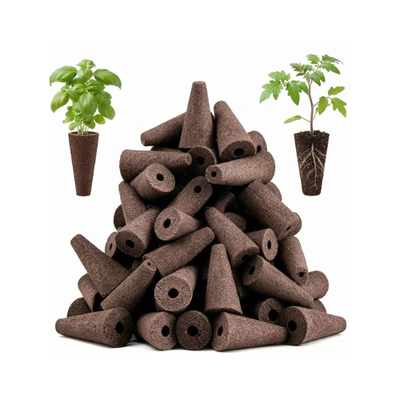
The best strategy in aquaponics is to treat the seedling area as an independent “nursery.” Seeds are started in plug trays, micro-blocks, or clean cubes, with carefully controlled watering. This results in uniform seedlings, allowing you to transplant at the right time instead of introducing uneven plants into the system.

The ideal transplanting stage is generally 2 to 4 true leaves with visible roots. If the plant is too young, it suffers from flow rate, temperature fluctuations, and light intensity ; if it is too old, it may restart poorly because it has already “settled” into a different environment.

The critical point in aquaponics is cleanliness : if you start seedlings in pots with soil or potting mix, you must avoid introducing fine particles into the water. Gently rinsing the roots (without damaging the root hairs) before placing the plant into a grow basket or substrate helps prevent cloudy water and pipe clogging.

Choosing growing media

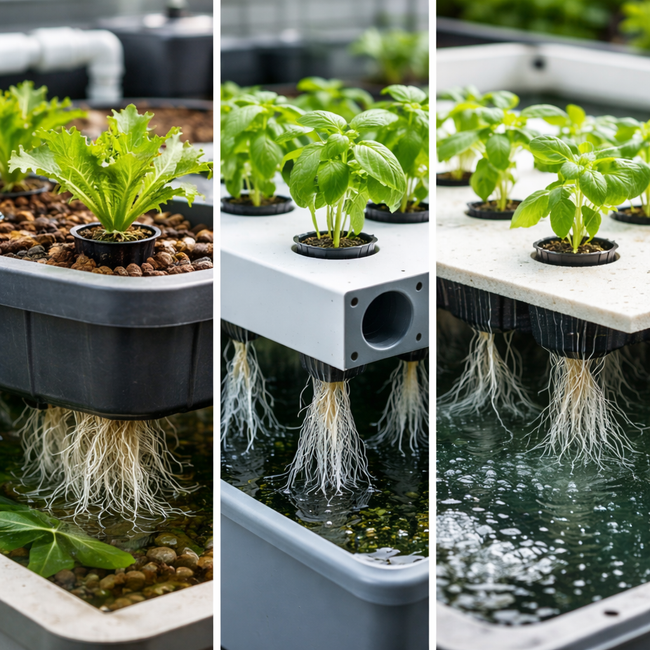
In a container with a substrate (clay pebbles, suitable pozzolana), establishment is often easier : the plant anchors itself, the moisture level remains stable, and the system is more forgiving of minor mistakes. It's one of the most beginner-friendly formats for spring sowing.

In NFT (gutters), the seedlings must already be well-rooted. Otherwise, they will dry out, float, or stagnate. NFT is very efficient, but more demanding in terms of the transplanting stage and the consistency of the flow rate.

In rafts/DWC systems, root oxygenation becomes the number one parameter. If the water lacks oxygen at the start, the roots turn brown and growth slows. It's an excellent system for foliage, provided it's stable.

Secure the system before densifying

1. Circulation avoids dead zones. A dead zone is an area where particles settle, oxygen levels drop, and organic matter decomposes poorly. In spring, this is typically what causes a system to become turbid.

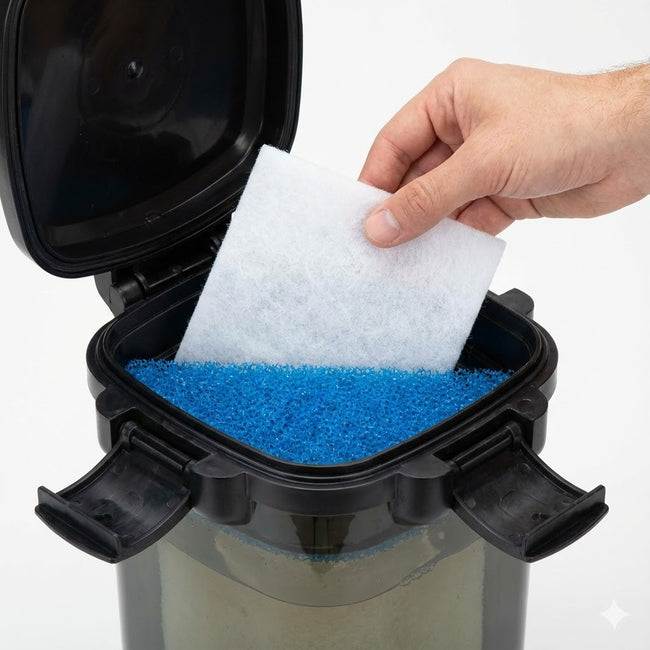
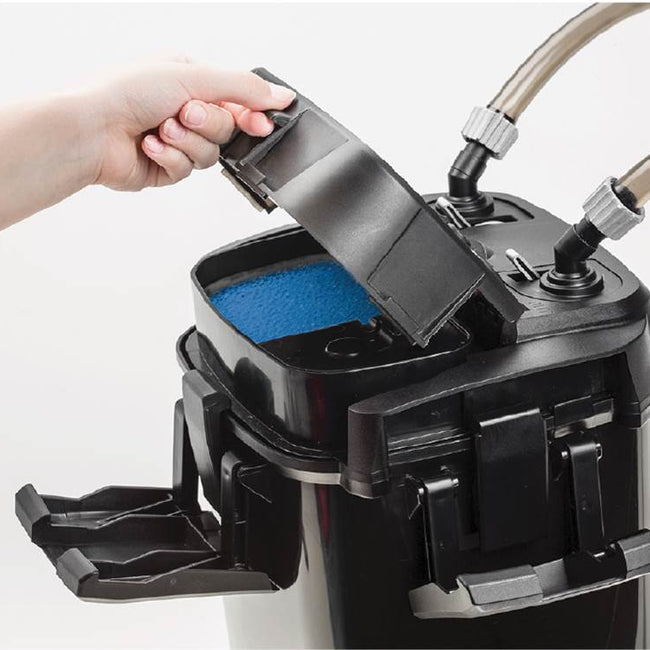
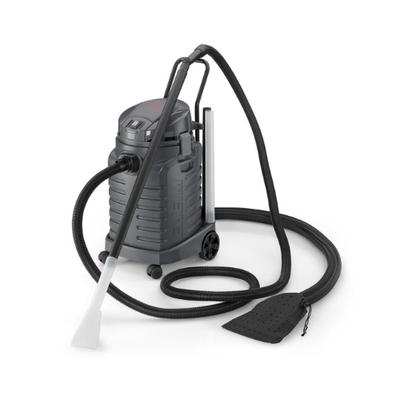
2. Mechanical filtration is your "bumper" at the start of the season. Transplanting, handling, small winter deposits: it all ends up in the water. Effective mechanical filtration captures solids before they clog the biofilter. This is precisely when a filter foam is useful : it improves water clarity and protects the biological filtration, without complicating the system.

3. Finally, the biofilter must be ready to handle the increased load. If you restart the system quickly while the biological activity is slow, you risk the appearance of nitrites. Here again, spring is achieved through gradual implementation.

3 tests that avoid unpleasant surprises

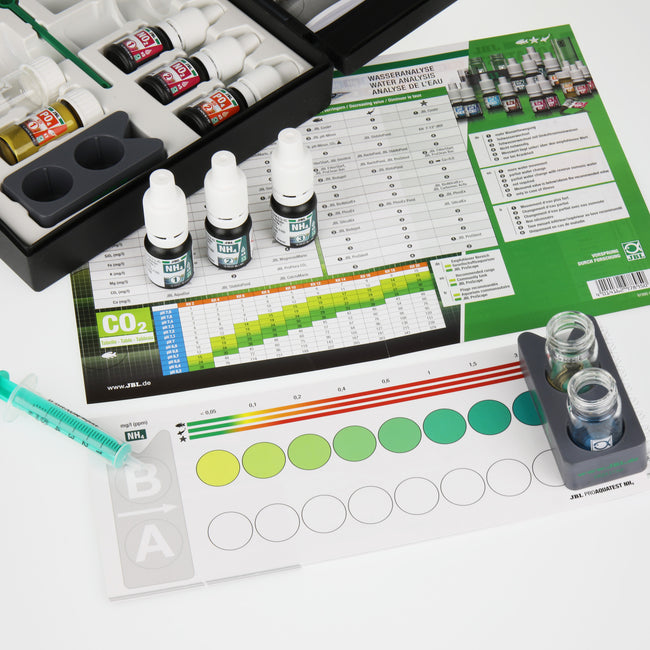
You don't need to test every day, but you should test at the right time : after a major transplant, after increasing feeding, after cleaning, or if you observe a visual change (cloudy water, lethargic fish, fading plants). Three parameters are particularly useful in spring :

  • Nitrites (NO2) : the most sensitive indicator of a biofilter that is not keeping up.
  • Ammonia/ammonium (NH3/NH4) : useful if you have any doubt about the charge or filtration.
  • pH : essential for bacterial stability and nutrient assimilation.

The method that makes plants recover

A successful transplant is visible very quickly : the plant stays upright, the leaves remain firm, and new roots begin to form. When a plant stalls, it is almost always due to inconsistent growing conditions.

The right approach is to limit stress : transplant at the end of the day or when light is less intense, avoid excessive flow rates on very young plants, and maintain consistent moisture around the roots during the first few days. In NFT systems, even brief drying at the start can have rapid negative consequences.

Do not transplant everything at once. In aquaponics, transplanting in small batches allows you to observe how the system responds. It is a simple strategy that helps prevent “domino effects” (cloudy water → overloaded filtration → nitrite spike → fish stress).

Solving common problems

If the water becomes cloudy after a transplanting session, the cause is very often mechanical. Address the issue first with simple actions : clean the mechanical filtration system (without "sterilizing" the biofilter), and improve circulation. A suitable pump is often the difference between a system that gets clogged and one that remains stable. External pumps are typically used to ensure regular circulation in aquariums and aquatic systems.

If the plants are stagnating, you should first look at the conditions before looking at the nutrients : water that is too cold, insufficient light, plant that is too young, damaged roots, or installation that is not adapted to the system (NFT too early, DWC without oxygen), are potentially at the root of the problem.

If your plants are yellowing, start by checking the pH and stability. In aquaponics, many "deficiencies" are actually nutrient blockages. Adding a supplement without checking the pH is often like piling solutions on top of an untreated problem.

A planting calendar for aquaponics

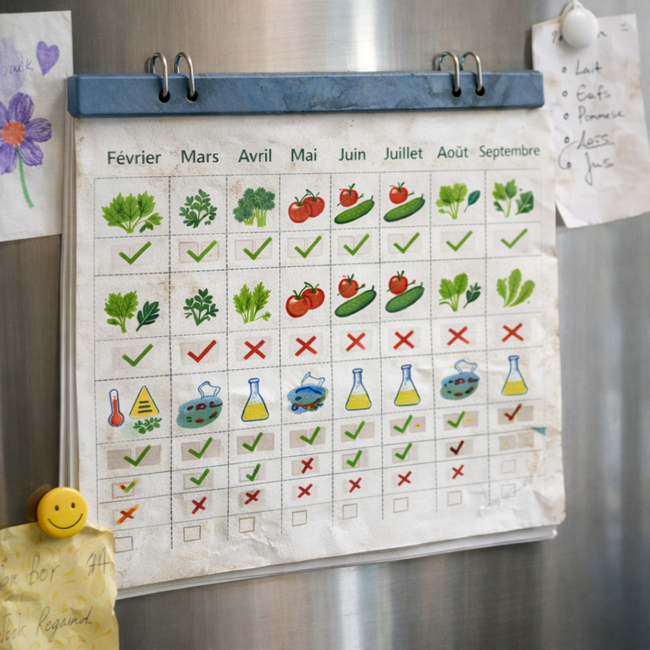
Editing a calendar helps to synchronize your actions according to temperature, biofilter activity level and crop type, to avoid sowing demanding plants too early, transplanting at the wrong stage, or overloading the system when it is biologically fragile.

We've published a dedicated article, complete with a month-by-month calendar (February to October), the crops best suited to each period, and the checkpoints to verify before accelerating. If your goal is to plan the season and achieve consistent harvests, this calendar will be the perfect complement to this guide.

Successful sowing = a system managed at the right pace

Successful spring sowing in aquaponics isn't about "sowing early" at all costs. It's about sowing cleanly, transplanting at the right stage, gradually increasing the planting density, and protecting your ecosystem with good circulation and effective mechanical filtration. When the timing is right, you naturally avoid cloudy water, nitrites, deficiencies, and stagnant plants.

And that's where aquaponics becomes really interesting : once the system is stable, you can chain rotations, produce earlier than a classic vegetable garden, and maintain a regularity that is difficult to achieve in open ground.