What to grow hydroponically throughout the seasons ?

14 May 2026
Système hydroponique mixte avec laitues, basilic et fraisier en culture toute l'année

Hydroponics is not entirely independent of the seasons. While soilless cultivation allows you to extend harvests and grow indoors all year round, light, temperature, and day length continue to influence the rhythm of your plants. Discover which varieties to prioritize in spring, summer, autumn, and winter, how to adapt your setup to the conditions of each season, and our practical tips for continuous cultivation without downtime, from March sowing to winter harvests.

Hydroponics, season by season

Although hydroponics largely frees itself from the constraints of soil and weather, it does not completely free itself from the seasonal cycle. Available light, ambient temperature, humidity, and day length continue to influence plant growth, even in indoor LED cultivation.

This guide reviews, season by season, what you can successfully grow hydroponically, then presents continuous crops that follow one another throughout the year. You will find specific varieties, precise parameters to adjust, and methods for uninterrupted harvesting.

Seasonality exists in hydroponics

Artificial lighting doesn't replace everything. Even with horticultural LEDs, hydroponic production remains influenced by four factors related to the outdoor environment : ambient temperature, room humidity, available photoperiod, and nutrient solution temperature.

In summer, the water in a closed greenhouse sometimes rises above 26°C, which suffocates the roots and promotes diseases. In winter, conversely, a solution below 14°C significantly slows down the absorption of nutrients by plants.

Natural light still plays a role, even as a supplement. A south-facing window provides free photosynthetic energy from March to September, which saves on LEDs and better follows the seasons.

Choosing crops according to the calendar means playing with these variations rather than against them.

Spring, the season of new beginnings

Spring marks the return of bright light and moderate temperatures between 14 and 22°C. These are ideal conditions for starting leafy greens in hydroponics, as they appreciate these fluctuations and grow quickly.

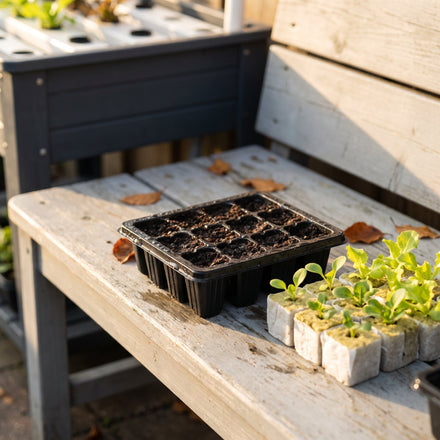
You can sow May Queen lettuce, basil, spinach, mint, and cilantro as early as March. Allow four to six weeks for the first edible leaves.

It's also the time to start everbearing strawberries from cuttings and prepare summer plants (tomatoes, cucumbers) for pre-germination, to transfer them as soon as the solution reaches 20°C.

Keep a close eye on humidity during mild and damp days. Excess humidity above 75% can encourage powdery mildew on young, still-fragile plants.

Summer, make way for gourmet crops

Summer ushers in the reign of solanaceae and cucurbits. Tomatoes, peppers, chilies, eggplants, cucumbers, and zucchinis thrive when the nutrient solution stabilizes between 20 and 22°C.

Grappoli cherry tomatoes, Black Krim, or Jupiter are particularly suitable for substrate systems (Dutch Bucket, large NFT). Allow four to five months between sowing and first harvest for indeterminate varieties.

Critical points in summer are solution oxygenation, shading for south-facing tanks, and combating evaporation. Permanent circulation and regular water top-ups maintain balance.

During the hottest hours, air circulation in the room or greenhouse limits water stress for plants in full production.

Autumn, yield and freshness

Autumn offers an ideal compromise for leafy vegetables. Temperatures drop to between 12 and 20°C, pests become scarcer, and plants benefit from still decent light until October.

Rocket, kale, Swiss chard, parsley, and autumn lettuces yield their best harvests during this period. The leaves remain tender longer, without bolting as they do in mid-summer.

For those who want to extend the growing season, it's also a good time to plant lamb's lettuce and hardy spinach, which grow steadily until the first frosts.

Remember to gradually lower the artificial photoperiod to 12 to 13 hours to mimic the natural decrease in light. This prevents premature bolting of long-day sensitive species.

Winter, the asset for indoor control

Winter reveals the true advantage of indoor hydroponics : producing while outdoor vegetable gardens are dormant. With appropriate LED lighting and a room kept between 16 and 22°C, you can harvest all winter long.

Cambrai Lamb's Lettuce, winter lettuces, common herbs, and resilient spinach can be grown effortlessly from November to February.

Microgreens become especially valuable this season. Their short 7 to 14-day cycle offers a concrete alternative to out-of-season store-bought vegetables, with remarkable nutritional density.

Be sure to compensate for the naturally low photoperiod with lighting for 14 to 16 hours a day, at 200 to 300 µmol/m²/s for leafy greens.

Adjust EC, pH, and Photoperiod Seasonally

Optimal parameters vary from season to season, even in controlled indoor cultivation. Systematically adjusting them significantly improves yields.

In spring, aim for an EC of 1.2 to 1.6 mS/cm for leafy greens, a pH of 5.8 to 6.2, a solution temperature of around 18 to 20°C, and a photoperiod of 14 to 16 hours. Young plants start strong with these gentle values.

In summer, fruiting plants demand more. Increase EC to between 1.8 and 2.6 mS/cm, maintain pH at 5.8 to 6.3, keep the solution below 22°C with an air pump, and maintain a total photoperiod of 14 to 16 hours (natural light plus LED if needed).

In autumn and winter, lower the EC to 1.0 to 1.4 mS/cm for slow-growing leafy greens, keep the pH at 5.8 to 6.2, and accept a solution temperature of 16 to 18°C. It is imperative to maintain 12 to 14 hours of light under LED to prevent bolting and stagnation.

Continuous aromatic plants

Aromatic herbs are the undisputed champions of continuous production in hydroponics. Short cycles, remarkable regrowth capacity, and moderate nutrient requirements mean they keep producing indefinitely.

Dark Opal basil, mint, chives, parsley, cilantro, and oregano lend themselves to weekly harvests by simply pinching the stems above a leaf. The plant grows back even stronger after each cut.

In a stable indoor system, expect four to six months of production per basil plant, and more than a year for mint or chives. Yields far exceed those of soil cultivation.

Just watch out for damping-off disease in young seedlings, the main pitfall when humidity remains high and the solution is poorly oxygenated at the beginning of the cycle.

Harvesting using the "cut & come again" method

The "cut and come again" method involves harvesting the outer leaves of a plant without pulling up the entire plant. The intact heart regrows for several successive cycles from the same root.

For an oak leaf lettuce or a Gloire du Dauphiné, you can harvest five to seven outer leaves per week without weakening the plant. Three to four complete cycles are common before replacement.

Cut cleanly with scissors 2 cm from the heart, never by pulling. The plant recovers in 7 to 10 days, and each new shoot benefits from the already developed root system.

This technique is remarkably suitable for arugula, kale, bok choy, and Swiss chard. It can easily double the total yield from the same spot compared to a single harvest.

Ever-bearing strawberries all year round

Ever-bearing strawberry plants, with continuous flowering, are perfectly suited for hydroponics. Some varieties produce from May to October outdoors, and even continuously indoors under LED lights.

The compact root system fits into 8 to 10 cm baskets, in NFT or inclined gutter systems. Expect 70 to 100 g of strawberries per plant over a full cycle, with 8 to 10 plants per linear meter.

The nutrient solution must remain balanced in potassium for sweet fruits. An EC of around 1.4 to 1.8 mS/cm yields excellent results, with a stable pH of 5.8.

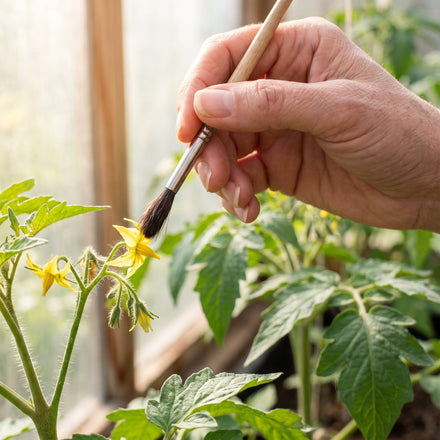
Indoors, plan for manual pollination with a soft brush, without bees, or generous air circulation during flowering to ensure fertilization of the flowers.

Long-season cherry tomatoes

Indeterminate cherry tomato varieties lend themselves to eight to ten-month cycles in indoor hydroponics. The plant grows continuously, produces in successive clusters, and fruits as long as there is sufficient light.

Plant in pure coco fiber in 10 to 20-liter Dutch Buckets. The substrate retains just enough moisture without drowning the roots, and facilitates vertical development.

A vertical trellising with stretched string, with weekly unhooking of emerging clusters, allows growth to be managed over three to four meters in height. Pinch off suckers as they appear.

Maintain a progressive EC of 2.0 to 2.8 mS/cm during fruiting, with a photoperiod of 14 to 16 hours under LEDs if natural light decreases.

Microgreens in rapid rotation

Microgreens are the most profitable crop per square meter in hydroponics. With a cycle of only 7 to 14 days, minimal equipment, and no seasonal dependency once under stable LED lighting.

Radish, broccoli, mustard, sunflower, peas, arugula, and kale produce their cotyledons in less than two weeks. Harvest with scissors when the first true leaves appear just above the cotyledons.

A tray or sprouting jars can yield 200 to 400 grams of fresh sprouts per harvest. Several trays staggered every three days are sufficient for consistent weekly production all year round.

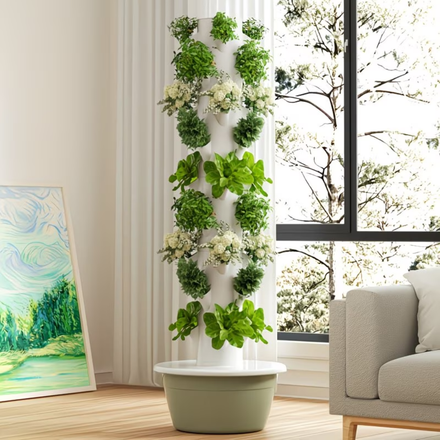
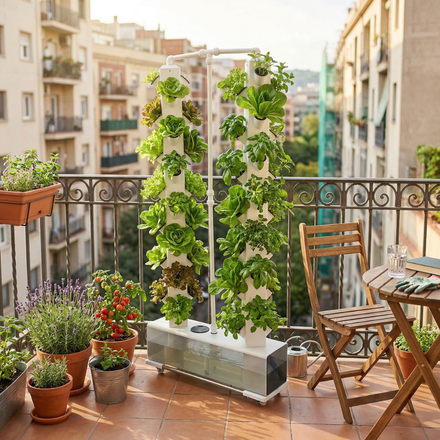
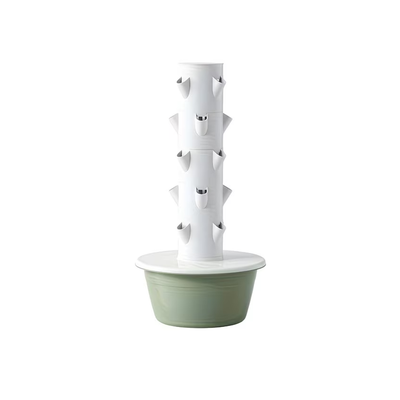
The principle of a vertical hydroponic tower also applies to microgreens, by stacking multiple levels of trays under LEDs to increase production density.

Growing at the right pace

Hydroponics opens the door to year-round production, provided you respect the plants' calendar rather than forcing their growth out of season. Each family of crops has its ideal window, and knowing how to alternate cool-season leafy greens, summer fruits, and continuous microgreens gives you access to concrete food autonomy.

The secret lies in regularly adjusting EC, pH, and photoperiod parameters throughout the months. With a little observation and the right selection of varieties, your hydroponic setup becomes a living source of fresh salads, herbs, and fruits twelve months a year.