How does a hydroponic grow tower work ?

11 May 2026
Comment fonctionne un tour de culture hydroponique

Vertical column hydroponics, which originated in NASA laboratories and was then popularized by EPCOT in 2005, allows growing up to 60 plants in 0.5 m² of ground space with 90% less water. Understanding the precise mechanics of runoff, root oxygenation, and pH/EC parameters is key to transforming this system into a reliable production machine.

Vertical Growing : How Does It Really Work ?

Urban gardeners often lack ground space, and traditional horizontal solutions show their limitations indoors. Meanwhile, technology from space agriculture is making its way onto balconies and into kitchens : the hydroponic growing tower. It stacks plants in a column, feeds their roots with a thin stream of enriched water, and allows for 30 to 50% accelerated growth compared to soil.

In this guide, you will discover step-by-step how a hydroponic tower actually works : its water cycle, its components, its variants (NFT or aeroponics), the parameters to monitor, the plants to prioritize, and the pitfalls to avoid. To put the approach into its general context, our complementary article details the foundations of soilless cultivation.

From NASA to your balcony

Vertical aeroponics was born in NASA laboratories in the early 1990s, with a specific goal : to produce fresh food during long space missions, where every liter of water and every cubic meter counted. The principle was quickly patented.

In 1996, Disney acquired a license and entrusted horticulturist Tim Blank with the development of a system open to the public, installed in the Living with the Land pavilion's greenhouse at EPCOT. Once proven, Blank left Disney in 2005 to found Future Growing and launch the very first domestic Tower Garden.

Twenty years later, the hydroponic tower market is booming, driven by urban agriculture, the quest for food autonomy, and pressure on water resources.

The complete water cycle

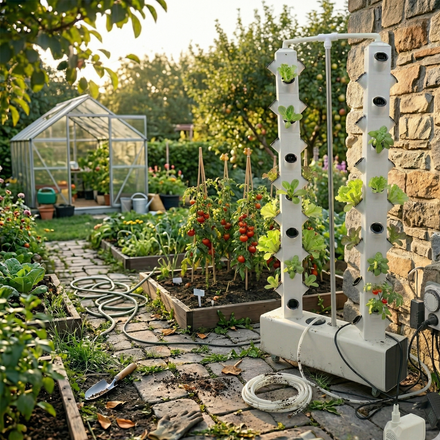
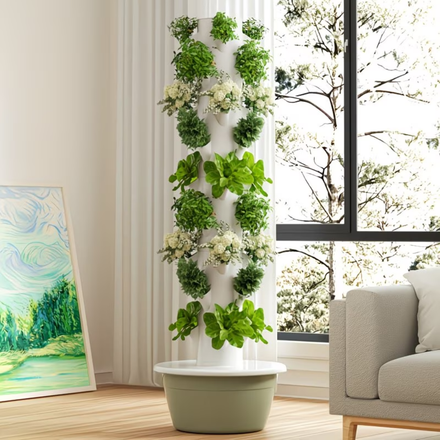
The system is based on an elegantly formidable closed loop. At the base, a 30 to 80-liter reservoir holds the nutrient solution and houses a submersible pump. This pump propels the water to the top of the column via an internal vertical tube.

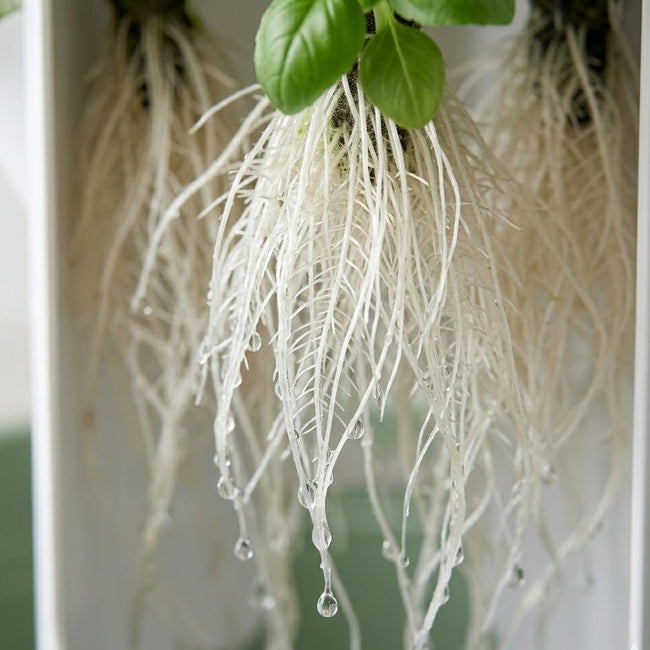
Once at the top, the water passes through a diffuser or a perforated ramp, then flows by gravity along the inner walls of the central tube. As it descends, it bathes the roots hanging in the column, depositing nutrients and oxygen.

The excess returns to the reservoir and immediately restarts the cycle. The system consumes less than 5% of the water of an in-ground crop because nothing evaporates into the soil and nothing is leached deeply. A timer can program the pump in short cycles to save electricity.

The anatomy of a rotating tower

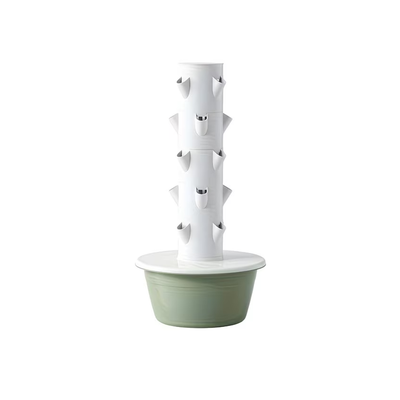
Five components are enough to transform a simple column into a productive system. The reservoir at the base acts as the hydraulic brain. The submersible pump plays the role of the heart, with one non-negotiable requirement : its discharge height (Hmax) must exceed the height of the tower by at least 50 cm.

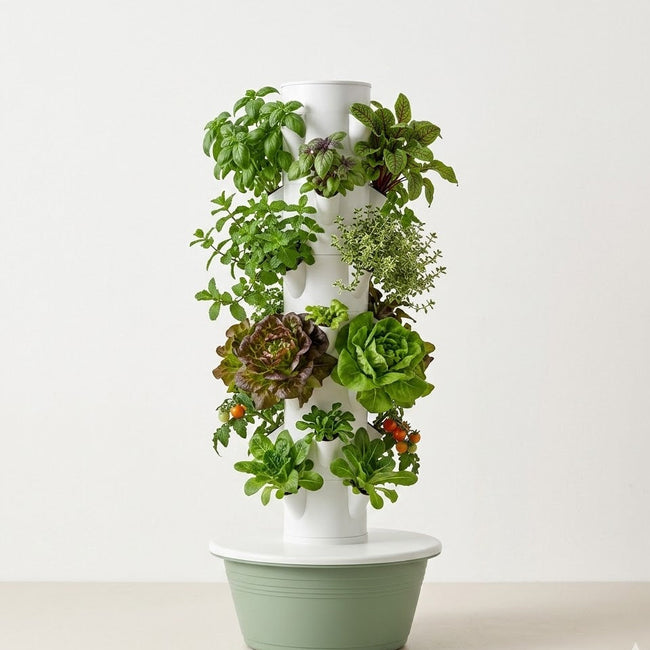
The column itself is usually made of food-grade PVC or opaque white plastic to block light and prevent algae growth. The net pots are staggered around the perimeter, spaced 15 to 20 cm apart to avoid mutual shading.

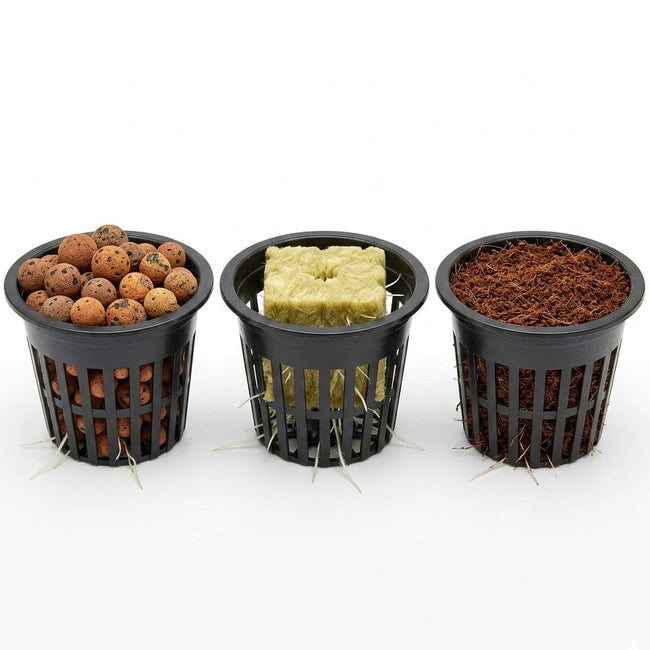
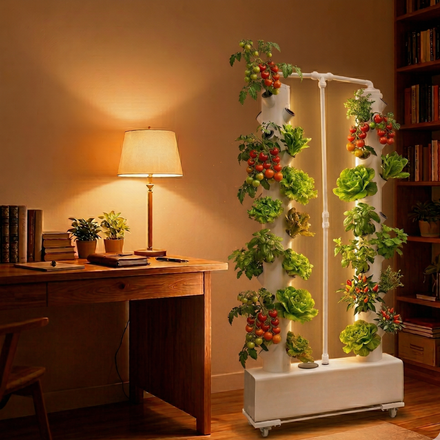
The substrate (clay pebbles, rockwool cube, sponge, or coconut fiber) holds the plant in place without providing nutrients : all nourishment comes from the nutrient solution. Our 9-tier tower perfectly illustrates this compact architecture.

NFT or tower aeroponics ?

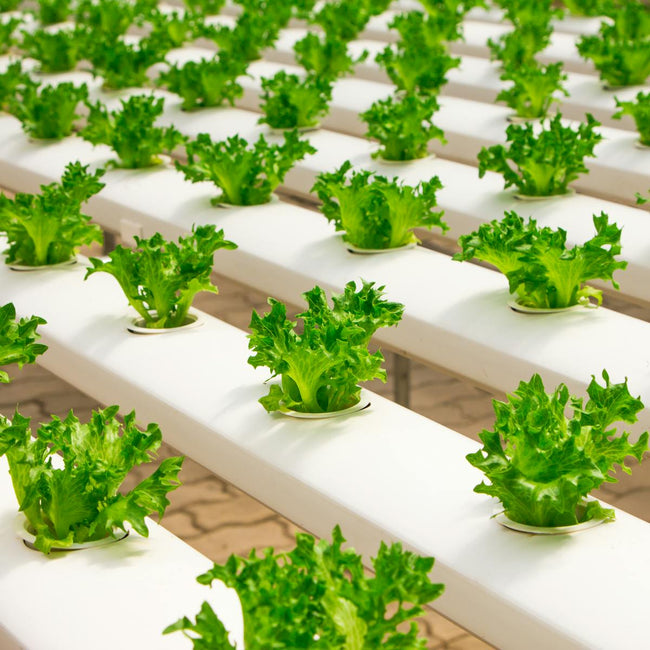
Two technical schools coexist. The Nutrient Film Technique (NFT) adapts the classic horizontal method to a vertical version : water flows in a thin film on the inner wall of the tube, and the roots cling to it to absorb what they need. Simple, robust, low flow, few breakdowns.

Tower aeroponics works differently. High-pressure nozzles installed in the root chamber spray a fine nutrient mist at regular intervals. The roots are suspended in the air, fully oxygenated between mistings.

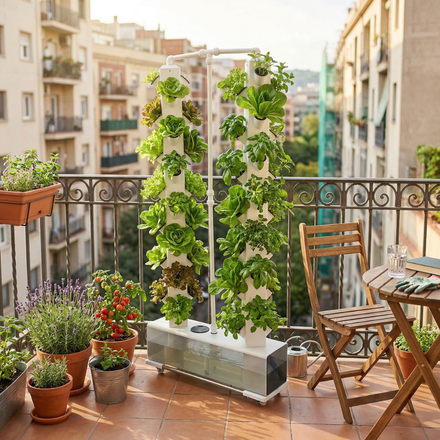
Result : 20 to 35% faster growth according to manufacturer Lyine's data for Butterhead lettuce. In return, aeroponics requires anti-clogging nozzles, a high-pressure pump, and increased vigilance. The 108-slot NFT tubes remain the most accessible solution for getting started.

Oxygen, the engine of growth

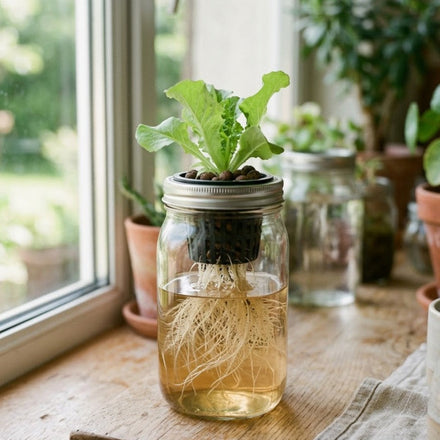
The secret to hydroponic speed lies in a parameter rarely highlighted : dissolved oxygen. When water trickles over surfaces and falls in drops into the reservoir, it becomes oxygenated through direct contact with the air.

The concentration of dissolved O2 thus easily climbs above 8 mg per liter, compared to 3 to 5 mg in waterlogged soil. The roots immediately benefit: cellular respiration accelerates, nutrient absorption increases, and biomass production follows.

It is this oxygen oversupply, more than the nutrients themselves, that explains why a lettuce grows in 25 to 30 days instead of 45 to 60 days in open ground. Keeping the reservoir water below 22°C is essential : beyond that, its capacity to dissolve oxygen sharply decreases.

Water, space, speed : key figures

The performance of a hydroponic tower is measured across three complementary axes. First, water : a well-sized tower consumes up to 90% less water than an equivalent outdoor crop. No evaporation from the soil, no deep leaching, total recirculation of the nutrient solution. A lettuce grown in traditional soil consumes about 25 liters of water per 100 grams of leaves ; in a tower, this ratio drops to less than 3 liters.

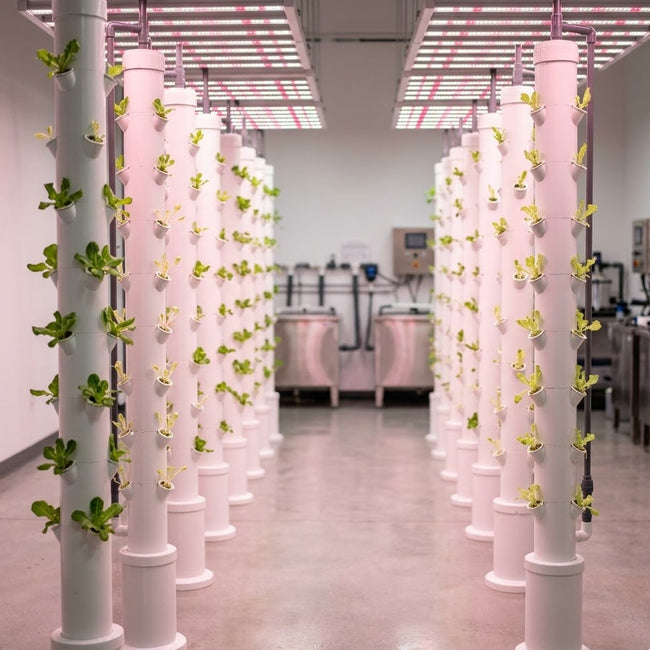
Next, space : a 1.5-meter high tower occupies 0.5 m² of floor space and accommodates 40 to 60 plants depending on the model. This is equivalent to 3 to 5 times more density than a classic garden bed of the same floor area. In a study conducted by the manufacturer Lyine on 100 m² of test area, aeroponic towers accommodated 3,500 plants compared to 2,200 for a 3-layer horizontal NFT system.

Finally, speed: thanks to oxygenation and precise nutrition control, lettuce reaches its harvest size in 21 to 30 days compared to 35 to 60 days outdoors. Basil doubles its volume in a few weeks. These gains result in 8 to 12 annual indoor growing cycles, compared to 1 to 3 outdoor cycles.

pH and EC, the two most important parameters

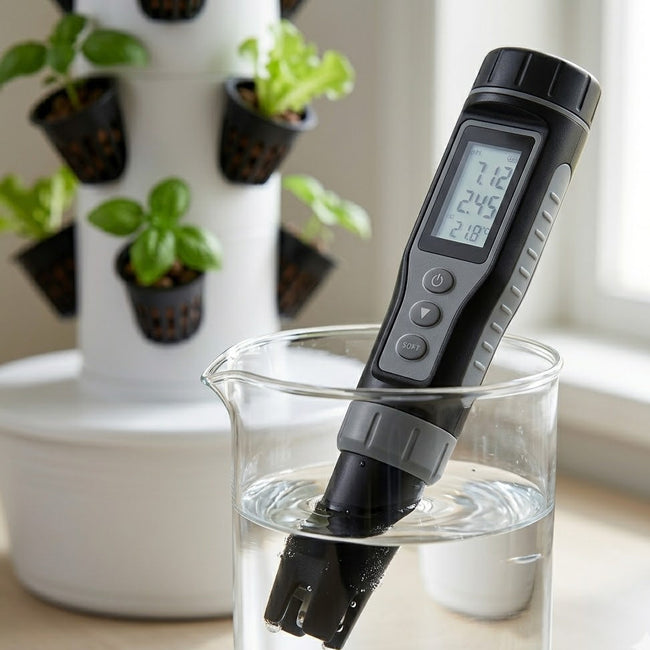
In hydroponics, two measurements are crucial for success. pH determines nutrient solubility : between 5.5 and 6.5, all elements remain available. Above 7, iron and manganese precipitate, and leaves quickly yellow.

EC (electrical conductivity) measures the concentration of mineral salts. Leafy vegetables require an EC of 0.8 to 1.4 mS/cm, while fruit-bearing plants increase to 1.4-2.0 mS/cm during peak fruiting. If too low, the plant stagnates ; if too high, it burns.

A 3-in-1 tester measuring pH, EC, and temperature in seconds is essential. If iron deficiency occurs despite correct pH, adding a dose of chelated iron quickly corrects chlorosis. For comprehensive principles of pH regulation, our dedicated guide details all methods.

The right substrate for a column

Unlike soil, hydroponic substrate does not provide nutrients : its sole purpose is to hold the plant in place and channel moisture to the roots. Weight, cleanliness, and chemical neutrality are the key criteria.

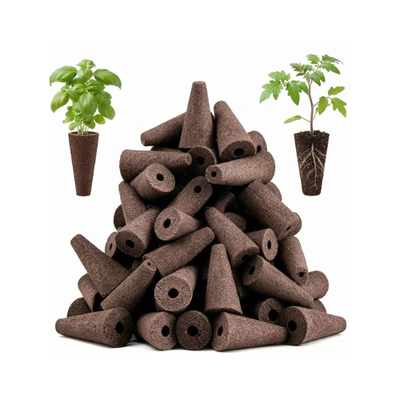
Expanded clay pebbles are the standard : very lightweight and perfectly draining, they fit into net pots and support the roots of mature plants. For seedlings, rock wool cubes or coco fiber are preferred, as they retain moisture during the germination stage.

Some towers incorporate pre-formed sponges that further simplify starting : simply place the seed in the center, moisten, and wait. After 7-10 days, the seedling goes directly into the net pot without stressful transplanting.

Plants that love vertical spaces

Not all plants are equally suitable for a tower. The champion plants share three traits : a compact root system, rapid growth, and moderate weight.

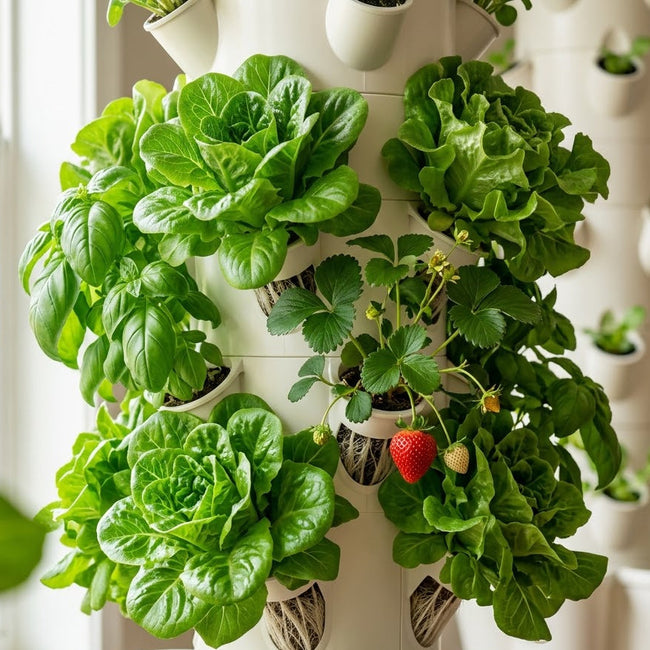
Leafy greens largely dominate : lettuces (all varieties), spinach, arugula, lamb's lettuce, bok choy, mizuna, young kale. Harvest in 25 to 45 days depending on the species. Aromatic herbs also excel : basil, parsley, chives, mint, cilantro, fresh thyme. Once established, they can be harvested continuously for months.

Ever-bearing strawberries yield excellent results on well-lit towers, with continuous fruiting from May to October. Small, compact peppers and chili peppers are also suitable, provided they are placed in lower positions and lightly supported.

Crops to avoid in column

Some plants are structurally incompatible with a tower. Root vegetables (carrots, parsnips, potatoes, beets, turnips, long radishes) need vertical space for their tuber: no pot-basket can provide this.

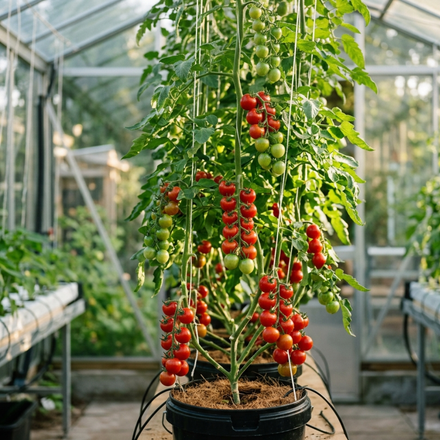
Heavy fruit-bearing plants pose a mechanical problem : indeterminate tomatoes, zucchinis, melons, and cucumbers weigh several kilograms when laden and quickly unbalance the column. Without substantial staking to the ground, the tower will tip over.

Woody perennials (established rosemary, small fruit bushes) become too voluminous over time. Finally, deep taproot plants (fennel bulbs, salsify) simply refuse to develop properly in a basket 5 to 6.5 cm in diameter.

Mistakes that ruin a tour

Several pitfalls explain the overwhelming majority of failures.

First : an undersized pump. The discharge head must exceed the total height of the tower, otherwise the plants at the top silently die of thirst.

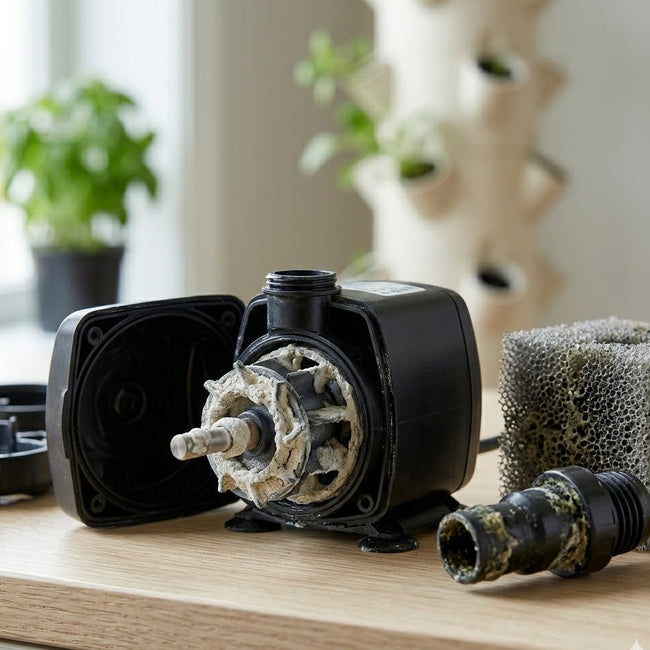
Second : insufficient indoor lighting. A flat LED above the tower is not enough. You need vertical LED bars around the perimeter to create a light cylinder. Third : limescale that clogs the pump and nozzles. In hard water areas, tap water must be filtered or softened.

Third : reservoir water above 24°C in summer. A system on wheels allows it to be moved into the shade during hot hours.

Vertical gardening : The future of urban vegetable patches

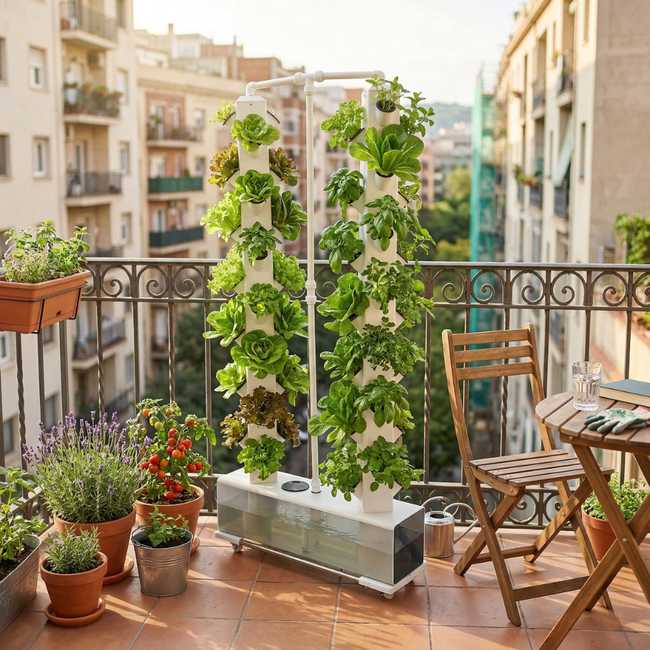
From the root chambers of NASA space stations to the Parisian balcony of an amateur gardener, the principle remains the same : circulate a richly oxygenated nutrient solution along suspended roots, and let the physics of runoff do the work of rain. With 90% water saved, 3 to 5 times more plants per m², and shortened growth cycles, the hydroponic tower precisely addresses the constraints of contemporary urban gardening.

All that's left is to choose the right plant to start with (lettuce, basil), measure its pH and EC weekly, and follow a few simple rules regarding the pump, light, and water temperature. The rest is learned by observation. A well-managed tower produces harvests for years, without digging, weeding, or downtime.