Growing without soil : why hydroponics changes everything

09 May 2026
Cultiver sans terre : pourquoi l'hydroponie change tout

Hydroponics is not a fad but an agronomic revolution thousands of years old, which consumes up to 90% less water and accelerates plant growth by 30 to 50%. Understanding its principles, methods, and limitations becomes essential for anyone looking to produce better, in less space, and with fewer resources.

Hydroponics and soil-less cultivation : a silent revolution

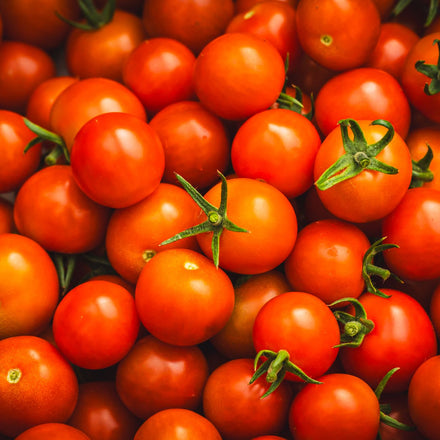
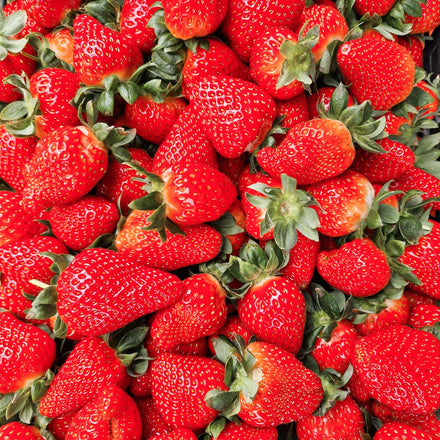
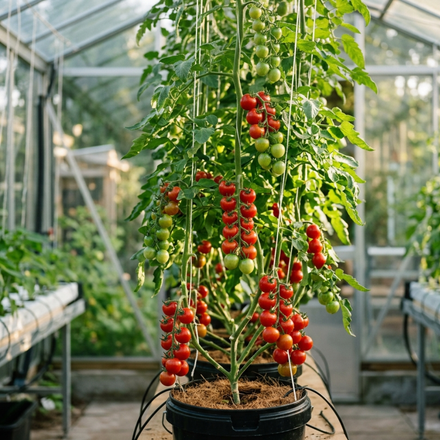
Without always knowing it, you are already eating hydroponic produce. Nearly three out of four strawberries sold in France and up to nine out of ten greenhouse tomatoes are produced by soilless cultivation, in a mineral-enriched water solution rather than in soil. This method, long kept confidential, is now emerging as one of the most credible answers to water shortages, the loss of arable land, and increasing pressure on agricultural yields.

But hydroponics, like aquaponics, is by no means a recent trend. It has roots in civilizations thousands of years old, was scientifically codified in the 19th century, and boarded the International Space Station in the 21st. In this article, we trace the origins of soilless cultivation, dissect its biological principle, compare the main technical families (NFT, DWC, aeroponics), explain why it saves up to 90% of water, and provide the concrete parameters for managing it, as well as its often-overlooked limitations.

At its origins : 4,000 years of landless cultures

The idea of growing plants elsewhere than in soil was not born in a modern laboratory. It appeared in Antiquity, in civilizations facing poor, dry, or flooded soils. The Hanging Gardens of Babylon, dated around 600 BC, remain the icon of this agronomical intuition: plants installed on terraced levels, irrigated by a sophisticated hydraulic system.

On the other side of the globe, the Aztecs designed the chinampas, rafts of reeds and rushes covered with silt, which floated on the swamps near present-day Mexico City. The plant roots plunged directly into the lake water and drew their nutrients from the aquatic environment. In Peru, the peoples of Lake Titicaca cultivated on similar lake borders, while ancient China had for millennia practiced cultivation on gravel, a direct ancestor of our modern clay pebble beds.

What connects these traditions is not shared technology but a common understanding : water is the vehicle for nutrients. When soil is lacking or depleted, it is water that must be loaded and redistributed. Hydroponics therefore does not invent a principle ; it makes it legible, measurable, and replicable.

From Sachs to Gericke : the birth of a science

The conceptual leap between chinampas and modern hydroponics occurred in the mid-19th century, in two German laboratories. Around 1860, botanist Julius von Sachs and agricultural chemist Wilhelm Knop sought to understand what in the soil truly nourished plants. By isolating mineral elements one by one and dissolving them in water, they managed to grow complete plants in a purely liquid solution. This technique, then called "solution culture," became a standard in plant physiology research and remains the foundation of all current hydroponic systems.

Nearly seventy years later, at the University of Berkeley, physiologist William Frederick Gericke brought the subject out of the laboratory. In the late 1920s, he grew tomato plants up to 7.5 meters high in his garden using a pure nutrient solution, generating a wave of press coverage. In 1937, with his colleague Setchell, he coined the term hydroponics, a contraction of the Greek words hydro (water) and ponos (labor). During World War II, the US Army adopted it to feed its garrisons isolated on the volcanic islands of the Pacific. Later, NASA would use it as the basis for its research on growing plants in space, as part of the CELSS program, and would serve fresh salad to ISS astronauts starting in 2015.

Feed the plant directly through the roots

The principle of hydroponics can be summarized in one sentence : replace the soil with an aqueous solution containing exactly the minerals the plant needs, and bring it into direct contact with its roots. Soil then becomes an unnecessary intermediary, sometimes even counterproductive, because its real role is limited to two functions : mechanical support and buffer storage of nutrients.

In a hydroponic system, the plant receives a solution balanced in macronutrients (nitrogen, phosphorus, potassium, calcium, magnesium, sulfur) and trace elements (iron, manganese, zinc, copper, boron, molybdenum). The roots no longer have to explore the soil to find their food. This energy saving is massive and results in a 30 to 50% accelerated growth compared to the same plant grown in soil. The nitrogen cycle, in particular, becomes a parameter that is chosen rather than a process that is endured.

One crucial point remains, often underestimated : roots need oxygen. A plant permanently immersed in a stagnant solution will suffocate in a few days. All efficient hydroponic systems therefore incorporate oxygenation, either through continuous circulation of the solution, or with an air stone, or through periodic air exposure of the roots. It is this double balance, precise nutrients and available oxygen, that makes hydroponics such a productive system.
NFT, DWC, Aeroponics : the main families

Hydroponics is not a single technique but a family of systems, each with its own circulation logic. NFT (Nutrient Film Technique) continuously circulates a thin film of solution over inclined channels : the roots rest in the channel and are saturated with both water and oxygen. DWC (Deep Water Culture) immerses the roots in deep water, oxygenated by an air pump, making it one of the simplest setups for beginners. Ebb & Flow (tide table) periodically floods and drains the substrate, combining the advantages of both worlds.

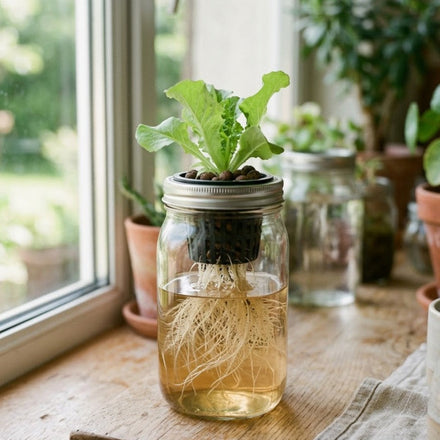
Aeroponics takes the logic to the extreme : the roots hang in the air and are sprayed several times a minute with a fine nutrient mist. It is the most efficient method in terms of growth and water consumption, but also the most demanding: a pump failure of a few minutes can be enough to dry out the roots. In contrast, the Kratky method is completely passive, without a pump or electricity, and is perfectly suited for jar salads.

For beginners, DWC and NFT offer the best compromise between simplicity, cost, and yield. an NFT hydroponic kit can produce 36 salads simultaneously over a few square meters, with no prior knowledge. As skills improve, one naturally moves on to more demanding systems, such as aeroponics or recycled drip irrigation.

Management : pH and EC, the two vital indicators

Where the gardener in soil has soil that buffers their errors, the hydroponicist directly controls their system. Without a buffer, every deviation in the solution affects the plant within hours. Two parameters concentrate all the mastery of the system : pH, which determines whether nutrients are absorbable, and EC, which measures their quantity. Understanding their role is half the battle.

pH : the key to assimilation

The pH measures the acidity of the solution on a scale from 0 to 14. In pure hydroponics, the plant's comfort zone is between 5.5 and 6.5, which is significantly more acidic than in soil where 6.5 to 7 is usually targeted. Outside of this range, certain elements become invisible to the plant even if they are physically present in the water : iron becomes blocked above 6.5, calcium and magnesium below 5.5. A plant that yellows in a properly dosed solution almost always suffers from a shifted pH. Correction is done by progressively adding pH down (acidifier) or pH up (basifier), with daily monitoring using a pH meter, highly recommended for any active system.
EC : the fuel gauge

EC (electrical conductivity) reflects the concentration of dissolved mineral salts, expressed in milliSiemens per centimeter (mS/cm). It's the equivalent of a fuel gauge : too low, the plant is underfed ; too high, it experiences osmotic stress and burns at the leaf tips. Target values vary depending on the stage and species : 1.0 to 1.4 mS/cm for lettuces and aromatic herbs, up to 2.0 to 2.5 mS/cm for tomatoes in full fruiting. Measuring every two to three days, supplemented by a complete solution change every week, is enough to maintain balance. Keeping a logbook of these readings is the best way to become a precise hydroponicist.

The Strategic Role of Inert Substrate

Hydroponics doesn't always mean growing in pure water. Many systems use a substrate, but it is considered inert : it mechanically supports the plant, temporarily retains moisture, and promotes root oxygenation, without providing any nutrients itself. All nutrition remains under the gardener's control, through the solution. This radically distinguishes a hydroponic substrate from a classic potting soil.

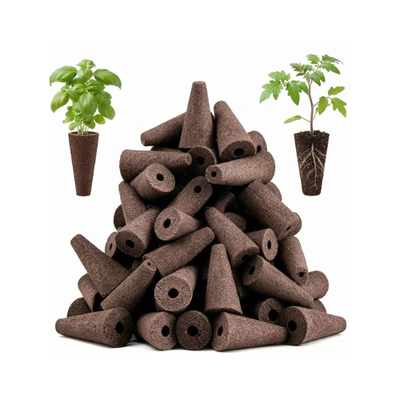
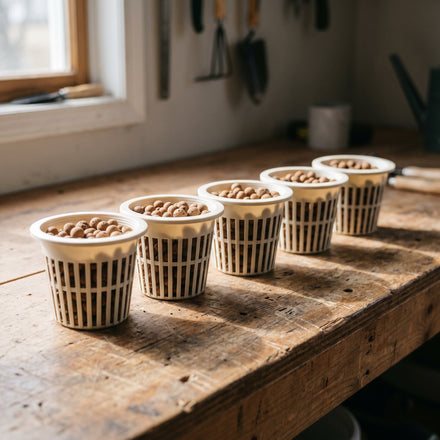
Four materials dominate. Expanded clay pebbles (LECA) offer the best drainage and excellent root system aeration ; they are suitable for DWC, grow beds, and pots, and can be recycled almost indefinitely after cleaning. Coco coir is the universal compromise : natural, lightweight, it retains moisture while allowing roots to breathe, but requires calcium and magnesium supplementation as it releases a lot of potassium. Rockwool dominates professional greenhouses due to its perfectly calibrated fibrous structure. Finally, perlite, this expanded volcanic glass, lightens and aerates mixes without altering the pH.

In practice, the majority of hydroponic cultures use a mix. The coco coir / perlite combination at approximately 70 / 30 is one of the most versatile, for both salads and fruits. The choice of substrate ultimately depends on the system (NFT, DWC, ebb & flow), the type of plant, and the time one is willing to dedicate to maintenance.

Why hydroponics saves up to 90% water

The figure recurs like a slogan in all presentations on hydroponics : 90% water saving compared to traditional agriculture. It is not marketing. A study conducted by Barbosa et al. at the University of Arizona showed that hydroponic lettuce production consumes about thirteen times less water than the same production in open ground, for equal yield. Depending on the configurations, the actual saving is between 70% and 95%.

This efficiency is due to a simple principle : recirculation. In a closed hydroponic system, the solution not absorbed by the plants returns to the reservoir and goes back into the circuit. No runoff loss, little evaporation loss, and zero leaching of nutrients into the groundwater. Conversely, in open-field cultivation, most of the irrigation water evaporates or penetrates the deep layers of the soil.

This logic explains why almost all commercial greenhouse tomatoes in Europe are now produced hydroponically. For individuals, the issue is less agronomic than ecological and financial : at a time of summer restrictions, growing your salads using ten times less water than your neighbor is no longer a gimmick, it's a strategy for autonomy. It is also one of the rare techniques that allows intensive cultivation in regions where water is expensive or scarce, from the Mediterranean Cévennes to urban rooftops.

Verticality, density, and urban farms

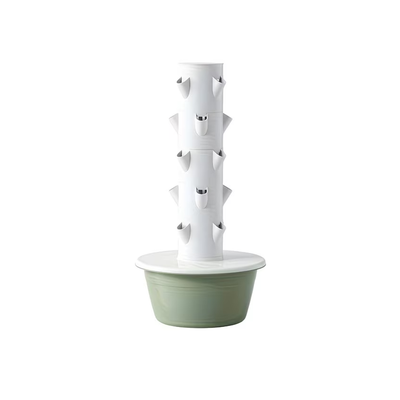
The second silent revolution in hydroponics is verticality. Freed from the constraints of soil and its weight, crops can be stacked. A hydroponic grow tower allows 20 to 45 plants to be aligned on a single square meter of ground, where open ground only accommodates 4 to 6. The calculation is immediate : for the same surface area, production is multiplied by five to ten.

This density explains the rise of urban vertical farms, these warehouse or basement installations that produce a few kilometers from consumers, without dependence on climate or seasons. At a domestic scale, the same logic applies on a balcony, in a garage, or a converted cellar. With a pump, suitable lighting, and a tower, one can harvest lamb's lettuce, basil, and lettuces every week, twelve months a year, without touching a single gram of soil.

Hydroponics thus reintroduces food production to the heart of the densest areas, where agricultural land is no longer accessible. It does not replace open ground, but it complements it in what it cannot do : produce fresh, in ultra-short circuits, with a minimal footprint and controlled seasonality. For those looking to take control of their food supply in urban or peri-urban environments, it is the most efficient tool per square meter available.

Limits and precautions of soilless cultivation

However attractive it may be, hydroponics is not a shortcut. It is a demanding system that requires rigor and a significantly higher initial investment than a traditional vegetable garden. A serious home setup involves a pump, a tank, piping, lighting if growing indoors, pH and EC testers, and a supply of corrective solutions. The entry ticket runs into hundreds of euros for the first systems, several thousands for more ambitious configurations.

Energy dependence is the other critical point. A power outage lasting several hours can kill an entire NFT system : without circulation, roots suffocate or dry out in a few hours depending on the method used. DWC offers a little more tolerance, aeroponics none. Any serious hydroponic system therefore includes a UPS or a backup battery. The fragility does not come from the technique itself but from the absence of a biological buffer : without living soil, without soil bacteria, the system has no memory and no self-regulation capacity.

Finally, hydroponics relies entirely on industrial nutrient solutions, and therefore on a supply chain for mineral salts. For those seeking complete autonomy, closing the mineral cycle is more difficult than in open ground. This is precisely the point that aquaponics claims to solve, by replacing synthetic fertilizers with the waste from fish farming.

Hydroponics and aquaponics: from mineral to living

Hydroponics and aquaponics share the same logic of soilless cultivation and the same use of water as a nutrient vector. The word "Aquaponics" is, moreover, a contraction of the words "Aquaculture" and "Hydroponics." Hydroponics is therefore a component of aquaponics. Nevertheless, they diverge radically in their source of nutrients. In hydroponics, the gardener himself doses a standardized mineral solution. In aquaponics, it is fish waste, transformed by a consortium of nitrifying bacteria, that nourishes the plants. With each pump cycle, water flows from the fish to the plants, then returns to the tank filtered and oxygenated.

This difference changes the nature of the system. Hydroponics is a technical device ; aquaponics is a living ecosystem. The former offers absolute control and record yields per square meter. The latter introduces a dimension of breeding, biological cycles, and nutrient autonomy, but requires finer control of the fish-bacteria-plant balance and compromises on nutritional precision.

The choice between the two depends on the project : hydroponics suits those looking for simpler production in a short urban circuit ; aquaponics appeals to those who want a complete, more resilient, and more natural ecosystem, but one that is just as efficient. To delve deeper into the comparison, our dedicated guide details the respective advantages, limitations, and costs of the two approaches.

Cultivating Differently : The Grammar of a Resilient Future

Hydroponics is neither a technological utopia nor a miracle solution. It is an agronomic grammar validated by 4,000 years of experimentation, codified by 19th-century science, and industrialized for almost a hundred years. It saves up to 90% of water, accelerates growth by 30 to 50%, and frees food production from soil constraints. In return, it requires rigor, daily monitoring, and a certain level of technicality.

More than an alternative to open-ground farming, it is a toolbox that everyone can adapt to their objectives: balcony autonomy, intensive production with vertical towers, or a first step towards a living ecosystem by branching out into aquaponics. At a time when pressure on soil, water, and climate is redrawing the rules of the agricultural game, knowing how to cultivate without soil becomes less of a hobby and more of a strategic skill. And the best way to learn is to start with a small, modest, and well-monitored system, allowing practice to foster expertise.