Kratky Method : Passive Hydroponics Without a Pump

13 May 2026
Bocal en verre avec laitue verte cultivée selon la méthode Kratky en hydroponie passive

Pump-free, electricity-free, and intervention-free hydroponics, that's the astonishing promise of the Kratky method. A minimalist approach based on a simple physical principle that opens up soilless cultivation to all gardeners, from curious beginners to convinced self-sufficient enthusiasts.

Hydroponics Without a Pump

Most hydroponic systems require a pump, sometimes two, and a permanent electrical connection. The Kratky method overturns this logic by growing lettuce and herbs in a simple jar of enriched water, with no movement, no current. It all relies on a precise discovery by Dr. Bernard Kratky : a plant can draw its nutrients from water and its oxygen from the air, provided its roots access both simultaneously.

This article traces the history of this technique, explains its physical principle, details the exact equipment needed, provides target pH and EC values, presents suitable plants, and offers a comparison with other hydroponic systems to help you choose.

The researcher who simplified everything

The method is named after its inventor, Dr. Bernard A. Kratky, a researcher at the College of Tropical Agriculture and Human Resources at the University of Hawaii. Starting in 2009, he published a series of articles in the scientific journal Acta Horticulturae demonstrating that it is possible to grow commercial-quality lettuce without any water circulation or forced aeration.

This discovery overturned a dominant belief in soilless cultivation that active oxygenation was essential. Kratky proved that the plant itself creates the conditions for its own respiration by consuming water from the reservoir as it grows.

The IFAS, the agricultural extension organization of the University of Florida, now describes this technique as "set it and forget it." The phrase perfectly summarizes the spirit of Kratky.

The principle of the air pocket

It all starts with a programmed imbalance between water and air. At startup, the reservoir is full and the bottom of the basket touches the surface of the nutrient solution. The plant consumes water day after day, the level drops, and a volume of humid air gradually forms under the lid.

Within this air volume, particular roots appear, thicker and fuzzy, capable of directly absorbing atmospheric oxygen. These are called air roots. The roots remaining in the solution retain their role of absorbing water and nutrients. This specialization is the key to passive operation.

The balance is anything but artificial : the plant invents it itself as it grows. The system only asks to respect this process, without disturbing it.

Without a pump, without electricity

This complete absence of mechanics radically distinguishes Kratky from all other hydroponic methods. Deep Water Culture, another popular system, permanently immerses roots in water agitated by an electric air stone. NFT, which we will discuss later, circulates a thin film of water via a pump.

Kratky, on the other hand, requires no connections, no timer, and no daily maintenance. The initial investment cost is often under 20 euros for a first attempt in a jar. This accessibility explains the method's success with schools, urban families, and installations in non-electrified areas.

The downside is well known : the system does not tolerate demanding plants or long cycles without replenishment. Therefore, crops must be chosen carefully.

Essential equipment

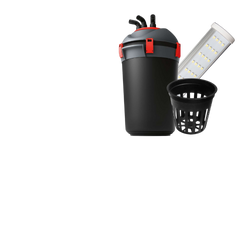
The list consists of six simple items. An opaque container or one made opaque (a one-liter Mason jar is suitable for lettuce, a 5-liter bucket for a larger plant). A drilled lid. A hydroponic net pot 5 to 8 centimeters in diameter. An inert substrate like rockwool or expanded clay pebbles.

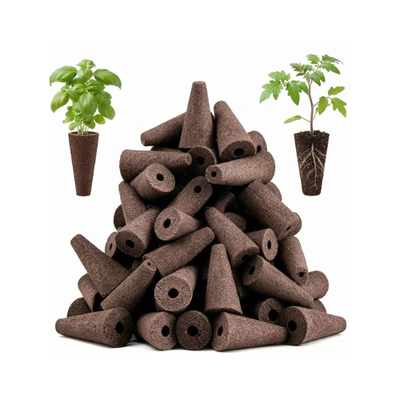
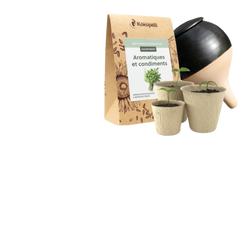
You also need seeds, preferably fast-growing ones, and a complete nutrient solution. Compressed peat germination pods simplify the seeding phase and fit directly into the basket.

If the container is transparent, you need to block the light by wrapping it with aluminum foil or an opaque fabric. Algae proliferate rapidly in light and compete with the roots for nutrients. This precaution is essential for success.

The target pH and EC

The initial adjustment of the solution conditions all subsequent growth. For lettuce and most leafy greens, the target pH is between 5.5 and 6.5. Above this range, nutrients like iron and manganese become less available. Below this range, calcium and magnesium are less assimilated.

EC, or electrical conductivity, measures the amount of dissolved salts. Lettuce in a Kratky system typically starts between 0.6 and 1.2 mS/cm. This low value compensates for the concentration phenomenon that occurs at the end of the cycle : the plant consumes proportionally more water than nutrients, which naturally causes the EC to rise.

A simple multi-parameter test pen allows you to measure pH, EC, and temperature in a few seconds. This investment of a few tens of euros radically improves the reliability of harvests. To learn more about this, our complete guide on pH regulation details adjustment methods.

Steps to start your first grow

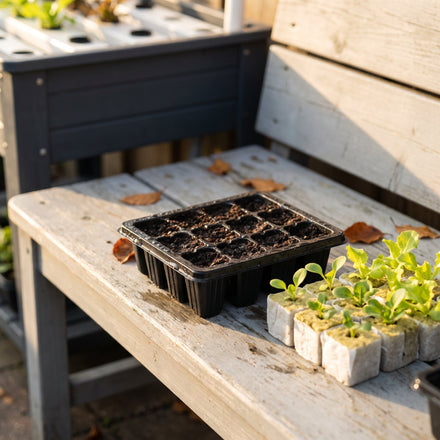
It all starts with germination. Place a seed in a damp rockwool cube or peat pod, keep at room temperature and in the light. Germination takes 3 to 7 days depending on the species. Our dedicated indoor seedling space facilitates this first phase.

When the first true leaves appear and the roots emerge from the cube, transfer the seedling to the net pot, which is then placed in the lid of the container. Prepare the nutrient solution according to the manufacturer's instructions, adjust the pH to around 6.0, and fill the reservoir until it just touches the bottom of the basket.

Place the entire setup on a bright windowsill or under a grow light. For a Reine de Mai lettuce, harvest arrives in 4 to 6 weeks with no additional input.

Plants that love Kratky

The stars of the method are short-cycle leafy greens. Lettuces, lamb's lettuce, spinach, pak choi, chard, and arugula reach maturity before the solution is fully consumed. Aromatic herbs also excel in this format. Basil, chives, mint, cilantro, and parsley produce generously for several weeks with a single refill.

For these crops, a one-liter jar is more than enough for one plant. A 5-liter bucket can accommodate three to four lettuces side by side, provided that correct planting distances are observed to avoid competition between neighbors.

Limitations to be aware of

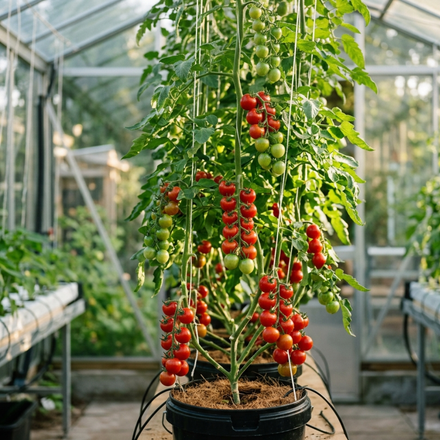
Fruiting plants like tomatoes, peppers, or cucumbers are possible but go against the passive philosophy. A tomato in Kratky consumes the equivalent of its own weight in water per week, which necessitates frequent top-ups or a 25 to 50-gallon reservoir.

Root vegetables, on the other hand, are incompatible. Carrots, potatoes, radishes, and beets deform or rot in a constantly humid environment. It is better to reserve them for soil cultivation or in dry substrates.
The 5 most common mistakes

The first mistake concerns light. A transparent container allows UV rays to pass through, and the water turns green in a few days due to microalgae. These consume nutrients, suffocate roots, and degrade dissolved oxygen. An opaque or covered container remains the basic rule.

The second concerns the water level at startup. If the solution completely submerges the first roots, the plant struggles to oxygenate its tissues and risks rot. The bottom of the basket should touch the water, not be submerged by several centimeters.

Then comes the mixing of incompatible cultures in the same reservoir, forgetting the initial pH adjustment, and underestimating the reservoir temperature in summer. Above 25°C, dissolved oxygen drops and pathogens accelerate their development.

Kratky vs. Other Methods

Compared to Deep Water Culture (DWC), the Kratky method stands out for its complete absence of forced aeration. DWC continuously oxygenates the water via an air stone, which allows for more demanding plants and warmer temperatures. In return, it depends on electricity and requires an air pump that can fail.

Compared to NFT (Nutrient Film Technique), where water continuously flows over the roots, Kratky represents a step down in terms of flow rate, yield, and scale. NFT requires a pump, inclined channels, and precise sizing. However, it is suitable for semi-commercial production of lettuce and strawberries.

Compared to classic recirculating hydroponics, Kratky falls into the family of non-circulating systems. It is the ultimate in simplicity, ideal for beginners in soilless cultivation before moving on to more technical installations.

Aquaponics and Kratky, the analogy

Kratky and aquaponics share a similar philosophy : allowing life to find its balance with minimal human intervention. In both cases, observation takes precedence over action, and patience rewards the gardener.

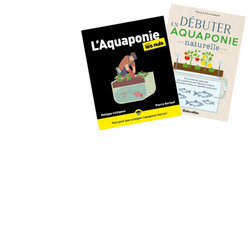
The differences remain profound. Aquaponics relies on a living ecosystem that combines fish, plants, and nitrifying bacteria. Fish waste, transformed by bacteria according to the nitrogen cycle, continuously and naturally nourishes the plants.

Kratky uses a chemical solution that is manufactured, consumed, and then drained. It does not create an ecosystem, but it admirably teaches the logic of root absorption. Many beginner aquaponists start with Kratky to understand the physics of soilless growth before embarking on their first tank.

A gateway to hydroponics

The Kratky method is undoubtedly the simplest, most economical, and most accessible way to discover soilless cultivation. With a jar, seeds, and a little nutrient solution, anyone can produce their first homemade lettuces without a pump or electricity.

It doesn't replace more ambitious systems like NFT or aquaponics, but it is an ideal gateway to understanding the principles of root absorption and water-air balance. Once these fundamentals are acquired, many gardeners move on to more active and productive setups. It's up to you to give it a try.