Which substrate should you choose for aquaponics ?

Written by Ulysse Hay · September 6, 2025
Substrats de culture utilisés en aquaponie

In aquaponics, the substrate not only serves to support the plants, but also plays an essential role in filtering and balancing the water. Choosing the right material is therefore a decisive step in the success of your installation.

Choosing the substrate in aquaponics

In aquaponics, every detail counts to ensure the system's proper functioning, and the choice of substrate is one of the most important decisions. Much more than a simple support for roots, the substrate plays a central role in biological balance. It serves as an anchor for plants, but also as a habitat for nitrifying bacteria, true invisible allies that transform fish waste into assimilable nutrients.

The substrate also influences water circulation, oxygen availability, and even the chemical stability of the system. The wrong choice can cause imbalances, slow plant growth, or compromise fish health. Conversely, the right substrate ensures vigorous crops and effective natural filtration. Understanding its functions and characteristics is therefore essential for laying a solid and sustainable foundation for your aquaponics project.

Why is grow medium so important?

Why is the substrate so important ?

In an aquaponic system, the substrate plays a much more complex role than in traditional gardening. In a traditional vegetable garden, the soil simply supports the roots and provides nutrients. In aquaponics, this role is multiplied, as the substrate becomes one of the pillars of the ecosystem. It first acts as a solid anchor for the plants : their roots must develop there without constraints, to ensure good access to water and nutrients. But it is not just a simple physical support. It is also a place where intense biological activity develops.

Nitrifying bacteria, invisible to the naked eye but essential to the nitrogen cycle, find the substrate an ideal surface for growth. They transform the nitrogenous waste produced by fish into compounds that can be assimilated by plants, allowing the ecosystem to function in a closed loop. A substrate that is too compact or chemically unstable can compromise this process, leading to harmful imbalances for both fish and crops. This is why it is crucial to choose a material that is porous, durable, and neutral, ensuring good root oxygenation, optimal biological filtration, and water chemical stability.

The most widely used grow media in aquaponics Clay pebbles 10L Plagron

The most used substrates in aquaponics

Over time, several materials have established themselves as benchmarks in aquaponics.

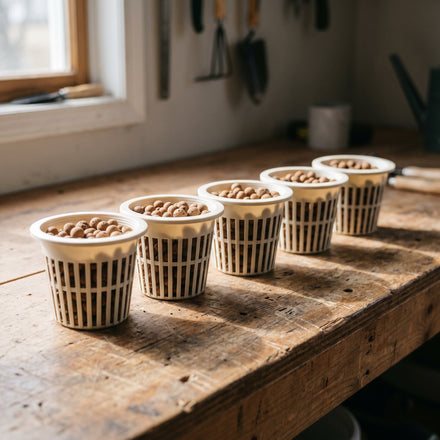
Expanded clay remains the preferred choice for enthusiasts. Its lightweight, porous beads provide remarkable aeration and an ideal colonization surface for bacteria. Their neutral pH and durability make them a reliable medium, although their initial cost can be prohibitive for large volumes.

Washed gravel, often chosen for its more affordable price, is another attractive option. Stable and durable, it makes a good biological support, provided you ensure that it does not contain limestone or metals that could affect water quality. Its major drawback remains its weight, which complicates the installation and maintenance of systems.

Pumice used as a grow medium in aquaponics

Pozzolana, derived from volcanic rocks, is another popular substrate. Lightweight, porous, and inexpensive, it provides an excellent exchange surface for bacteria. Its major drawback is that it tends to clog very easily, and cleaning it is not at all easy.

Finally, coconut fiber represents a more ecological and organic alternative. Easy to handle, it retains water well and promotes seedling growth. However, it degrades quickly and must be replaced regularly, making it an interesting supplement but rarely a primary substrate. These materials must be chosen based on budget, space, and the crops planned.

Sphagnum moss is sometimes used in aquaponics for its excellent water retention capacity, making it an attractive substrate for seedlings. However, it clogs easily, making water circulation difficult. Its cleaning is complicated, making it impractical in the long term. Furthermore, importing it from distant regions raises ecological concerns, limiting its usefulness as a primary substrate.
Grow media to avoid at all costs

Substrates to absolutely avoid

While some materials are true allies in aquaponics, others represent pitfalls to avoid. Sand, for example, seems attractive because it's inexpensive and easy to find, but its accumulation of waste quickly prevents proper water circulation and deprives roots of oxygen, leading to rotting problems. Conventional soil and potting mix also pose a problem. They release substances that unbalance the ecosystem, attract parasites, and compromise the health of both fish and plants.

Limestone gravel, which is widespread in some regions, poses another danger. By releasing calcium carbonate, it alters the pH of the water, gradually alkalizing it. This chemical imbalance weakens the entire system, affecting the plants' ability to absorb nutrients and compromising the health of fish. Finally, chemically treated artificial substrates, such as certain polished glass or plastic beads, present a long-term risk of releasing toxic substances into the water. It is therefore better to turn to proven, stable, and neutral media to ensure the safety and longevity of the system.

How to choose the right grow medium? Compacted coconut fiber

How to choose the right substrate ?

The choice of substrate is not simply a matter of taste; it depends above all on the objectives and constraints of each project. Budget remains a determining factor : expanded clay is ideal, but its higher price sometimes limits its use, while washed gravel is an economical compromise. The type of cultivation envisaged also plays a major role. A deep growing bed requires a stable and durable substrate, while floating baskets or vertical towers require lighter materials better suited to this format. Maintenance frequency must also be taken into account. Some substrates are easy to clean and allow for more comfortable monitoring, while others, heavier, complicate handling and require more work.

In a region where the water is already hard, it is also not recommended to use a substrate that could further alter the pH. In this case, opt for a neutral material. Finally, it may be worth favoring local resources. Not only does this reduce costs, but it also limits the carbon footprint associated with transportation. In short, the right substrate is one that meets your production objectives, your financial means, and your environmental constraints.

White Bucket White Bucket

How to clean and maintain your aquaponics substrate ?

Over time, the substrate becomes loaded with organic deposits, which can slow water circulation, reduce root oxygenation, and disrupt bacterial colonization. Therefore, its maintenance is essential to maintain the balance of the system.

Sometimes this requires complete disassembly, but in general, maintenance is mostly based on simple, regular actions. This involves observing the water flow, preventing the substrate from compacting, removing excess material, and, if necessary, partially rinsing with clean, non-chlorinated water. The goal is not to make the substrate sterile, but to limit clogging while keeping the precious nitrifying bacteria colonies alive. Some materials, such as coconut fiber, eventually degrade and must be replaced regularly, while others, such as expanded clay or pozzolan, can last for years provided they are cleaned from time to time and reused. The key lies in a delicate balance : intervening enough to keep the substrate effective, but without ever disrupting the ecosystem that has settled there.

Conclusion : The right substrate, an invisible but essential pillar

The substrate, although invisible once the system is in place, determines the success of any aquaponic installation. It supports the plants, houses the bacteria, filters the water, and ensures the stability of the entire system. Choosing an unsuitable material undermines the balance of the system from the start, while a thoughtful choice guarantees vigorous crops and healthy fish. Too often overlooked, this decision deserves special attention, as it determines the productivity and longevity of the installation.

A well-chosen substrate not only optimizes plant growth and fish vitality, but also simplifies daily maintenance and reduces the risk of imbalances. Ultimately, the substrate is not a mere technical detail, but a true pillar of aquaponics, the one upon which the balance and lasting success of the entire system rests.

Sources

Oklahoma State University Extension, Nitrification and Maintenance in Media Bed Aquaponics, Biofiltering role of the grow medium bed, bed stratification and maintenance tasks.

Zhao et al., Substrates, Plants, and Their Combinations for Water Purification of Urban Household Aquaponics Systems, IJERPH, 2022, Experimental comparison of support materials and volcanic rock performance on ammoniacal nitrogen.

New Mexico State University, Aquaponics, Circular 680, Effect of alkalinity and pH on water balance.

Goddek et al., Challenges of Sustainable and Commercial Aquaponics, Sustainability, 2015, Compromise pH between plants, fish, and bacteria, and phosphorus availability.

Eck et al., Nutrient Cycling in Aquaponics Systems, Springer, 2019, Mineralisation of solids and nutrient cycling within the grow medium.

Frequently asked questions

Most home grow beds are filled with around thirty centimetres of grow medium, a depth that allows three distinct layers to coexist. The top two or three centimetres stay dry, breaking the cycle of algae and fungus gnats. The middle zone, alternately wet and drained, is where the bulk of nitrifying activity takes place. The bottom, permanently submerged, retains solids and mineralises them slowly.

Below around fifteen centimetres, these layers merge and the bed loses its role as a biofilter, becoming little more than a flowerpot. Beyond forty centimetres, weight becomes the real problem, especially with gravel, and the bottom tends to become anaerobic.

The test takes just a few minutes before you buy, using a simple handful of material.

  • Drop a few drops of white vinegar onto dry stones — any effervescence indicates limestone.
  • Soak a litre of gravel in a bucket of rainwater for two days, then measure the pH and compare it with a control sample without gravel.
  • Rinse until the water runs clear — water that stays milky indicates fines that will clog the grow bed.

A material that alkalises the water is not always a write-off, but it will force you to correct the pH continuously, which is precisely the opposite of what you want.

Always, even clay pebbles sold as clean. Manufacturing dust clouds the water for weeks and ends up settling at the bottom of the pond.

On the sole criterion of nitrogen removal, experimental comparisons of support media in domestic aquaponics do place volcanic rock at the top, with ammonia removal rates close to 89% and more stable long-term performance than the ceramic beads tested alongside it. Its honeycomb structure provides an enormous colonisation surface for nitrifying bacteria.

That does not make it the best choice for everyone. That same network of fine pores makes it prone to clogging with organic matter, and cleaning it is a thankless task. Clay pebbles, smoother and considerably lighter, are easy to handle and rinse, which matters on the day you need to empty a grow bed by hand.

The common compromise is to reserve pumice for beds that receive water which has already been settled, and to keep clay pebbles where solids arrive directly, or where the weight of the bed is a genuine concern.

Yes, and it's the most common cause of gradual drift. A calcareous grow medium continuously releases carbonate, pushing the pH upward and increasing alkalinity. The problem is that aquaponics already relies on a narrow compromise, around 6.8 to 7.0, between what plants, fish, and nitrifying bacteria each prefer. Shifting that balance point blocks the uptake of iron and phosphorus by plants, even when the water contains both. A neutral grow medium costs less than repeated chemical correction.

Yes, provided you layer them rather than mix them. A layer of gravel at the bottom stabilises the bed and retains solids; clay pebbles on top lighten the whole thing and make planting easier. Mixed together in bulk, the fine particles migrate downwards, fill the voids in the coarser material, and the bed clogs up faster than with a single medium.

Read next

Which fish to choose for aquaponics ?

Which fish to choose for aquaponics ?

Aquaponics, which combines fish farming and plant cultivation, is gaining increasing interest. If you're looking to embark on this adventure, choosing the right species will be a crucial step in your project.

Read the article
What fertilizer should I use in aquaponics ?

What fertilizer should I use in aquaponics ?

In aquaponics, fish and bacteria provide many of the nutrients plants need. However, some nutrients can sometimes be lacking. Adding the right fertilizers then becomes essential to maintain a healthy balance. But what products

Read the article
Growing lotus in aquaponics

Growing lotus in aquaponics

The lotus is an aquatic plant whose flowers are emblematic of the most beautiful ornamental ponds. In aquaponics, in an ornamental system (a pond with goldfish or koi carp) that does not need to

Read the article
Aquaponics and Summer Holidays

Aquaponics and Summer Holidays

You're going away for two weeks in July and your aquaponics system will be running without you : this thought rightly makes you anxious, because heatwaves, evaporation, and fish feeding raise practical questions. Good

Read the article
Recognizing deficiencies in aquaponics

Recognizing deficiencies in aquaponics

In aquaponics, plants can show signs of weakness even when the system appears balanced. Pale leaves, slowed growth, or deformities are often linked to subtle yet critical micro-deficiencies. These deficiencies involve essential elements such

Read the article
A practical calendar for success in aquaponics

A practical calendar for success in aquaponics

In aquaponics, the success of a season depends mainly on good upstream calendar management : periods of sowing, planting, ramp-up… and times when it is better not to intervene. Unlike a traditional vegetable garden,

Read the article