Green water in your pond : 5 chemical-free solutions

13 May 2026
Bassin de jardin avec eau verte due à la prolifération du phytoplancton en suspension

In the middle of summer, the water in your pond turns an opaque green and you can no longer see your fish. Good news : five natural solutions, well combined, are enough to restore clear water in a few weeks, without any chemicals.

Why does pond water turn green ?

Green pond water is caused by a proliferation of suspended single-celled microalgae, called phytoplankton. These tiny organisms multiply at a dizzying speed as soon as they find three ingredients together: abundant light, warm water, and excess nutrients (nitrates and phosphates).

This guide presents five natural levers to combine : shading the surface, oxygenating the water, using barley straw, supporting filter bacteria, and manually removing organic matter. As a bonus, you will find a preliminary diagnosis point and the number 1 mistake that ruins all other efforts.

Test the water to identify the cause

Before taking any action, measure the nitrates (NO3) and phosphates (PO4) in your pond. These two parameters are the true fuel for phytoplankton ; knowing them will help you determine where to focus your efforts.

Aim for less than 30 mg/L of nitrates and less than 0.5 mg/L of phosphates for a healthy pond. Above these levels, algae will take over the ecosystem in just a few days.

Strip or drop water tests (such as JBL) are sufficient for a quick and reliable diagnosis. Repeat the measurement weekly during treatment.

Shade with floating plants

Phytoplankton needs light to multiply. Covering between 50 and 60% of the pond surface with floating plants drastically cuts off this essential resource.

Aquatic plants such as water lilies, water hyacinths, or water lettuce play this dual role: they provide shade and absorb dissolved nutrients, depriving algae of their second fuel source.

Do not exceed 60% coverage, otherwise oxygenation and gas exchange become insufficient. One-third of open water is always necessary.

Boost dissolved oxygen

Well-oxygenated water promotes aerobic bacteria that break down nutrients before algae can absorb them. Without aeration, organic matter transforms into nitrogen and phosphorus, which are directly usable by phytoplankton.

A dedicated aerator, connected to a separate outlet from the main pump, ensures continuous oxygenation. Choose a porous ceramic diffuser rather than a simple perforated hose.

The goal is to maintain a dissolved oxygen level above 5 mg/L. This is also essential for the comfort of your fish in summer.

Barley straw, a living filter

A centuries-old English agricultural tradition, barley straw works by the slow oxidation of its fibers in contact with water and UV. The process releases very small amounts of hydrogen peroxide, enough to inhibit the growth of single-celled algae.

Use 200 to 300 grams of straw per cubic meter of water, placed in a floating net. Replace every 2 to 3 months. Ideally introduced at the beginning of spring, when the water temperature reaches 10°C.

This method is 100% natural, biodegradable, and harmless to fish and plants. It acts preventively rather than curatively.

Green water, filamentous algae, cyanobacteria

Three phenomena often confused, but with very different consequences. Green water (phytoplankton) is unsightly but harmless, and even beneficial to young fish that feed on it. Filamentous algae form green hairs on stones and plants, which are annoying but pose no health risk.

The case of cyanobacteria

Cyanobacteria, mistakenly called blue-green algae, are actually photosynthetic bacteria. They form a foamy green or blue-green algal bloom on the surface. Some species produce hepatotoxins, neurotoxins, or dermatotoxins dangerous to humans and animals. If in doubt, do not touch the water and consult a professional for analysis.

Invisible bacteria allies

A biological filter colonized by beneficial bacteria converts toxic ammonia into nitrites, then into nitrates that can be absorbed by plants. Without this bacterial relay, waste stagnates and directly feeds algae.

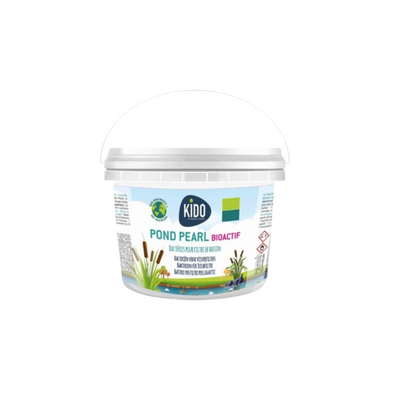
You can speed up the establishment or regeneration of the filter with additions of commercial bacterial cultures. Biological filtration takes 2 to 3 weeks to produce its full effects.

Avoid at all costs cleaning your filter with chlorinated tap water ; you would kill the colony in a few minutes. Always rinse it with pond water.

Regular manual withdrawal

A simple yet essential step, the weekly removal of dead leaves, faded flowers, and clumps of filamentous algae physically removes organic matter before it decomposes and releases nutrients.

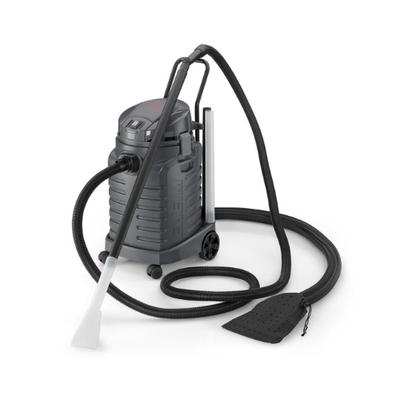
A fine-mesh skimmer net will do the trick. For larger ponds, a floating surface skimmer continuously vacuums up particles.

Allow 10 minutes per week in summer for a domestic pond of 3 to 5 m³. This simple routine is enough to prevent 80% of problematic accumulations.

The mistake that ruins your efforts

Overfeeding your fish is by far the number one cause of persistent green water. Unconsumed pellets fall to the bottom, disintegrate, and release nitrogen and phosphorus, the ideal feast for phytoplankton.

Feed only what your fish consume in 2 to 3 minutes. Two small portions a day are better than one large one. In summer, observe your pond before and after each feeding.

If you suspect an imbalance related to food, also read our guide on cloudy water which follows the same logic.

Combine for lastingly clear water

None of the five solutions works dramatically on its own. The winning combination involves plant shading, bubbler oxygenation, barley straw for prevention, a well-maintained biological filter, and weekly manual removal. All while keeping an eye on the amount of food distributed.

Allow two to four weeks for transparency to return, longer if your pond is new and its ecosystem still unstable. Patience and regularity are your best allies for a clear pond without any chemicals.