Koi Carp in Aquaponics : The Complete Guide

06 May 2026
Vue aérienne centrée d'un bassin aquaponique avec des carpes koï colorées nageant dans une eau claire, entouré de bacs de culture maraîchère

Koi carp is one of the most popular species used in ornamental aquaponics. Hardy, gregarious, and producing a good amount of waste, it integrates perfectly into a well-designed system. This comprehensive guide gives you all the keys to successfully raising them in a closed-loop system.

Koi carp in aquaponics : good or bad idea ?

Koi carp are often associated with Japanese ornamental ponds. In aquaponics, they find a new purpose : that of a biological engine at the service of sustainable plant production.

Their main asset is their resilience. They tolerate variations in water quality well, adapt to closed artificial environments, and continuously produce nitrogenous waste that nitrifying bacteria transform into nutrients for plants.

However, koi are not a species without constraints. Their high waste production, sensitivity to ammonia imbalances, and slow growth require a well-dimensioned installation from the start. They are an ideal choice for those who wish to combine aesthetics and productivity, provided that filtration is not neglected.

Introduction to the Koi Carp

The koi carp is a domesticated variety of common carp, bred in Japan for its patterns and colors. A gregarious and peaceful freshwater fish, it can live for 20 years on average, exceed 70 years under optimal conditions, and reach 50 to 90 cm in adulthood. In France, it is legally considered a domestic animal.

In aquaponics, its advantages are real: good resistance to water quality variations, adaptability to closed systems, and continuous production of nitrogenous nutrients. Its limitations also include : a high organic load, dependence on efficient biological filtration, and sensitivity to peaks of ammonia and nitrites. It is better suited for well-sized installations than for beginner micro-systems.

The most common varieties are the Kohaku (white with red spots), the Taisho-Sanke (white, red, and black), the Showa-Sanshoku (black with red and white spots), and the Tancho (white with a single red spot on its head).
What surface area should be planned for koi ?

The water volume is the first parameter to define before any installation. In aquaponics, it directly impacts the system's biological stability : the larger the volume, the more the system can absorb management errors and parameter variations.

For koi carp, the recommended minimum is 5 m³ per adult in a classic ornamental pond. In aquaponics, a ratio of 250 to 500 liters per koi can be considered depending on the quality of filtration and the available plant surface, but this volume remains a strict minimum that should not be further reduced.

A minimum depth of 1.50 m is essential to prevent excessive cooling of the bottom in winter and to allow fish to find their ideal temperature zone. A multi-depth pond is highly recommended.

As a guide, for 5 adult carp, a pump capable of filtering at least 5,000 to 10,000 liters per hour can renew the entire volume in 2 to 3 hours.

Water quality : key parameters for koi

Monitoring water quality is crucial in aquaponics. For koi carp, the safety thresholds are :

- Ammonia (NH₃) : 0 mg/L. Any spike is an alert due to overfeeding or an unstable bacterial cycle.

- Nitrites (NO₂⁻) : 0 mg/L. Toxic even at low doses, their presence indicates an undersized biofilter.

- Nitrates (NO₃⁻) : Should remain low. A high level reveals an imbalance with the plants' absorption capacity.

- pH : 6.5 to 7.5. Koi fear sudden variations. Beware of rain which acidifies pond water.

- Dissolved oxygen : min. 6 mg/L. A continuous pump and aeration (diffuser) are essential.

- Temperature : 15 to 25°C. Outside this range, metabolism and bacterial nitrification are disrupted.

Feeding Koi

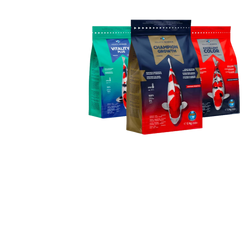
Koi carp are omnivorous with a tendency towards herbivorous. In captivity, they are fed with specialized floating pellets (33 to 45% protein), which allow visual monitoring of food intake : when the pellets sink without being consumed, the fish are satiated.

In aquaponics, feeding directly influences the fertilization of the plant system. Overfeeding is the most common mistake : unassimilated waste generates an ammonia spike and destabilizes the ecosystem.

Feeding frequency should be adjusted according to water temperature :
- Below 6-8°C : total cessation of feeding (metabolism blocked).
- Between 8 and 14°C : 1 to 3 times a week.
- Between 14 and 16°C : 3 to 7 times a week.
- Above 16°C : at least once a day.

Food should be stored in a cool, dry place away from light to prevent degradation or mold.

Koi overwintering : managing the cold season

Koi are a cold-hardy species, but their metabolism slows down significantly when the water temperature drops below 10°C. Below 6°C, they enter semi-hibernation and retreat to the deeper areas of the pond to minimize their energy expenditure.

In aquaponics, this period requires system adaptation. The production of nitrogenous waste drops considerably, which mechanically reduces the supply of nitrates for plants. This slowdown must be anticipated by favoring winter vegetable species (lamb's lettuce, watercress, bok choy) that tolerate reduced nutrient intake.

Filtration must remain active even in winter to keep the nitrifying bacteria dormant rather than letting them die. Turning off the pump for several consecutive days can suffocate the biofilter and force a new startup cycle in the spring, which takes 4 to 6 weeks. An active aerator prevents the formation of a homogeneous ice layer on the surface and preserves gas exchange.

For an outdoor system, it may also be worthwhile to integrate a pond heating system to prevent ice from paralyzing the pond, or even killing the fish in some extreme cases.

What are the ideal plant combinations ?

Koi carp interact with plants indirectly but fundamentally : their waste, transformed by bacteria into nitrates, constitutes the essential part of plant fertilization. The choice of plants must therefore take into account their pH and nutrient requirements, which must be compatible with the parameters maintained for the koi.

The most suitable species are lettuce, basil, mint, spinach, and aromatic herbs in general. These plants effectively absorb nitrates, filter water, and grow quickly, contributing to the chemical balance of the system.

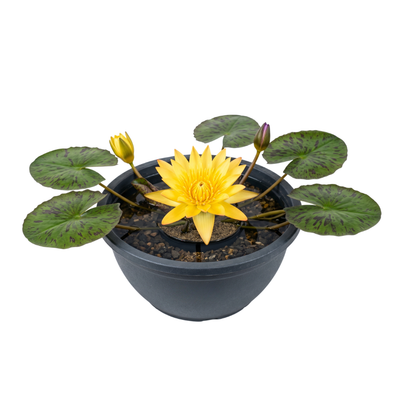
Ornamental aquatic plants (lotus, water lilies) can also be integrated into the pond, provided they are placed in baskets to protect them from the koi, which may damage or uproot them. The surface covered by aquatic plants should not exceed 30% of the total pond surface, to avoid oxygen deprivation in the water at night.

Common mistakes to avoid in koi farming

The first mistake is underestimating the pond volume. A pond that is too small amplifies every chemical imbalance and leaves no room for error. A generous volume always pays off in the long run.

The second mistake is neglecting biological filtration. An undersized filter or an unstabilized biofilter cannot handle the organic load produced by adult koi. The result is consistently the same : ammonia accumulation, fish stress, and mortality.

The third mistake is starting without a stabilized bacterial cycle. Introducing fish into a new pond without having initiated the nitrogen cycle immediately exposes the koi to toxic peaks. Bacterial startup must precede any introduction of animals.

The fourth mistake is the imbalance between fish load and plant surface area. Too many fish for too few plants leads to nitrate accumulation in the water. Too few fish for a large plant surface area deprives plants of nutrients. Balance must be built gradually.

Finally, the lack of regular monitoring of parameters (NH₃, NO₂⁻, pH, temperature) is the number one cause of silent crises. Weekly water testing is the minimum to anticipate imbalances before they become critical.

Essential Equipment

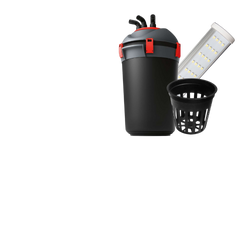
A high-performance koi pond relies on four key pieces of equipment.

The filtration pump renews the entire volume of water in a maximum of 2 to 3 hours and operates continuously.

The biological filter houses the nitrifying bacteria : an undersized biofilter is the primary cause of failure in koi aquaponics.

The UV-C filter limits the proliferation of algae and pathogenic microorganisms.

Finally, an aeration system (fountain, diffuser, or water jet) maintains dissolved oxygen above 6 mg/L, benefiting both fish and bacteria.

Conclusion : Koi, a demanding but rewarding choice

Koi carp are an excellent choice for ornamental and productive aquaponics, provided their fundamental needs are met : space, effective filtration, consistent water quality, and regular monitoring of parameters.

Their integration into a well-designed aquaponics system creates a virtuous cycle : koi fertilize the plants, the plants purify the water, and bacteria ensure the transition. It's a living ecosystem that requires attention, but in return offers great resilience and a true sense of management satisfaction.

Start with a generous volume, stabilize your bacterial cycle before introducing any fish, and gradually adjust the density. Patience is the primary quality of a successful aquaponist working with koi.