Algae in the Pond in Summer : Causes & Solutions

15 May 2026
Algues dans le bassin l'été : causes & solutions

Summer pushes your pond to its biological limits, and algae thrive on the slightest weakness. Here's how to understand the mechanics of summer proliferation and regain control naturally.

Pond Algae : Summer's Broken Balance

When summer arrives and the water temperature rises above 20°C, many ponds turn a greenish tint within a few days or become covered with silky filaments on the surface. This is never by chance, but the result of an imbalance between light, nutrients, and oxygen. Understanding the mechanisms involved radically changes how to act.

This guide reviews the three main types of algae you'll encounter in your garden pond, from harmless filamentous algae to toxic cyanobacteria. You'll find the precise parameters to measure, natural methods that truly work, and common mistakes that worsen the situation. The goal remains a clear, lively, and stable pond, without relying on any miracle products.

Why summer causes algae to explode

Summer combines three factors that transform a balanced pond into an algae cauldron. The water temperature climbs above 20°C, direct sunlight reaches 12 to 14 hours per day, and fish metabolism accelerates, increasing waste and food requirements.

Under these conditions, algae photosynthesis dramatically speeds up. A phytoplankton cell can double in less than 24 hours when the temperature exceeds 22°C with sustained lighting.

Algae then exploit the slightest free nutrient in the water. The more direct sun the pond receives, the more organic waste accumulates, and the more explosive the proliferation becomes. An uncontrolled outbreak can occur in just a few days.

Understanding this mechanism allows for acting on the right levers rather than merely reacting.

Filamentous algae under the microscope

Filamentous algae form those long, silky green strands that wrap around rocks, plants, and submerged accessories. Three genera dominate in European ponds : Spirogyra, Cladophora, and Oedogonium.

Spirogyra appears early in spring when the water reaches 12 to 15°C. Cladophora takes over in mid-summer, forming dense, almost felt-like clumps. Oedogonium attaches to rigid supports and tolerates water circulation poorly.

These algae thrive in clear water, rich in nitrates, sparsely planted, and exposed. They are not toxic to fish, but they gradually suffocate the pond by trapping waste and consuming nocturnal oxygen.

Regular removal with a telescopic pond net remains the most effective preventive measure to limit their biomass before they cover the surface.

Green Water, the microscopic invasion

The cloudy green water that sometimes appears within 48 hours is not a disease, but a phytoplankton bloom. Single-celled microalgae, mainly of the genus Chlorella or Scenedesmus, multiply suspended in the water.

Each liter can contain several million cells invisible to the naked eye. Their size is around 5 to 20 microns, which allows them to pass through almost all conventional mechanical filters.

Unlike filaments, phytoplankton is not always harmful. It even serves as food for daphnia and young fish. But its uncontrolled proliferation blocks light, suffocates submerged plants, and drastically reduces dissolved oxygen at dawn.

Water that turns green in less than a week almost always indicates a nutrient imbalance that needs to be corrected quickly.

Cyanobacteria, the real danger

Often mistaken for green algae, cyanobacteria form blue-green, sometimes reddish, veils with a foamy or painted appearance. They are not algae but photosynthetic bacteria, and that's what makes them formidable.

Certain species, such as Microcystis or Anabaena, produce microcystins, hepatotoxic toxins dangerous to fish, amphibians, dogs that drink the water, and humans through prolonged contact.

They appear in warm, stagnant water, rich in phosphorus and poor in available nitrogen. Water that smells strongly of mud, takes on a turquoise hue, and has a film on the surface should immediately raise an alert.

If you suspect a cyanobacterial bloom, restrict access to the pond, stop feeding the fish, and initiate maximum oxygenation before any treatment.
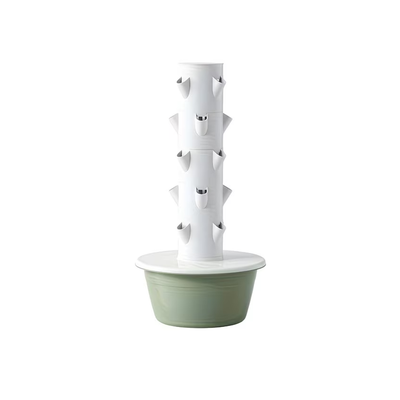
Test your water to diagnose

Before acting, one must measure. The responsible nutrients come from three main sources : fish excrement, daily overfeeding, and dead leaves decomposing at the bottom.

Four parameters warrant weekly monitoring in summer. Nitrates (NO₃) should remain below 50 mg/L for a recreational pond, ideally below 25 mg/L. Phosphate (PO₄), often overlooked, should fall below 0.035 mg/L to truly curb algae.

Carbonate hardness (KH) between 6 and 10°dH stabilizes the pH within the 7 to 8.5 range. Water that is too soft will see its pH skyrocket in direct sunlight, stressing fish and promoting certain algae.

Also measure dissolved oxygen early in the morning, before sunrise ; this is the critical time of day. A monthly pH test and nitrite test are no longer sufficient at 22°C.

The manual withdrawal, the first step

No treatment will yield results without first removing visible biomass. Filaments concentrate weeks of accumulated nutrients, and leaving them in place means restarting the cycle every time.

A fine-mesh net is sufficient for ponds up to 5 m³. Beyond that, it's better to invest in a telescopic model with a 1.60 m handle to reach the center without getting into the water and disturbing the fish.

Proceed early in the morning, when the algae are engorged with oxygen and easier to catch in clumps. Rotate the net like a spaghetti fork ; the filaments will naturally wrap around the frame.

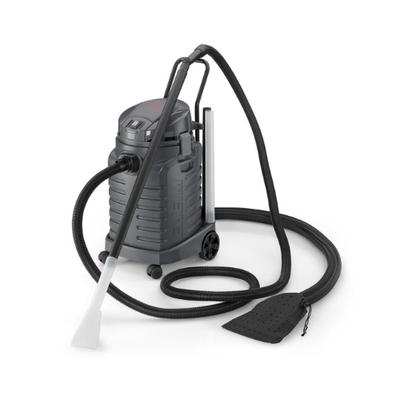
Take the opportunity to vacuum the bottom silt with a pond vacuum cleaner every two months. This layer of sediment traps phosphates and organic matter, a true nutrient reservoir for summer algae.

Good bacteria at work

Heterotrophic bacteria are the invisible allies of a clear pond. They directly consume nitrates and dissolved organic carbon, depriving algae of their main fuel without any chemicals.

A mature biological filter already contains billions of these microorganisms. But in summer, their activity increases with temperature and a boost often proves useful, especially after filter cleaning or medication treatment.
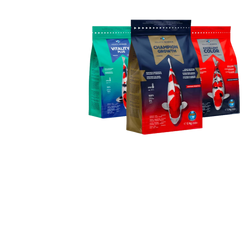
Bacterial activators provide selected strains capable of rapidly colonizing filter media. Allow two to three weeks to observe a clear clarification of green water.

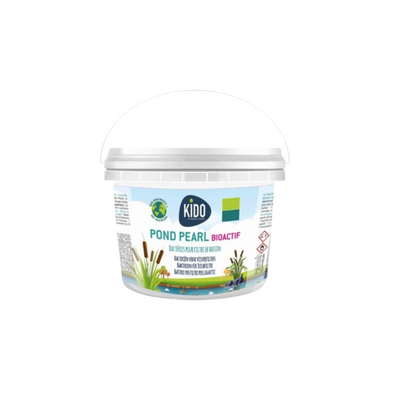
Long-lasting bacterial balls gradually release their load over one to two months. A practical solution for outdoor ponds where you want to limit interventions while maintaining a stable background effect.

Barley straw, a grandmother's remedy

Known to British fish farmers since the 19th century, barley straw acts slowly but durably. As it decomposes in water, it releases polyphenols which, when oxidized by light, produce tiny amounts of hydrogen peroxide.

This molecule inhibits cell division in single-celled and filamentous algae without harming fish, plants, or bacteria. The recommended dosage is around 50 grams per cubic meter of water for a noticeable effect.

Place the straw in a floating mesh bag, ideally near a pump return to maximize oxygenation around it. The effect appears after four to six weeks, once decomposition has begun.

This is a preventive rather than a curative method. Installed from April onwards, it stabilizes the pond for the entire warm season. As a curative measure for an already colonized pond, its action alone remains insufficient.

Plants steal light

A plant cover of 50 to 70% of the surface radically changes the game. Water lilies, lotuses, and other floating plants cast a soft shadow on the pond bottom, depriving algae of the light they covet.

Water hyacinths and water lettuce, in addition to their shading effect, have submerged fibrous roots that directly pump dissolved nitrates and phosphates. An adult hyacinth absorbs up to 1.9 grams of nitrogen per day.

Below the surface, elodea, myriophyllum, and ceratophyllum oxygenate the water during the day and provide shelter for fry. They also consume nutrients in direct competition with algae.

Balance is built over several seasons. Allow for one water lily per 2 to 3 m² of surface and supplement with several submerged oxygenating plants from planting to speed up the process.

Oxygen, the anti-algae ally

Dissolved oxygen often plays an underestimated role. At night, algae consume as much O₂ as they produce during the day, and fish suffocate at dawn when the concentration drops below 4 mg/L.

A good capacity air pump agitates the surface and facilitates gas exchange with the atmosphere. Aim for an air flow rate of approximately 0.5 to 1 liter per minute for every 1,000 liters of pond water in midsummer.

Porous air stones diffuse fine bubbles that remain in contact with the water longer and oxygenate better than large bubbles. Place them at the deepest point to agitate the entire water column.

A water jet, waterfall, or pump return directed towards the surface supplements oxygenation during the day. At night, the air pump takes over and prevents sudden drops in oxygen that are fatal to fragile fish.

Mistakes that make the problem worse

The first mistake is to completely drain the pond to start from scratch. This operation destroys the mature bacterial flora, and the new water, rich in mineral nutrients, becomes an ideal breeding ground for immediate recolonization.

Overfeeding fish exacerbates the problem within a few days. An adult koi carp is content with a portion equivalent to 1 to 2% of its weight per day, divided into two feedings. Any excess ends up in the filtration system or at the bottom. To avoid overfeeding, consider installing an automatic fish feeder.

The systematic use of chemical algaecides certainly eliminates algae, but a massive dead biomass consumes a lot of oxygen as it decomposes. The risk of fish asphyxiation becomes real in the days following treatment.
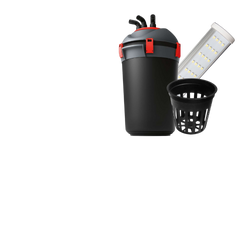
As a curative measure for an already unbalanced pond, the bioactive anti-algae tablet remains preferable, as it combines targeted action with stabilizing bacterial input.

A clear pond, a living ecosystem

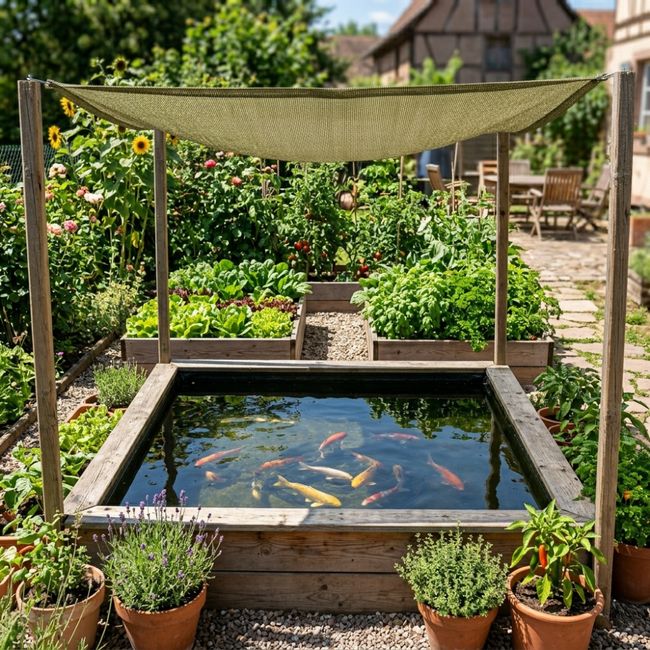
Summer algae blooms are never inevitable. They are a signal from your pond alerting you to an excess of nutrients, a lack of shade, or insufficient oxygenation. Reacting at the right time, with the right tools, is almost always enough to restore balance within a few weeks.

The best strategy remains preventive. A well-designed vegetable cover, filtration adapted to the volume, reasonable feeding, and weekly monitoring of parameters in July-August will save you from almost all problems. A pond that calmly passes through the summer is a pond where every link, from bacteria to plants, is doing its job.