Regulating pH in an aquaponics system

Written by Tristan Ulrich · December 19, 2025
ph en aquaponie

pH is one of the most sensitive and critical parameters in aquaponics. It directly influences the health of the fish, the effectiveness of nitrifying bacteria, and the plants' ability to absorb nutrients.

An improperly controlled pH can slow crop growth, cause visible deficiencies, or weaken fish, even if the rest of the system appears to be functioning correctly.

Why pH is a central parameter in aquaponics?

In aquaponics, pH directly determines the biological stability of the system. Poor pH control can slow down nitrification, cause deficiencies in plants, increase the toxicity of certain compounds to fish, and make the system generally more fragile.

What makes pH tricky to manage is that it shifts constantly. It is influenced by fish feeding, bacterial activity, source water quality, plant density, and even the maturity of the system. Unlike hydroponics, the aim is not to "correct" pH quickly, but to support and stabilise it.

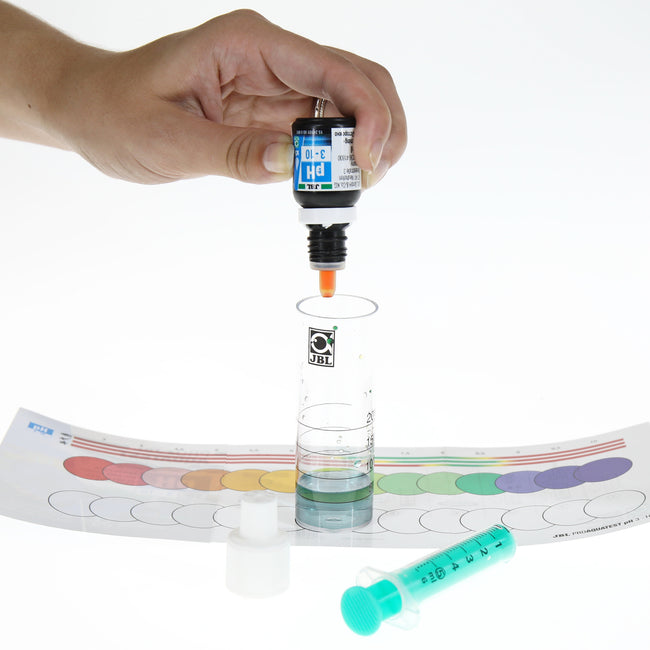
Measuring the pH of water in an aquaponic system

How does pH affect the system?

For fish, pH has a direct bearing on two key factors: physiological stress and ammonia toxicity. The higher the pH, the more dangerous the toxic form of ammonia (NH₃) becomes. This means that at a high pH, the same ammonia level poses a far greater risk than it would at a lower pH — a point that is often underestimated.

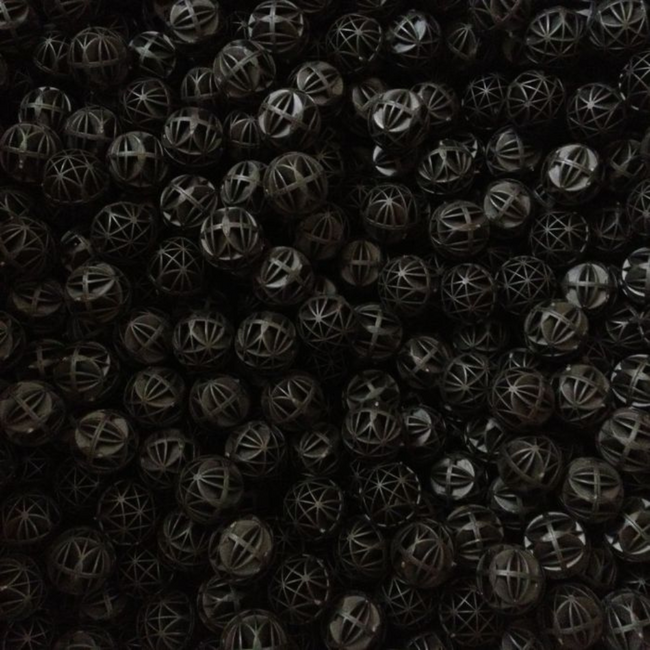
Nitrifying bacteria, which convert ammonia into nitrites and then into nitrates, have an optimal operating range. When pH drops too low, their activity slows considerably. The system can then accumulate ammonia or nitrites, even when the biofilter is correctly sized.

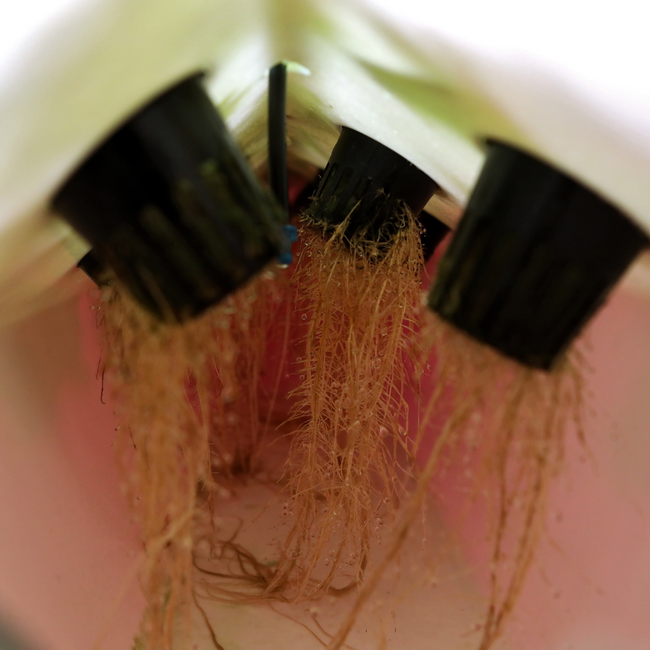
Plants, for their part, rely on pH to absorb nutrients. At a high pH, iron, manganese, and sometimes phosphorus become poorly available. At too low a pH, other mineral balances deteriorate, which can affect growth or fruit quality.

What pH range to aim for in practice

What pH range should be targeted in practice ?

In most aquaponic systems, the most functional range is between 6.4 and 7.0. This zone allows for efficient nitrification while maintaining good nutrient availability for plants.

A pH around 6.6 to 6.8 is often an excellent compromise. It limits iron deficiencies, protects fish from excessive ammonia toxicity, and allows the biofilter to function properly.

It is important to understand that stability is more important than precision. A system stable at 6.4 will often give better results than a system fluctuating between 6.8 and 7.4. Living organisms tolerate slightly imperfect pH well, but very poorly frequent variations.

Why pH almost always drops over time

Why does pH almost always decrease over time ?

In a mature aquaponic system, a gradual decrease in pH is normal. It is directly linked to nitrification. With each transformation of ammonia into nitrates, hydrogen ions are released, which acidifies the water.

The more productive the system (more fish, more food, more active bacteria), the more pronounced this acidification will be. If the initial water is low in minerals, the pH can drop quite rapidly because the water lacks buffering capacity.

This is why many systems seem stable at first, then encounter problems after a few months. The nitrogen cycle is then fully active, but the pH is no longer sufficiently maintained.

Measuring and interpreting the results Hydrogen Potential Test

Measure and interpret the results

Measuring pH is only meaningful if the results are interpreted over time. Drop tests are reliable for everyday use. Electronic pH meters are very accurate but require regular calibration.

The key is not the isolated value, but the trend. A pH that slowly decreases each week indicates that the system is using up its natural buffer. A pH that drops sharply often signals a more serious imbalance.

It is recommended to measure the pH at the same time of day, ideally once a week in a stable system, and more frequently during start-up or after a major change.

Correcting pH long-term Carbonate Hardness Test

Correcting the pH permanently

In most cases, a pH that is too low is the result of active nitrification combined with poorly buffered water. In other words, the system is functioning… but it lacks the mineral reserves to absorb the acidity produced.

In this situation, the most effective solutions rely on the gradual addition of carbonates, particularly calcium and potassium. These elements slowly raise the pH while strengthening the mineral structure of the system. The goal is not to correct the problem once, but to maintain the pH over time.

Hard, calcareous water naturally maintains a high pH, ​​even if the system is functioning correctly. The most consistent solution is to improve the quality of the makeup water, for example by mixing it with softer water.

Measure with precision Essential Pack : Aquaponics water analysis (NH4, NO2, NO3, pH, KH)

Measure accurately

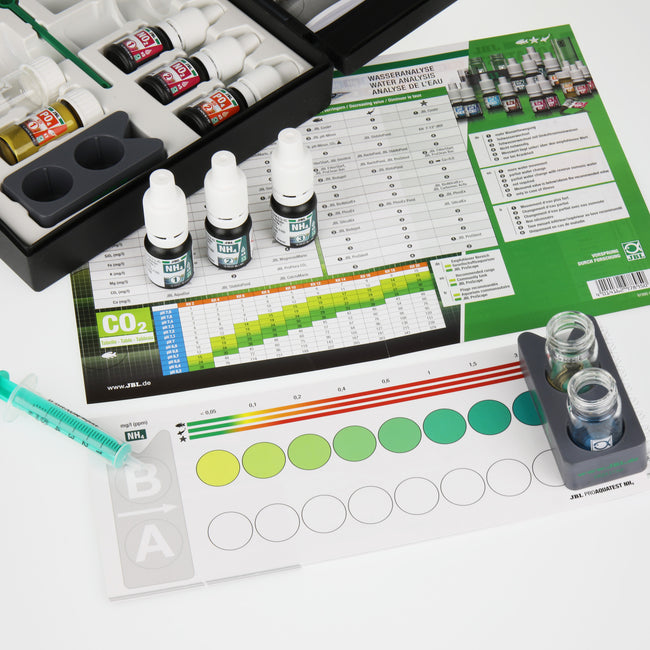
Managing pH without knowing other water parameters (such as hardness or nitrates) is like driving blindfolded. Paper test strips are often inaccurate and difficult to read. To make the right decisions, you need to visualize what's really happening in your water using reliable colorimetric tests (drop tests).

The essential investment is a Complete Analysis Kit (like the JBL one). Unlike cheap electronic gadgets that malfunction, these laboratory tests give you reliable readings for pH, as well as for Iron, Nitrates, and Hardness.

This is the only way to know if your pH drop is due to active nitrification (good sign) or a water hardness problem (bad sign).

The "Double Action" Buffer Potassium Bicarbonate

The "Double Action" Tampon

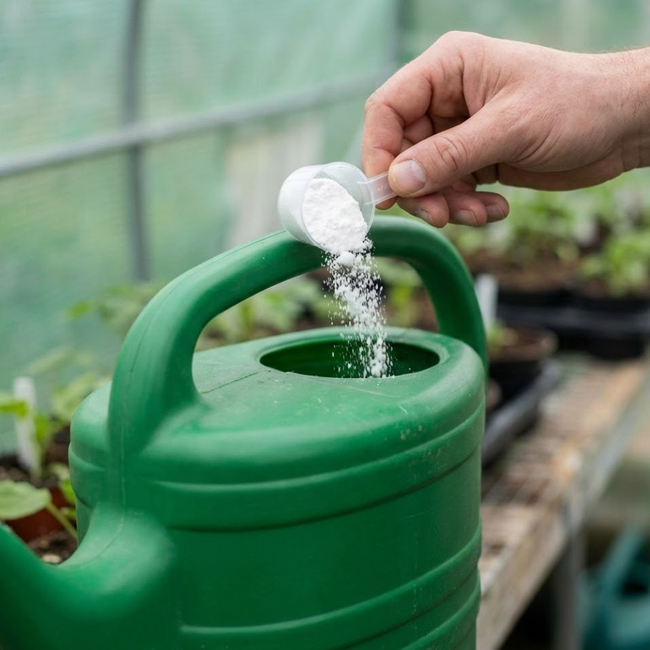
When the pH drops, the common mistake is to use generic chemicals. In aquaponics, we have access to a much more effective tool : Potassium Bicarbonate (KHCO₃). This product, available as a crystalline powder, is the preferred solution for professionals because it does more than just raise the pH.

Its primary role is to raise the carbonate hardness (KH), creating a buffering effect that stabilizes your water and prevents sudden fluctuations that can be harmful to fish. But its main advantage lies in its formula : it provides your plants with potassium (K). This is the most essential nutrient for the flowering of tomatoes and fruiting vegetables.

Conclusion: pH, deficiencies and overall system stability

pH is one of the main causes of "phantom" deficiencies in aquaponics. It is not uncommon to see plants yellowing or stagnating even though the nutrients are present in the water. In many cases, the problem is not a shortage but a nutrient uptake blockage caused by an unsuitable pH. A pH that is too high prevents iron absorption in particular, leading to chlorosis in young leaves. Conversely, a pH that is too low can disrupt other mineral balances and weaken certain crops, especially fruiting plants.

Before adding supplements or correctors, it is therefore essential to check the pH and analyse how it changes over time. Very often, stabilising the pH is enough to restart growth and correct symptoms without any further intervention.

In the long term, a well-managed pH makes the system more tolerant, more productive, and easier to maintain. It becomes a true indicator of the maturity and stability of the aquaponic ecosystem.

Sources

Oklahoma State University Extension, Nitrification and Maintenance in Media Bed Aquaponics, Cycling duration, pH range tolerated by nitrifying bacteria, and ammonia and nitrate thresholds.

New Mexico State University, Circular 680, Aquaponics, Water quality thresholds used here for oxygen, nitrogen and alkalinity, and the toxic fraction of ammonia as a function of pH.

Oklahoma State University Extension, Recirculating Aquaculture Tank Production Systems, Aquaponics, Integrating Fish and Plant Culture, pH compromise between bacteria and plants, and a protocol for alternating potassium and calcium base additions.

Eck, Körner and Jijakli, Nutrient Cycling in Aquaponics Systems, Aquaponics Food Production Systems, Springer 2019, Acidification linked to nitrification, and availability of potassium, calcium and magnesium depending on pH.

UF/IFAS HS1252, A Practical Guide for Aquaponics as an Alternative Enterprise, Typical daily feeding rates and top-up water renewal volumes.

Frequently asked questions

No. Fill the system, let it run, and allow nitrification to acidify the water on its own. You will only need to intervene if the pH stays stubbornly high after cycling.

There's no universal dose, because the result depends on your water volume, its starting carbonate hardness, and the intensity of nitrification. The only reliable method is to work in very small increments — dissolve the powder in a bucket of system water before pouring it slowly into a high-flow area, then measure again twenty-four hours later. A rise of around two tenths of a pH unit per day is a reasonable pace, and more than sufficient for a living system.

The second habit to develop is not to make potassium carry the entire load. Aquaponic design guides describe an alternating base addition approach, where potassium hydroxide and calcium hydroxide are added in comparable quantities several times a week to hold pH around 7.0 in commercial units. The same logic applies at a domestic scale. Alternating a potassium source with a calcium source avoids saturating the system with a single cation, while simultaneously covering two plant requirements.

The classic mistake is to correct once, generously, and think no more of it. A productive system continuously consumes its buffer, so a single heavy correction merely shifts the problem — and gives the fish a pH shock into the bargain. A small, regular weekly addition, logged in a notebook, is far better than a massive intervention every two months.
This is a common phenomenon. Dissolved carbon dioxide acidifies the water, and its concentration varies throughout the day depending on photosynthesis by plants and algae, fish activity and the effectiveness of aeration. Water with poor circulation at the end of the night often shows a slightly lower pH than it does at the end of the afternoon.

A small variation between two points in the day requires no action, provided you always measure at the same time so that comparisons are meaningful. On the other hand, a fluctuation that widens from week to week generally indicates a buffer that is becoming exhausted or aeration that has become insufficient relative to the system's load.

Yes, and it is the habit that makes the biggest difference. pH is merely the visible result; the real reserve is carbonate hardness, that is to say the alkalinity of the water. It is consumed silently over weeks, then the pH drops suddenly when there is nothing left to absorb the acidity produced by nitrification.

University aquaponics guides recommend keeping alkalinity at a high level, in the region of one hundred milligrams per litre expressed as calcium carbonate equivalent. A monthly alkalinity test is sufficient to see the drop coming several weeks in advance — something a simple pH reading can never do.

Most imbalances do not stem from the system itself, but from seemingly routine maintenance actions.

  • Topping up evaporation losses with water very different from that already in the pond, whether reverse osmosis or heavily hard water.
  • Cleaning the biofilter and the pre-filter on the same day, which causes nitrification to restart unevenly.
  • Adding a corrector directly into the pond without prior dilution, creating a zone of extreme pH around the fish.
  • Increasing feeding without adjusting the buffer, given that acidification follows the quantity of food added.
  • Reading a pH test under coloured artificial lighting, which distorts colour comparison.

None of these mistakes shows up on a single reading; they only become apparent across a series of measurements.

Certainly not via pH. The genuinely toxic fraction of ammonia — the un-ionised form — increases sharply as pH rises. Raising the pH during an ammonia spike therefore converts a tolerated reserve into active poison for the fish in one go.

The correct procedure is as follows. Stop feeding, push aeration to its maximum, check that dissolved oxygen remains comfortably above five milligrams per litre, then wait for total ammonia nitrogen and nitrites to fall back below the one milligram per litre threshold recommended by aquaponics guides. Only once these values have been brought under control should the buffer and pH be restored, gradually.

Read next

Koi carp in aquaponics

Koi carp in aquaponics

Koi carp is one of the most popular species used in ornamental aquaponics. Hardy, gregarious, and producing a good amount of waste, it integrates perfectly into a well-designed system. This comprehensive guide gives you

Read the article
Growing lotus in aquaponics

Growing lotus in aquaponics

The lotus is an aquatic plant whose flowers are emblematic of the most beautiful ornamental ponds. In aquaponics, in an ornamental system (a pond with goldfish or koi carp) that does not need to

Read the article
Aquaponics and Summer Holidays

Aquaponics and Summer Holidays

You're going away for two weeks in July and your aquaponics system will be running without you : this thought rightly makes you anxious, because heatwaves, evaporation, and fish feeding raise practical questions. Good

Read the article
Salmonponics: aquaponics in cold water

Salmonponics: aquaponics in cold water

Aquaponics is often associated with pond fish like goldfish and koi. However, there is a variant perfectly suited for our temperate regions, cool climates, and winters : salmoponics. Trout, char, brook trout, these iconic

Read the article
Is aquaponics suitable for animal welfare ?

Is aquaponics suitable for animal welfare ?

We often talk about what aquaponics produces. But rarely about what the fish that make it work experience. Are they simply tolerated in a system designed for production, or can aquaponics truly respect their

Read the article