Preparing your aquaponic system for autumn

Written by Tristan Ulrich · September 19, 2026
Système aquaponique de jardin en automne avec feuilles mortes sur le lit de culture

Autumn is the season that determines the health of your system throughout winter, as the water cools faster than the aquaponist's habits tend to change. Here is how to manage this transition without stressing your fish or crashing your biofilter.

Why autumn changes everything in aquaponics

Between mid-September and the end of November, an outdoor aquaponic system often loses 10 to 15 °C of water temperature. This cooling does not simply slow plant growth — it fundamentally alters three interconnected balances: the appetite and digestion of the fish, the activity of the nitrifying bacteria in the biofilter, and the organic load reaching the filtration. An aquaponics keeper who carries on feeding as they did in August will mechanically produce an excess of ammonia that their slowed-down biofilter can no longer handle.

This article follows the transition in the order it actually unfolds in practice. You will first see what the cold really changes in the water, then how to adapt feeding quantities and feed type, how to support the bacteria, how to manage fallen leaves and filtration, how to adjust crops to the reduced light levels, and finally what equipment checks to carry out before the first frosts. The numerical benchmarks are given as ranges, since they depend on your species, your volume, and your climate.

When autumn arrives where you are

The mid-September to late-November window described here corresponds to a temperate oceanic climate. It shifts depending on the region: two to four weeks earlier in Scandinavia and central Europe, where cooling is also more abrupt, and often a month later around the Mediterranean, where some ponds never drop below ten degrees.

The rest of the guide remains unchanged, because it is built around water temperature thresholds rather than dates. Monitor these thresholds with a thermometer submerged in the pond, and the sequence will be right for you whatever the calendar says.

Cooling water in an aquaponic pond on an autumn morning Floating pond thermometer

What cooling changes

Water has high thermal inertia, which gives a false sense of security. A 1,000-litre pond follows air temperature with a two-to-four-day lag, but it follows it nonetheless, and once the average night-time temperature is consistently below 10 °C, it will not recover.

Freshwater fish are ectotherms; their metabolism depends directly on water temperature. Between 20 and 12 °C, digestion slows considerably, and below 10 °C most temperate species almost stop feeding altogether. This is not a sign of illness but a perfectly normal period of dormancy.

The same cooling affects the bacteria in the biofilter, with a useful lag worth knowing about. They remain active longer than fish appetite lasts, which gives you a comfortable window if you reduce feeding rations before the water drops too low. The nitrogen cycle does not stop — it simply slows down.

Measuring water temperature in aquaponics in autumn with a probe

Monitoring water temperature

A daily reading taken at the same time of day is worth more than a highly accurate reading taken at random. In autumn, the gap between early morning and mid-afternoon can easily reach 3 to 5 °C in a small volume, and it is the morning reading that determines whether to feed.

A remote-probe thermometer left in place avoids opening the system every day. Log the reading in a notebook or spreadsheet, because it is the trends over seven days that matter, not isolated spikes. Two cold days followed by a mild spell are no reason to stop feeding; a full week below 12 °C is.

Also remember to take your reading at the bottom rather than the surface if your pond exceeds 60 cm in depth. Thermal stratification is minimal in a well-circulated system, but it does exist in poorly circulated ponds, and your fish spend autumn in the lower layer.

The transition calendar: September to November

The exact dates depend on your location, but the sequence is always the same and benefits from being planned in advance. In September, the water stays above 16 °C in most regions and the system is still running at full capacity. This is the time for major maintenance work — clearing the settling chamber, rinsing the foam pads, trimming the filter plants — while the bacteria can still recover quickly.

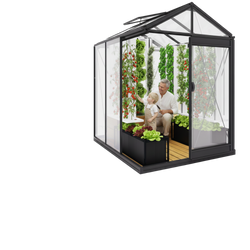
In October, the water generally drops below 14 °C. Feeding rations decrease, the feed changes, and the leaf net goes on. This is also the ideal window to install a shelter or close up a greenhouse, since you gain a few degrees for free at precisely the moment they matter most.

In November, the system enters winter mode. The biofilter is left untouched, feeding is reduced to very little or stopped entirely depending on the species, and the focus shifts to monitoring. Here are the temperature thresholds that trigger each action.

  • Above 16 °C: normal regime, full ration, heavy maintenance possible
  • Between 16 and 12 °C: ration halved, gradual switch to a highly digestible feed
  • Between 12 and 8 °C: one meal every two to three days, wheatgerm feed
  • Below 8 °C: feeding stopped for most temperate species
  • Below 4 °C: monitoring only, no maintenance of filter media
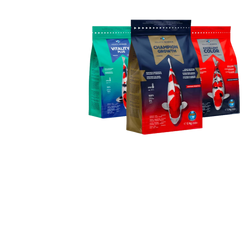
Reduced pellet ration for fish in aquaponics during autumn Floating food for koi carp in cool water

Reducing the ration gradually

The most reliable rule is to follow appetite rather than the calendar. Feed the amount consumed in two to three minutes, then remove whatever remains. If pellets are still floating after five minutes, the next day's ration should be reduced.

In practice, feeding typically goes from 1.5 to 2% of body mass per day in summer down to around 0.5% at 14 °C, then to one feed every two or three days below 12 °C. For 10 kg of fish, that means dropping from 150 to 200 grams daily to around fifty grams, then to almost nothing.

This reduction doesn't starve anyone — it respects the animal's physiology. Undigested food sits in the digestive tract and ferments, causing far more serious problems than a seasonal fast. We cover this point in more detail in our article on animal welfare.

Classic pellets and wheatgerm pellets for autumn feeding

Changing feed as the temperature drops

Below 14 °C, a pellet rich in animal protein becomes difficult to digest. Aquarists who keep ponds have long used what are known as wheatgerm foods, whose starch is better assimilated at low temperatures, with a reduced protein level that typically sits around 25 to 30% compared with 40 to 45% during the main growing season.

The switch should be made gradually, over one to two weeks, by blending the two foods in decreasing proportions. An abrupt changeover disrupts the intestinal flora and frequently results in poorly formed faeces, visible in the settling chamber a few days later.

At this time of year, opt for a floating pellet — it allows you to see at a glance what has not been eaten and to adjust the quantity the following day. Our pond fish foods clearly distinguish between these seasonal formulations.

Biofilter media colonised by nitrifying bacteria in aquaponics

The biofilter slows down in cold weather

Nitrifying bacteria work best between 17 and 34 °C. Several aquaculture sources place the loss of efficiency at around 50 % near 18 °C compared to the optimum, with a very marked drop below 10 °C. They do not die, however — they enter dormancy and restart in spring.

In practical terms, your system processes less ammonia per hour at the very moment when the slightest feeding error produces more of it. This is precisely why rations should be reduced before the temperature drops, not after.

Avoid cleaning the biological media in autumn under any circumstances. Rinsing it with tap water, which is chlorinated, destroys a population that will not re-establish itself for several weeks at that time of year. If rinsing becomes unavoidable, do it in a bucket of system water, never under a tap.

Test the water more often, not less

Many aquaponics growers ease off monitoring when the growing season ends, precisely when the system is at its most vulnerable. The combination of a slowed biofilter, an increasing organic load from falling leaves, and a gardener spending less time outside creates the perfect conditions for an ammonia spike that goes unnoticed.

Weekly testing is sufficient as long as the water stays above 14 °C, provided you actually do it. Below that, move to two checks per week during the transition month, then return to a weekly schedule once the winter regime is established and feeding has stopped. Record every reading — a slow drift shows up in a series of figures, never in a single measurement.

Keep an eye on pH as well, which tends to drift when nitrification slows and plant uptake falls. Our article on pH regulation in aquaponics covers the gentle corrections to favour.

  • Ammonia and nitrites: twice a week during the transition period
  • pH and carbonate hardness: once a week
  • Temperature: every morning at the same time
Protective net holding back fallen leaves above a pond in autumn

Dead leaves, the silent enemy

A handful of fallen leaves in a 1,000-litre pond seems harmless enough. As they decompose, they consume oxygen, release tannins that turn the water brown and slightly acidify it, then load the settling chamber with a fine matter that is difficult to remove.

The most effective solution is a mechanical one. A net with a 10 to 20 mm mesh stretched over the pond from the very first week of leaf fall retains most of them, provided it is taut enough not to dip into the water. A slack net turns into a debris trap that eventually releases what it was holding.

Remove the build-up every two or three days during windy periods. If leaves have already settled on the bottom, remove them with a wide-mesh landing net rather than by draining, as a large water change at this time of year inflicts a thermal shock that is entirely avoidable.

Cleaning a filter sponge in the system water in autumn Complete pond aerator, 540 or 1,000 L of air per hour

Cleaning the filtration before the cold sets in

The mechanical filter, for its part, must be clean before winter sets in. Sludge that has built up over the summer continues to mineralise slowly and consumes oxygen, precisely where your system needs it most.

The right approach is to rinse the foam media and purge the settler in late September or early October, while the water is still above 14 °C and the bacteria can quickly replenish what has been removed. Always rinse in a bucket filled with pond water, never under the tap.

Keep the two stages clearly separate in your maintenance routine: the mechanical filter needs cleaning regularly, the biological filter as rarely as possible. Water that turns cloudy after an autumn clean is almost always a sign of over-zealous rinsing — a situation we cover in detail in our article on cloudy water.

Air diffuser producing fine bubbles in an aquaponic pond

Oxygen remains a priority

Cold water holds more dissolved oxygen than warm water, which might suggest that aeration becomes less important in autumn. The demand does indeed fall compared to summer, but it never disappears entirely, and keeping the aerator running remains one of the most important tasks of the season.

Several consumers continue working as the water cools. Leaves and plant debris breaking down, sludge settling on the bottom, the bacteria in the biofilter — working more slowly but not stopping — and the fish themselves, whose metabolism is slowing: all of them draw from the same reserve. There is also a purely mechanical effect: a pond covered with a tarpaulin or sheltered inside a greenhouse exchanges far less gas with the open air, since both the surface area in contact with the atmosphere and wind-driven agitation are reduced.

Keep the air pump running throughout winter, reducing the flow rate slightly if needed. On an outdoor pond, an air pump kit sized for the volume — complete with pump, pipes, and diffusers — will see out the season without intervention. In late autumn, raise the diffuser to mid-depth rather than leaving it on the bottom, because a diffuser placed right at the base circulates the coldest layer upwards and equalises the temperature throughout the volume, whereas the fish are actively seeking that lower, more stable zone in which to overwinter.

Low autumn light over lettuces grown in a greenhouse

Matching crops to available light

Temperature is not the only limiting factor. With around ten hours of daylight per day, most leafy vegetables slow down considerably, regardless of the heat available. In temperate Europe, this threshold is crossed towards the end of October and does not recover until mid-February.

Summer crops still in place — tomatoes, cucumbers, basil — will not make up the lost ground. It is better to remove them than to leave them taking up space, as they continue drawing nutrients without producing anything. Clearing them also frees up light for cold-season crops.

Focus on hardy leafy vegetables — lamb's lettuce, spinach, winter lettuce, chard, kale, watercress. Our selection of 15 plants to grow highlights those that tolerate the colder season best.

Aquaponic pump clogged with plant debris before winter

Checking the equipment before the frosts

Autumn offers the last comfortable opportunity to work on plumbing and electrics. Remove the pump, open the strainer, pull out any fibres wrapped around the shaft, and check the impeller. A clogged pump draws more power and overheats — two faults that will eventually cause it to fail in the middle of winter.

Next, check the frost-vulnerable points: above-ground pipes, fittings in dead-end positions, exposed valves. Any section of standing water in an outdoor pipe will freeze, and a cracked pipe is usually only discovered at the thaw, by which time the pond is already half empty.

Finally, check the drip loop on every electrical cable and make sure there is a 30 mA RCD on the circuit. This detail costs very little and prevents accidents at the time of year when moisture levels are at their highest.

Cover, insulate or heat?

Three approaches that are often confused, yet serve entirely different purposes. The right choice also depends on the species you're keeping and where the system is located. A pond of goldfish, koi carp or tench will happily overwinter outdoors without any heating in temperate Europe, provided there is a deep zone that won't freeze solid — around 80 cm to 1 m.

Covering is the simplest option. A tarpaulin, fleece or panel placed over the tank lets through less light, which reduces temperature swings between midday and night and so puts less stress on the fish. Its other benefit — often the main one at this time of year — is keeping leaves and debris out of the water. However, don't expect a significant heat gain from a cover; that's not what it does best.

Insulating is arguably the best option. By lining the walls and base of an above-ground tank with foam panels or boards, you retain the heat already stored in the water and increase the thermal mass of the volume. The benefit works both ways: the water heats up more slowly in summer and cools down more slowly in winter, stabilising the whole system year-round without any energy consumption.

Heating has its uses in certain situations, but they remain limited. It is costly, complicated to set up, and entirely dependent on the species being kept and the local climate. A heater is most justified for extending the season by a few weeks either side, not for producing in the depths of winter, and it should always be sized according to volume and the target temperature differential — never guesswork. Our guide on greenhouses and outdoor kits covers these trade-offs in detail.
Uneaten pellets floating on cold water, a sign of overfeeding

Classic autumn mistakes

The first mistake — by far the most common — is feeding out of habit. Pellets still floating after five minutes are a warning sign, not a minor detail. They will sink, break down, and generate pollution that a sluggish biofilter will be unable to process.

The second is the autumn deep clean, carried out with good intentions at entirely the wrong moment. Clearing the settler, rinsing the foam pads, and scrubbing the biological media all on the same November weekend is effectively restarting a cycle in the middle of cold weather.

The third is more subtle: switching off the air pump or the water pump to save a few pounds. Cutting the circulation deprives the biofilter of oxygen and kills it within days. All three pitfalls are among the common mistakes we have documented.

Autumn across European countries

The calendar given above applies to a temperate oceanic climate — that of north-west France, Belgium, or the Netherlands — where the drop below 14 °C typically occurs during October. It shifts considerably with latitude and altitude, and it is far better to calibrate it against your own readings than against a calendar date.

In southern Europe — Spain, Portugal, southern Italy, or Greece — the water often stays above 14 °C until November, and leafy vegetable production continues throughout winter without any shelter. The limiting factor there is less the cold than the reduction in light, which is very real even under a mild sky.

In the north and east — Germany, Poland, or Scandinavia — the transition begins as early as mid-September and frost sets in early. Cover becomes essential there, and pond depth is a design consideration, not a comfort one. Aquaponics keepers in the mountains, in the Alps or the Carpathians, follow a calendar close to that of the Nordic countries, sometimes a full month ahead of the neighbouring lowlands.

Conclusion: making the transition to winter successfully

Autumn demands no major work — it demands anticipation. Almost every incident at this time of year stems from a mismatch between the actual water temperature and the aquaponist's habits, whether that means feeding rations kept up for too long or a clean-out carried out a month too late.

Focus on the logic rather than the calendar. Measure, adjust the ration, switch feed, protect the surface, service the mechanical components, and leave the biological side alone. Once this sequence is in motion, winter passes with almost no intervention and the system comes back in March with the biofilter fully intact.

It is also the right time to prepare for the following season. A system correctly put into winter mode restarts faster in spring than one that was barely rescued in January, and that head start translates into weeks of extra harvest.

Sources

Connecticut Department of Energy and Environmental Protection, Winter Fish Kills, Winter mortalities caused by oxygen depletion under ice

Oklahoma State University Extension, Nitrification and Maintenance in Media Bed Aquaponics (HLA-6729), Slowing nitrification and maintaining the grow medium bed

Southern Regional Aquaculture Center, Recirculating Aquaculture Tank Production Systems: A Review of Current Design Practice (SRAC 453), Establishes that a large proportion of feed is released as solids and sizes aeration and settling requirements, forming the basis of the advice on mechanical cleaning before winter.

FAO, Cultured Aquatic Species Information Programme, Oreochromis niloticus, Sets out the lethal temperature thresholds and feeding rates expressed as a percentage of biomass, reference points used when reducing rations.

NSW Department of Primary Industries, Silver Perch (Bidyanus bidyanus) aquaculture, Official data sheet giving the optimum temperature, dissolved oxygen threshold, and free ammonia limit for a temperate farmed species.

Frequently asked questions

It depends entirely on the species. Temperate fish in an outdoor pond overwinter outside without difficulty, provided depth and oxygenation are adequate. Warm-water species cannot manage this — the FAO places the lower lethal temperature of Nile tilapia at around 11 to 12 degrees, for example, which means a frost-free indoor space or heating is essential.

The greater the volume and depth, the more stable the temperature at the bottom remains. In regions with hard frosts, a zone of at least eighty centimetres provides a refuge where fish stay motionless, provided the surface is never completely frozen over.

It is better to hold off. A fish arriving in cold water barely feeds, fails to rebuild its reserves, and recovers poorly from the stress of transport. The biofilter, already running slowly, then takes on an additional load it will do nothing with until spring. Delay the introduction until the water warms durably and appetite returns.

Yes, provided you space out feedings. The nature of the risk changes — it no longer comes from overfeeding but from a biofilter running slowly that lets through what it handled with ease in summer.

  • Un-ionised ammonia is the priority to monitor; aquaculture references place it between 0 and 0.05 ppm.
  • Nitrite comes next, with a reference range of 0 to 0.5 ppm.
  • Alkalinity warrants a monthly check, as low buffering capacity will cause pH to drop as soon as biological activity decreases.

In cold water, this is the expected behaviour. Concern begins if they come to the surface, breathe rapidly or rub against the walls — three signs that point to oxygen levels or a parasite, not the season.

Follow the same logic as in autumn, but in reverse and even more gradually. Resume very small quantities once the water holds steadily above around twelve degrees, keep using the cold-season feed until the warming is properly established, and do not return to summer rations until the biofilter has got back up to speed. Nitrifying bacteria restart more slowly than fish appetites, and it is precisely this lag that causes the spring ammonia spikes.

Read next

What to sow in autumn in aquaponics

What to sow in autumn in aquaponics

Autumn is not the end of the growing season — it is the start of the most peaceful one. Here is what to sow, when to do it and how to achieve leaf harvests

Read the article
Build your aquaponic system

Build your aquaponic system

Do you dream of growing your own fresh vegetables and fish at home, in just 2 m² of garden, without pesticides, without weeding, and using roughly 90% less water than in the ground? It

Read the article
Aquaponics and Summer Holidays

Aquaponics and Summer Holidays

You're going away for two weeks in July and your aquaponics system will be running without you : this thought rightly makes you anxious, because heatwaves, evaporation, and fish feeding raise practical questions. Good

Read the article
Recognizing deficiencies in aquaponics

Recognizing deficiencies in aquaponics

In aquaponics, plants can show signs of weakness even when the system appears balanced. Pale leaves, slowed growth, or deformities are often linked to subtle yet critical micro-deficiencies. These deficiencies involve essential elements such

Read the article
A practical calendar for success in aquaponics

A practical calendar for success in aquaponics

In aquaponics, the success of a season depends mainly on good upstream calendar management : periods of sowing, planting, ramp-up… and times when it is better not to intervene. Unlike a traditional vegetable garden,

Read the article
Controlling pests in aquaponics

Controlling pests in aquaponics

Aquaponics has a reputation for being a clean, ecological, and naturally protective method of cultivation. However, like any living system, it can be affected by pests : aphids, gnats, mites, invasive algae, or unwanted

Read the article