What is Aquaponics ?

Written by Ulysse Hay · May 22, 2025
Système aquaponique associant élevage de poissons et culture de légumes

Aquaponics is far more than a growing method: it is a living ecosystem in which fish and plants grow together in perfect harmony. Inspired by the workings of nature, this sustainable approach is attracting a growing number of people who want to produce their own food while respecting the environment. But what exactly is aquaponics?

Aquaponics: sustainable growing by combining fish and plants

What if you could grow vegetables while raising fish in perfect balance, where each element feeds the other with no water wastage and no pesticides? What might sound like an environmentalist's dream is in fact very much a reality: it is aquaponics, an innovative growing method that combines respect for nature, food self-sufficiency and ease of use. At a time when finding sustainable solutions is becoming a necessity, this system appeals to amateur gardeners and professional growers alike.

But how does aquaponics actually work? Where does it come from? And above all, is it possible to set up at home, even without a garden? In this article, we will dive into the fascinating world of aquaponics, explore its origins, understand its applications and discover how anyone can, at their own pace, adopt this approach to grow differently.

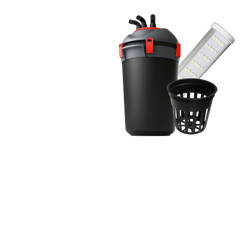
How does aquaponics work? Easy-Start Bacterial Activator

How does aquaponics work ?

In a pond, fish naturally produce waste that is rich in ammonia. This waste is then converted by bacteria into nitrate, a form of nutrient that plants can absorb directly.

The roots of the plants, submerged in a grow medium or simply in the water, take up these nutrients to grow. In doing so, they filter the water and purify it, allowing it to be returned to the fish tank.

This virtuous cycle makes it possible to grow vegetables, herbs, and even fruit whilst raising fish — all without soil, without adding chemical fertiliser, and with extremely low water consumption.

An ancient history and a modern revival

An ancient history and a modern renaissance

The Aztecs were already growing their vegetables on chinampas — floating islands on lakes that were naturally fertilised by fish-rich waters. In Asia, certain traditional rice paddies incorporated fish farming: the fish fertilised the plants, which in turn purified the water, forming a virtuous cycle. The idea of combining aquatic farming with plant cultivation is therefore far from new.

It was in the 1970s that the modern concept of aquaponics was rediscovered and formalised, notably in the context of the search for sustainable alternatives to intensive agriculture. Today, faced with water management challenges and the growing demand for more locally sourced food, aquaponics is experiencing a new surge of interest. Aquaponic farms are springing up on city rooftops, on the outskirts of towns, and on former brownfield industrial sites.

What are the benefits of aquaponics?

What are the benefits of aquaponics ?

Local and seasonal production : You grow ultra-fresh food at home, reducing your dependence on industrial circuits.

Water saving : More than 90% of water is reused in a closed circuit.

Naturally grown without chemicals : Fish and bacteria are at the heart of the system. The use of pesticides would be fatal to them.

Double production on a small surface : On the same space, you harvest both vegetables and raise fish.

Aquaponics at home Geraldine Aquaponics Kit

Aquaponics at home


Thanks to our aquaponics kits designed for home use, it's now possible to set up a productive system at home, even indoors, without necessarily needing a large garden. Transform a corner of your home into an indoor vegetable garden or set up a small pond on the patio : home aquaponics adapts to almost any space.

Many families today are choosing home aquaponics as a way to reconnect with nature, learn how to grow their own vegetables, and introduce children to ecology. Whether you have a small balcony, a terrace, a garden, or even a greenhouse, there are suitable solutions for getting started with aquaponics.

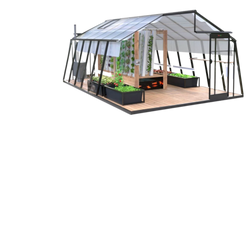
Large-scale aquaponics Myfood Aquaponics Greenhouse : Family 11 to 44m²

Large-scale aquaponics

By combining local food production, reduced chemical inputs, and low water consumption, aquaponics offers considerable advantages, particularly in urban areas or regions facing water stress. Innovative farming operations are now using aquaponics
as a lever for sustainable productivity, while providing consumers with healthy, locally grown food.

These professional aquaponic greenhouses can produce year-round, even in environments that would ordinarily be poorly suited to agriculture, thanks to precise system management, in soilless and greenhouse conditions.

Why choose aquaponics over hydroponics?

Why choose aquaponics over hydroponics ?

Aquaponics, a fusion of the terms "aquaculture" (fish farming) and "hydroponics" (soilless plant cultivation), offers a sustainable and environmentally friendly solution that surpasses hydroponics in many ways.

Unlike hydroponics, which relies on artificial nutrient solutions, aquaponics creates a symbiotic ecosystem where fish waste naturally provides the nutrients needed by plants. In turn, the plants purify the water, which is then recycled back to the fish.

This circular and self-sustaining agricultural model makes aquaponics more natural, while still producing healthy, high-quality food. Choosing aquaponics is a truly capable approach to addressing the challenges of food sovereignty and water scarcity by leveraging the best of aquaculture and hydroponics.

Aquaponics for greater food independence MyFarm Aquaponic Kit for Greenhouses

Aquaponics to gain food independence

Faced with changing lifestyles and uncertainties related to food supplies, many households are looking to produce some of their own food. Aquaponics fits perfectly into this approach.

It allows you to grow fresh vegetables and raise fish at home, all year round, even in small spaces.

With a well-designed aquaponics system, everyone can improve their quality of life by reducing their dependence on traditional systems. It's a simple and effective way to regain control over what you eat, while taking concrete action toward a healthier, more environmentally friendly diet. What could be more rewarding than feeding your loved ones quality food, grown with love ?

Conclusion : growing differently, at home and for tomorrow

Aquaponics isn't just an ingenious system : it's a new way of thinking about our food and our connection to nature. By merging aquaculture and market gardening in a single ecosystem, it makes local, sustainable, and environmentally friendly production possible.

Whether you are passionate about aquaculture, motivated by food self-sufficiency, looking for a rewarding project, or simply concerned about your health, aquaponics represents a practical and accessible solution.

Univers Aquaponie offers complete, easy-to-install kits so everyone can get started at their own pace. What if you took the first step toward a more sustainable diet... a fish, a plant, and a lot of common sense ?

Sources

SMIDAP, Étude de faisabilité technico-économique d'un pilote d'aquaponie en Pays de la Loire (OPRA 2), 2018, Approximate water saving from a recirculating system, and feedback from a French pilot project.

ITAVI, Aurélien Tocqueville, Réglementation et aquaponie, premier tour d'horizon, 2020, Regulatory framework for fish farms and list of permitted species in France.

University of Florida IFAS Extension, HS1252, A Practical Guide for Aquaponics as an Alternative Enterprise, Daily water renewal rate, stocking densities, and feed rations.

Oklahoma State University Extension, Nitrification and Maintenance in Media Bed Aquaponics, Biological start-up period for a new system.

New Mexico State University, Rossana Sallenave, Important Water Quality Parameters in Aquaponics Systems, CR-680, Reference ranges for pH, dissolved oxygen and nitrogen.

Frequently asked questions

First, allow for the biological start-up of the system — roughly two to four weeks before nitrification establishes itself, and often a full month before you can grow in earnest. After that, lettuces and herbs can be harvested within a few weeks, whereas fruit crops take an entire season.

The classic temptation is to plant everything on day one. It is far better to start with a few undemanding plants and wait until nitrates are actually showing up in the water.

Yes, provided you compare like with like. Recirculating systems, on which aquaponics is based, operate with a daily water renewal of just a few per cent of the total volume, whereas open pond farming involves large-scale water replacement. French pilot projects put the saving at around 90% less water than conventional production.

On a domestic kitchen garden scale, the comparison also favours aquaponics over growing in open ground. Water is neither drained deep into the soil nor lost through run-off — it circulates in a closed loop and only leaves the system through evaporation, plant transpiration, and the small amount carried away with the sludge removed from the filter.

In practice, regular top-ups are still necessary, particularly in summer and in a greenhouse where evaporation increases significantly. Rainwater harvesting is preferable to tap water, whose chlorine must in any case be neutralised or allowed to off-gas before being added to the pond.

For a domestic system where nothing is sold, no particular formalities are required. Everything changes the moment production is sold commercially.

  • The installation then falls under the rules applicable to fish farms, with a declaration or authorisation requirement depending on production capacity.
  • The species kept must be among those native to French waters, such as carp, trout, perch, pike-perch, or tench.
  • An exotic species is only an option in a closed facility, with no discharge into the natural environment.

If in doubt, the local departmental directorate for territories (direction départementale des territoires) is the body to consult before purchasing any fish.

This is the real weak point of the method. Without a pump, water stops circulating through the biofilter and oxygen levels drop first in the fish tank. A few hours generally pass without harm in cool, lightly stocked water, but far less so in the height of summer with a high stocking density.

A small battery-powered air pump is enough to get through a typical power cut. After a prolonged stoppage, restart circulation and then test for ammonia and nitrites over several days, as bacteria deprived of oxygen take time to return to their normal activity.

Yes, provided the fish receive a quality feed and no pesticide treatment has ever been applied to the crops. Rinse the vegetables as you would any other harvest.

The same mistakes come up time and again with beginners.

  • Adding too many fish before the biofilter has been colonised.
  • Overfeeding, which drives ammonia up even faster than a high stocking density.
  • Rinsing filter media under chlorinated tap water, thereby killing the bacteria.
  • Never testing the water, then discovering a problem only when fish start gasping at the surface.

None of these is serious if caught early. A test kit and a log book are worth more than any sophisticated piece of equipment.

Read next

Salmonponics: aquaponics in cold water

Salmonponics: aquaponics in cold water

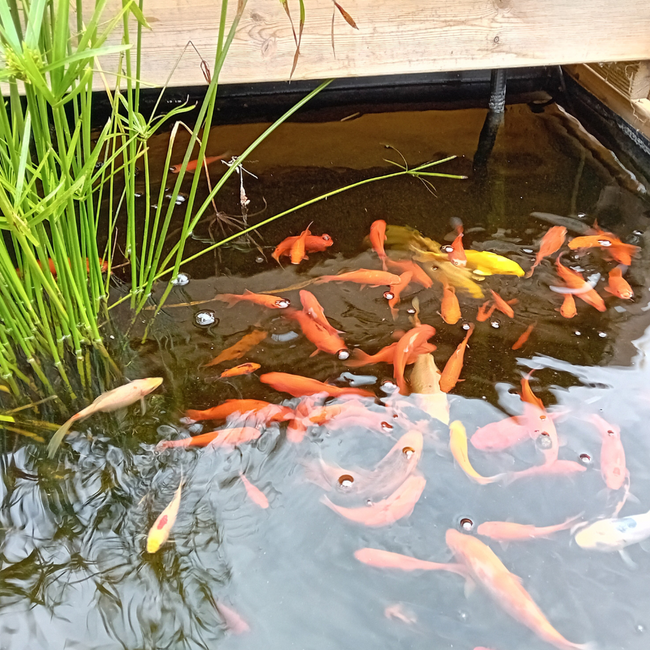
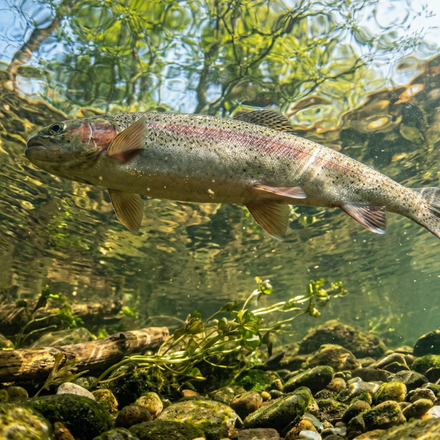
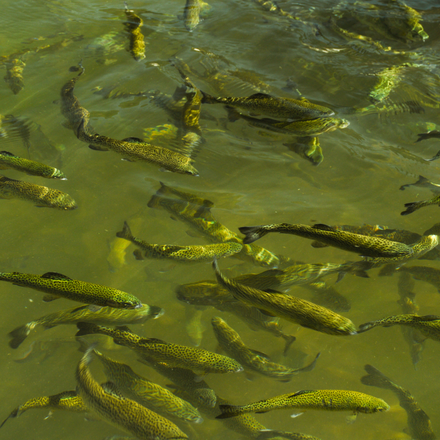
Aquaponics is often associated with pond fish like goldfish and koi. However, there is a variant perfectly suited for our temperate regions, cool climates, and winters : salmoponics. Trout, char, brook trout, these iconic

Read the article
Is aquaponics suitable for animal welfare ?

Is aquaponics suitable for animal welfare ?

We often talk about what aquaponics produces. But rarely about what the fish that make it work experience. Are they simply tolerated in a system designed for production, or can aquaponics truly respect their

Read the article
Greenhouses and outdoor aquaponics kits

Greenhouses and outdoor aquaponics kits

What if your garden became a mini-ecological farm ? Thanks to greenhouses and outdoor aquaponics kits, you can produce your own sustainable food, completely independently.

Read the article
Aquaponics and Summer Holidays

Aquaponics and Summer Holidays

You're going away for two weeks in July and your aquaponics system will be running without you : this thought rightly makes you anxious, because heatwaves, evaporation, and fish feeding raise practical questions. Good

Read the article
15 plants to grow in aquaponics

15 plants to grow in aquaponics

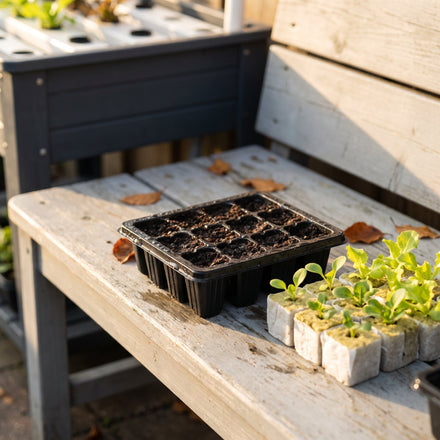
Aquaponics is ideal for growing a wide variety of plants, both indoors and outdoors. Some varieties adapt particularly well to this soilless growing method, with a constant supply of nutrient-rich water.

Read the article