Vermicompost : the natural fertilizer your plants are waiting for

06 April 2026
Lombricompost : l'engrais naturel que vos plantes attendent

Every day, we produce organic waste that ends up in the bin without us really thinking about it. Peelings, coffee grounds, food scraps : these materials are actually a valuable resource. Vermicompost transforms them into a highly concentrated natural fertilizer, thanks to the silent work of earthworms. Here's everything you need to know to understand, make, and use vermicompost at home.

What exactly is vermicompost ?

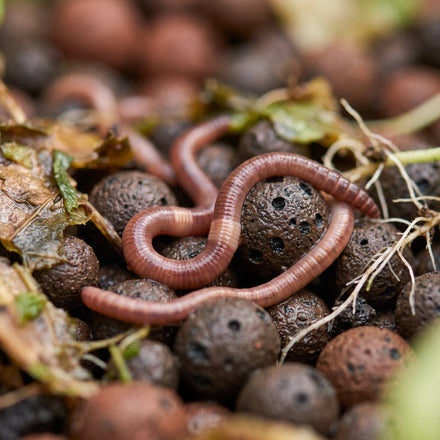
Vermicompost is the result of the transformation of organic matter by specific earthworms, primarily the red wiggler (Eisenia fetida), also known as the manure worm or tiger worm. These worms ingest organic waste, digest it, and produce an amendment of exceptional nutritional richness for plants. This process is called vermicomposting, and it takes place in a specially designed bin called a vermicomposter.

What distinguishes vermicompost from traditional compost is primarily its concentration of nutrients, its fine and homogeneous texture, and the almost complete absence of odor when the system is well managed. It is a living product, rich in beneficial bacteria, enzymes, and humic acids, which not only improves plant nutrition but also soil structure.

The earthworm, an unsung hero

The earthworm is one of the most useful organisms on the planet, and one of the most unappreciated. In its natural environment, it spends its life ingesting decomposing organic matter, transforming it, and enriching the soil with its excretions, called castings. These castings are naturally rich in nitrogen, phosphorus, potassium, and calcium, in forms directly assimilable by plant roots.

In a vermicomposter, the process is the same, but concentrated and accelerated. The worms used in vermicomposting are not ordinary garden worms. They are epigeic worms, which live on the surface and in the upper layers of the soil, particularly adapted to the rapid decomposition of fresh organic matter. Eisenia fetida is the most commonly used species : it is voracious, productive, resistant to varying conditions, and reproduces easily. A well-established population can process several hundred grams of waste per day.

Vermicompost vs. Traditional Compost : What's Really Different ?

Many people confuse vermicompost and compost. Both are natural amendments resulting from the transformation of organic matter, but their production method, composition, and use differ significantly.

Traditional compost is produced by microbial fermentation, a process that generates heat and generally requires a significant volume of materials, outdoor space, and several months of patience before obtaining a usable product. Vermicompost, on the other hand, is produced in a few weeks, at ambient temperature, in a modest-sized bin that can fit in a kitchen, on a balcony, or in a garage. It is two to five times richer in available nutrients than traditional compost. Its texture is fine, homogeneous, without lumps, similar to that of a high-quality potting mix. And contrary to popular belief, a well-managed vermicomposter produces practically no odor.

A Natural Fertilizer with Exceptional Properties

Vermicompost is often nicknamed garden black gold, and this reputation is not exaggerated. Its composition makes it one of the most complete amendments available: it provides nitrogen for leaf growth, phosphorus for root and flower development, potassium for plant resistance, and a wide range of trace elements in highly bioavailable forms.

What makes vermicompost truly exceptional is what it provides beyond nutrients. It is loaded with beneficial bacteria that improve soil microbial life, enzymes that facilitate the absorption of nutrients by roots, and humic acids that improve substrate structure and its water retention capacity. In other words, it doesn't just nourish plants : it nourishes the soil in which they grow. And a living soil is a soil that produces more vigorous plants, more resistant to diseases, and more productive.

How Does a Vermicomposter Work ?

A vermicomposter is a bin, usually composed of several superimposed trays, in which worms live and work. The operating principle is simple : organic waste is placed in the top tray, the worms gradually break it down, and the finished vermicompost accumulates in the lower trays, ready to be harvested.

The bottom bin is equipped with a tap that allows for the collection of vermicompost liquid, also called worm tea. This brown liquid, diluted with water at a ratio of one part juice to ten parts water, is a remarkably effective natural liquid fertilizer for watering potted plants or garden plants. Nothing is lost: the worms transform your waste into solid and liquid fertilizer simultaneously. A standard-sized vermicomposter can process the organic waste of a household of two to four people and produce enough vermicompost to maintain a vegetable garden, potted plants, or a small decoupled aquaponic system.

What waste can be put in a worm composter ?

Worms don't eat everything, and understanding what they do enjoy is key to a well-functioning vermicomposter. Generally, anything from the kitchen that decomposes easily is suitable for them : fruit and vegetable peels, coffee grounds and paper filters, tea bags, stale bread, crushed eggshells, cooked meal leftovers without excessive salt or sauce, dead leaves, and uncoated newspaper torn into small pieces.

It's important to vary the input to maintain a balance between wet and dry materials. A vermicomposter that receives too much wet material without dry material is at risk of becoming acidic and too compact, which stresses the worms. A ratio of approximately two-thirds wet material to one-third dry material is a good starting point. It's better to add waste in small, regular amounts rather than a large quantity all at once, which promotes homogeneous decomposition and avoids unpleasant odors.

What never to put in a worm composter

Certain waste should be completely banned from the worm composter, either because it directly harms the worms or because it unbalances the system. Meats, fish, and dairy products ferment quickly and generate foul odors, while attracting pests. Large quantities of citrus fruits excessively acidify the environment. Onions, garlic, and large amounts of spices irritate the worms and drive them away. Fats significantly slow down decomposition and create an impermeable barrier.

Diseased plants or those treated with pesticides should also be avoided: worms are living organisms sensitive to chemical substances. Salt, even in small quantities, is toxic to them. A simple rule to avoid mistakes : if the waste could naturally be found in a forest undergrowth or in a garden, it can generally be added to the worm composter.

Making your own worm composter

For those who wish to start without immediate investment, making your own worm composter remains an accessible option. The simplest version uses two opaque, stackable plastic bins : the upper bin, with holes in its bottom, receives the worms and waste, while the lower bin collects the precious worm composting liquid. A starting substrate composed of potting soil, moistened dead leaves, and shredded cardboard is sufficient to welcome the first worms.

This approach has the advantage of being economical and allows you to familiarize yourself with worm composting before investing in a more sophisticated model. However, it has obvious limitations: plastic in contact with your waste and soil, questionable aesthetics, and shorter durability. For regular and long-term use, a purpose-built worm composter will always be more efficient and more pleasant to use daily.

Buying a worm composter : what to look for

The choice of a worm composter depends primarily on your situation and how you will use it. Today, there are solutions designed for every configuration, from city apartments to vegetable gardens.

For indoor use, on a balcony or in the kitchen, the terracotta worm composter is a particularly elegant and efficient solution. Terracotta, a natural and porous material, naturally regulates humidity inside the bin, which is ideal for worms. It contains no plastic, releases no odors, and blends perfectly into a well-kept interior. This is precisely what we offer with our indoor terracotta worm composter an artisan-made object, compact, functional, and aesthetically pleasing enough to find its place in a kitchen or living room.

For outdoor use, in the garden or on a terrace, the terracotta in-ground worm composter is a highly intelligent solution. It slips directly into the soil of the vegetable garden or a growing container, and the worms circulate freely between the composter and the surrounding soil. The fertilizer is continuously diffused, directly to the roots of the plants, without any manipulation. Available in several sizes from 1 to 12 liters, it adapts to all spaces, from a simple balcony container to a large vegetable garden.

Whatever model is chosen, it is advisable to provide the compost worms separately if they are not included in the kit. They are the ones who will do all the work.

Our selection of vermicomposters

How to use vermicompost in the garden and in pots ?

Vermicompost is used in very small quantities compared to traditional compost, precisely because of its high concentration of nutrients. For potted plants or window boxes, one to two handfuls of vermicompost mixed into the potting soil when repotting or sowing are sufficient. For plants already in the ground, a thin layer applied to the surface around the base, without burying it, will allow watering to gradually diffuse nutrients to the roots.

In the garden, a surface application of two to three centimeters is sufficient to enrich the soil before planting. Vermicompost liquid, diluted to ten percent in unchlorinated water, can be used directly for watering or foliar spraying. As with all concentrated fertilizers, excessive use can weaken the roots. The golden rule of vermicompost remains moderation : less, but better.

Beginner Mistakes to Avoid

The first mistake is adding too much waste too quickly at the start. Worms need time to settle in, acclimatize, and reproduce. During the first few weeks, it's best to add small amounts and observe their behavior. If waste accumulates without being consumed, it means the worm population is not yet sufficient or the environment is unbalanced.

The second mistake is leaving the worm composter too wet. A waterlogged environment lacks oxygen, which stresses the worms and generates odors. If the bin's contents appear too wet, you should add shredded cardboard or dry leaves and temporarily reduce wet waste input.

The third mistake concerns temperature. Worms work best between 15 and 25 degrees Celsius. Below 10 degrees, their activity slows down considerably. Above 30 degrees, they suffer and can die. In winter, it is advisable to bring the worm composter indoors. In summer, it should be kept in the shade, with regular checks of the environment's moisture.

Vermicomposting and aquaponics : a combination that makes sense

The link between vermicompost and aquaponics is less obvious at first glance, but it is real and particularly relevant for aquaponists seeking complete autonomy. In an aquaponics system, plants are fed by fish waste transformed by bacteria. However, certain nutrients, particularly iron, calcium, and some trace elements, may be lacking in the long term in a closed system.

Vermitea, diluted in water, can be used occasionally as a natural mineral supplement in certain decoupled aquaponics systems, with caution and in small quantities, to enrich the water with trace elements without disrupting the biological cycle. Furthermore, the compost worms themselves can serve as a living dietary supplement for certain omnivorous fish species raised in aquaponics, such as percids or salmonids. This creates an additional virtuous cycle : kitchen waste feeds the worms, the worms enrich the water and feed the fish, and the fish feed the plants.

Conclusion : vermicomposting, a habit that changes everything

Adopting vermicomposting means changing your perspective on waste. What used to go into the trash every week becomes a resource. What used to be a cost for commercial fertilizers becomes free and produced at home. And this daily act of putting your peelings in the bin is part of a larger logic : consume less, produce better, close cycles.

Whether you have a garden, a balcony, or a few potted plants, vermicomposting has a place in your home. And if you practice aquaponics, it becomes a natural complement to your system, perfectly consistent with the values that led you to this practice. Your plants will thank you, and your trash will be a little lighter.