Is aquaponics suitable for animal welfare ?

01 April 2026
L'aquaponie est-elle adaptée au bien-être animal ?

We often talk about what aquaponics produces. But rarely about what the fish that make it work experience. Are they simply tolerated in a system designed for production, or can aquaponics truly respect their well-being ? Water quality, space, light, feed : here's what the reality of a well-run system looks like.

Animal Welfare in Aquaponics : What are we really talking about ?


There's a lot of talk about what aquaponics produces : fresh vegetables, fish raised without chemicals, food self-sufficiency within reach of your garden. But one question rarely comes up in conversations : do the fish really benefit from it ? Are they simply tolerated in a system designed for production, or can we talk about an environment that truly respects their biology and needs ?

The short answer : it entirely depends on how the system is designed and maintained. Aquaponics has the potential to offer very good living conditions for your fish. But this potential doesn't materialize on its own.

Animal welfare is not a concept reserved for dogs and chickens. Fish are sentient beings, capable of feeling stress, pain, and physiological discomfort. Scientific research has confirmed this for several decades, even if collective awareness is still slow to develop. In aquaponics, fish play a central role by producing the nutrients that feed the plants. But reducing them to this role is to miss an important reality.

When the fish is healthy, the whole system is healthy

This is perhaps the most compelling argument for those who approach animal welfare with skepticism : caring for your fish is not sentimentalism. It is intelligent management of a living system.

When a fish is subjected to chronic stress, its body reacts in a very specific way. Its cortisol levels increase, which weakens its immune system and makes it much more vulnerable to parasites, bacterial infections, and fungal diseases. It eats less, absorbs nutrients less effectively, and its growth significantly slows down. In an aquaponics system, this directly translates to less efficient production, fish that do not reach their optimal weight, and an increased risk of cascading mortality.

But there is an even less visible, yet very real, effect : a stressed fish alters the water chemistry. It excretes more nitrogenous substances, disrupts the balance of the biological cycle, and can weaken the entire waste transformation chain on which plant health depends. In other words, the well-being of your fish and the performance of your system are not separate issues. They are intimately linked. What is good for them is good for you.

Water that you control

This is one of aquaponics' great advantages over other forms of farming : the water in the tank is a parameter that you monitor, analyze, and can act upon. In a natural pond or outdoor farming, variations are endured. In aquaponics, they are read before they become problems.

Ammonia, continuously produced by fish through their excrement and respiration, is normally transformed by the system's bacteria into nitrites, then into nitrates, which are much less toxic. As long as this cycle works, the water remains healthy. An ammonia level higher than 0.5 mg/L is a warning sign. Nitrites above 0.1 mg/L require rapid intervention. A pH that deviates outside the 6.8 to 7.4 range affects both fish health and nutrient absorption by plants.

What makes aquaponics particularly favorable to animal welfare is precisely this ability to measure, anticipate, and correct. A liquid test kit used regularly, at least once a week during the start-up phase, is enough to stay in control. No traditional farming offers this direct visibility.

Temperature under control

In an outdoor farm, water temperature follows the seasons, the whims of the climate, heatwaves, and cold nights. In aquaponics, and particularly in indoor or greenhouse systems, you have control. This is a considerable advantage for the well-being of your fish.

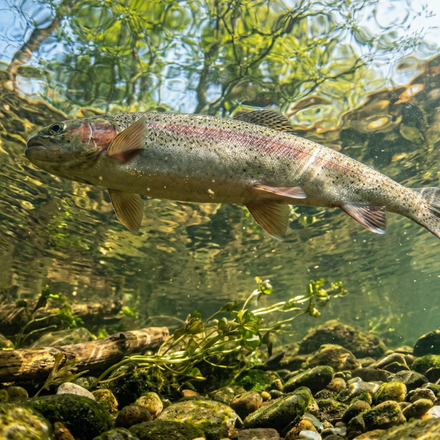
Each species has a very specific comfort range. Tilapia, the most common in aquaponics, thrives ideally between 25 and 30 degrees Celsius. Below 20 degrees, its metabolism slows significantly, its appetite drops, and its vulnerability to infections increases. Carp are more tolerant, with a comfortable range between 15 and 25 degrees. Trout, on the other hand, require cool and very oxygenated water, ideally between 12 and 18 degrees. Above that, they suffer quickly and silently.

What many people don't know is that temperature also directly affects the dissolved oxygen content in the water. The warmer the water, the less oxygen it contains. A pond at 30 degrees with insufficient aeration can put your fish in hypoxia without anything being visible on the surface. Maintaining a stable temperature adapted to your species, with a reliable thermometer in continuous immersion, is one of the simplest and most effective decisions you can make to ensure the comfort of your animals.

Ideal fish density

This is one of the topics that surprises aquaponics beginners the most. A densely populated tank can seem impressive at first glance, almost too crowded. And yet, wanting to reduce the density too much is an error just as problematic as wanting to exceed it.

In domestic aquaponics, the recommended range is between 20 and 30 kg of fish per cubic meter of water. This is the range in which the system operates in a balanced way, without overloading the biological filtration, and without the fish being cramped. For larger-scale operations, one can go up to a density between 35 and 50 kg per cubic meter with a well-sized system and enhanced aeration. Beyond that, it is technically possible in some cases, but it requires advanced mastery and very regular monitoring.

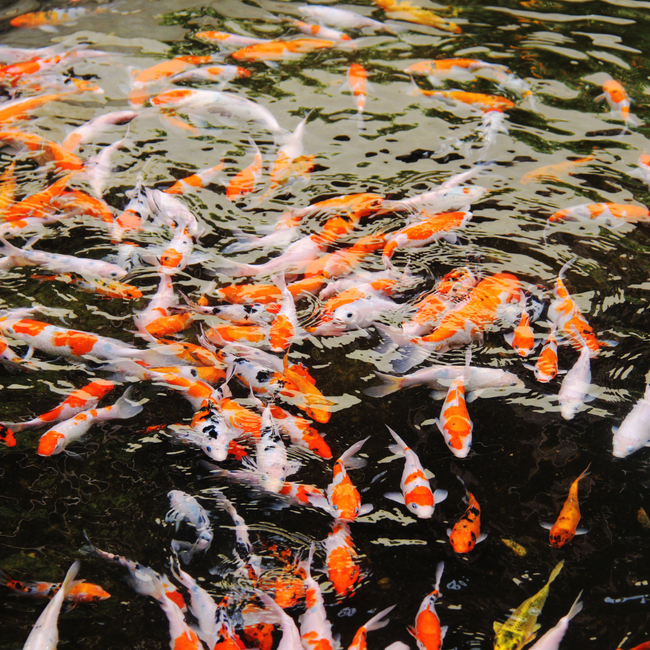
What many don't know is that a too sparsely populated tank creates its own problems. Most species used in aquaponics are social animals, accustomed to living in groups, sometimes in schools. Below a certain density threshold, territorial behaviors set in. Dominant individuals mark their space, chase weaker ones, and cause injuries. And an injury in a tank is an entry point for bacterial infections and fungal diseases. A larger group naturally dilutes these dominance phenomena : aggression disperses, no individual can concentrate its territoriality on just one other, and the social hierarchy establishes itself in a more diffuse and less violent way.

The good news is that the fish themselves signal when the density becomes too high. The signals are subtle at first : a slight unusual agitation, fish coming to the surface more often, less enthusiastic food consumption, slightly damaged fins. These are weak signals, but they appear long before the situation becomes critical. In aquaponics, the goal is not to produce at any cost. For the system to work, production must occur under good conditions.

The light-dark cycle respected

Fish have a biological clock. Like most animals, they need a regular alternation between light and dark phases to regulate their metabolism, appetite, growth, and reproductive behavior. This is known as the circadian rhythm, and disturbing it has very real consequences for their health, even if they remain invisible for a long time.

Continuous 24-hour lighting, a common situation in poorly configured indoor systems, gradually stresses fish. Their appetite decreases, their growth slows, and their immunity weakens. Permanent darkness produces similar effects. Most common aquaponics species adapt very well to a 12-hour light and 12-hour darkness cycle, close to natural conditions.
It should nevertheless be noted that many fish are accustomed to living in shaded areas in their natural environment (under logs, vegetation, or at the bottom of ponds). These fish, such as trout, pike-perch, or carp, require low light to avoid stress and provide them with good rearing conditions.

A regular and controlled diet

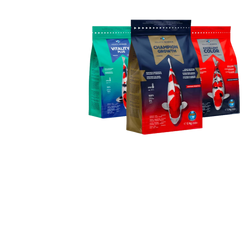
Feeding your fish correctly seems like one of the simplest tasks, yet it's one of the most crucial for their daily well-being. In aquaponics, the system's logic naturally leads to thoughtful feeding : overfeeding unbalances the water chemistry, which immediately affects the plants. The system itself encourages moderation.

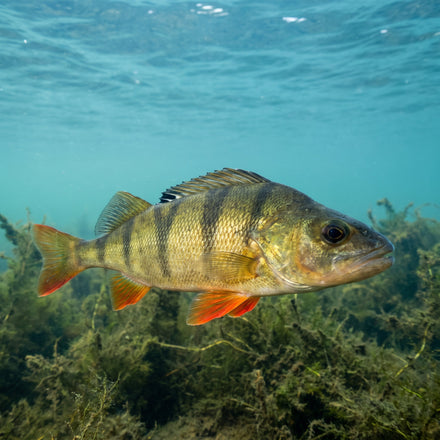
The basic rule is clear : one to two feedings per day, in an amount consumable within a maximum of five minutes. Anything left in the water after this time decomposes, raises ammonia levels, and weakens biological filtration. But beyond quantity, the quality of the food is just as important. A pellet rich in animal proteins will be much better assimilated by carnivorous species like perch, while a tilapia, naturally omnivorous, adapts very well to a plant-based food. Using food unsuitable for the species is not only less effective for growth but also a source of deficiencies that weaken the animals in the long term.

One last detail makes a real difference : the regularity of feeding times. Fish quickly adapt to a rhythm and develop behavioral anticipation. Always feeding at the same time reduces stress related to waiting, promotes quick and complete consumption, and gives you a reliable indicator of their health. A fish that doesn't come for its food at the usual time is often the first signal that you need to check the water parameters.

Learning to observe your fish daily

Fish cannot tell you that they are not well. But they show it to you, provided you know how to observe. And this is one of the concrete advantages of aquaponics : because you are regularly in contact with your system, you naturally develop this ability to read the signs. A few minutes of daily attention are enough to spot the first signs of a problem, long before the situation becomes critical.

A healthy fish swims smoothly and in a balanced way, without visible effort or abnormal tilt. It reacts to your approach, eagerly comes to get food as soon as it is distributed, and has shiny scales, well-spread fins, and clear eyes. Its breathing is regular, without sudden gill movements.

A fish in distress sends very different signals. It rises to the surface to breathe, which indicates a lack of oxygen or gill irritation. It remains motionless near the bottom or in an isolated corner, refuses to eat, has fins clamped against its body, white spots, or redness. Its behavior changes : it isolates itself, flees light, loses its usual reactivity. The golden rule is simple : don't wait for it to get worse. Unusual behavior warrants an immediate check of water parameters. In the vast majority of cases, prompt intervention is enough to rectify the situation.

Conclusion : Animal Welfare, the Key to a Sustainable System

Aquaponics is not ethical by accident. It is ethical because it provides practitioners with concrete means to respect the welfare of their animals : measurable and adjustable water, controllable temperature, rational stocking, controlled light cycle, and regular feeding. None of these conditions are difficult to achieve. All simply require attention and consistency.

Your fish are not just simple production cogs. They are what keep your system alive. Take care of them, and your aquaponics system will repay you a hundredfold.

It's simple : if you don't respect animal welfare, your aquaponics system won't last long...