Creating your indoor seed-starting setup

29 March 2026
Créer son espace de semis en intérieur

Multiplying your indoor plants requires stabilizing precise physical variables : substrate temperature, blue spectrum (450nm) and relative humidity. This guide explains how to prevent seedlings from stretching and stems from damping off indoors.

Creating an indoor seed starting setup to control rooting and germination


Propagating your own plants indoors allows you to break free from the seasonal calendar and ensure the genetic quality of your crops. Indoors, success depends on stabilizing three variables : substrate temperature, humidity under a dome, and the quality of the light spectrum.

This technical guide details the protocols for transforming a corner of your living room into a plant production unit capable of generating robust plants with an optimal success rate.

Thermal activation of growth hormones

The metabolism of a seed or cutting depends on the soil temperature, which is often 3 to 4°C lower than the ambient air temperature in an apartment. To trigger the circulation of auxins (rooting hormones), the substrate must absolutely reach 21°C to 24°C. Below this, tissues stagnate and the risk of rot increases.

Using a regulated heating mat allows this temperature to be stabilized to the nearest degree, creating a constant biological "boost." This bottom heat halves the germination time for demanding species like chili peppers or tropical plants.

By maintaining a homogeneous thermal environment, the root system is secured even before the appearance of the first leaves.

Humidity management through containment

A rootless cutting survives solely on air humidity. The goal is to maintain a relative humidity of 85 to 90% to stop evapotranspiration. At this stage, the vapor pressure deficit (VPD) must be almost zero so that the plant does not exhaust itself trying to pump water it no longer possesses.

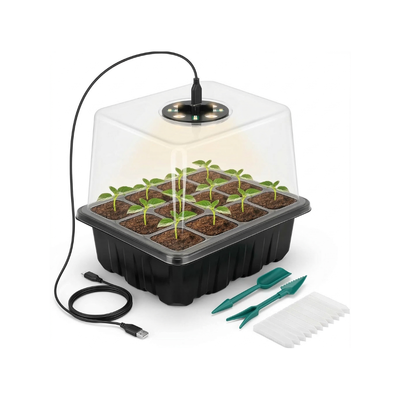
The trick is to use a rigid dome with adjustable vents. Fine condensation on the walls indicates a saturated environment. As soon as the first rootlets appear, open the vents 25% each day to harden the tissues.

This process avoids hydric shock when exposed to open air and strengthens the leaf cuticle.

**Light spectrum** and elongation inhibition

Placing seedlings on a windowsill often leads to "stretching": the stem elongates and weakens due to lack of light. To obtain stocky plants, a spectrum rich in blue light (450 nm) is needed. This specific spectrum inhibits internode elongation and promotes a compact and sturdy structure.

Horticultural LED bars placed 15-20 cm from the top of the plants provide the necessary intensity without emitting excessive heat. An 18-hour light cycle allows for maximum photosynthesis during the juvenile growth phase.

This approach ensures that the plant's energy is invested in root structure rather than in a desperate search for light.

**Nutrient solution** temperature and uptake

Water chemistry is as important as light. Young roots are sensitive to thermal shocks. Watering with 15°C water can stop growth for 24 hours. The ideal is to maintain the irrigation water at 20°C, a temperature where dissolved oxygen and nutrient solubility are in perfect balance.

Placing your water reserves or cutting trays on the same regulated heating mat used for germination helps keep the nutrient solution at a constant ambient temperature. This facilitates the absorption of phosphate ions, essential for primary root development. Lukewarm and stable water avoids osmotic stress and ensures a smooth transition when applying light fertilizers.

Substrate hygiene and **damping-off**

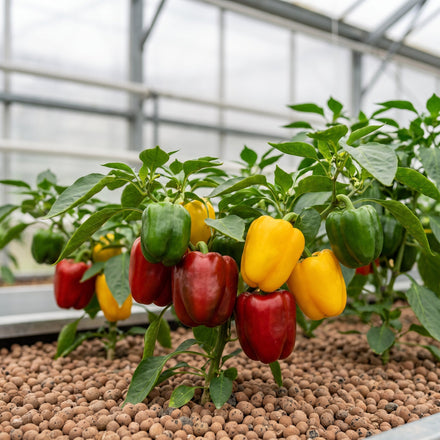
"Damping off" is a devastating fungus that attacks the base of the stem in humid environments. To prevent it, always use a sterile substrate (rock wool, coco coir, or special seed-starting mix). Avoid standing water at the bottom of the tray: the substrate should be moist like a wrung-out sponge, never waterlogged.

An effective tip is to sprinkle a little cinnamon or activated charcoal on the surface of the potting mix for their natural antifungal properties.

Good air circulation, once the dome is removed, is also crucial to strengthen the stem through the mechanical action of air movement, thus simulating outdoor conditions.

Hardening before transplant

The transition from the nursery to the permanent system must be gradual. This "weaning" period lasts approximately 4 days. Begin by placing the plants in a less protected area of your apartment, with natural air circulation. This forces the plant to produce lignin, making the stem woodier and more resistant.

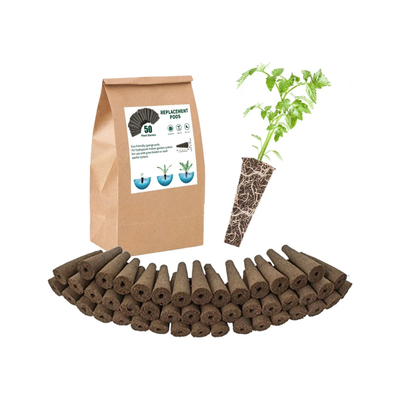
Slightly reduce the watering frequency to encourage roots to explore the entire substrate volume in search of moisture. A plant ready for transplanting can be identified by its white roots starting to show through the holes of the basket or pot.

Physical Transition to the definitive system

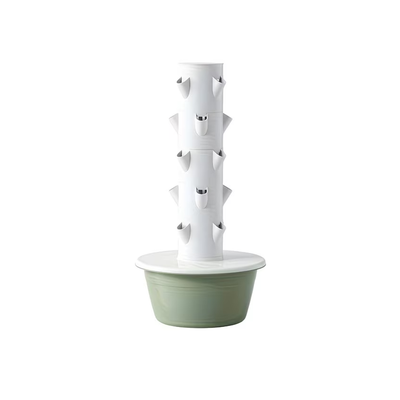
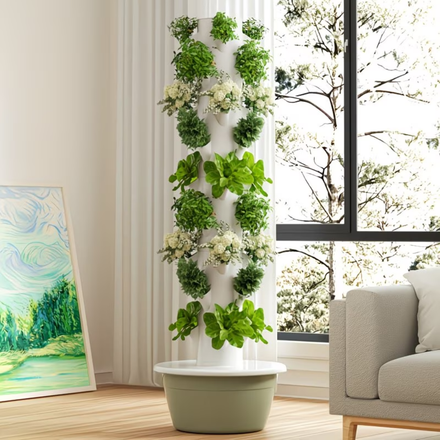
Transplanting to the final system (pot, tower) is determined by visual root analysis. Only intervene when the white roots are actively colonizing the propagation substrate or poking through the holes in the basket to avoid osmotic stress. Handle plants exclusively by the substrate (coco, rockwool), never by the fragile stem.

Pre-saturate the final substrate with a diluted nutrient solution for immediate capillary contact and to limit hydration shock. In case of a significant temperature difference, temporarily use your same regulated heating mat (available on our website) to stabilize the root zone during recovery.

Maintain soft light and 60-70% humidity for 48 hours before transitioning to maximum growth regimen.

**Water quality** and microbiology

To achieve a new level of vigor, adjusting water chemistry is often an underestimated lever in an apartment setting. The use of osmotic water (EC 0.0) makes it possible to eliminate bicarbonates and chlorine, which destabilize the substrate's pH.

Starting from a neutral base, adding a targeted nutrient solution at a low concentration (EC 0.4 mS/cm) guarantees immediate assimilation without the risk of mineral lockout or burning of young tissues.

At the same time, the biological safeguarding of the rhizosphere provides protection against pathogens. Early inoculation with mycorrhizal fungi (Glomus) or beneficial bacteria (Bacillus subtilis) creates a living barrier around the roots. They actively optimize phosphorus absorption, accelerating the root explosion necessary before transitioning to the definitive system.

Mastering Indoor Plant Propagation

Creating an indoor propagation space isn't about horticultural magic; it's about rigorously controlling simple physical variables. By stabilizing root temperature, managing vapor pressure deficit (VPD), and selecting the precise light spectrum, you free yourself from seasonal uncertainties.

Success isn't measured solely by an optimal rooting rate, but by the vigor of transplanted plants. A compact plant with thick stems and explosive roots is the foundation for a healthy and productive crop. Consistency and rigor in managing these parameters are the true keys to mastering your indoor propagation.