

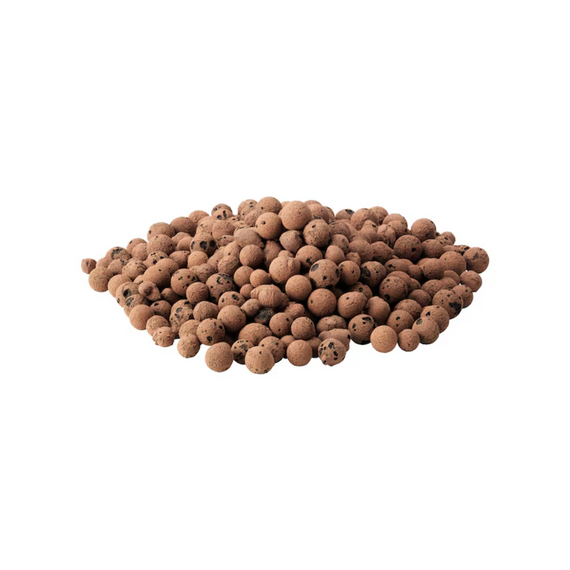
Or Brun clay pebbles for pots and planters, 6 L
Regular price
$20.00
Regular price
Sale price
$20.00
Unit price
/
per
This 6 litre bag of fired clay pebbles, made in France without chemical treatment or additives, can be used at the bottom of a pot, as a surface mulch and in open ground.
In hydroponics as in aquaponics, these inert pebbles form a grow medium that lets water and oxygen circulate.
 Customer support 7 days a week by email
 Delivery within 2 to 15 business days
100 % secure payment
The summary
- What you receive: 6 litres of expanded clay pebbles, 8 to 16 mm, made in France.
- At the bottom of a pot: a 2 to 3 cm layer, covered with compost.
- On the surface: 3 to 4 cm of mulch, then normal watering over the top.
- What they do with water: they hold 120 ml per litre and release it when the grow medium dries out.
- Before use in a system: a thorough rinse with clean water, which washes away the fines.
- How many seasons: several, since the pebbles do not break down.
Fired clay made in France, for draining a pot and mulching the surface
Or Brun clay pebbles, 6 L, are expanded clay pebbles of 8 to 16 mm, made in France, used to drain the bottom of a pot and to mulch the surface. A layer of 2 to 3 cm at the bottom and 3 to 4 cm on the surface is enough. They hold 120 ml of water per litre and release it as the grow medium dries out.
This 6-litre bag contains 2.8 kg of expanded clay pebbles, fired from natural clay and made in France, in a size of 8 to 16 mm. It is designed first and foremost for your pots and planters, where the pebbles drain the bottom, mulch the surface or lighten the potting compost, and it also serves as a grow medium in hydroponics and in aquaponics, where you use the pebbles on their own.
🪴 Three uses for the same bag
Firing at high temperature gives each ball a porous, honeycombed structure that is light yet resistant to crushing. This porosity holds about 120 ml of water per litre of balls and releases it as the grow medium dries out around them, while the gaps between the balls stay filled with air. You can make use of these two properties in three ways, depending on where you place the balls: at the bottom of the pot, they drain off excess water; on the surface, they slow evaporation; mixed into the compost, they stop it from compacting. At the foot of a plant in open ground, a layer of about 4 cm acts as a mulch in the same way.
At the bottom of the pot
A layer 2 to 3 cm deep, covered with potting compost when planting, keeps the drainage holes clear and the water away from the roots.
As mulch
A layer 3 to 4 cm deep spread over the surface limits evaporation and weed emergence, and you then water normally on top.
In the compost
About 10% of the container's volume, mixed into the compost, aerates it and lets the roots breathe along the full height of the pot.
Drain a coir liner before filling it
In a balcony planter, the coconut fibre planter liners take a base layer of 2 to 3 cm very well: the clay pebbles stop the grow medium from blocking the drainage holes and keep a volume of air beneath the root ball. The compressed coconut fibre then fills the liner on top, and its fibres hold the water that the pebble layer lets run through. The pot therefore stays light, drains from the bottom and keeps its moisture within the mass.
The base layer and the holes
A layer of clay pebbles is no substitute for a drainage hole. In a closed pot, the water eventually fills the gaps between the pebbles and the reservoir becomes a bath in which your roots suffocate, exactly as in waterlogged compost. So check the bottom of your container before filling it, and keep the layer to 2 to 3 cm to leave room for the grow medium.
📏 How many pots per bag
A 6 L bag goes a different distance depending on how you use it. As a base layer, a 30 cm diameter pot needs about 1.8 L of clay pebbles for a depth of 2.5 cm, so the bag lines the bottom of three pots of that size. As a mulch, a planter of 80 x 20 cm covered to 3.5 cm uses roughly 5.6 L, almost the whole bag. Mixed into the compost, 10% of a 20 L pot comes to 2 L of pebbles, enough to treat three pots. For your own containers, multiply the surface area to be covered by the depth you want, bearing in mind that 1,000 cm³ makes 1 L.
🏭 An expanded clay made in France
Your pebbles are made of a single material, expanded clay, and comply with the NF U 44-551 standard for growing media. Their pH measured in water is 8.5, their conductivity 0.15 mS/cm and their dry matter 90%, which makes them a practically inert medium: it releases no nutrients, and fertilisation remains entirely up to you. The bag carries the mention suitable for organic farming, so you can use them with herbs, vegetables or soft fruit. As they do not break down, you can reuse them for several seasons in a row after rinsing, and the bag itself is made with at least 51% recycled plastic.
🐟 In a water circuit
In hydroponics as in aquaponics, these balls serve as a grow medium: they support the plant and let water and oxygen circulate around the roots. Rinse them thoroughly with clean water before use, as this washes away the clay fines formed during transport, which would cloud the water in the grow bed. As their pH of 8.5 is higher than that of aquaponic water, which is kept between 6.4 and 7.5, also check the pH of your water during the first week with a pH test using drops. The article on cloudy water in aquaponics details the causes of water laden with particles, and the one on choosing a grow medium for aquaponics places clay among the other media.
Technical specifications
Use
- Base layer
- 2 to 3 cm thickCovered with potting compost at planting time.
- Surface mulching
- 3 to 4 cmWater as normal over the top: the water passes through the layer without moving it.
- Mixing with compost
- About 10% of the volumeTo aerate a grow medium that is compacting.
- Organic farming
- Suitable for useFor herbs, vegetables and soft fruit.
The bag
- Volume
- 6 L
- Net weight
- 2.8 kg
- Manufacturing
- FranceBag made with at least 51% recycled plastic.
- Standard
- NF U 44-551, growing medium
The beads
- Material
- Fired expanded clayPorous and honeycombed, lightweight yet resistant to crushing.
- Size
- 8 to 16 mmOn 90% of the product.
- pH measured in the water
- 8.5Above aquaponics water: rinse and check the pH before putting it into the system.
- Water retention
- 120 ml per litre
- Conductivity
- 0.15 mS/cm
- Dry matter
- 90%
To budget for separately
- The growing medium
- Coconut fibre or potting compostIn a pot, the beads support the grow medium without replacing it.
- Fertilisation
- A natural fertiliserThe bead is inert: it releases no elements.
8 further specifications are available in the detailed view.
In the box
- 1 bag of 6 litres of expanded clay pebbles, size 8 to 16 mm
Grading, pH, conductivity, water retention, dry matter, weight, standard and application rates: bag label, consulted on 11/10/2026.
Which bag of clay pebbles should you choose?
The shop's three bags of clay pebbles differ in volume, grade and the use they suit best.
A pot, a tub or a grow bed?
The small bag suits pots and window boxes, the medium one hydroponic pots, the large one beds and growing tubs.
| Format | Volume (L) | Primary use | Size (mm) | Bag weight (kg) | Price | |
|---|---|---|---|---|---|---|
| Clay pebbles 50 L for hydroponics andYour choice | 50-litre bag | 50 L | Hydroponics and aquaponic grow bed | 8 to 20 | 19,5 kg | $22.00 |
| Plagron Euro Pebbles clay pebbles, 10 LYour choice | 10-litre bag | 10 L | Hydroponics and pot growing | 8 to 16 | 4 to 5 kg | $12.00 |
| Recommended Or Brun clay pebbles for pots and planters, 6 LYour choice | 6-litre bag | 6 L | Pot base and mulching | 8 to 16 | 2,8 kg | $20.00 |
Clay pebbles 50 L for hydroponics and
Format50-litre bag
Volume (L)50 L
Primary useHydroponics and aquaponic grow bed
Size (mm)8 to 20 mm
Bag weight (kg)19,5 kg
Plagron Euro Pebbles clay pebbles, 10 L
Format10-litre bag
Volume (L)10 L
Primary useHydroponics and pot growing
Size (mm)8 to 16 mm
Bag weight (kg)4 to 5 kg
Or Brun clay pebbles for pots and planters, 6 LRecommended
Format6-litre bag
Volume (L)6 L
Primary usePot base and mulching
Size (mm)8 to 16 mm
Bag weight (kg)2,8 kg
Volumes, sizes and weights recorded on 11/10/2026 from the packaging and the manufacturers' data sheets.
Help choosing
Which bag for your containers?
Estimate your
delivery time
Your estimate
Delivery
Estimated time
It covers preparing your order and then the transit time quoted by the carrier, counted in working days.
It is not a guaranteed delivery date: public holidays, peak periods, customs or a carrier delay can extend it. The exact amount, in your currency, is worked out in the cart once your address is entered.
The bag contains 6 litres, and its delivery is free: the basket shows it at €0.00 when ordered on its own. The final delivery times are shown at the basket once the address has been entered.
Frequently asked questions
8 questions
6 key questions, 8 in the detailed view
You may also like


Related articles

Grow media
Which grow medium to choose for aquaponics?
Where fired clay sits among soilless grow media.
Read the article

Diagnosis
Understanding and correcting cloudy water in aquaponics
The causes of cloudy water, from suspended particles to algae.
Read the article

Season
Maintaining your aquaponic system in summer
Covering water surfaces to limit evaporation in the height of summer.
Read the article

Protection
Controlling pests in aquaponics
A grow medium surface that is always wet attracts fungus gnats and their larvae.
Read the article

Fertilisation
Which fertiliser should you use in aquaponics?
What to add when the grow medium releases nothing.
Read the article

Plants
Let us talk about your project
A question about this product or your setup? Our team will answer and advise you.

Interest-free instalment payments
Offered depending on the cart amount, at checkout.

Delivery in 2 to 15 working days
Depending on the products and shipping sites. Estimate by destination in the estimator on this page.

After-sales service 7 days a week by email or chat
Our team answers all your questions.

Shop responsibly
Become part of the change.
