Aquaponics with children

Written by Tristan Ulrich · October 24, 2026
Aquarium aquaponique Aquapouss'Mini dans un salon, basilic, ciboulette et menthe dans le bac de culture, poissons dans la cuve

Setting up a small aquaponic system at home gives children a complete ecosystem to observe every day, with fish, bacteria and plants all at work. This guide brings together ages, species, fast-growing crops and safety rules, so you can see the project through from the first seedling to the first harvest.

Aquaponics with children, an ecosystem at eye level

A fish tank, a few plants with their roots dipping in the water and a small pump are enough to hold a child's attention for months. Aquaponics makes a complete biological cycle visible, in a living room as in a classroom. The fish excrete nitrogenous waste, bacteria convert it, the plants feed on it and the water returns to the tank relieved of some of its nitrate. It all happens before their eyes, continuously, with no screen involved.

This guide brings together what really works with a young audience, in France as elsewhere in Europe. In it you will find activities for each age group, hardy fish species that are permitted, crops that sprout within a few days, small experiments linked to the science curriculum, and the hygiene and electrical safety rules to put in place from day one. The aim remains simple: that the child understands, takes action and comes back to the tank of their own accord.

Garden aquaponic system A River In The Garden seen from above: fish pond, clay pebble media bed and lettuce raft

Why aquaponics captivates children

An aquarium is something you watch; an aquaponic system is something you understand. The difference lies in the visible loop between fish and plant, which children often piece together for themselves after a few weeks of observation, before they even have the vocabulary to explain it. Something is always happening, a leaf growing, a fish changing its behaviour, water turning cloudy then clearing, and each of these small events offers a concrete way in to talk about the nitrogen cycle, plant nutrition or food chains.

The emotional side weighs just as much. Feeding a living creature every day builds an attachment, and that attachment makes the demands of a regular routine easier to accept. A child who grumbles about watering a pot plant will happily come and check on the fish in the morning.

Children's hands of two different ages holding a tray of aquaponics seedlings

What age to start aquaponics

There is no minimum age for observing, only gestures to adapt. Before the age of five, a child looks, points, tells stories and pours in a portion of food prepared by an adult, without putting their hands in the water. The US Centers for Disease Control and Prevention also recommend that children under five should not clean or handle aquarium equipment, as they are among the people most at risk of severe infections.

Between six and nine, independence becomes real for daily tasks. The child feeds a ration prepared in advance on their own, takes the temperature, spots a fish staying at the bottom and draws what they see. At this age, regularity matters more than precision, and a two-minute check every day is worth more than a long session on Sunday.

Around the age of ten, water chemistry becomes accessible. Comparing a colour against a chart, watching a level rise and then fall and linking that figure to a cause are all within reach, with an adult alongside for the reagents. At secondary school, a teenager can run a system almost alone, partial water changes included, with the adult keeping charge of the electrics.

Aquaponics activities by age group

The main risk in a family project is not technical but motivational. It is better to hand over a few tasks, suited to the child's age, and to really hand them over, without going back over the child's work every time.

  • From 3 to 5 years old: watching and naming the fish, counting leaves, pouring in the prepared ration and misting the seedlings, always under an adult's supervision.
  • From 6 to 8 years old: feeding on their own with a pill organiser, sowing, measuring a plant with a ruler and keeping a notebook of dated drawings.
  • From 9 to 11 years old: taking the temperature, reading a test strip with an adult, transplanting, harvesting and drawing a first graph.
  • From 12 years old: carrying out drop tests, interpreting the nitrogen cycle, running an experiment with a control and helping to build a system.

Among siblings, a weekly rota avoids arguments and lets everyone have a go at everything. In a classroom, a duty chart with two people in charge each week has the same effect. If interest flags, changing the crop is often enough to revive curiosity, because a strawberry plant or a pot of mint is not watched over in the same way as a tray of cress.

Planted Aquapouss'Mini aquaponic aquarium, grow bed above the fish tank, in a bright room

Choosing a small system for indoors

For a first system with a child, aim for a fish tank of at least forty litres or so. Any smaller and the water changes too quickly and the slightest feeding error has consequences, much larger and the upkeep becomes a job for an adult. An indoor aquaponic aquarium such as the Aquapouss'Mini, which carries a 15-litre grow bed above a 43-litre tank, remains the easiest format to follow, because you can see the water rise, pass through the roots and then drain back down.

Deep water culture models have another educational advantage: you lift the raft and show the roots without dismantling anything. Provide a quiet pump, lighting if the room lacks light, a stable piece of furniture away from the radiator and direct sunlight, a protected socket nearby, and a gradual start-up. A tank placed in a thoroughfare always ends up getting in the way.

Tanichthys albonubes and platys, small hardy fish for a children's aquaponics system

Which fish to start with, with confidence

The choice comes down to hardiness and adult size, not looks. The Tanichthys albonubes, or white cloud mountain minnow, is a small shoaling fish of about 4 cm that likes cool water, around 18 to 22 °C according to FishBase, which in most cases means no heater is needed in a living room. The same source advises keeping it in a group of at least five individuals, in a tank at least 60 cm long.

The guppy and the platy, two very common livebearers, need warmer water, generally around 24 °C, so a properly set and guarded heater is required. They breed quickly, which becomes either a biology lesson or an overpopulation problem depending on how you plan for it, and it is best to know at the time of purchase who will take the young.

The goldfish, often given to children, is poorly suited to a small tank. It grows a great deal, lives for many years and produces an enormous amount of waste. As for the fish bowl, it should be ruled out for every species, with the RSPCA reminding us that no fish should live without a correctly installed and maintained filter. Buy only a few fish to begin with: a comfortable margin for error is worth more than a full tank in the first week.

Natural pond with clear water bordered by vegetation, a habitat to be protected from released species

Never release a fish into the wild

A fish you no longer want must never be released into a river, and tank water must never be emptied into a pond. Several species long sold in pet shops appear on the list of invasive alien species of concern for the European Union, banned from sale, breeding and release, such as the red-eared slider, the marbled crayfish, the mosquitofish and the pumpkinseed, as well as water hyacinth and water lettuce, two floating plants sometimes recommended in aquaponics. To part with a fish, a pet shop, an aquarist club or a vet are the right people to contact.

Watercress grown on a deep water culture raft in aquaponics, roots dipping into the water Genovese basil seeds

The plants that grow fastest

With a child, speed matters more than yield. Garden cress generally sprouts within a day or two and can be cut after about two weeks, which gives an almost immediate first success. Root vegetables, radishes included, are best avoided, as they develop poorly in aquaponics, and it is better to keep the bed for leaves and herbs.

Cut-and-come-again lettuces are harvested leaf by leaf and regrow after each picking, which keeps interest up over time. Basil seeds round off the selection nicely, as the plant thrives in the nitrate-rich water of an established system and its scent can be recognised at the slightest touch. To widen the range through the seasons, the list of suitable crops offers useful guidance.

Explaining the nitrogen cycle to children in simple words

There is no need to bring out scientific vocabulary on the first day. With the youngest children, the image that works involves three characters. The fish make the water dirty, invisible bacteria turn that dirt into food for the plants, and the plants eat it through their roots. This slightly blunt wording is easy to remember and can then be checked with the tests.

Around the age of ten, you can name the stages. The ammonia given off by the fish is converted into nitrite, which is highly toxic, and then into nitrate, which is far better tolerated and is absorbed by the plants. These bacteria need time to colonise the grow medium, which is why a new system is started up without fish. The RSPCA recommends this approach, which lasts at least two weeks and often longer, and the first residents are only added once the ammonia and nitrite have risen and then fallen back to near zero.

For a child, this running-in period becomes the first experiment of the project. The adult provides a small source of ammonia, a pinch of fish food or pure ammonia solution with no perfume or soap, as New Mexico State University specifies, then you measure every day and plot three curves. The ammonia peak rises and then falls, the nitrite peak follows, and the nitrate settles in. A child who has watched these three waves follow one another understands an ecosystem better than from any diagram, and our article on the nitrogen cycle goes through the mechanism in detail.

Child drawing a fish in an aquaponics observation notebook

The observation logbook, the key tool

A simple notebook turns maintenance into an investigation. The youngest children draw and stick in a seed, while the older ones measure, date and compare. Three readings are enough to keep it going over time: the water temperature, the height of the tallest plant and a free-form sentence on what has changed.

To track growth, measure the same plant with a ruler each week, always from the rim of the pot, and photograph the tray in the same place and at the same time of day. After two months, the series of photos and the hand-drawn curve are always impressive, and the notebook serves as a memory when a problem arises, since it lets you go back over the preceding days to look for a plausible cause. In class, a graph built from the group's real measurements naturally links science with maths.

A child's hand giving a small pinch of flakes to the aquaponics fish JBL ProNovo Bel Flakes M staple flake food

Feeding the fish, the right amount

Overfeeding is by far the most common mistake when a child does the feeding, and it only shows afterwards, when the water turns cloudy and the nitrites rise. As a general rule, give what the fish consume in one to two minutes, once or twice a day, without leaving any food floating afterwards. Prepare the ration in a weekly pill organiser, one compartment per day, with a flake food suited to small species, then put the tub out of reach. The routine becomes safe, and the adult controls the quantity without ever having to say no.

Multi-parameter water test strip showing its coloured ranges after immersion

Measuring pH, a first experience

pH is ideal for a first experiment, because it can be read by colour and compared anywhere. With a strip or a drop test, the child measures tap water, tank water, rainwater collected in a clean bowl and a little water with lemon juice added, then ranks the results from most acidic to most alkaline.

In the tank, the value matters directly to the living things in it. New Mexico State University states that a pH kept between 6.4 and 7.4 remains tolerable for fish, plants and bacteria, with an ideal compromise around 6.8 to 7.0, and adds that pH normally falls as nitrification progresses.

This observation opens the way to a second, longer experiment. Recorded every week, the pH of an established system most often drifts slowly downwards, and the child discovers that an invisible living organism is changing the chemistry of their water.

Water testing in aquaponics with coloured tubes and a dropper bottle Pack of 5 aquaponics water tests: NH4, NO2, NO3, pH, KH

Testing the water, a true scientific ritual

Colourimetric tests turn an invisible concept into a colour, and a tube that turns purple prompts a much stronger reaction than an isolated number. During start-up, New Mexico State University recommends testing every day, then once a week when the system is balanced, monitoring ammonia, nitrite, nitrate and pH.

A drop test kit covering ammonium, nitrite, nitrate, pH and KH meets these needs, and each result can be noted straight away in the logbook. The reagents are still chemicals. They should be handled over a sink, with an adult present, and stored out of reach in their original packaging.

Hygiene and safety when doing aquaponics with children

A tank of water, electrical equipment and children's hands call for a few simple rules, which soon become habits if they are put in place from day one. Every appliance must be plugged into a circuit protected by a 30 mA residual current device (RCD), which the NF C 15-100 standard requires on all circuits in homes built to current standards. In an older home, a 30 mA RCD socket or adaptor provides this protection.

The health risk is low but well documented. Aquarium water can harbour germs, including salmonella and mycobacteria such as Mycobacterium marinum, which causes skin lesions on the hands and forearms in humans, known as fish tank granuloma. Washing your hands with soap greatly reduces this risk, and even a minor wound should never go into the water without a glove.

  • Unplug the pump and heater before putting your hands in, and let a heater cool down before taking it out of the water.
  • Form a low loop in each cable before the plug, so that any water running down the cable drips onto the floor.
  • Wash your hands with soap after touching the water, the fish, the food or the equipment.
  • Wear gloves if you have a cut, and never start a siphon by mouth.
  • Empty the waste water into a bath or a utility room sink, never into the kitchen sink or a watercourse, then clean the drain bucket.
  • Store test kits, water conditioners and fish food out of reach.
Child's finger placing a seed in a damp rockwool cube Rockwool cubes for seedlings, 2 or 2.5 cm

Sowing with a child, step by step

Sowing is the most accessible stage of the project, as it requires neither strength nor precision. Soak a rockwool cube, drain it, drop a seed into the hollow, and you are done. Handle the cubes while they are damp, as dry rockwool can irritate the skin.

Always sow a little more than you need, two or three seeds per cube for cress, one or two for lettuce and basil, because germination is never total and a half-empty tray is discouraging. Keep the cubes damp without drowning them, in a mild room, under bright light as soon as the first shoots appear, then transplant once the roots emerge from the cube, often after two to three weeks. Our guide to the seedling area details the equipment you will need.

Mint and basil cuttings rooting in a jar of water

An experiment on plant needs

The Key Stage 2 science curriculum asks pupils to experiment in order to identify some of the needs of plants, and aquaponics lends itself to this perfectly. Take two cuttings of basil or mint of the same size and place them in two identical jars, one filled with water from the tank, the other with tap water that has been left to stand.

Place the jars side by side, in the same light, and ask the children to predict the result before you begin. Over three to four weeks, the child measures the roots, counts the leaves and compares. The cutting placed in the tank water, which is richer in nitrates, often keeps greener foliage, though nothing is guaranteed, and that is precisely what makes it a genuine experiment.

One variation is to place two identical young plants, one in the light and the other in a cupboard, to isolate the need for light. In every case, the child learns to change only one factor at a time, the very principle of a controlled experiment.

Harvesting basil with scissors from the grow bed of an Aquapouss'Mini

The first harvest, a decisive moment

This is the moment the children have been waiting for, and often the one that decides what happens next. Harvest with them, not for them, taking the outer leaves of a cut-and-come-again lettuce so as to keep the heart, which allows several pickings from the same plant. Rinse the harvest in clean water like any other vegetable, have hands washed before going into the kitchen, and plan for a modest quantity. A handful of watercress in the family salad is enough to create the pride you are looking for.

When aquaponics doesn't work, turning failure into a lesson

A living project has its accidents. A plant wilts, a seed fails to sprout, a fish dies. These moments are unpleasant, but they are part of the learning process, provided you don't brush them aside.

For a plant, the cause is almost always a lack of light, too much water at the base of the stem or a deficiency visible on the leaves. A young shoot that stretches and turns pale needs more light, not more water. A seed that does not germinate is often explained by a grow medium that is too cold or too waterlogged, and our article on germination failures goes through the most common causes.

For a fish, the subject calls for honesty. Explain that the animal has died, look together at what may have happened, check the water parameters, then decide what to do next. Children cope better with a clear explanation than with a quiet replacement overnight, and these episodes leave a lasting mark, not necessarily a bad one, when the adult stays present without dramatising.

Homemade mini aquaponic system with a transparent tub, a crate and net pots

Building a mini system at home

Building it yourself costs little and gives children the role of builder. The simplest set-up combines a food-grade transparent storage box, a perforated crate placed on top, net pots filled with rinsed clay pebbles and a small submersible pump, in the order of a few hundred litres per hour for this volume. An adult takes care of the drilling and the wiring, while the children rinse the pebbles, fill the pots and test the flow with a watering can before the system is filled.

Then leave the circuit running for twenty-four hours to check it is watertight, and start the fishless cycling described above. For a first experience without electricity or animals, passive growing can be set up in half an hour with a jar, a nutrient solution prepared by the adult and a plant.

Automatic feeder and timer for going on holiday

Going on holiday without losing everything

A week away can be prepared for in an hour. Healthy adult fish generally cope with a few days without food far better than with overfeeding, so an automatic feeder set to a single small daily ration remains the safest solution. Top up the water level, put the lighting on a timer and ask a neighbour to look in without handing over the food container. Our guide to summer holidays covers longer absences in detail.

A classroom nature corner with a mobile aquaponics system on castors

Extending aquaponics into the classroom

Aquaponics fits directly into school curricula. In cycle 2, it feeds into the "questioning the world" strand on living things. In cycle 3, the science and technology curriculum published in 2023 asks pupils to represent the feeding links between living things as chains forming a network, then, in sixth grade, to understand the role of micro-organisms in the decomposition of organic matter, exactly what the bacteria in the grow bed do.

Éduscol points out that no text sets a restrictive list of animals permitted in the classroom, but that rearing conditions must be suitable, that allergies should be checked with families, and that the supplier must be able to take the animals back at the end of the project. A named person in charge and a written protocol for the school holidays prevent the project from being abandoned in its first year, and our article on aquaponics at school covers the subject in more detail.

Conclusion: aquaponics with children, a year-long project

Aquaponics with children requires neither a large budget nor any prior technical skill. It requires a tank of reasonable volume, hardy fish that are legally permitted, a fishless cycling period, a few hygiene rules kept up from the very first day and a protected electrical circuit. The rest comes almost by itself, driven by curiosity, over a whole year with its seasons, its setbacks and its successes.

Start small, with cress and a few fish, then let the child decide what comes next. They will ask you of their own accord to add another tank.

Sources

Centers for Disease Control and Prevention, Fish, Healthy Pets, Healthy People, Hand washing, children under five kept away from cleaning, gloves, emptying away from the kitchen, germs including salmonella and mycobacteria, no releasing into the wild.

Ministry of Agriculture, zoonosis fact sheet Mycobacterium marinum, skin infections, Fish tank granuloma on the hands and forearms, infection through a wound, wearing gloves and hand hygiene.

Éduscol, How do we recognise the living world? Questioning the world of living things, matter and objects, Classroom tanks, the absence of a restrictive list, rearing conditions, allergies, the supplier taking the animals back and the ban on releasing them.

Ministère de l'Éducation nationale, cycle 3 science and technology curriculum, BO no. 25 of 22 June 2023, Plant requirements to experiment with, food chains in a network and the role of micro-organisms in decomposition.

National Museum of Natural History of Luxembourg, neobiota.lu, EU species, Aquatic species on the Union list, including the red-eared slider, the marbled crayfish, the mosquitofish, the pumpkinseed, the water hyacinth and the water lettuce.

New Mexico State University, Important Water Quality Parameters in Aquaponics Systems (CR680), pH range of 6.4 to 7.4, compromise of 6.8 to 7.0, daily tests at start-up then weekly, end-of-cycle thresholds and pure ammonia without additives.

RSPCA, Choosing an Aquarium for Pet Fish, Why bowls are unsuited to the fish's welfare, why a filter is essential, a fishless start-up of at least two weeks, and a position away from radiators and sunlight.

FishBase, Tanichthys albonubes, White cloud mountain minnow, Temperature of 18 to 22 °C, adult size of about 4 cm, a group of at least five individuals in a 60 cm long tank.


Frequently asked questions

No. A fish should not be picked up by hand, as contact damages the mucus that protects its skin, and handling brings nothing to the child. Fish are moved with a net, by an adult, and every intervention in the tank ends with washing your hands with soap.

No, a balanced system gives off no noticeable smell. A muddy smell almost always points to overfeeding or a clogged filter.

Remove it promptly, then look for the cause before replacing anything. Three checks are usually enough.

  • A test for ammonia and nitrite, both of which should stay very low.
  • The water temperature, which is often to blame after a hot spell or a heating failure.
  • The feed given over the previous few days, checked against your observation notebook.

If a child is involved, explain things simply and without drama. The investigation that follows teaches more than an immediate replacement.

Several weeks. The tank must first house a colony of bacteria able to convert ammonia into nitrites, then nitrites into nitrates. The RSPCA allows at least two weeks for this fishless start-up, and it often takes longer in fresh water.

The practical benchmark comes from testing. New Mexico State University considers the cycle established when ammonia and nitrites have fallen to 0.5 ppm or less and nitrates appear. Then introduce only a few fish, and build up the stock gradually.

Yes, with two simple precautions. Rinse the harvest in clean water like any other vegetable, and wash your hands before and after every intervention in the tank, because the water of an aquaponic system remains farm water, which is anything but sterile. Also avoid harvesting in the days following the use of a fish treatment, even one described as natural.

Some species are simply banned in the European Union, and others needlessly complicate a first project.

  • The red-eared slider, the marbled crayfish and the red swamp crayfish appear on the EU list of invasive species.
  • Water hyacinth and water lettuce are on it too, despite their reputation as cleansing plants.
  • Small freshwater shrimp and aquarium snails remain possible in a suitable tank, provided you never release them.

Read next

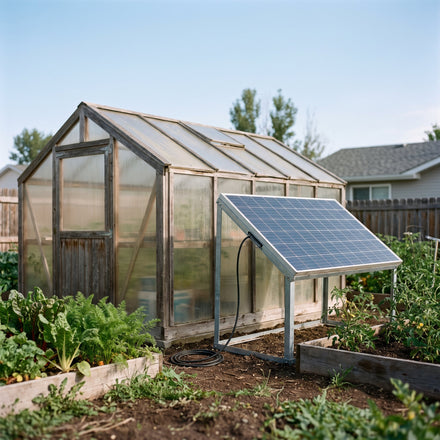
Solar aquaponics, a self-sufficient system

Solar aquaponics, a self-sufficient system

The sun can do far more than power a pump: it oxygenates the tank, circulates the water, cooks the fish and dries the herbs from the harvest. Here is how to make a small

Read the article
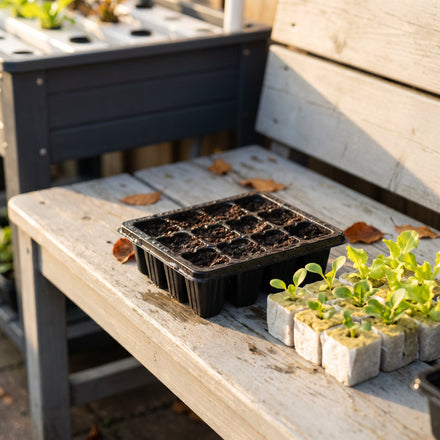
Herbs in aquaponics

Herbs in aquaponics

Quick, generous and undemanding, herbs are among the most rewarding crops for getting started in aquaponics. Basil, mint and chives grow fast, can be harvested continuously and readily forgive small imbalances in the system.

Read the article
What to sow in autumn in aquaponics

What to sow in autumn in aquaponics

Autumn is not the end of the growing season, it is the start of the most peaceful one. Here is what to sow, when to do it and how to achieve leaf harvests through

Read the article
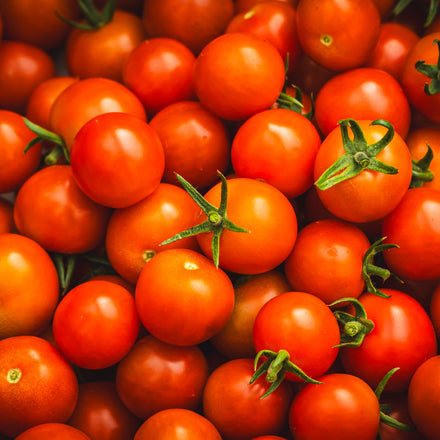
Growing tomatoes in aquaponics

Growing tomatoes in aquaponics

Hungry for nutrients and a lover of warmth, the tomato finds aquaponics an ideal growing environment. This comprehensive guide takes you from choosing a variety through to harvest, covering pH, hand pollination, and pruning,

Read the article
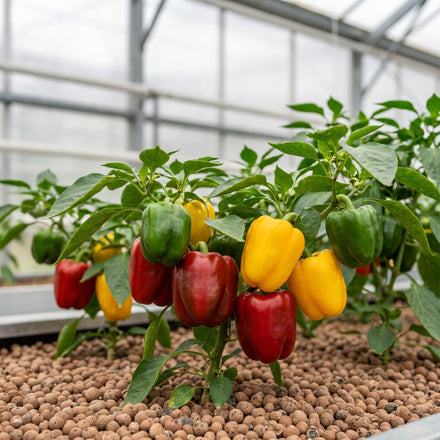
Growing peppers in aquaponics

Growing peppers in aquaponics

The pepper appeals to aquaponic growers for its long harvest and its nutritional richness, provided you give it suitable warmth and nutrition. This complete guide details every step, from seedling to harvest, to help

Read the article

Discover our aquaponics greenhouses and kits:

View all
Produits du rayon Kits d'aquaponie chez Univers Aquaponie

Aquaponics kits

Aquaponics kits ready to install in the garden, on a patio or in a greenhouse, with fish tank, grow beds and pump.

Discover
Produits du rayon Univers Plantes chez Univers Aquaponie

Plants

Seeds, grow media, fertilisers and aquatic plants for successful growing in aquaponics, hydroponics and the vegetable garden.

Discover
Produits du rayon Univers Équipements chez Univers Aquaponie

Equipment Universe

The equipment that keeps a system running: soilless growing, water circulation and aeration, filtration, temperature, plumbing and lighting.

Discover
Produits du rayon Serres d'aquaponie chez Univers Aquaponie

Aquaponics greenhouses

Greenhouses designed for aquaponics, supplied with their fish tank and grow towers.

Discover
Produits du rayon Univers Poissons chez Univers Aquaponie

Fish

Feed, monitor the water and care for your pond, aquarium or aquaponic fish.

Discover
Produits du rayon Univers Formation chez Univers Aquaponie

Learning

Books and practical courses on aquaponics, hydroponics and food self-sufficiency.

Discover