Growing pots for aquaponics

Written by Tristan Ulrich · September 19, 2026
Pots paniers de culture remplis de billes d'argile pour l'aquaponie

The net pot is an unassuming but decisive accessory in aquaponics: it supports the plant, houses the grow medium and allows water and oxygen to circulate freely. This guide explains how to choose the right model according to diameter, mesh, material and system type.

Choosing the right pots for aquaponic growing

The growing pot is easily overlooked, yet it is fundamental to the success of an aquaponic system. It holds the plant in position, retains the grow medium, and allows water and oxygen to reach the roots. A poorly chosen pot — too small, too enclosed, or made from an unsuitable material — quickly leads to restricted roots, escaping grow medium, or an unstable plant.

On the market, you will most often come across net pots, those slotted cups recognisable by their perforated sides. This guide helps you choose the right model based on diameter, mesh size, material, and system type, with practical pointers for fitting out everything from a small indoor tank to an entire greenhouse.

A grow basket pot with clay pebbles and roots submerged in water in aquaponics

The basket pot and its role

The net pot is a plastic basket with heavily perforated sides and base. Its structure of vertical slots serves a precise purpose: allowing roots to pass freely into the nutrient-rich water while retaining the inert grow medium that holds the plant in place. It is this balance between support and openness that sets it apart from a standard horticultural pot.

In aquaponics, this detail makes all the difference. The roots that pass through the mesh are bathed in oxygenated water rich in nitrates, which promotes vigorous growth and reduces the risk of root asphyxiation. The pot is therefore not simply a container, but an interface between the plant and the living system.

These baskets are found in almost every setup, from grow medium beds to floating rafts, making them the most universal component in soil-free cultivation.

Grow basket pots of various diameters lined up for aquaponics Hydroponic growing pot: 5 or 6.5 cm

Choosing the Right Diameter

The pot diameter should first be chosen according to the adult size of the plant. Common sizes range from around 3.5 centimetres for the smallest to 8 or 9 centimetres for the largest, with very popular intermediate sizes around 5 and 6.5 centimetres. A pot that is too small restricts root development and makes a large plant unstable, while a pot that is too wide wastes grow medium for a small lettuce.

In practice, smaller diameters are suited to herbs, seedlings, and young plants, whereas larger fruiting vegetables require more space. A size of 8 to 9 centimetres, with an internal diameter of around 5.8 centimetres, offers good anchorage for a mature tomato or pepper plant, for example.

Bear in mind the opening of the support as well, since the collar of the pot must fit snugly into the hole of the trough or deep water culture raft.

Close-up of the mesh and slots of a culture basket pot

Mesh Size and Slots

Slot size deserves just as much attention as diameter. Slots that are too wide let clay pebbles and fine media escape, dirtying the circuit and potentially clogging a pump. Conversely, a fine mesh holds the grow medium well but can impede the passage of large roots if poorly designed.

The rule is straightforward: match the mesh to the media being used. Fairly narrow slots suit clay pebbles and loose grow media, while wider openings work well for rockwool cubes, which cannot fall through. A rigid basket with clean edges is more resistant to blockage and easy to clean.

Check this point before purchasing, as an ill-matched mesh is one of the most common causes of cloudy water at the start of an installation.

What material should you choose for your grow pots?

Plastic dominates the net pot market by a wide margin, and for good reason. Lightweight, rigid, and completely unaffected by permanent moisture, it can be cleaned in seconds and reused season after season. Standard models are moulded from food-safe, stable plastic that releases nothing into the system water — a non-negotiable point when fish are living downstream.

Other materials do exist, and it is worth knowing how they actually perform in an aquaponic system.

  • Biodegradable pots — made from peat, wood fibre, or pressed cardboard — are designed to be buried and to break down. Kept permanently submerged, they soften within a few weeks, allow the grow medium to escape, and eventually lose all ability to support the plant.
  • Geotextile felt pots provide excellent root aeration, but they lose their shape once waterlogged and cannot be fitted into a raft board or a tower module.
  • Terracotta and ceramic are chemically stable, but heavy, fragile, and their solid walls prevent roots from reaching the nutrient water.
  • Untreated metal should be ruled out without hesitation, as it can leach elements that are harmful to fish.
  • Perforated plastic remains the only material that meets all four requirements: lasting support of the grow medium, unobstructed root passage, chemical stability, and easy cleaning.

We do stock biodegradable pots, and they remain perfectly suited for seedlings destined for the ground. For a grow medium bed, a raft, or a tower, plastic net pots are the right choice — which is precisely why they make up the bulk of our range. A properly selected net pot can be handled dozens of times without cracking and will last several years.

Filling a net pot with clay pebbles in aquaponics Clay pebbles 10L Plagron

Matching Pot and Grow Medium

The pot and the grow medium form an inseparable pair. The basket holds everything together, but it is the medium that supports the plant, buffers moisture and provides an anchorage for the roots. Expanded clay pebbles are the most widely used, as they are lightweight, porous and highly aerated. Pumice stone, being heavier, provides stability for larger plants, whilst rockwool is well suited to seedlings.

The choice should be made in keeping with the mesh size of the pot and the weight of the plant. Our guide to choosing your grow medium compares the options and their uses in detail.

A good habit is to rinse the medium before use, to remove any dust that might cloud the pond water.

Young seedling in a small mesh culture pot in aquaponics

Pots for Seedlings

Young plants have different needs from mature specimens. For seedlings and cuttings, small baskets are preferred — often 3.5 to 5 centimetres — which accommodate a rockwool cube or a few fine pebbles. Their small volume concentrates moisture around the delicate roots and makes handling in the nursery easier.

These small pots act as a staging point between germination and the final system. Once the roots are well clear of the mesh, the young plant can be transferred without stress into a larger basket. Our article on spring seedlings covers this starting phase in detail.

Always keep a few small baskets in reserve, as they are used in large numbers over successive rounds of sowing.

Large fruiting vegetable in a wide net pot in aquaponics 50 L coco fibre, natural or with perlite

Pots for large vegetables

At the other end of the scale, fruiting vegetables such as tomatoes, cucumbers, and peppers require wide, deep baskets. A pot of 8 to 9 centimetres provides the grow medium volume and the anchorage needed to support a heavy, fruit-laden plant without tipping over. Stability is both a safety requirement and a matter of yield.

With these larger volumes, a slightly more moisture-retentive medium proves its worth. Clay pebbles combined with a proportion of natural coco fibre buffer moisture fluctuations for a plant that transpires heavily, without closing off the airflow to the roots. Staking remains essential regardless, as the pot alone cannot support a plant of a metre or more.

Choosing a pot sized for the mature plant from the outset avoids a tricky repotting mid-season, which always carries a risk for roots that have already established.

Matching the pot to the system

Not all aquaponic systems use net pots in the same way, and the right approach is to choose the pot based on your setup. In a grow medium bed, the media fills the entire trough and the pot is used mainly to isolate each plant, which means simpler, medium-sized models work perfectly well. This is the most forgiving setup when it comes to pot choice.

In deep water culture, the pot is inserted into a hole in the float board and hangs directly in the nutrient solution. The collar must fit snugly in the opening to hold the plant securely without it slipping through. NFT systems, by contrast, require narrow pots sized to the channel diameter — often around 5 centimetres. Finally, vertical growing towers use specific pots that click into the stacked modules. For a full explanation of that last setup, our article on the workings of a growing tower covers the principle in detail. Bear in mind that a pot poorly matched to its system leads to leaks, instability, and reduced yields.

Grow basket pots in a deep water culture raft in aquaponics

The pot in deep water culture

Deep water culture, or raft culture, illustrates just how important the pot is. Net pots are inserted into holes in a floating board that sits on a pond, with the roots permanently submerged in oxygenated water. This setup is particularly well suited to lettuces and short-cycle crops, which are thirsty and require little anchorage.

Here, the pot diameter must match the board holes exactly. A pot that is too small falls through into the water; one that is too large simply will not seat properly. 5 cm pots are a widely used standard for this type of system, as they hold a young lettuce plant securely.

Water oxygenation is critical, since the submerged roots depend on it directly to stay healthy.

Net pots on a vertical grow tower in an aquaponic system Tower extension modules for the MyFarm kit

Pots for vertical towers

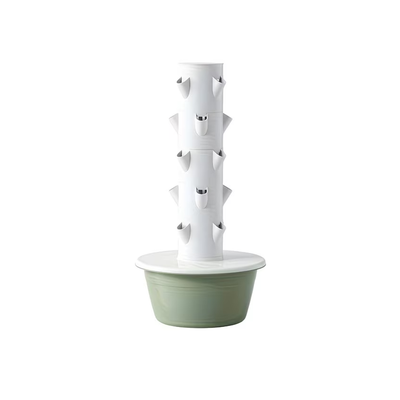
Vertical growing towers make use of height to multiply growing positions over a minimal footprint. They use dedicated net pots designed to clip into the modules and receive a trickle of water that flows from top to bottom. The pot here serves as both a housing and a root support.

This format is best suited to lightweight, compact plants such as strawberries, herbs, and small salad varieties. Large fruiting vegetables, which are too heavy and too bulky, are poorly suited to it. The choice of pot is dictated by the tower model, so the net pots specified by the manufacturer must be used.

When properly filled with a lightweight growing medium, these vertical net pots offer a remarkable yield per square metre for small-scale crops.

Maintaining your pots and avoiding common mistakes

A growing pot can be reused across many seasons, provided it is properly maintained. Between crops, a thorough clean removes the root residue and biofilm that build up in the slits. A simple scrub under clean water is usually sufficient, occasionally supplemented by a soak in a mild solution. This practice limits the spread of disease from one crop to the next and extends the life of your equipment.

Several mistakes crop up regularly among beginners and are worth avoiding from the outset.

  • Choosing a pot that is too small for a fruiting vegetable, which unbalances the plant at maturity.
  • Overlooking the mesh and allowing clay pebbles to escape into the system.
  • Reusing a dirty pot, risking the spread of root pathogens.
  • Forgetting to rinse new grow medium, a persistent source of cloudy water.

By anticipating these points, you avoid most setbacks and keep a healthy, long-lasting stock of pots. A clean, correctly sized container is a modest investment that will serve you for years.

By country: standards and availability across Europe

Net pots are highly standardised products, which makes life considerably easier for aquaponics growers throughout Europe. Common diameters, expressed in centimetres, are consistent from one country to the next, so a pot bought in France fits neatly into a panel sourced elsewhere. This compatibility stems from the widespread use of these pots in professional hydroponics, a highly international sector.

A few differences remain, however. In English-speaking countries, sizes are sometimes given in inches, with a two-inch pot corresponding to roughly 5 centimetres and a three-inch model to around 7.5 centimetres. Gardeners in northern Europe, where indoor growing is common due to the climate, often have a wide selection of net pots for tower systems and closed setups. In the south, greenhouse and outdoor growing sometimes favours larger containers for fruiting vegetables.

In all cases, the terminology can vary. Depending on the region, you may come across the terms net pot, mesh pot, hydroponic pot, or basket pot — but they all refer to the same thing. Sticking to the diameter in centimetres remains the most reliable way to choose the right size, regardless of the supplier.
Assortment of net pots on a potting bench

Where to find your growing pots

When equipping a system, it is better to have an assortment of sizes rather than a single format. A few small baskets for seedlings, a majority of medium models for everyday crops, and a handful of large pots for fruiting vegetables will cover most of the needs of a home setup. Buying in bulk is often cheaper and avoids running out mid-season.

Our collection of growing supports brings together net pots in various diameters, designed for aquaponics and hydroponics. You will also find compatible grow media to fill them.

Keeping a small stock of clean, stored pots on hand lets you transplant and renew your crops without ever interrupting production.

Conclusion: a straightforward but crucial choice

The net pot is one of the least expensive accessories in aquaponics, yet one of the most fundamental. By considering your choice according to four criteria — the diameter suited to the plant, the mesh size matched to the grow medium, a stable and reusable material, and a format consistent with your system — you lay sound foundations for all your growing.

Keep the overall logic in mind: a small basket for seedlings, a wide and stable container for fruiting vegetables, and a specific model for rafts and towers. Regular maintenance extends the life of this modest equipment and limits the spread of disease from one season to the next.

Chosen carefully and maintained properly, your pots become a lasting investment that grows alongside your system, from the first seedling to your most abundant harvests.

Sources

University of Minnesota, A Comparison of Rockwool, Lava Rock, Expanded Clay Aggregate, and Coconut Coir as Growing Substrate in a Floating Raft Aquaponic System, Direct comparative trial of the four grow media used in a deep water culture net pot, with fresh lettuce weights ranging from 35.9 g in rockwool to 54.5 g in coco fibre, supporting the section on matching the pot to the grow medium.

Oklahoma State University Extension, Soilless Growing Mediums (HLA-6728), Gives the physical properties and pH of the grow media referenced in the article — highly porous and pH-neutral expanded clay balls, porous volcanic rock, acidic and highly moisture-retentive coco fibre, and alkaline rockwool — justifying the choice of mesh size according to the medium.

Oklahoma State University Extension, Hydroponics (HLA-6442), A reference guide on soilless growing systems, covering expanded polystyrene raft culture, rockwool cubes for young plants, and the need for a minimum air percentage in the grow medium — elements that underpin the sections on rafts and seedlings.

SMIDAP et Lycée O. Guichard de Guérande, Optimisation Pilote Régional Aquaponie, second programme (OPRA2), French pilot study comparing, within a single greenhouse, deep water culture, NFT, clay balls, perlite and vertical columns of the ZipGrow type, documenting the format constraints mentioned for grow towers and gutter-style supports.

Frequently asked questions

Yes, without any difficulty. Empty out the grow medium, remove the dried roots, then soak the net pots in water with a splash of white vinegar to dissolve limescale, or in very dilute bleach solution if a root disease has been present. A thorough rinse is essential before replanting. A net pot only needs replacing once it becomes brittle or has been warped by the sun.

Drilling your own holes gives you the freedom to space plants however you like, which matters a great deal for lettuces that quickly crowd each other out towards the end of their cycle. You will, however, need a hole saw that exactly matches the rim diameter of the net pot — otherwise the pot either falls through or won't seat properly. A ready-made panel guarantees the fit and a tried-and-tested spacing, at the cost of a fixed layout.

An opaque pot limits light entry at root level, thereby slowing the formation of green algae on the grow medium and on the walls. It is a small detail, but it prevents the slow fouling of the circuit.

Think in terms of growing area rather than number of pots, then divide by the spacing required for each species. Feedback from French pilot systems shows that the growing area of a domestic system amounts to a few square metres spread across raft beds, channels and grow medium troughs. Allow for some spare stock too, as baskets get lost and broken over successive transplantings, and an assortment of three diameters covers most requirements.

Yes in certain set-ups, but each has its constraints.

  • In a clay pebble media bed, the plant is placed directly into the grow medium, which acts as the pot.
  • In a raft system, a simple foam collar can hold the stem — a common solution for lettuce but not very stable for a heavy plant.
  • In NFT, doing without a net pot complicates transplanting and allows roots to slip into the channel.

Harvest on time, as most blockages come from plants left in place too long. A strainer on the pump and a check of the gutter returns takes care of the rest.

Read next

Growing tomatoes in aquaponics

Growing tomatoes in aquaponics

Hungry for nutrients and a lover of warmth, the tomato finds aquaponics an ideal growing environment. This comprehensive guide takes you from choosing a variety through to harvest, covering pH, hand pollination, and pruning,

Read the article
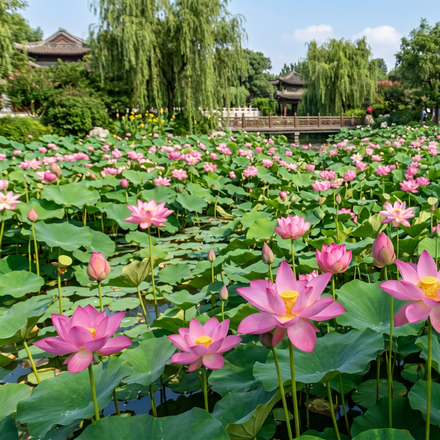
Growing lotus in aquaponics

Growing lotus in aquaponics

The lotus is an aquatic plant whose flowers are emblematic of the most beautiful ornamental ponds. In aquaponics, in an ornamental system (a pond with goldfish or koi carp) that does not need to

Read the article
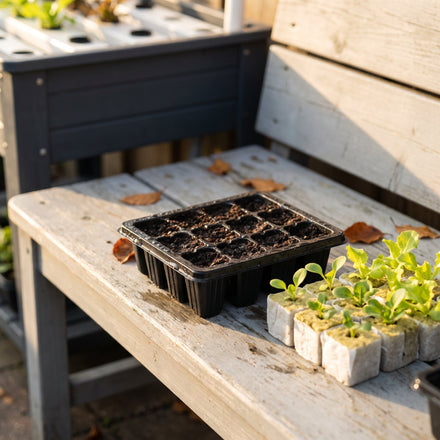
What to sow in autumn in aquaponics

What to sow in autumn in aquaponics

Autumn is not the end of the growing season — it is the start of the most peaceful one. Here is what to sow, when to do it and how to achieve leaf harvests

Read the article
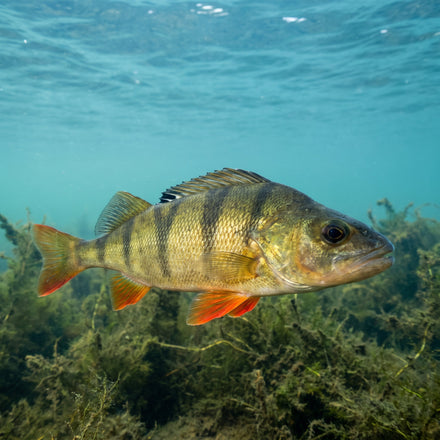
Raising perch in aquaponics

Raising perch in aquaponics

The common perch is the predatory fish of European temperate waters: hardy, with sought-after flesh, and perfectly suited to aquaponic systems in temperate climates. Here is how to raise this fish, the temperatures to

Read the article
Aquaponics and Summer Holidays

Aquaponics and Summer Holidays

You're going away for two weeks in July and your aquaponics system will be running without you : this thought rightly makes you anxious, because heatwaves, evaporation, and fish feeding raise practical questions. Good

Read the article