



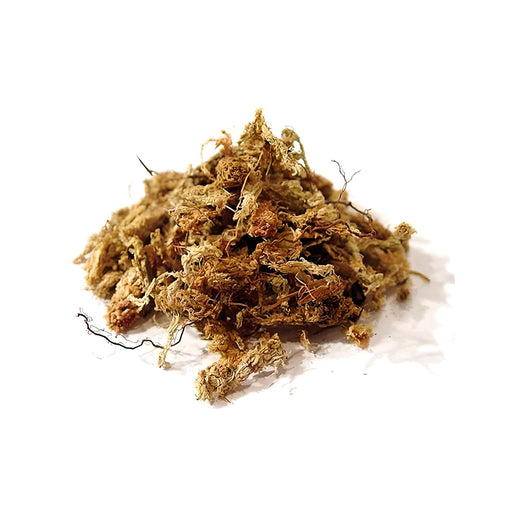

Organic seedling compost for pots and soil blocks
Regular price
$9.00
Regular price
Sale price
$9.00
Unit price
/
per
| Volume | Price | Price per L | vs 2,5 L |
|---|---|---|---|
| 2,5 L | $9.00 | $3.60 | — |
| 5 L | $12.00 | $2.40 | −33 % |
| 10 L | $20.00 | $2.00 | −44 % |
This organic seed compost from Guano Diffusion combines light and dark sphagnum peat with a small dose of organic fertiliser, just enough for the seedlings' first week. Suitable for organic farming, it is sold in 2.5, 5 and 10 L bags, suited to a season of pots.
 Customer support 7 days a week by email
 Delivery within 2 to 15 business days
100 % secure payment
The summary
- Peat blend: a seed compost based on blond and black sphagnum peats, made in France.
- Its feed: 1 g of NPK 5-3.5-8 organic fertiliser per litre, for the first week.
- Its key values: a pH of 6 and a low conductivity of 40 mS/m, suited to young roots.
- What it is for: sowing in pots, trays or pressed blocks, cuttings and plants intended for aquaponics.
- Bags: 2.5 L for one tray, 10 L for a season of pots.
- Organic use: it can be used in organic farming.
Fine peat mix for sowing in small pots, trays and blocks
Guano Diffusion's SeedMix is a seedling compost of blond and black peat, with 1 g of organic fertiliser per litre for the first week. Your plants then move on to ZeroMix, which you fertilise yourself. In 2.5, 5 or 10 L bags, it also raises aquaponics seedlings, with the root ball rinsed before the grow bed.
A seed contains enough to germinate, but not enough to feed the seedling beyond its cotyledons. Seed compost must therefore fulfil two roles that slightly contradict each other: staying poor enough not to burn a radicle only a few millimetres long, and containing just enough nutrients for the first true leaves not to turn yellow. Guano Diffusion's SeedMix strikes this balance with a base of sphagnum peat and a load of 1 g of organic fertiliser per litre, calculated to cover the first week of development. You then stay in control of nutrition, at the pace of your plants.
🌾 Two peats and a gentle fertiliser
The blond peat of sphagnum moss, only slightly decomposed, keeps a fibrous structure that retains water while letting air circulate between its fibres. The black peat, more decomposed, adds body and a better capacity to hold nutrients, which stops the fertiliser being lost at the first watering. Their blend gives a fine, even grow medium that settles just enough to keep a seed in contact with moisture. The organic fertiliser, dosed at NPK 5-3.5-8, favours potassium, which supports the development of tissues. The pH of 6 sits in the range where most elements remain available to the plant, and the conductivity of 40 mS/m, or 0.4 mS/cm, stays low, as is appropriate for young roots that are still very sensitive to salts. Finally, each litre of potting mix holds 700 ml of water, which gives the seed steady moisture between waterings.
🌱 Sowing in pots or soil blocks
Pots and seed trays
Fill without compacting, level off, sow, then cover with a thin layer of sieved compost before watering with a fine spray.
Pressed blocks
When moistened, the mix packs down in a soil blocker and produces blocks that can be transplanted without a pot.
Cuttings
Its airy structure also suits stem cuttings, set in a pot kept moist.
Transplanting
As soon as the first true leaves have formed, the plant moves into a larger pot or into its final position.
After a week, the fertiliser reserve in the mix runs out, and it is up to you to take over if the plants stay in their pots. A very dilute application of complete fertiliser is enough at this stage, or transplanting into the ZeroMix unfertilised compost from the same brand, enriched with dried blood guano at a rate of 10 g per litre, which lets you adjust the nutrition of each pot. For slow-germinating plants such as parsley or peppers, a bag of vermiculite scattered on the surface keeps moisture around the seed without forming a crust. The article on germination failures covers the most common causes, which often have more to do with water and air than with the seed itself.
Sow in peat pots so you can transplant without breaking up the root ball
The biodegradable peat pots are filled with this potting soil and transplanted whole, the pot breaking down in the soil. This spares you from handling the roots at their most fragile moment, which matters for squashes, cucumbers or basil, which tolerate being knocked out of their pots badly. The plant then shows no check in growth after planting out.
An opened sachet reseals in a dry place
Close the bag after use and store it away from frost and strong heat, because a peat compost that dries out completely becomes hard to rewet. If it has dried out, moisten it gradually in a tub, working it by hand, before filling your pots.
🌡️ Warmth, light and watering
The compost provides water and air, but it is temperature that decides the speed of germination. Each vegetable has its own range: lettuce germinates from just a few degrees and reaches its optimum around 24 °C, whereas tomato and pepper prefer a grow medium close to 29 °C and pepper hardly emerges at all below 16 °C. A tray of pots left on a cold windowsill can therefore stay dormant for two weeks, whereas the same seedlings emerge within a few days on a heated mat or in a heated room. Spinach and cabbages, which are more tolerant, can be sown earlier in spring, when the soil is still cool.
As soon as the seedlings break through the surface, their needs change. They then require plenty of light, otherwise the stem lengthens and flops over, which is known as etiolation: place the tray near a very bright window or under a grow light switched on for 14 to 16 hours a day. Water preferably from below, leaving the pots to soak for a few minutes in a saucer, then empty out the remaining water, because compost that is permanently soggy encourages damping off of seedlings. Finally, sow at a depth of two to three times the size of the seed, and leave very fine seeds on the surface, simply pressed onto the moist compost.
🐟 Seedlings for aquaponics
In an aquaponic system, this potting compost is used to raise your plants before they are installed, not to fill the grow beds. A plant sown in a pot can be transplanted into open ground, a pot or a planter without any special precautions. If it is going into a bed of clay pebbles, gently rinse the root ball in a bucket of room-temperature water to remove most of the compost, because peat particles cloud the water, end up in the pump, and the fertiliser they carry has no place in the fish circuit. For plants intended exclusively for the beds, rockwool cubes avoid this step. The guide to getting spring seedlings off to a good start in aquaponics sets out this calendar.
Raising the seedlings separately has another advantage, which lies in how the harvests are organised. While the lettuces in place finish growing in the system, the next batch grows in small pots and gains three to four weeks. You then replace each harvested plant with one that is already well developed, so the tanks are never left empty and the fish always find roots to absorb the nitrates they produce. The nursery is also the only place where you can feed the young plants freely, since their water does not reach the pond.
📦 Three sizes for one season
SeedMix is sold in bags of 2.5, 5 and 10 litres. The small size fills a seedling tray or a few seed trays, which is enough for a batch of herbs on a balcony. The 10-litre bag covers a season of pots, since a 7 cm pot holds about a quarter of a litre, so it fills around forty of them. If you sow several staggered batches for an aquaponic system, the large size saves you opening a fresh bag for every sowing, provided you keep it closed between uses so that it does not dry out.
Technical specifications
The compost
- Composition
- Blond and black sphagnum peats
- Fertiliser
- Organic, NPK 5-3.5-8Dose of 1 g per litre, for the first week of the seedlings
- pH
- 6Measured at a 1:5 dilution
- Conductivity
- 40 mS/mThat is 0.4 mS/cm, a low value suited to young roots
- Water retention
- 700 ml per litre
- Organic matter
- 85% of the dry matterFor 35% dry matter
- Organic farming
- Usable
- Manufacture
- France
Sizes and use
- Volumes
- 2.5, 5 or 10 L
- Uses
- Seedlings, soil blocks, cuttingsIn pots, seed trays, module trays or soil blockers
- Fertiliser reserve
- Around 1 weekThen, heavily diluted fertiliser or transplanting
- Storage
- Sealed bag, frost-freeDried-out peat is hard to rewet
4 further specifications are available in the detailed view.
In the box
- 1 sachet of SeedMix compost of 2.5, 5 or 10 L, depending on the size chosen
Composition, fertiliser, pH, conductivity, retention and origin: manufacturer's data sheet (guano-diffusion.com); germination temperatures based on Alabama Extension sheet ANR-1061.
Manufacturer and product safety
- Manufacturer
- Guano Diffusion
- Website
- www.guano-diffusion.com
Information provided under Regulation (EU) 2023/988 on general product safety.
Estimate your
delivery time
Your estimate
Delivery
Estimated time
It covers preparing your order and then the transit time quoted by the carrier, counted in working days.
It is not a guaranteed delivery date: public holidays, peak periods, customs or a carrier delay can extend it. The exact amount, in your currency, is worked out in the cart once your address is entered.
The bag is dispatched from a distributor's warehouse in France, as a parcel of 1 to 4 kg depending on the size. The exact shipping cost is shown in your basket.
Frequently asked questions
6 questions
6 key questions
You may also like


Related articles

Seedling
Getting spring seedlings off to a good start in aquaponics
This guide sets out the seedling calendar for an aquaponic system.
Read the article

Seedling
Germination failure: causes and solutions
The causes of failed germination often lie in the water and the air in the grow medium.
Read the article

Seedling
Setting up an indoor seedling area
Heat, light and humidity are set there for successful seedlings.
Read the article

Grow media
Which grow medium should you choose in aquaponics?
This article compares the grow media that receive the plants once they have been transplanted.
Read the article

Calendar
A practical calendar for succeeding in aquaponics
The calendar places the seedling period within the year of a system.
Read the article
Let us talk about your project
A question about this product or your setup? Our team will answer and advise you.

Interest-free instalment payments
Offered depending on the cart amount, at checkout.

Delivery in 2 to 15 working days
Depending on the products and shipping sites. Estimate by destination in the estimator on this page.

After-sales service 7 days a week by email or chat
Our team answers all your questions.

Shop responsibly
Become part of the change.
