Overwintering your garden pond

Written by Tristan Ulrich · October 18, 2026
Bassin de jardin en hiver avec un trou maintenu ouvert dans la glace

When temperatures drop, a poorly prepared garden pond puts your fish at risk, especially if the surface freezes over completely. Overwintering the pond properly means ensuring gas exchange, healthy water and fish that get through the cold unharmed.

Overwintering a garden pond properly

With the arrival of the cold, life in a garden pond slows right down. The fish's metabolism drops, the plants go dormant and the filtering bacteria work at a reduced rate. This winter balance is fragile, and the main danger comes from a surface completely covered in ice, which cuts off the exchange between air and water.

Overwintering a pond means anticipating these changes. We look at how fish get through the winter, why frost is dangerous, and how to keep an ice-free area, manage oxygenation, filtration, feeding, plants and depth, with the differences between European climates.

Koi carp resting at the bottom of a garden pond in winter

How pond fish get through the winter

Pond fish are cold-blooded animals. As the water cools, their metabolism slows down, and in very cold water they enter a sort of torpor. They then gather in the deepest and most stable zone of the pond, where they move very little. This slowdown is why you should neither disturb them, nor feed them normally, nor strike the ice above them.

Koi carp, goldfish and other cyprinids tolerate cold well. They get through the winter in water close to 0 degrees as long as the pond does not freeze over completely and the oxygen continues to be replenished.

Why frost puts your fish at risk

The cold itself is not the main enemy of pond fish. What really threatens them is a continuous layer of ice that seals the surface. Oxygen from the air can no longer dissolve into the water, and the ice, especially when covered in snow, deprives the plants of the light they need to produce oxygen. Meanwhile, the decomposition of leaves and bottom sludge continues to use up the available oxygen and releases gases, such as carbon dioxide, methane and hydrogen sulphide, which can no longer escape.

Over the weeks under a closed sheet of ice, the oxygen runs out and these gases build up. The fish, even when sluggish, eventually suffocate. American agricultural extension services describe this lack of oxygen as the usual cause of winter fish kills, far more than the direct effect of the cold, and stress that shallow ponds with a heavy load of organic matter are the most at risk.

The rule is therefore simple. You must always keep an opening in the ice to preserve these exchanges. This free area, however small, lets the pond breathe and the gases escape throughout the winter. If snow lies for a long time, clearing part of the frozen surface, when this can be done safely, also gives the plants their light back.


Protective net over a garden pond to catch leaves before winter EHEIM VAC40 sludge vacuum for ponds, 40-litre tank

Cleaning the pond before winter

Winter preparation begins in autumn, before the first frosts, by reducing as much as possible the organic matter that will decompose under the ice. Remove dead leaves that have fallen into the water, cut back faded plants and clear the deposits from the bottom with a pond vacuum, which saves you from emptying the pond. A net stretched over the water while the leaves are falling stops them from building up, and the pond thus enters the cold season with a low organic load and more stable water.

Anti-freeze dome keeping a hole open in the ice of a garden pond

Keeping a hole open in the ice on the pond

Keeping an ice-free area is the central task of overwintering. The safest solution is a floating de-icer, often called an ice-free dome, fitted with a small heating element that stops the water freezing over a limited area without heating the whole pond. Thermostatically controlled models, such as the EHEIM thermo200 de-icer, only switch on as freezing approaches.

This arrangement leaves an opening permanently in place through which gases escape and the air is renewed. As a benchmark, an Iowa State University guide considers an opening of about 30 centimetres in diameter sufficient for 9 square metres of surface. In regions with harsh winters, it is often combined with gentle aeration.

Never break the ice with a hammer. The shock wave is very stressful, even fatal, for sluggish fish. If the surface has frozen over, melt a hole by setting a pan of hot water on the ice.

Aerator creating bubbles to oxygenate a garden pond in winter Air pump for tanks and ponds, 80 to 3,600 L/h

Oxygenate without cooling the bottom

Winter oxygenation is useful, provided it is done with care. An air pump connected to a diffuser, commonly known as an air stone, supplies oxygen and helps keep an area free of ice. However, you should avoid stirring up the whole water column, because the deeper layer, slightly warmer and more stable, serves as a refuge for the fish.

So place the diffuser at a shallow depth, near the surface or in a shallow area, and not on the bottom, as university extension services recommend for the cold season. Set a gentle flow rate, a steady string of bubbles rather than a rolling boil, and install the pump itself out of the water, sheltered from rain and frost.

Should you switch off the pond pump and filtration in winter?

How to manage the pump and filter in winter depends on your climate and the type of pond. In regions where the water stays cold for several weeks and freezes over at the surface, many owners switch off conventional filtration. Running a pump that draws water from the bottom would stir up the deep layer and cool the area where the fish rest, while also exposing the equipment to frost.

If you switch off a submersible pump, take it out of the water, clean it and keep it submerged or filled with water, as some manufacturers' instructions recommend, so that the seals do not dry out. Conversely, in regions with mild winters where the water does not freeze, you can often keep a reduced level of filtration running to maintain healthy water. Our pond pumps and our filter media cover both approaches.

In every case, bear in mind that the activity of the filter bacteria slows down sharply in cold water. Biological filtration no longer plays its full role in the depths of winter, which makes it all the more worthwhile to keep the pond clean and carrying little organic matter.

Light feeding of pond fish in autumn before winter Wheat Germ Floating freshwater food for koi

Feed less and differently

Winter feeding is adjusted to the water temperature. When it drops, the fish's digestive system slows down, and a rich feed that is poorly digested can weaken them and increase the organic load in the pond.

From autumn, when the water falls below about 15 degrees, switch to a cool-water feed based on wheatgerm, which is easier to digest and which its manufacturers intend for water at roughly 5 to 15 degrees, and gradually reduce the rations. American university guides put the complete stop to feeding at between 10 and 7 degrees or so. In practice, stop feeding as soon as the water stays consistently in this range, as the fish then live off the reserves built up in autumn.

Resume feeding only in spring, when the water is consistently back above 10 degrees, starting with small quantities.

Frost and thin ice at the edge of a garden pond, with the water temperature dropping

Monitor the temperature of the pond water

All overwintering decisions rest on the water temperature, which is far more reliable than the air temperature, because water cools slowly. A pond thermometer lets you follow it daily and change the feed, stop feeding or put the anti-freeze measures in place at the right time, using three benchmarks: about 15 degrees to switch to cool-water feed, 10 to 7 degrees to stop feeding and 0 degrees for the risk of freezing. In the coldest regions, or for more sensitive fish, a pond heater can complete the setup.

Cut-back, frosted pond plants at the edge of a garden pond in winter

Overwintering your pond plants

Aquatic plants also need some preparation. Marginal plants and hardy oxygenating plants spend the winter outdoors, but their dead foliage must be cut back before the frosts so that it does not rot in the water. Hardy aquatic plants such as water lilies are cut back to the crown, then lowered into the deep zone, out of reach of the frost.

Frost-tender or tropical species must be brought into a frost-free room or treated as annuals. Also avoid plants on the European list of invasive alien species, such as water hyacinth, water lettuce or water primroses, the sale, possession and introduction of which into the wild are prohibited in the European Union.

Overwintering your pond according to country and climate

Overwintering a pond is not done in the same way everywhere in Europe. The severity and duration of frost change everything, and the same instruction may be essential in one region and unnecessary in another. It is better to adapt these principles to your local climate than to apply a single recipe.

  • Mild climates, the Atlantic coast and southern Europe: the water rarely freezes, and reduced filtration can be maintained.
  • Temperate climates, most regions: surface frost remains temporary, and an anti-freeze device and stopping feeding are generally enough.
  • Cold climates, central, eastern and northern Europe: frost lasts longer, so sufficient depth and aeration become essential.
  • Mountain areas: winters are long and harsh, and a pond heater may be justified for the fish.

In every case, the most reliable guide remains the actual temperature of your water, not the calendar. A mild autumn delays overwintering, while an early cold snap brings it forward. The same guidelines apply to overwintering an aquaponics system installed outdoors, whose fish and biofilter slow down in the same way. In cold regions, some aquaponics growers even choose trout, which are comfortable in cool water, as our article on salmonid aquaponics shows.

Deep garden pond in winter: the depth protects the fish from freezing Telescopic pond net, 40x35 or 50x43 cm

Depth, the best protection for the pond

The best winter protection for a pond is decided at the design stage. A pond that is deep enough will not freeze right to the bottom in an ordinary winter, and its deep layer stays warmer than the surface, since the densest water, close to 4 degrees, tends to collect there. The Royal Horticultural Society recommends at least 60 centimetres at the deepest point to limit the risk of the pond freezing solid. For koi carp, which grow a great deal, more is generally allowed for, around a metre or more in cold regions.

If your pond is too shallow, it is better to bring the fish indoors into a tank set up in a frost-free room for the winter. A pond net with a telescopic handle lets you catch them gently, without emptying the pond.

Mistakes to avoid when overwintering your pond

Many winter losses are avoidable. They most often stem from a few classic mistakes, which are easy to correct once you understand the reasoning behind them.

  • Letting the surface freeze over completely with no open area at all.
  • Breaking the ice with a tool, which causes shock waves that are dangerous for the fish.
  • Carrying on feeding when the water is already too cold.
  • Stirring up all the water and chilling the deep zone where the fish rest.
  • Neglecting the autumn clean-up and leaving leaves and silt to rot.
  • Introducing invasive exotic plants or fish, or releasing pond fish into the wild.

By avoiding these pitfalls and keeping an eye on the temperature, overwintering becomes a calm routine. A well-prepared pond gets through the cold without any losses and springs back to life in the spring.

Conclusion: a worry-free winter for your garden pond

Overwintering your garden pond requires neither complicated equipment nor constant effort, but rather forward planning and a few key actions at the right time. Cleaning before the frosts, keeping an area free of ice, gentle oxygenation, adapting the filtration, stopping feeding at the right threshold and relying on sufficient depth: that is the essence of it, with the water temperature as your guiding thread.

Carefully prepared in autumn, your pond protects its fish and gets going again quickly in spring.

Sources

Royal Horticultural Society, How to care for ponds, Oxygen drop under the ice, ice to be melted with a hot saucepan and never broken, snow to be cleared.

Royal Horticultural Society, Ponds in February (make a new pond), Minimum depth of 60 cm at the deepest point to limit the risk of the water freezing solid.

University of Illinois Extension, Under the ice: what winter means for your pond, Oxygen under ice and snow, consumption through decomposition, diffuser to be moved up into a shallow area in winter.

Kansas State University, Water Gardening: Maintenance (MF2913), Stopping and resuming feeding at around 10 °C (50 °F), the lethal shock wave when you strike the ice, and overwintering your plants.

Iowa State University Extension, Fall and Winter Care of Watergardens, Toxic decomposition gases, size of the opening in the ice, feeding down to 7 °C (45 °F), hardy water lilies lowered to the bottom.

OASE, Pond de-icer, Manufacturer's manual: the thermostatic antifreeze lets oxygen in and carbon dioxide and methane out.

LSU AgCenter, Tips to reduce disease outbreaks in fish, Slow immunity in cold water and diseases favoured by spring warming and temperature swings.

EEE Resource Centre (OFB, IUCN France), List of invasive alien species of concern for the European Union, Pond plants and fish regulated in the European Union.

Frequently asked questions

It depends on your equipment and your climate. A pump sitting on the bottom stirs up the water in the sheltered area and needs to be raised or switched off. A gravity filter that freezes may crack. In a mild winter, many people leave a reduced flow running with the pump raised to mid-depth, which maintains gas exchange. In colder regions, you switch off, drain and store the equipment frost-free, relying on a floating de-icer to keep an opening in the surface.

This is the trickiest case, since the cold also attacks through the walls and not only through the surface. Three conditions at the very least.

  • A sufficient volume and depth of water to keep a deep zone that does not freeze.
  • Insulation of the exposed walls, rigid panels or thick mulch.
  • An opening kept clear at the surface for gas exchange.

Failing that, it is better to move the fish to a tank set up in a frost-free room.

No, this is the expected behaviour in cold water. Leave them alone, do not handle them and do not try to stimulate them.

The danger comes not from the cold but from the surface closing over. Under thick ice, organic matter keeps decomposing and uses up the dissolved oxygen without the air being able to replenish it. Reopen an area by placing a container of hot water on the ice until it melts, never by hitting it. An anti-freeze device or gentle surface aeration, kept running all winter, will prevent it from coming to this. If a smell is released when you open it, ventilate without delay.

An open-weave cover stretched over the water limits the amount of leaves falling in and the cooling effect of the wind, without ever sealing the surface. Avoid a solid sheet laid directly on the water, which stops gas exchange and deprives the plants of light.

When the water warms up durably above roughly 10 degrees, and not at the first mild spell. Restart the filtration first, let the biofilter reactivate for a few days, then offer small amounts of fresh-water feed before gradually returning to the usual ration. Resuming too generously, while the filter bacteria are still barely active, can cause a rise in ammonia.

As winter ends, the fishes' immune defences restart more slowly than the bacteria and parasites, which benefit from the warming water. Sudden temperature swings between day and night add to this stress. Watch the fishes' behaviour closely, along with the condition of their skin and fins, check the water quality with suitable tests, and consult a specialist fish vet if you notice wounds or deaths.

No. Several species popular for ponds appear on the list of invasive alien species of concern for the European Union, including water hyacinth, water lettuce, water primroses, Brazilian watermilfoil, pumpkinseed sunfish and stone moroko. Selling them, keeping them and introducing them into the wild are all prohibited. Likewise, never release your pond fish into a river or a pond.

Read next

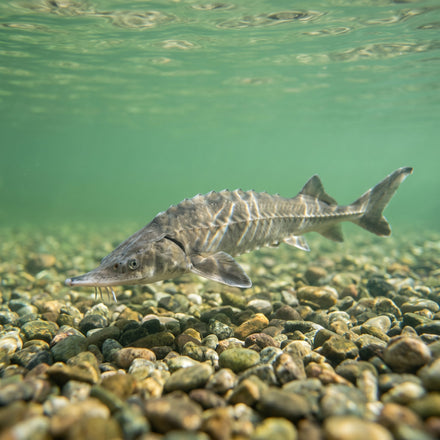
Sturgeon in a garden pond

Sturgeon in a garden pond

As prehistoric as it is elegant and demanding, the sturgeon can thrive in a large garden pond provided its particular needs are met. This European-focused guide covers the suitable species, the pond size required,

Read the article
Summer recipes from the kitchen garden

Summer recipes from the kitchen garden

Summer turns the vegetable garden into a machine of abundance, and that's precisely where the biggest waste occurs, due to not knowing what to do with the harvest. Cooking and preserving what you've grown

Read the article
Protecting your aquaponic system in winter

Protecting your aquaponic system in winter

Winter is a critical period for an aquaponic system: the pond may freeze, bacterial activity collapses and the fish's metabolism slows right down. With the right habits and a minimum of equipment, you can

Read the article
Green pond water: 5 solutions

Green pond water: 5 solutions

In the middle of summer, the water in your pond turns an opaque green and you can no longer see your fish. Good news : five natural solutions, well combined, are enough to restore

Read the article
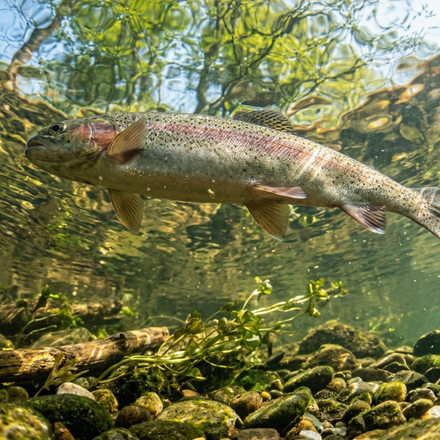
Salmonponics: aquaponics in cold water

Salmonponics: aquaponics in cold water

Aquaponics is often associated with pond fish like goldfish and koi. However, there is a variant perfectly suited for our temperate regions, cool climates, and winters : salmoponics. Trout, char, brook trout, these iconic

Read the article
Is aquaponics suitable for animal welfare ?

Is aquaponics suitable for animal welfare ?

We often talk about what aquaponics produces. But rarely about what the fish that make it work experience. Are they simply tolerated in a system designed for production, or can aquaponics truly respect their

Read the article

Discover our aquaponics greenhouses and kits:

View all
Produits du rayon Kits d'aquaponie chez Univers Aquaponie

Aquaponics kits

Aquaponics kits ready to install in the garden, on a patio or in a greenhouse, with fish tank, grow beds and pump.

Discover
Produits du rayon Univers Plantes chez Univers Aquaponie

Plants

Seeds, grow media, fertilisers and aquatic plants for successful growing in aquaponics, hydroponics and the vegetable garden.

Discover
Produits du rayon Univers Équipements chez Univers Aquaponie

Equipment Universe

The equipment that keeps a system running: soilless growing, water circulation and aeration, filtration, temperature, plumbing and lighting.

Discover
Produits du rayon Serres d'aquaponie chez Univers Aquaponie

Aquaponics greenhouses

Greenhouses designed for aquaponics, supplied with their fish tank and grow towers.

Discover
Produits du rayon Univers Poissons chez Univers Aquaponie

Fish

Feed, monitor the water and care for your pond, aquarium or aquaponic fish.

Discover
Produits du rayon Univers Formation chez Univers Aquaponie

Learning

Books and practical courses on aquaponics, hydroponics and food self-sufficiency.

Discover