



Sold out


The Symbiose® aquaponic kit is a 4.30 m grow bench that combines a one-cubic-metre fish-rearing pond, growing beds, and their filtration system, suitable for a garden or terrace. It can house trout, char, or perch, and requires around 30 minutes of maintenance per month.
The price includes installation, commissioning, and a starter kit. Orders are placed through the Glaez website.
Free and without obligation: we get back to you with a tailored offer.
Free when you go through Univers Aquaponie
£200 worth of consumables of your choice from the Univers Aquaponie catalogue
 Customer support 7 days a week by email
 Delivery within 2 to 15 business days
The Glaez Symbiose® aquaponics kit is a raised bed measuring 4.30 m by 1.30 m that combines fish farming and vegetable growing in a closed loop. Its one-cubic-metre pond holds up to 25 kg of trout, Arctic char, perch or zander. It provides 3 m² of growing space and needs about 30 minutes of maintenance a month.
The Symbiose is an above-ground aquaponics bench measuring 4.30 m by 1.30 m, designed to produce both edible fish and vegetables in the garden. On one side is a one-cubic-metre rearing pond, on the other 3 m² of growing space, and between the two a mechanical and biological filtration unit links everything together in a closed loop. Its height ranges from 1.20 m to 3 m depending on the configuration, and the raised beds let you work standing up along the whole length, without kneeling or bending towards the ground.
The bench brings together four functions that form a single circuit: rearing, filtration, growing and cooling. The water leaves the pond loaded with fish waste, passes through the mechanical filter that holds back solid particles, then the biofilter where nitrifying bacteria convert ammonia into nitrates. It then irrigates the 3 m² of growing area, where the roots take up these nitrates, and returns to the pond. A cooling and oxygenation system completes the loop, which matters with a cubic metre of water exposed to the summer sun. The galvanised steel structure, finished in RAL 7006, is made near Nantes using French materials, and the bench's design principle is patented by Glaez. You have nothing to connect yourself between these elements: the team that installs the bench fills and starts the system on site.
The rearing
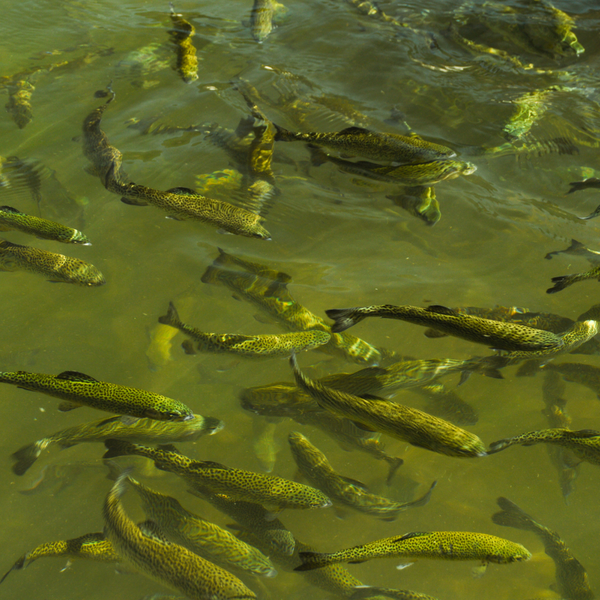
The one-cubic-metre pond accommodates trout, Arctic char, perch, or zander, up to a maximum of 25 kg of fish.
Filtration
A mechanical filter retains solids, then a biofilter houses the nitrifying bacteria.
Rafts
One square metre of floating rafts carries lettuces and short-cycle herbs.
The grow medium
The 2 m² of beds filled with clay pebbles support the plants that bear fruit.
More than two tonnes over 4.30 m in length
First measure the length: 4.30 m in one unbroken run, plus room to walk around the bench. Next check the load-bearing capacity, because the 600 kg structure and its 1,600 L of water exceed two tonnes once the beds are filled, which rules out a lightweight floor or a deck on unchecked pads. Finally, tell us when you order about any difficult access, narrow passage or staircase, as the installation is carried out on site in a single day.
Feed trout with a growth-stage pellet
The Symbiose was designed for trout, and the 5.5 mm trout feed pellets suit the 100 to 400 g fish that stock a grow-out pond. Their 45% protein covers the needs of a salmonid, and the nitrogen they supply becomes, after passing through the biofilter, the main source of nitrate for your crops. A 20 kg sack fed at 1% of body weight lasts about 80 days on a pond stocked with 25 kg, and it should be ordered before the fish arrive, since feeding begins the day after they are introduced.
The rearing tank holds 1 m³, and the rest of the system brings the total volume to 1,600 L. The recommended density is 25 kg of fish per cubic metre, which leaves the animals room and gives the filtration a margin on both dissolved oxygen and ammonia. The suitable species are freshwater food fish: trout first of all, then char, brook trout, perch and pike-perch. You start with young fish, and the biomass increases as they grow, so stocking is done in stages, leaving the biofilter 2 to 3 weeks between additions. The article on trout in aquaponics covers the temperature and oxygen it requires.
The two supports do not suit the same plants, which allows you to grow lettuces and fruiting vegetables side by side. On the square metre of rafts, the roots dip directly into the water, which suits fast, light crops: lettuces, mesclun, tender herbs. The 2 m² of grow medium beds hold the plants that grow tall and bear fruit, tomatoes, peppers, strawberries, because the clay pebbles give them a mechanical hold that water alone cannot provide. You therefore divide your crops according to their habit, since the lettuce on a raft and the tomato in a bed receive the same water. The pebbles also house part of the bacterial colony, which makes them a complement to the biofilter: a bed should therefore never be emptied of all its pebbles between two crops. The comparison of grow media for use in aquaponics details this difference.
In aquaponics, balance is calculated from the feed given each day, relative to the growing area. The commonly used guideline runs from 40 to 50 g of feed per square metre per day for leafy vegetables, and from 50 to 80 g for fruiting vegetables. On the Symbiose, 1 m² of rafts and 2 m² of beds therefore call for between 140 and 210 g of feed per day. A pond stocked with 25 kg of trout, fed at 1% of their body weight, receives about 250 g a day, or just over 80 g per square metre: the stock then sits at the upper limit of the fruiting-vegetable range, so at full load it first suits fruiting crops in full production. If you start in spring with 15 kg of fish fed at the same rate, the ration of 150 g corresponds more to salad crops, and the balance shifts as the stock grows. At full capacity, the unit produces up to 50 kg of fish and 50 kg of fruit and vegetables a year.
Consumption is 592 kWh per year, pumps, oxygenation and cooling included, and it runs continuously, since the bacteria in the biofilter need oxygenated water day and night. This annual average varies with the seasons, as the cooling works mainly in summer. Upkeep takes about 30 minutes a month: there is no watering, no weeding and no soil work. Your time goes on feeding, topping up the water to make up for evaporation, cleaning the mechanical filter and recording the parameters. An optional automatic feeder gives you up to 3 weeks of absence, and the FOOD+ add-on module extends that autonomy to more than a month. Make sure you have a reliable, protected power supply, as a prolonged power cut stops the circulation, the oxygenation and the cooling all at once.
Installation and commissioning are included in the price, anywhere in France, with a starter kit and support during the first few weeks. The bench is set up in a day, without foundations, and it can be assembled and dismantled without tools: you can therefore move it over the years, after emptying it, or replace a part without taking the rest apart. Its design is modular, so you start with the basic configuration and then add growing or fish-rearing capacity, including a nutrient film technique growing module. An extension is best decided after a first season, once you know what you actually harvest and how much time you have to manage.
Once the bench is in place and filled, the colony of nitrifying bacteria takes 3 to 5 weeks to establish itself in the biofilter and in the clay pebbles. The sequence shows up in your readings: first a peak in ammonium, then a peak in nitrite, then both fall back to zero while nitrate appears. Only at that point do you introduce the first trout, in small numbers, and the load begins to increase. Test the water every 2 days during this phase, then weekly; after that, keep the pH between 6.4 and 7.5, a range that is acceptable to the trout, the bacteria and the vegetables alike. Starter bacteria get the colony going faster, and the guide to starting an aquaponic system properly describes the test result that gives the go-ahead for adding fish.
A cubic metre of above-ground water in the sun warms up quickly, and temperature is the most delicate parameter to manage with trout, which prefer water below 18 °C and whose growth stops above 21 °C. The built-in cooling addresses this constraint, and you can help by positioning the bench so that it avoids the full afternoon sun. Warm water holds less dissolved oxygen just when the fish consume the most of it, so temperature should be measured just as you measure pH during the hot months. Reduce the ration if the water goes above 20 °C, since uneaten feed degrades water quality. Top-up needs also rise in summer; top up with rainwater or with mains water left to stand for 24 hours, so that the chlorine dissipates before it reaches the biofilter.
The essentials
Footprint and energy use
What is included in the price
To budget for separately
10 further specifications are available in the detailed view.
In the box
Dimensions, weight, volumes, species, power consumption and maintenance: datasheet from the manufacturer Glaez (glaez.fr), sourced on 07/10/2026. Feeding guidelines: FAO small-scale aquaponics guide.
Manufacturer and product safety
Information provided under Regulation (EU) 2023/988 on general product safety.
Request a free quote with no obligation: we get back to you with a tailored offer.
Free when you go through Univers Aquaponie
£200 worth of consumables of your choice from the Univers Aquaponie catalogue
Une saison au jardin : l'arrivée des truites dans le bassin
Une saison au jardin : les paramètres à surveiller en été
Une saison au jardin : le point à mi-saison, cultures et truites
L'aquaponie au jardin, interview sur France Bleu Loire Océan
Your estimate
It covers preparing your order and then the transit time quoted by the carrier, counted in working days.
It is not a guaranteed delivery date: public holidays, peak periods, customs or a carrier delay can extend it. The exact amount, in your currency, is worked out in the cart once your address is entered.
The bench is not dispatched as a parcel: it is delivered, installed and commissioned on site. Please notify us of any narrow passages, staircases or upper-floor access at the time of ordering.
12 questions
6 key questions, 12 in the detailed view
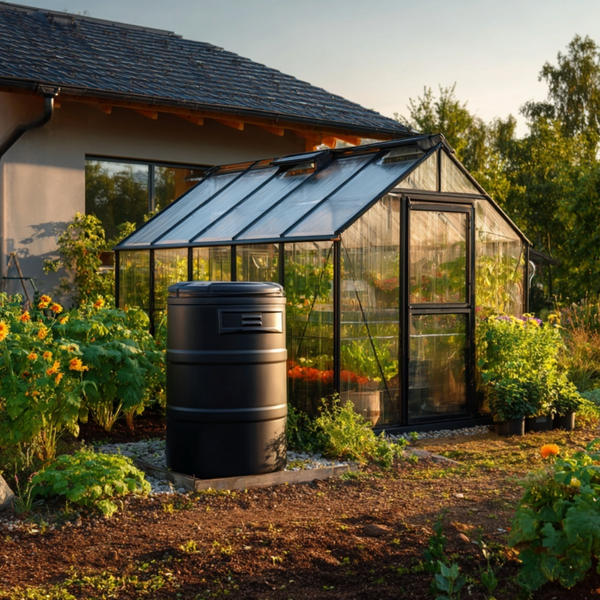
Garden sizes and what they demand of the ground.

What separates a clay pebbles bed from a deep water culture unit.
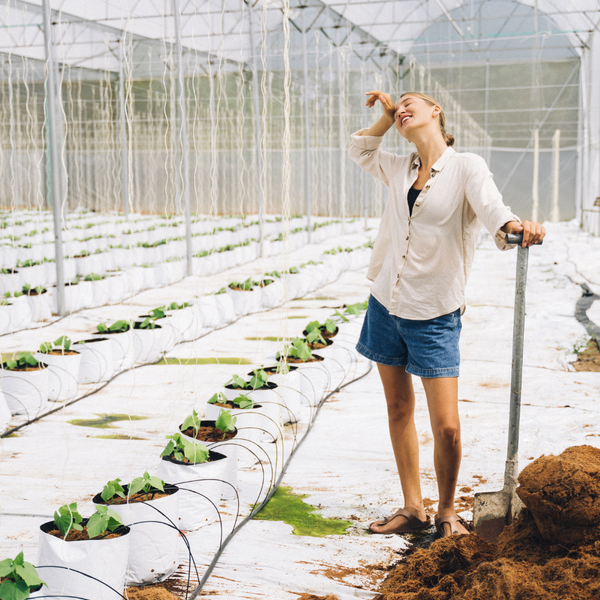
Cycling the biofilter and gradually increasing the fish load.
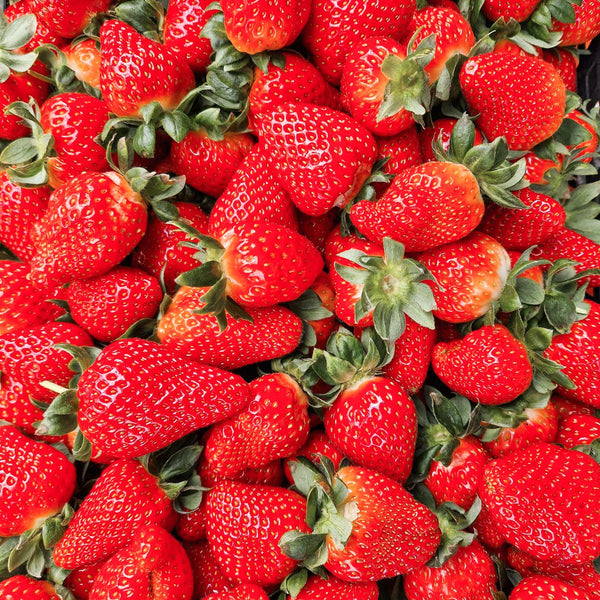
A crop that does very well in a grow medium trough.
What a deliberately low stocking density actually changes.
A question about this product or your setup? Our team will answer and advise you.

Interest-free instalment payments
Offered depending on the cart amount, at checkout.

Delivery in 2 to 15 working days
Depending on the products and shipping sites. Estimate by destination in the estimator on this page.

After-sales service 7 days a week by email or chat
Our team answers all your questions.

Shop responsibly
Become part of the change.


