Sturgeon in a garden pond

Written by Tristan Ulrich · September 5, 2026
Esturgeon sterlet nageant au fond d'un bassin de jardin

As prehistoric as it is elegant and demanding, the sturgeon can thrive in a large garden pond provided its particular needs are met. This European-focused guide covers the suitable species, the pond size required, oxygenation, sinking feed, mistakes to avoid, and the conditions under which it can find a place in an aquaponic system.

The sturgeon, a pond fish like no other

With its prehistoric silhouette, pointed snout, and rows of bony scutes, the sturgeon is mesmerising as it glides along the bottom of a garden pond. Yet this fish, with its very particular behaviour, is far from an ordinary inhabitant — it demands precise conditions to remain in good health year after year.

Before taking one on, it is essential to understand its real requirements, which often differ greatly from those of goldfish or koi carp. We will cover what size pond to plan for, which species to choose, how to maintain consistent oxygenation, what food to offer, how to avoid the mistakes that shorten its lifespan, and under what conditions it can find a place in an aquaponic system.

Ventral mouth and barbels of a pond sturgeon

A bottom-dwelling fish with a unique profile

The sturgeon belongs to an ancient lineage that has remained almost unchanged for millions of years. Its skeleton is largely cartilaginous, its elongated body is protected by five rows of bony plates called scutes, and its caudal fin is reminiscent of a shark's.

Its mouth is positioned on the underside of the head, preceded by four sensory barbels. This arrangement makes it a strict bottom feeder, which detects food through contact with the substrate rather than by sight. It rarely rises to take a floating pellet at the surface — a constraint worth bearing in mind when feeding. Its eyesight is poor, a legacy of life in cold, often turbid rivers, and it relies primarily on its barbels and sensory receptors to find its way. Its mouth is positioned on the underside of the head, preceded by four sensory barbels.

Another notable trait: the sturgeon swims almost constantly and cannot reverse. It needs a large, clear volume of water in which to move without becoming trapped, which dictates pond layout far more than with a conventional fish.

Large deep garden pond suited to sturgeon

What pond size do you need for a sturgeon?

This is the point that puts off the most would-be keepers. Sturgeon need space — a great deal of it — and the volume required depends first and foremost on the species. Figures vary widely across sources, from 4,000 to 7,000 litres per fish in some guides for a sterlet, up to 10,000 litres according to most European pond specialists for the same species. For a Siberian or a diamond sturgeon, which grow considerably larger, you need to plan for significantly more.

These figures are guidelines, not thresholds carved in stone. A generously filtered, well-oxygenated and lightly stocked pond performs better than a theoretically adequate volume that is overcrowded. Depth matters just as much as volume: a floor of at least one metre, and preferably 120 centimetres, keeps the water cooler in summer and provides a refuge zone. Elongated shapes, free of tight corners and narrow recesses, suit sturgeon far better than a small round pond where the fish can only circle endlessly.

An undersized pond remains the single most common cause of failure. It is far better to rule out sturgeon in a modest water feature and choose more suitable fish instead, rather than condemning an animal that will easily reach one metre at adulthood.

Sturgeon species suited to the garden pond

Not all sturgeons are equal when it comes to a domestic pond. Some species exceed two metres and are only suited to very large expanses of water, while others remain more manageable. The choice depends on the volume available, the climate, and the growth rate. One simple rule applies: never acquire a sturgeon without knowing its true adult size, as a specimen sold at thirty centimetres in an aquatic shop will continue growing for years.

Three species appear most frequently among European hobbyists, each with a distinct profile.

  • The sterlet (Acipenser ruthenus), the smallest, typically reaches around 1 to 1.20 metres. It is the best candidate for a reasonably sized pond, with a marked preference for cool water.
  • The Siberian sturgeon (Acipenser baerii), widely kept and hardy, tolerates our winters and temperate summers well, but grows considerably larger and lives for several decades.
  • The diamond sturgeon (Acipenser gueldenstaedtii), robust and popular, also requires a very large volume at maturity.

Whatever the species, a sturgeon is a long-term commitment. A Siberian can live around fifty years — it passes almost like an heirloom, and its future deserves careful thought before purchase.

Air stone diffusing oxygen for the pond sturgeon Pond aerator kit + hoses + diffusers

Reliable oxygenation

If a single parameter were to sum up success with sturgeon, it would be oxygen. The species is among the most demanding in the pond on this point, and a lack of dissolved oxygen puts it at risk far more quickly than goldfish or koi.

A simple waterfall is not enough. You need a air pump or air compressor sized to the volume, running continuously, with diffusers placed near the bottom to circulate the entire water column. During heatwaves, this oxygenation becomes vital as warm water holds far less oxygen, and night-time aeration matters at least as much as daytime.

You should also plan for a backup in the event of a power cut — for example, a battery-powered emergency supply. A few hours without aeration on a warm summer night can be enough to lose a specimen that has been established for years.

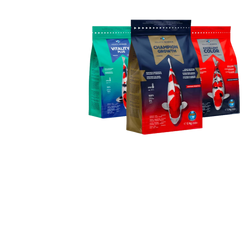
Sturgeon feeding on sinking food at the bottom of the pond Sinking food for sturgeon : Aquatic Science

A sinking feed designed for the purpose

Because of its underslung mouth, sturgeon cannot feed like other fish. They require a sinking food, specially formulated, rich in protein and fat, that settles on the bottom and releases a strong scent so it can be detected by the barbels.

Standard floating pellets for pond fish are rarely accessible to them and condemn them to lose weight in the midst of plenty. It is better to offer small quantities spread throughout the day, several times, rather than a single large feeding — an approach that suits their slow, continuous feeding behaviour far better.

One important point: sturgeon do not truly hibernate and continue to feed when the water remains above a few degrees. It is therefore important to keep feeding them in the cold season too, using a food formulated for low temperatures.

Sturgeon swimming with koi carp in a pond

Keeping koi carp together

The sturgeon shares its pond quite happily with koi carp, with which it does not come into direct conflict. It is in fact the most widespread pairing in European garden ponds, with the two species occupying different zones — the koi predominantly in mid-water and the sturgeon near the bottom.

The real difficulty is feeding. Alert and opportunistic, koi quickly locate the sinking food intended for the sturgeon and devour it before it reaches him. This competition gradually starves the bottom-dwelling fish, while risking the koi becoming overweight from a food that is too rich for them.

The solution is to feed the sturgeon at the end of the day, in a quiet area and always at the same spot, so that it learns where to find its food. Monitoring its body condition remains the best indicator — a sturgeon losing weight almost always signals competition at feeding time.

Temperature: a wider range than most people think

Sturgeon have a reputation as cold-water fish that deserves a closer look. Published research on Siberian sturgeon places steady growth within a comfortable range of 18 to 24 degrees, and farming is commonly carried out up to 25 or 26 degrees with satisfactory results. Beyond 26 degrees sustained over several weeks, studies report measurable effects on immune response, and above 28 degrees both feed intake and growth drop off sharply. The sterlet, being smaller, is generally considered to prefer a slightly cooler range, around 12 to 22 degrees.

This explains why so many European garden ponds keep sturgeon alongside koi without any particular difficulty. In a well-designed pond, the fish copes well with a mild summer, and remains active in winter in water just a few degrees above freezing — giving it a far wider tolerance than many ornamental fish.

The real summer danger is therefore not so much the thermometer as oxygen. Warm water holds less of it, and losses occur most often at night, when the temperature stays high and dissolved oxygen reaches its lowest point. It is this combination that proves fatal, rarely temperature alone.

In practical terms, the siting of the pond needs to be thought through from the outset. A water feature facing due south, shallow, with no shaded area and no water movement, will accumulate every risk factor during July and August. Including a deep section, some shade, aeration that runs through the night, and monitoring temperature with a simple pond thermometer often makes the difference between a sturgeon that thrives and one that struggles every summer.

Clear pond bottom with gravel for sturgeon

Designing the pond floor

Because the sturgeon lives and feeds at the bottom, the layout of this zone is critical. The ideal floor remains smooth and clear — sand or rounded pebbles — with no sharp edges or gaps where the fish could injure itself or become trapped.

Avoid any hazardous décor without exception: open pipes, rigid plant baskets, nets, or jagged rocks. A sturgeon that cannot reverse out of a tight corner becomes wedged easily, and the outcome is often fatal. An open, uncluttered floor is far preferable to a heavily decorated one.

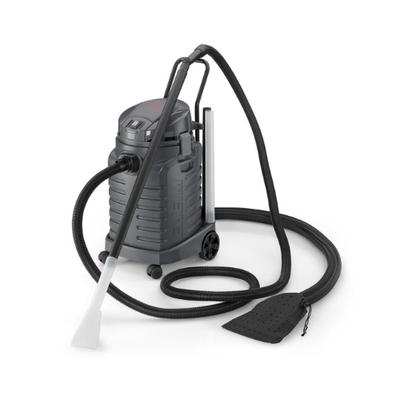
A well-maintained floor also limits the build-up of silt, which consumes oxygen as it decomposes and degrades water quality. Good mechanical filtration combined with regular floor cleaning keeps the environment healthy. Water clarity, on the other hand, matters very little to the sturgeon itself — it naturally inhabits turbid, low-light rivers.

Garden pond in winter with an ice-free zone

Winter, a season without a break

Unlike many pond fish that slow down markedly, the sturgeon does not truly enter winter dormancy. It keeps moving and feeding as long as the water is not icy, which means it cannot simply be left unattended from October to March.

The critical point comes when the surface freezes over. A complete layer of ice traps gases and cuts off the water's exchange with the air. You must keep a permanently ice-free zone, using an aerator or a frost-protection bell, to maintain oxygenation and allow gases to escape.

You should also adjust the ration — lighter and distributed during the warmest hours of the day — using a highly digestible feed. A well-managed sturgeon gets through winter without difficulty, provided aeration is never cut off entirely.

Across Europe, a question of summer heat rather than latitude

On a European scale, sturgeon can be found in garden ponds almost everywhere, from the north of the continent to the Mediterranean fringe. In the north and west — Germany, the Netherlands, Belgium and the oceanic regions — milder summers and well-designed ponds suit them comfortably year-round, and the only real constraint is aeration during heatwaves.

Further south, in Spain, Italy and areas where water temperature consistently exceeds 26 degrees, the species requires more care. A deep pond, partial shade and oversized oxygenation become essential rather than optional. In these climates, a small shallow pond in full sun should be ruled out entirely, whereas a large, well-equipped body of water allows them to be kept without particular difficulty. Mountain regions and cold continental climates, where the water remains cool, are among the most favourable.

On the regulatory side, several species of wild sturgeon are protected and the trade in live specimens is strictly regulated. Fish sold for garden ponds come from aquaculture, but it is wise to check local rules before any purchase, as the frameworks can vary from one country to another.

Sturgeon at the surface due to lack of oxygen in warm water 6-in-1 pond water analysis kit

Common mistakes to avoid

The first mistake, and the most serious, remains an undersized pond. Insufficient volume condemns a fish that needs space and depth — no amount of goodwill makes up for this fundamental shortcoming.

Next comes summer aeration, underestimated almost everywhere. Many people switch off the air pump at night or rely on a waterfall, yet it is precisely during the hottest hours of the night that dissolved oxygen drops to its lowest. A fish that lingers at the surface in an apathetic state is often signalling oxygen deficiency rather than heat stress.

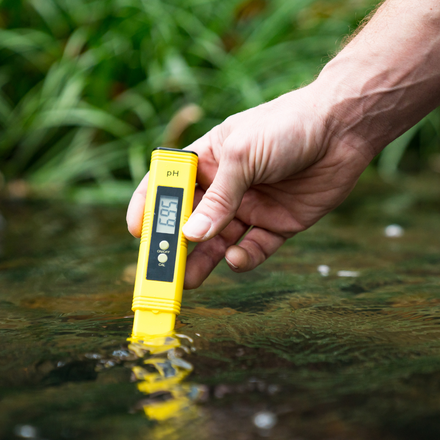
Finally, many pond keepers get feeding wrong, offering unsuitable floating pellets or letting the koi eat indiscriminately. Regularly checking water quality with reliable test kits helps you correct course before the situation deteriorates.

And what about sturgeon in aquaponics – is it feasible?

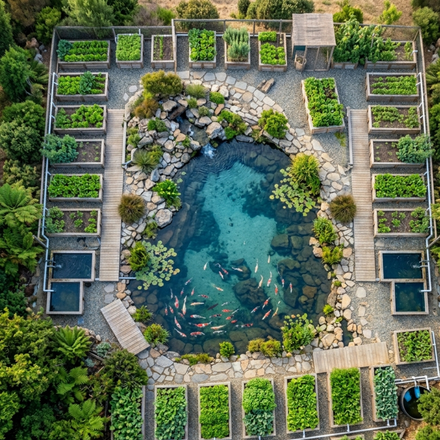
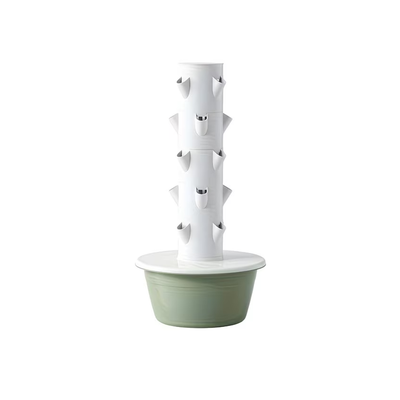
The question comes up regularly, since a garden pond can serve as a reservoir for growing beds installed alongside it. The answer is yes, under fairly specific conditions. Sturgeon eat a great deal and produce a very consistent amount of nitrogen, which nitrifying bacteria convert into nitrates that plants can use, and their comfortable temperature range, around 18 to 24 degrees, overlaps well with that of a domestic aquaponic system.

Two constraints determine success. The first is oxygen, which is already shared between the fish, the filter bacteria, and the plant roots – and sturgeon are among the most oxygen-hungry species in the pond. Oversized aeration running throughout the night is not optional. The second relates to solids, as a significant proportion of the feed distributed passes through as particles that clog the grow medium if no settling stage is placed between the pond and the growing beds.

On top of this comes the question of volume, which remains the real barrier to entry. A sturgeon requires several thousand litres on its own, which rules out small balcony or terrace systems and points firmly towards a proper garden pond coupled with separate growing beds. In return, this large volume stabilises temperature and water parameters, giving considerably more margin for error than a small system.

On the growing side, the range of crops is wider than with a strictly cold-water fish. Lettuces, watercress, spinach, and herbs produce excellent results in spring and autumn, and fruiting vegetables such as tomatoes or peppers remain viable in summer as long as the water stays below 26 degrees. To compare with a genuinely cold-water approach, our article on salmonid aquaponics covers the case of trout, which are considerably more demanding on this point than sturgeon.
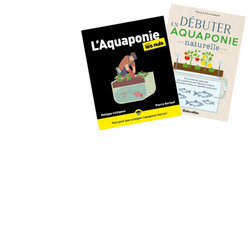
Conclusion: an exceptional fish for large ponds

The sturgeon is not a pond fish like any other, and that is precisely what makes it so rewarding. Taking on this ancient, elegant, long-lived creature is a wonderful undertaking, provided you give it an environment suited to its needs. A very large volume, sufficient depth, impeccable oxygenation, and a specific sinking feed form the non-negotiable foundations of its success.

Most failures stem not from the fish itself — which is hardier than people tend to say — but from an undersized pond or aeration that has been neglected on summer nights. By planning the setup in advance, monitoring the temperature, and respecting its particular feeding behaviour, you give yourself every chance of keeping it for many years.

Well housed, the sturgeon becomes the centrepiece of a living garden pond, alongside koi and aquatic plants, and can even, in a generously sized installation, supply a few growing beds. It is a companion that can be passed on and that rewards, season after season, the attention you give it.

Sources

FishBase, Acipenser baerii, Siberian sturgeon, Habitat, maximum size, longevity, barbels and benthic feeding habits of the species

Aquaculture International, heat stress in Siberian sturgeon (Acipenser baerii), Growth range of 18 to 24 °C, stress threshold measured at 26 °C, and a drop in feed intake above 28 °C

JustKoi, everything you need to know about sturgeon in a pond, Recommended pond volume, cohabitation with koi, and summer overnight losses linked to dissolved oxygen

Southern Regional Aquaculture Center, Recirculating Aquaculture Tank Production Systems (SRAC 453), Proportion of feed returned as solids and settling residence time, for coupling with grow beds

MDPI Water, A Review of Bubble Aeration in Biofilter to Reduce Total Ammonia Nitrogen of Recirculating Aquaculture System, Comparative output of diffusers and oxygen transfer rates, for sizing aeration systems

Frequently asked questions

Yes, far better than its reputation suggests. Research on the Siberian sturgeon places its growth range between 18 and 24 °C, and farming is commonly practised up to 25 or 26 °C. Beyond 26 °C sustained over several weeks, the immune response deteriorates, and above 28 °C feed intake drops sharply. The real concern is not the thermometer but oxygen, since summer losses occur mainly at night, when the water stays warm and dissolved oxygen reaches its minimum. A deep pond, some shade and an air pump running through the night take care of the essentials.

No, except in a temporary grow-out tank of very large volume. A specimen approaching one metre will find neither the swimming length nor the thermal stability it needs in a domestic aquarium.

No, and this is a common misconception. In the wild, sturgeon inhabit rivers that are often turbid and poorly lit, where visibility is low. Their eyesight is poor and they locate food using their four sensory barbels and electroreceptors, not by sight. What matters to them is dissolved oxygen, temperature and the absence of decomposing silt on the bottom. Water clarity is primarily of interest to the observer.

It is a very long-term commitment. Ichthyological references record ages exceeding sixty years for Siberian sturgeon in the wild, with late sexual maturity and a population doubling time of over fourteen years. In a pond, actual lifespan depends primarily on volume and oxygenation quality, but you need to think in decades rather than seasons. Ask yourself at the point of purchase what will happen to the fish if you move house.

This is the most persistent misconception, and it proves costly. The sturgeon forages on the bottom but does not consume silt or algae; on the contrary, it requires well-oxygenated water. Purchased as a cleaning aid, it adds to the organic load rather than reducing it.

Yes, provided the layout is carefully planned.

  • Choose marginal plants and water lilies in weighted baskets, kept away from the bottom swimming zone.
  • Avoid rigid wide-mesh baskets and nets, where a snout can become trapped.
  • Keep at least half of the bottom completely clear.

A partially shaded surface can even be an advantage in summer, as it slows the rise in water temperature.

Yes, in a true garden pond coupled with remote growing beds. Its comfortable temperature range overlaps well with that of a domestic system, and it produces nitrates very consistently. Two factors determine success: oversized aeration that runs through the night, and a settling stage placed between the pond and the beds, since a significant proportion of the feed passes through as solids that clog the grow medium. Volume remains the real barrier to entry, which rules out small-scale systems.

This is almost always a sign of insufficient oxygen, especially in warm water or after a storm. Boost aeration immediately, then check the temperature and dissolved oxygen before considering any other explanation.

Read next

Protecting your pond from predators

Protecting your pond from predators

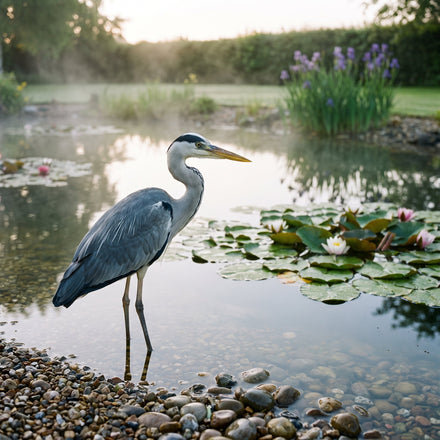
Heron, cat, kingfisher, or cormorant — most pond predators are protected by law and can only be deterred using passive devices. This guide brings together the figures that work, the devices that have proven

Read the article
Raising perch in aquaponics

Raising perch in aquaponics

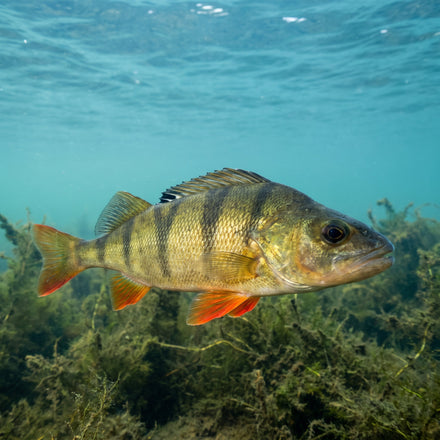
The common perch is the predatory fish of European temperate waters: hardy, with sought-after flesh, and perfectly suited to aquaponic systems in temperate climates. Here is how to raise this fish, the temperatures to

Read the article
Pond algae in summer

Pond algae in summer

Summer pushes your pond to its biological limits, and algae thrive on the slightest weakness. Here's how to understand the mechanics of summer proliferation and regain control naturally.

Read the article
Koi carp in aquaponics

Koi carp in aquaponics

Koi carp is one of the most popular species used in ornamental aquaponics. Hardy, gregarious, and producing a good amount of waste, it integrates perfectly into a well-designed system. This comprehensive guide gives you

Read the article
Regulating pH in an aquaponics system

Regulating pH in an aquaponics system

pH is one of the most sensitive and critical parameters in aquaponics. It directly influences the health of the fish, the effectiveness of nitrifying bacteria, and the plants' ability to absorb nutrients. An improperly

Read the article