Plant deficiencies in aquaponics

Written by Tristan Ulrich · September 14, 2025
Feuillage présentant des signes de carence en aquaponie

Aquaponics relies on a precise balance between fish, plants and bacteria. When that balance is disrupted, plants can quickly show signs of nutritional deficiencies, even in a system that appears stable.

Understanding the cause of these deficiencies is essential for maintaining healthy, sustainable growth in aquaponics.

Deficiencies in aquaponics: how to recognise and correct them


Aquaponics is built on a virtuous cycle: fish feed the plants through their waste, and the plants purify the water for the fish. This cycle operates without soil, using fish water as the sole basic nutritional input for the plants. As a result, imbalances can occur, and the plants — true indicators of the system's health — sometimes show signs of weakness linked to nutritional deficiencies.

Understanding why these shortfalls arise, learning to identify their symptoms and knowing how to correct them is essential for ensuring the long-term viability of the system. Far from being inevitable, deficiencies in aquaponics are in fact valuable signals which, when correctly interpreted, allow you to fine-tune the balance and make production even more efficient.

Why do deficiencies appear?

Why do deficiencies appear ?

A fish population that is too small leads to insufficient nutrient production, which directly limits the fertility of the system. Inappropriate feeding of the fish is another common cause: if their food lacks variety or quality, the waste produced will not contain enough of certain elements that plants need.

The water pH also plays a decisive role. When it is too high or too low, certain nutrients, though present, become unavailable to the roots. This is known as nutrient lockout: the plants are not actually short of nutrients, but they are unable to absorb them.

Finally, technical issues such as poor water circulation, insufficient oxygenation or inadequate filtration can exacerbate these imbalances and hinder crop growth.

The most common deficiencies Chelated iron (iron chelate) EDDHA 6%

The most common deficiencies

Iron deficiency is arguably the most common. It shows up as marked yellowing of young leaves while the veins remain green. This phenomenon, known as iron chlorosis, is often linked to a pH that is too high, which blocks iron uptake.

Even when this mineral is present in the water, plants can no longer absorb it. It is therefore important to keep your pH between 6 and 7.5. If that is not enough, you can use DTPA chelated iron 11%, which is an ideal solution: it remains stable up to neutral pH, does not affect the colour of the water, and is perfectly suited to aquaponic systems.

Potassium is also a frequent source of imbalance. When it is lacking, leaf edges become dried out or scorched, and stems grow more brittle, leaving plants vulnerable to disease and climatic variation. To correct this deficiency, adding potassium bicarbonate is particularly useful, as it also acts as a pH buffer.
Calcium and magnesium deficiency Epsom salt

The lack of calcium and magnesium

Calcium is equally essential to plant cell structure. When it is lacking, you will notice distorted leaves, fragile young shoots, and, on fruiting crops such as tomatoes or peppers, blossom end rot. To address this, it is advisable to remineralise the water by adding calcium carbonate, which strengthens both plant health and system stability.

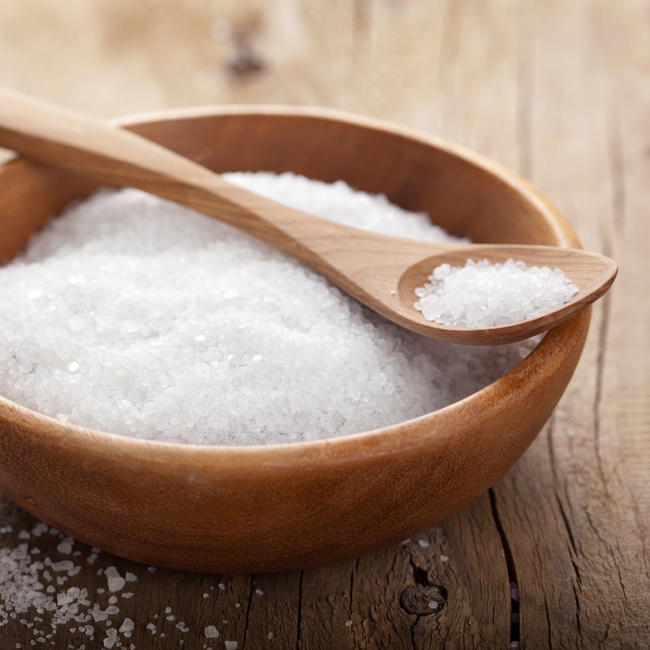
Finally, magnesium can also be lacking. Its deficiency shows up as yellowing between the veins of older leaves, while young shoots retain their green colour. In this case, a supplement of magnesium sulphate, better known as Epsom salt, will quickly and effectively restore the balance.

How do you prevent these imbalances? Hydrogen Potential Test

How can we prevent these imbalances ?

Correcting a deficiency is possible, but it is always simpler and more sustainable to anticipate them. The first precaution is to monitor the pH of the water regularly. Kept between 6.5 and 7, it guarantees optimal nutrient availability and promotes balanced uptake by the plants. This monitoring must be regular, as even a slight variation can be enough to disrupt the equilibrium.

Fish feeding is another key factor. A varied, high-quality diet results in nutrient-rich waste, which directly benefits the crops. Investing in a balanced diet for your fish is therefore investing in the health of your plants and the stability of the entire system.

Monitoring the aquaponic system 6-in-1 pond water analysis kit

Monitor the aquaponic system

Daily observation remains the most effective preventive tool. Plants communicate constantly through their appearance. Yellowing leaves, distorted stems or slowed growth are all warning signs that you need to learn to read. The quicker the response, the simpler the correction and the less the system is disrupted.

Finally, supplements should always be added with restraint. An excess of nutrients can be just as problematic as a deficiency: it can unbalance the ecosystem, stress the fish and weaken the bacterial flora. Working in small doses, monitoring progress and adjusting gradually is the best strategy for maintaining a lasting equilibrium.

Conclusion: balance at the heart of aquaponics

Deficiencies in aquaponics should not be seen as insurmountable obstacles, but as valuable signals. Iron, potassium, calcium and magnesium are the nutrients most commonly involved, and each presents distinct symptoms that quickly become familiar to the attentive eye. By learning to recognise them, understand their causes and correct them with precision, you turn every difficulty into an opportunity for improvement.

Aquaponics is above all a lesson in balance and observation. The more time you take to listen to your plants, monitor your parameters and intervene with accuracy, the more you will develop genuine practical expertise. It is this daily vigilance that makes the difference between a fragile, unstable system and a productive, resilient and sustainable ecosystem.

Sources

Oklahoma State University Extension, Recirculating Aquaculture Tank Production Systems, Aquaponics, Integrating Fish and Plant Culture, Target chelated iron concentration, choice of DTPA at neutral pH and the ratio between daily dose and growing area.

Oklahoma State University Extension, Identifying and Correcting Iron Deficiencies in Ornamentals, Symptoms of iron chlorosis, pH thresholds beyond which iron becomes unavailable, and choice of chelate according to pH.

Eck, Körner and Jijakli, Nutrient Cycling in Aquaponics Systems, Aquaponics Food Production Systems, Springer 2019, Fate of nitrogen from feed and availability of phosphorus, potassium, calcium and magnesium.

New Mexico State University, Circular 680, Aquaponics, Reference pH and nitrate ranges, and water parameters to check before concluding there is a deficiency.

Oklahoma State University Extension, Nitrification and Maintenance in Media Bed Aquaponics, pH range compatible with nitrification and nitrate levels observed in a media bed.

Frequently asked questions

No. These formulas supply nitrogen in the form of urea or ammonium, and often copper — two things your fish cannot tolerate.

Everything comes down to a single criterion: the mobility of the element within the plant. A mobile element is relocated from older leaves to new growth when it becomes scarce, so symptoms appear lower down. An immobile element stays wherever it was first deposited, so symptoms appear higher up, on the youngest tissue.

In practice, yellowing that starts on young leaves with veins that remain clearly green points to iron deficiency. Yellowing between the veins of older leaves points to magnesium. Even, general yellowing of older leaves combined with noticeably slow growth points to nitrogen. The extension guides on iron chlorosis also describe a typical progression, where the veins themselves eventually fade, followed by brown spots appearing before necrosis sets in.

One further indicator helps to distinguish causes in aquaponics. Nitrogen is rarely the limiting factor in a system with a good fish load, since most of the nitrogen from the feed ends up in the water, with only a small fraction retained by the fish themselves. A nitrogen-like symptom in a well-fed system should therefore prompt you to look elsewhere — at root oxygenation or at a pH level that is blocking nutrient uptake.

The constraint is the same for all supplements: they must feed the plant without harming the fish or sterilising the biofilter.

  • Chelated iron, the preferred option and the only way to keep iron soluble at a pH close to neutral.
  • Magnesium sulphate, very well tolerated, corrects magnesium deficiency without affecting pH.
  • Calcium carbonate or hydroxide, which remineralises the water and supports the buffer.
  • Potassium bicarbonate or hydroxide, which provides potassium and raises pH.

Conversely, avoid any product containing copper, nitrogen fertilisers based on urea or ammonium, and anti-algae treatments. Copper in particular is used as an algicide and an antiparasitic, which says enough about what it does to a closed ecosystem.

The type of chelate is not a minor brand detail — it determines whether the iron remains available or precipitates out. Extension fact sheets on iron chlorosis place EDTA and DTPA chelates below pH 7, and reserve EDDHA for water above 7, where it is more effective but considerably more expensive.

Since aquaponics is run precisely around neutral pH, DTPA is the standard compromise. University aquaponic guides note that the iron supplied through feed is insufficient and describe chelated iron supplementation targeting around two milligrams per litre, precisely because this chelate remains soluble around pH 7.0.

Sometimes that is the right answer, but it is also the riskiest one. A planting area that is oversized relative to the fish feeding load produces a system that remains persistently deficient, where you are constantly chasing supplements without ever addressing the underlying shortfall.

The benchmark to check before adding anything is the ratio between the daily feed ration and the growing area. University aquaponics guides cite roughly sixty to one hundred grams of feed per square metre per day for raft systems, and approximately a quarter of that figure for media bed or NFT.

If you are well below that, increase the ration first — it costs nothing and disturbs no existing balance. Only if the ration is already at the maximum the fish can consume does the question of adding biomass arise, and at that point it requires a simultaneous review of aeration and filtration.

Allow around one to two weeks. Leaves that have already lost their colour will not turn green again — it is the new growth that gives the verdict, which explains why so many unnecessary double doses are applied.

Never repeat an application before a new leaf has had time to form. Photographing the same plant each week remains the most reliable way to track progress.

Read next

Recognizing deficiencies in aquaponics

Recognizing deficiencies in aquaponics

In aquaponics, plants can show signs of weakness even when the system appears balanced. Pale leaves, slowed growth, or deformities are often linked to subtle yet critical micro-deficiencies. These deficiencies involve essential elements such

Read the article
15 plants to grow in aquaponics

15 plants to grow in aquaponics

Aquaponics is ideal for growing a wide variety of plants, both indoors and outdoors. Some varieties adapt particularly well to this soilless growing method, with a constant supply of nutrient-rich water.

Read the article
What plants can be grown in aquaponics ?

What plants can be grown in aquaponics ?

Aquaponics brings together fish farming and plant cultivation in a sustainable, circular system. But for this aquatic garden to become truly productive, you need to know which plants to choose.

Read the article
Aquaponics and Summer Holidays

Aquaponics and Summer Holidays

You're going away for two weeks in July and your aquaponics system will be running without you : this thought rightly makes you anxious, because heatwaves, evaporation, and fish feeding raise practical questions. Good

Read the article
A practical calendar for success in aquaponics

A practical calendar for success in aquaponics

In aquaponics, the success of a season depends mainly on good upstream calendar management : periods of sowing, planting, ramp-up… and times when it is better not to intervene. Unlike a traditional vegetable garden,

Read the article
Controlling pests in aquaponics

Controlling pests in aquaponics

Aquaponics has a reputation for being a clean, ecological, and naturally protective method of cultivation. However, like any living system, it can be affected by pests : aphids, gnats, mites, invasive algae, or unwanted

Read the article