Pollinating Plants Indoors

Written by Tristan Ulrich · September 19, 2026
Pollinisation manuelle en intérieur d'une fleur de tomate au pinceau

Indoors, far from bees and wind, many flowers remain sterile and drop without setting fruit. Replicating the pollinator's action by hand is simple, quick, and transforms the yield of a flat garden, greenhouse, or aquaponic system.

Achieving pollination indoors

As soon as a fruiting crop grows in a space cut off from the outside — in a flat, under a conservatory, in a greenhouse that remains closed, or in an aquaponic system installed indoors — it loses access to the bees, bumblebees and wind that naturally move pollen around. A greenhouse ventilated during the day or a pond installed outdoors, on the other hand, will continue to receive insect visitors. Without this transfer, flowers open, wilt and drop without ever setting fruit, a phenomenon observed just as readily in France as in Belgium, the Netherlands or Scandinavia, where the under-cover season is long.

The solution comes down to a few simple hand pollination techniques. Here we cover the three reference methods — the paintbrush, vibration and shaking — along with their practical application species by species, the right time of day, the effect of humidity, and the mistakes that cause fruit set to fail.

Indoor tomato flowers dropping without setting fruit

Why your flowers fail to set

An unpollinated flower always follows the same pattern. It opens normally, remains receptive for two to four days, then yellows at the peduncle and drops off. This shedding, known as blossom drop, is not a disease but simply the absence of fertilisation.

Outdoors, a single tomato flower receives multiple insect visits and is subject to wind vibrations — more than enough to release pollen. In an enclosed room, the air is still and filtered, so the pollen remains trapped inside the anthers and never reaches the stigma.

The most useful first step is to observe each open flower and act within its receptive window. Once that period has passed, no amount of intervention will save a flower that is already beginning to wilt.

Male and female courgette flowers for hand pollination Chinese Long Cucumber Seeds

Self-pollinating flowers or separate blooms

Not all plants pollinate in the same way. Tomatoes, chillies, peppers, aubergines, and strawberries bear hermaphrodite flowers that are both male and female. These are self-fertile, and a simple movement of pollen within the same flower is sufficient.

Cucurbits — courgettes, squashes, cucumbers, and melons — work differently. They produce separate male and female flowers on the same plant. Pollen must then be transferred from one flower to another, something no indoor air current will do on your behalf.

Identifying the flower type of each crop avoids wasted effort. A tomato plant can be shaken; a courgette plant must be pollinated flower by flower.

The brush method, step by step

A brush is the most versatile and precise tool for hand pollination. Choose one with soft, natural bristles — a fine watercolour brush or a cotton bud works perfectly well. The aim is to collect the pollen, a very fine yellow powder, and transfer it to the receptive female part of the flower.

On a self-pollinating plant such as a tomato, gently rotate the brush inside the corolla to load the bristles with pollen, then rub it against the central stigma. On a cucurbit, collect pollen from the stamens of a freshly opened male flower and apply it to the pistil of the female flower, which is identifiable by the small fruit at its base.

  • Work with fully open flowers at peak receptivity.
  • Make sure the brush is visibly loaded with yellow pollen before each transfer.
  • Use the same brush for an entire variety, and clean it between species.
  • Repeat every one to two days while new flowers continue to open.
  • Mark treated flowers so you can keep track of them.

This routine, which takes only a few minutes and should be repeated regularly, is enough to take an indoor plant from a handful of fruits to a continuous harvest. The brush remains the go-to method when a growing space contains several different species side by side.

Vibration pollination of a tomato flower using an electric toothbrush

The vibration, the toothbrush

Tomatoes, chillies and aubergines rely on vibration pollination. In nature, the bumblebee grips the flower and vibrates its flight muscles at high frequency to expel pollen from the anthers. You can replicate this with a simple electric toothbrush.

Press the vibrating head against the back of the open flower, or against the stem just behind it, for around five seconds. A fine cloud of pollen is released and settles onto the stigma. The process is much faster than using a brush when the plant carries only self-pollinating flowers.

A tuning fork, an electric razor or a small vibrating motor will produce the same result. The key is a brief, targeted vibration — without bruising the flower.

Shaking the stem of an indoor tomato plant to release pollen

Stem Shaking

Even simpler, shaking suits plants carrying a large number of self-pollinating flowers. It involves gently vibrating the plant so that pollen disperses by gravity onto neighbouring stigmas.

Tap the main stem or the flower trusses lightly with a fingertip, or give the canes a quick daily flick. In a sealed greenhouse or an indoor aquaponic system, a gentle airflow from a fan set to its lowest setting for a few hours a day replicates the effect of wind and noticeably improves fruit set across all plants.

This method requires little effort but is less reliable than a brush for cucurbits, which require a directed transfer of pollen.

Indoor tomato and pepper flowers to hand-pollinate Red Tomato Seeds "Jupiter"

Pollinating tomatoes and chillies

Tomatoes are the indoor crop most affected by this. Each yellow flower is complete; a daily shake or a brush with a soft paintbrush during flowering is sufficient. The best indicator of success is the small green fruit swelling behind the spent flower.

Chillies and peppers pollinate in the same way, but their flowers are more delicate and more fragile. A very soft brush or a gentle vibration prevents them from dropping. Aubergines follow the same logic of vibration pollination.

With all three crops, consistency is key. A missed flower is permanently lost, whereas a daily round catches each bloom at exactly the right moment.

Pollen transfer by brush onto a courgette flower indoors

Courgettes and cucumbers in pots

Cucurbits require a precise technique. Pick a freshly opened male flower, remove the petals if needed to expose the stamens, then rub the pollen directly onto the pistil of the female flower. A paintbrush works equally well for those who prefer not to sacrifice the male flower.

The female flower is recognisable by the miniature fruit visible at its base — a tiny courgette or small cucumber waiting to be fertilised. Cucurbit flowers often last only a morning, which is why it is important to act early.

Without pollination, this miniature fruit yellows and rots. With a successful transfer, it swells within a few days.

Humidity, temperature, and pollen viability

Success with hand pollination does not depend solely on technique. Pollen is a living and fragile material whose viability varies considerably depending on the conditions in the room. Air that is too humid causes the grains to clump together and prevents them from releasing, while air that is too dry or too warm desiccates them and renders them sterile.

For most indoor fruiting crops, a relative humidity of around 50 to 70% and a temperature of approximately 18 to 27 degrees provide the best conditions. Above 30 to 35 degrees, tomato pollen rapidly loses its fertilising capacity, which explains the frequent failures during heatwaves, even when insects are present.

In practice, pollinate when conditions are stable, ventilate rooms that are too humid, and avoid working immediately after foliar watering, as waterlogged stigmas do not capture pollen well. In a greenhouse or on an aquaponic system, monitoring conditions with a simple thermometer-hygrometer helps you choose the right moment and understand a run of failures.

Manual pollination with a brush on a strawberry flower indoors

Strawberries: avoiding misshapen fruit

The strawberry perfectly illustrates the importance of thorough pollination. Each flower carries dozens of pistils, and every single one must be fertilised to produce an achene — those tiny seeds on the surface of the fruit. Partial pollination results in misshapen, twisted or stunted strawberries.

Work the brush in several small circles across the entire centre of the flower, over several days if necessary, to cover all the pistils. A well-pollinated strawberry plant produces regular, full-bodied fruit, whereas the absence of insects leads to disappointing harvests.

It is often the crop that benefits most from careful hand-pollination when growing indoors or in a vertical growing tower.

Light, vigour and flower quality

A flower can only be pollinated successfully if it is well-formed in the first place. Indoors, the limiting factor is almost always light. Under insufficient lighting, plants etiolate, produce few flowers, abort buds and generate poor-quality pollen. No paintbrush will compensate for a lack of light energy.

For fruiting crops such as tomatoes, peppers or strawberries, you need to aim for powerful horticultural lighting and long exposure times — in the region of twelve to sixteen hours per day depending on the growth stage. A full spectrum, including far-red, promotes flower initiation. This is where good horticultural lighting makes all the difference, particularly in rooms without a south-facing window.

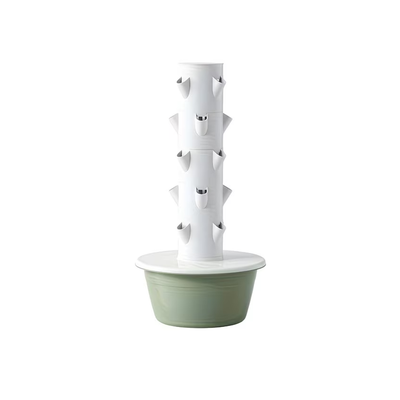
Vertical systems make this considerably easier. A grow tower with integrated LEDs brings every tier closer to the light and keeps plants compact and covered in flowers that are easy to hand-pollinate. On these systems, a few minutes with a brush each day turns a healthy flowering into an actual harvest.

Indoor plants in full midday light, the ideal moment for pollination

The right moment to pollinate

Pollen isn't available all day long. It is released mainly when the flowers are fully open and the air is neither too humid nor heavy with dew. The most favourable window generally falls between mid-morning and mid-afternoon, commonly cited as between 10 am and 4 pm.

At this point, the anthers are dry and the pollen detaches at the slightest contact. Very early in the morning, overnight moisture still makes it sticky, and later in the day many flowers close up again. A daily visit during this midday window catches each flower at its peak receptivity.

Under artificial lighting, time your intervention a few hours after the lights come on, once the flowers have been active for a while.

The mistakes that cause fruit set to fail

Most manual pollination failures come down to small details that are easy to correct. Knowing these pitfalls helps you achieve consistent results and avoid jumping to conclusions about a plant or growing medium problem.

  • Pollinating too early in the morning, when the pollen is still damp and sticky.
  • Missing flowers through lack of daily checks during flowering.
  • Confusing male and female flowers on cucurbits.
  • Watering the foliage just beforehand, which saturates the stigmas.
  • Allowing excessive heat to sterilise the pollen above 30 to 35 degrees.
  • Neglecting light levels, which leads to weak flowers and poor-quality pollen.

By addressing these points, fruit set becomes reliable and consistent. Manual pollination is not a difficult science — it is a daily routine of a few minutes that rewards persistence.

Fruit set, small tomato forming after manual pollination indoors

Checking that the fruit is setting

Three to seven days after a successful pollination, one sign is unmistakable: the ovary at the base of the flower swells and forms a small green fruit. This is fruit set — proof that fertilisation has worked. Conversely, a flower that yellows and drops off whole indicates failure.

This feedback is invaluable. If many flowers are dropping, adjust one variable at a time: the time of day, humidity, the strength of the vibration, or the frequency of your visits. A simple log — even a mental one — helps to isolate the cause.

Manual pollination improves quickly with practice. After a few cycles, the technique becomes second nature and ensures consistent harvests year-round indoors.

Conclusion: a simple technique for reliable harvests

Hand-pollinating plants indoors is straightforward. It is a matter of replacing bees and wind with a regular, species-appropriate action: a brush for precision work and cucurbits, vibration and gentle shaking for self-fertile flowers such as tomatoes — all at the right time of day and in conditions that are neither too humid nor too warm.

Success comes down mainly to consistency. A flower that is not pollinated within its brief window is lost, whereas a daily round of a few minutes catches every opening and turns a decorative flush of blossom into an edible harvest. Upstream, good light and vigorous plants make all the difference to the quantity and quality of pollen.

As soon as a crop is cut off from insects — in a flat, inside a closed greenhouse, or on an indoor aquaponic system — this habit becomes the link that is so often forgotten between sowing and harvesting. By making it part of your routine, you secure tomatoes, chillies, courgettes, and strawberries throughout the season, wherever you are growing in Europe.
Sources

University of Maryland Extension, Tomato pollination and how to increase it in high tunnels (Gerald Brust), Describes the self-fertilisation of the tomato flower, the need for vibration to dislodge a heavy, sticky pollen, the thermal thresholds of the pollen tube and the yield gains achieved through repeated assisted pollination.

University of Maryland Extension, Vegetable Plant Pollination in a Changing Climate, Distinguishes self-pollinating crops from those dependent on insects, notes that courgette flowers are only open in the morning, and links heat to small, misshapen fruit.

Oregon State University Extension Service, Why vegetables drop blossoms, Gives the flower-drop thresholds for tomatoes and peppers, explains the systematic drop of male flowers in cucurbits, and describes the manual transfer of pollen between male and female flowers.

University of Maryland Extension, Tomato Pollination and Bumblebee Visits, Details pollination by bumblebee vibration, monitoring of visits via bite marks, and the link between the number of fertilised seeds and fruit size.

Frequently asked questions

It helps considerably without being equivalent. A trial in a large polytunnel using an electric leaf blower directed at plants for five to twenty seconds four times a week increased yield per plant by nearly 55%. A domestic fan produces a similar but weaker effect, and does nothing for courgettes, whose pollen must be transferred from one flower to another.

Yes for strawberries, where every pistil counts. A single pass is usually enough on a tomato flower.

Extremes matter far more than averages, and most indoor failures occur against a glazed bay window in summer or in an unheated room in spring.

  • In tomatoes, pollen tube growth is optimal at around 21 °C, and the viability of both pollen and ovules deteriorates above approximately 32 °C
  • Tomato flowers also drop when nights fall below 13 °C or days exceed 32 °C for a prolonged period
  • Peppers have an even narrower range, with blossom drop as soon as nights fall below 14 °C or days exceed 29 °C

Yes, several cucumber varieties bred for greenhouse cultivation set fruit without fertilisation and are labelled parthenocarpic. They are well suited to an enclosed balcony or a room without insects. For tomatoes, no common variety dispenses with the process, even if the flower is self-fertile.

Does not keep well at room temperature. Harvest and transfer in the same session rather than storing.

Not in a living room, no. The colonies sold commercially are designed for enclosed, ventilated greenhouses. Where they are put to work, their activity is monitored by the bite marks left on the floral cone, and more than three to four visits per flower is generally considered a good result. The final size and weight of the fruit depend on the number of fertilised seeds, and therefore on the quality of pollination. Done by hand, daily repetition serves exactly the same purpose.

Read next

Watering your plants with an olla

Watering your plants with an olla

The Olla, also called an Oya, is a microporous clay pot buried near plants. It slowly releases water according to the roots' needs, allowing for deep, economical, and consistent irrigation. Increasingly popular, this system

Read the article
15 plants to grow in aquaponics

15 plants to grow in aquaponics

Aquaponics is ideal for growing a wide variety of plants, both indoors and outdoors. Some varieties adapt particularly well to this soilless growing method, with a constant supply of nutrient-rich water.

Read the article
What to sow in autumn in aquaponics

What to sow in autumn in aquaponics

Autumn is not the end of the growing season — it is the start of the most peaceful one. Here is what to sow, when to do it and how to achieve leaf harvests

Read the article
Preparing your aquaponic system for autumn

Preparing your aquaponic system for autumn

Autumn is the season that determines the health of your system throughout winter, as the water cools faster than the aquaponist's habits tend to change. Here is how to manage this transition without stressing

Read the article
Choosing your hydroponic tower

Choosing your hydroponic tower

A hydroponic tower promises around thirty lettuces in less than half a square metre of floor space, and it delivers on that promise — provided the column suits your room, your light levels, and

Read the article
Growing tomatoes in aquaponics

Growing tomatoes in aquaponics

Hungry for nutrients and a lover of warmth, the tomato finds aquaponics an ideal growing environment. This comprehensive guide takes you from choosing a variety through to harvest, covering pH, hand pollination, and pruning,

Read the article