Pond algae in summer

Written by Ulysse Hay · May 15, 2026
Développement d'algues dans un bassin en été

Summer pushes your pond to its biological limits, and algae thrive on the slightest weakness. Here's how to understand the mechanics of summer proliferation and regain control naturally.

Pond Algae : Summer's Broken Balance

When summer arrives and the water temperature rises above 20°C, many ponds turn a greenish tint within a few days or become covered with silky filaments on the surface. This is never by chance, but the result of an imbalance between light, nutrients, and oxygen. Understanding the mechanisms involved radically changes how to act.

This guide reviews the three main types of algae you'll encounter in your garden pond, from harmless filamentous algae to toxic cyanobacteria. You'll find the precise parameters to measure, natural methods that truly work, and common mistakes that worsen the situation. The goal remains a clear, lively, and stable pond, without relying on any miracle products.

Why summer causes algae to boom

Why summer causes algae to explode

Summer combines three factors that transform a balanced pond into an algae cauldron. The water temperature climbs above 20°C, direct sunlight reaches 12 to 14 hours per day, and fish metabolism accelerates, increasing waste and food requirements.

Under these conditions, algae photosynthesis dramatically speeds up. A phytoplankton cell can double in less than 24 hours when the temperature exceeds 22°C with sustained lighting.

Algae then exploit the slightest free nutrient in the water. The more direct sun the pond receives, the more organic waste accumulates, and the more explosive the proliferation becomes. An uncontrolled outbreak can occur in just a few days.

Understanding this mechanism allows for acting on the right levers rather than merely reacting.

Filamentous algae under the microscope

Filamentous algae under the microscope

Filamentous algae form those long, silky green strands that wrap around rocks, plants, and submerged accessories. Three genera dominate in European ponds : Spirogyra, Cladophora, and Oedogonium.

Spirogyra appears early in spring when the water reaches 12 to 15°C. Cladophora takes over in mid-summer, forming dense, almost felt-like clumps. Oedogonium attaches to rigid supports and tolerates water circulation poorly.

These algae thrive in clear water, rich in nitrates, sparsely planted, and exposed. They are not toxic to fish, but they gradually suffocate the pond by trapping waste and consuming nocturnal oxygen.

Regular removal with a telescopic pond net remains the most effective preventive measure to limit their biomass before they cover the surface.

Green water, the microscopic invasion

Green Water, the microscopic invasion

The cloudy green water that sometimes appears within 48 hours is not a disease, but a phytoplankton bloom. Single-celled microalgae, mainly of the genus Chlorella or Scenedesmus, multiply suspended in the water.

Each liter can contain several million cells invisible to the naked eye. Their size is around 5 to 20 microns, which allows them to pass through almost all conventional mechanical filters.

Unlike filaments, phytoplankton is not always harmful. It even serves as food for daphnia and young fish. But its uncontrolled proliferation blocks light, suffocates submerged plants, and drastically reduces dissolved oxygen at dawn.

Water that turns green in less than a week almost always indicates a nutrient imbalance that needs to be corrected quickly.

Cyanobacteria, the real danger

Cyanobacteria, the real danger

Often mistaken for green algae, cyanobacteria form blue-green, sometimes reddish, veils with a foamy or paint-like appearance. They are not algae but photosynthetic bacteria, and that is precisely what makes them so dangerous.

Certain species, such as Microcystis or Anabaena, produce microcystins — hepatotoxic compounds that are dangerous to fish, amphibians, dogs that drink the water, and humans through prolonged contact.

They appear in warm, stagnant water that is rich in phosphorus and low in available nitrogen. Water that smells strongly of mud, takes on a turquoise tint, and shows a film on the surface should trigger an immediate response.

If you suspect a cyanobacterial bloom, restrict access to the pond, stop feeding the fish, and begin maximum oxygenation before any treatment.
Testing your water to diagnose 14-in-1 pond water analysis kit

Test your water to diagnose

Before acting, you need to measure. The nutrients responsible come from three main sources: fish waste, daily overfeeding, and dead leaves decomposing on the bottom.

Four parameters are worth checking weekly in summer. Nitrates (NO₃) should stay below 50 mg/L in a leisure pond, ideally below 25 mg/L. Phosphate (PO₄), often overlooked, should be kept as low as possible, as it is most commonly the limiting factor in algae proliferation.

Carbonate hardness (KH) between 6 and 10°dH stabilises the pH in the 7 to 8.5 range. Soft water can see its pH shoot up in full sun, stressing the fish and encouraging certain algae.

Also measure dissolved oxygen early in the morning, before sunrise — this is the critical moment of the day. A pH test and a nitrite test once a month are no longer sufficient at 22°C.

Manual removal, the first step Telescopic pond net

The manual withdrawal, the first step

No treatment will yield results without first removing visible biomass. Filaments concentrate weeks of accumulated nutrients, and leaving them in place means restarting the cycle every time.

A fine-mesh net is sufficient for ponds up to 5 m³. Beyond that, it's better to invest in a telescopic model with a 1.60 m handle to reach the center without getting into the water and disturbing the fish.

Proceed early in the morning, when the algae are engorged with oxygen and easier to catch in clumps. Rotate the net like a spaghetti fork ; the filaments will naturally wrap around the frame.

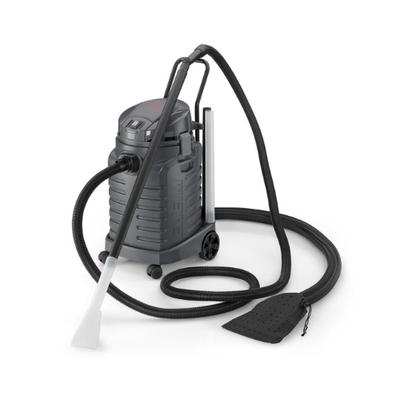
Take the opportunity to vacuum the bottom silt with a pond vacuum cleaner every two months. This layer of sediment traps phosphates and organic matter, a true nutrient reservoir for summer algae.

Beneficial bacteria at work

Good bacteria at work

Heterotrophic bacteria are the invisible allies of a clear pond. They directly consume nitrates and dissolved organic carbon, depriving algae of their main fuel without any chemicals.

A mature biological filter already contains billions of these microorganisms. But in summer, their activity increases with temperature and a boost often proves useful, especially after filter cleaning or medication treatment.
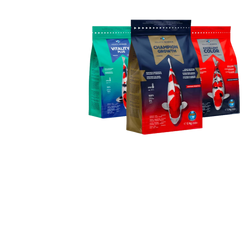
Bacterial activators provide selected strains capable of rapidly colonizing filter media. Allow two to three weeks to observe a clear clarification of green water.

Long-lasting bacterial balls gradually release their load over one to two months. A practical solution for outdoor ponds where you want to limit interventions while maintaining a stable background effect.

Barley straw, the old-fashioned remedy

Barley straw, a grandmother's remedy

Known to British fish farmers since the 19th century, barley straw works slowly but durably. As it decomposes in the water, it releases polyphenols which, when oxidised by light, produce minute quantities of hydrogen peroxide.

This compound inhibits cell division in both unicellular and filamentous algae without harming fish, plants, or bacteria. American university extension services recommend around 10 to 25 grams of straw per square metre of pond surface area — a quantity that can be doubled or tripled for an initial treatment in a pond already heavily affected.

Place the straw in a floating mesh bag, ideally near a pump return to maximise oxygenation around it. The effect becomes apparent after four to six weeks, once decomposition is properly under way.

This is a preventive method rather than a curative one. Installed from April onwards, it stabilises the pond throughout the warm season. Used curatively on a pond already colonised by algae, it is not sufficient on its own.

Plants competing for light Yellow Hardy Waterlily : Nymphaea Gold Medal

Plants stealing the light

A plant cover of 50 to 70% of the surface radically changes the game. Water lilies, lotuses, and other floating plants cast a soft shadow on the pond bottom, depriving algae of the light they covet.

Water hyacinths and water lettuce, in addition to their shading effect, have submerged fibrous roots that directly pump dissolved nitrates and phosphates. An adult hyacinth absorbs up to 1.9 grams of nitrogen per day.

Below the surface, elodea, myriophyllum, and ceratophyllum oxygenate the water during the day and provide shelter for fry. They also consume nutrients in direct competition with algae.

Balance is built over several seasons. Allow for one water lily per 2 to 3 m² of surface and supplement with several submerged oxygenating plants from planting to speed up the process.

Oxygen, your ally against algae Pond aerator kit + hoses + diffusers

The oxygen, your anti-algae ally

Dissolved oxygen often plays an underestimated role. At night, algae consume as much O₂ as they produce during the day, and fish suffocate at dawn when the concentration drops below 4 mg/L.

A good capacity air pump agitates the surface and facilitates gas exchange with the atmosphere. Aim for an air flow rate of approximately 0.5 to 1 liter per minute for every 1,000 liters of pond water in midsummer.

Porous air stones diffuse fine bubbles that remain in contact with the water longer and oxygenate better than large bubbles. Place them at the deepest point to agitate the entire water column.

A water jet, waterfall, or pump return directed towards the surface supplements oxygenation during the day. At night, the air pump takes over and prevents sudden drops in oxygen that are fatal to fragile fish.

Mistakes that make the problem worse

Mistakes that make the problem worse

The first mistake is to completely drain the pond to start from scratch. This operation destroys the mature bacterial flora, and the new water, rich in mineral nutrients, becomes an ideal breeding ground for immediate recolonization.

Overfeeding fish exacerbates the problem within a few days. An adult koi carp is content with a portion equivalent to 1 to 2% of its weight per day, divided into two feedings. Any excess ends up in the filtration system or at the bottom. To avoid overfeeding, consider installing an automatic fish feeder.

The systematic use of chemical algaecides certainly eliminates algae, but a massive dead biomass consumes a lot of oxygen as it decomposes. The risk of fish asphyxiation becomes real in the days following treatment.
As a curative measure for an already unbalanced pond, the bioactive anti-algae tablet remains preferable, as it combines targeted action with stabilizing bacterial input.

A clear pond, a living ecosystem

Summer algae blooms are never inevitable. They are a signal from your pond alerting you to an excess of nutrients, a lack of shade, or insufficient oxygenation. Reacting at the right time, with the right tools, is almost always enough to restore balance within a few weeks.

The best strategy remains preventive. A well-designed vegetable cover, filtration adapted to the volume, reasonable feeding, and weekly monitoring of parameters in July-August will save you from almost all problems. A pond that calmly passes through the summer is a pond where every link, from bacteria to plants, is doing its job.

Sources

Rutgers NJAES, Blue-Green Algae in Waterways (FS1216), Conditions that promote algal blooms, identified toxins and the need for laboratory analysis.

N.C. Cooperative Extension, Algae Control in Ponds, The one-third to one-half treated surface rule, the risk of oxygen depletion after algae die-off, and the limits of pond dye.

Penn State Extension, Barley Straw for Algae Control, Barley straw dosing of 10 to 25 grams per square metre of surface, with a higher initial dose for heavily affected ponds.

New Mexico State University, Circular 680, Water Quality, Dissolved oxygen and nitrate reference values for fish-rearing water.

Oklahoma State University Extension, Nitrification and Maintenance in Media Bed Aquaponics, Starting up nitrification: the role of pH and ammonia.

SRAC 453, Recirculating Aquaculture Tank Production Systems, A Review of Current Design Practice, Size classes of solids, mesh size, settling time, and the proportion of feed excreted as solids.

Frequently asked questions

No, and this is one of the costliest traps of summer. A mass of filamentous algae removed all at once, or killed all at once by a treatment, decomposes within a few days, and that decomposition consumes dissolved oxygen at precisely the moment when warm water already contains the least. Extension services that advise on pond management recommend treating no more than a third to a half of the surface at a time, or having backup aeration in place before you intervene.

For a garden pond, the principle applies in a straightforward way. Remove algae from one half of the pond one weekend, then the other half eight to ten days later, leaving the removed clumps to drain at the water's edge for an hour before composting them, to give any larvae and fry trapped in the filaments time to return to the water.

Throughout the operation, keep the air pump running day and night. It is the only reliable safeguard against a sharp drop in oxygen at dawn, and it costs almost nothing to run.

You cannot change the aspect, but you can change what the light reaches. Three levers work well in combination.

  • A floating plant cover built up gradually, always keeping a portion of open water for gas exchange.
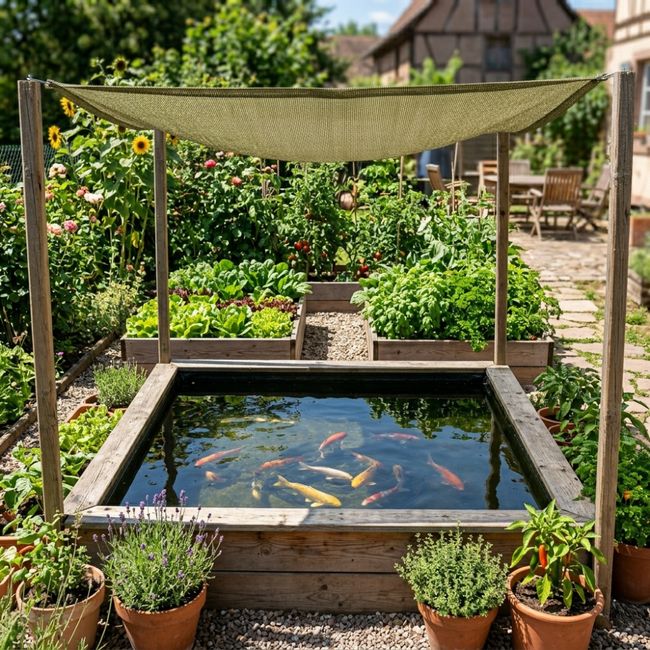
  • A shade cloth stretched over only the hottest hours of the day, rather than left in place permanently.
  • A pond dye, useful in shallow areas against filamentous algae, but with no effect on suspended phytoplankton.

None of these measures addresses excess nutrients. They buy you time to act on the real cause.

One to two weeks in peak heat if nothing has changed on the nutrient side. Removal relieves the surface; it never addresses the underlying cause.

This is actually the most common situation. Clear water lets light reach right down to the bottom, and filamentous algae, anchored to stones and walls, make far better use of it than suspended phytoplankton. Clarity and the absence of algae are two entirely different things.

This clarity often indicates an under-planted pond, where no higher plants are competing with the algae for dissolved nutrients. The remedy is not to cloud the water, but to fill the vacant niche — with submerged plants and partial surface cover.

First, restrict access to the water, particularly for dogs. Fatal poisonings of livestock and dogs that have drunk from a bloom are well documented, and nothing in the appearance of the surface film can indicate whether it is producing toxins. Only a laboratory analysis can answer that question.

Next, do not handle the water with bare hands, push aeration to the maximum, stop feeding, and do not apply any algicide until the situation has been clarified. A heavy treatment in already warm water would add mortality through oxygen depletion to the toxic risk.

Nitrate is only one of the two fuels. Phosphorus, on the other hand, rarely shows up on entry-level test kits and lurks mainly in bottom sediments, from where it returns to solution as soon as the water warms and oxygen becomes scarce near the bottom.

A low reading can also mean that algae are consuming nitrates as fast as they form. Test for phosphate instead, remove the silt, and limit what enters the pond — fallen leaves, garden run-off, and excess feed being the main culprits.

Read next

Pond evaporation in summer

Pond evaporation in summer

Between July and August, your pond can lose several hundred litres per week without you noticing. Good news: calculating these losses is simple, and topping up without disturbing your fish is just as easy

Read the article
Aquaponics and Summer Holidays

Aquaponics and Summer Holidays

You're going away for two weeks in July and your aquaponics system will be running without you : this thought rightly makes you anxious, because heatwaves, evaporation, and fish feeding raise practical questions. Good

Read the article
Maladies des poissons en aquaponie

Maladies des poissons en aquaponie

Les maladies des poissons comptent parmi les défis les plus redoutés en aquaponie. Apprenez à reconnaître les premiers signes d'alerte, à comprendre les causes profondes et à choisir le bon traitement sans compromettre vos

Read the article
Protéger son bassin des prédateurs

Protéger son bassin des prédateurs

Héron, chat, martin-pêcheur ou cormoran, la plupart des prédateurs de bassin sont protégés par la loi et ne peuvent être écartés que par des dispositifs passifs. Ce guide réunit les chiffres qui fonctionnent, les

Read the article
Élever la perche en aquaponie

Élever la perche en aquaponie

La perche commune est le carnassier des eaux tempérées européennes, robuste, à la chaire recherchée et parfaitement adapté aux systèmes aquaponiques en climat tempéré. Voici comment élever ce poisson, les températures à cibler, les

Read the article
Esturgeon en bassin de jardin

Esturgeon en bassin de jardin

Poisson préhistorique aussi élégant qu'exigeant, l'esturgeon peut faire merveille dans un grand bassin de jardin à condition de respecter ses besoins particuliers. Ce guide au cadrage européen détaille les espèces adaptées, la taille de

Read the article