No, that figure represents the higher end of the range. Evaporation measurements from shallow water bodies published by the Oklahoma State University Extension give, for the period from May to October, cumulative losses of between 28 and 44 inches depending on the region — roughly 700 to 1,130 millimetres over six months. Averaged out over a day, that places the seasonal mean at around four to six millimetres, with considerably higher peaks during hot, dry, and windy spells.
In other words, a centimetre per day corresponds to a fine summer's day in a dry climate, not to the average across an entire season. An oceanic climate, high humidity, or a pond sheltered from the wind will bring this figure down considerably, whereas a south-facing exposed pond with a waterfall running continuously may exceed it.
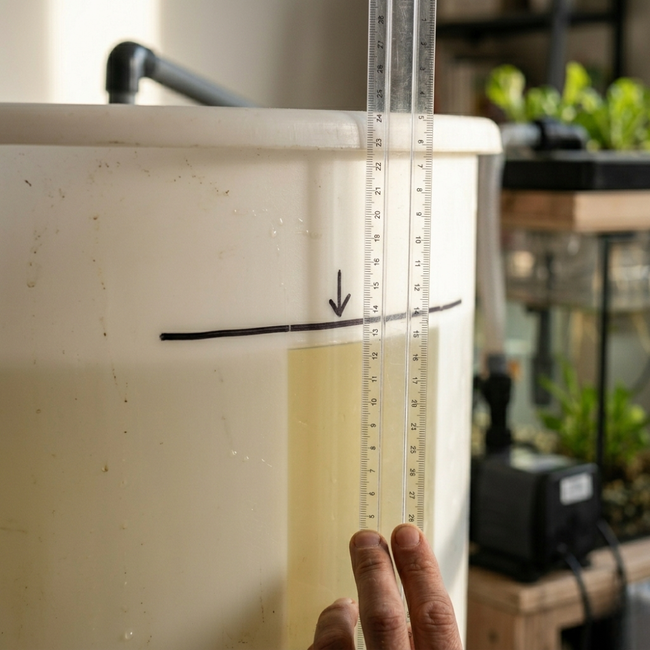
The only figure that matters is your own. Three readings taken a week apart, noted alongside the day's weather, are worth far more than any regional average when it comes to sizing your top-up reservoir.