



JBL Float suction-cup aquarium thermometer
Regular price
400.00 RSD
Regular price
Sale price
400.00 RSD
Unit price
/
per
133.33 RSD × 3 with no fees
Klarna.
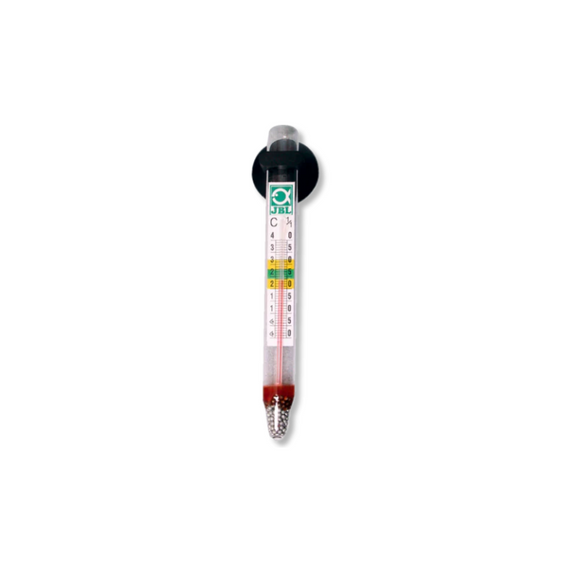
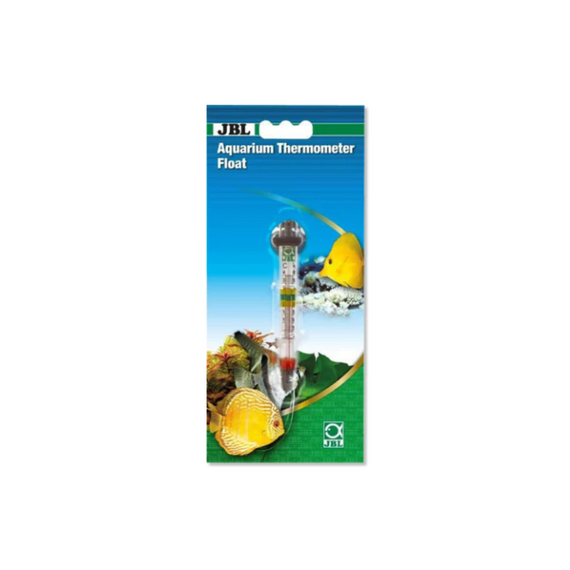
This JBL Float glass thermometer, graduated from 0 to 40 °C, attaches to the glass with a suction cup or floats upright when free. A green band around 25 °C marks the range for a tropical aquarium.
It weighs 17 g, uses no power and can be read at a glance as you walk past the tank.
 Customer support 7 days a week by email
 Delivery within 2 to 15 business days
100 % secure payment
The summary
- Its range: from 0 to 40 °C, graduated degree by degree, for cool water as well as heated water.
- How to read it: a green band around 25 °C, between two yellow bands, the benchmark for a tropical tank.
- Where to stick it: opposite the heater, where the water is coolest in the tank.
- How it arrives: a 17 g glass thermometer, in a blister pack, with the rest of your order.
Glass thermometer graduated from 0 to 40 °C, suction-cup or floating
This glass thermometer attaches inside the tank with a suction cup and stays permanently submerged, so it gives the true water temperature and not that of the room. Its red liquid column is graduated from 0 to 40 °C, degree by degree.
The thermometer works by simple expansion: when the water warms up, the liquid in the column expands and its level rises on the scale, with no battery, no screen and no adjustment. A ballast of beads at the foot of the tube keeps it upright when you detach it from the glass, so it can also float freely in a tank without a smooth wall. The suction cup withstands acidic and alkaline water alike, and the complete thermometer weighs 17 g.
🌡️ The scale and its green marker
The scale covers everything you encounter in a freshwater tank, from the cool water of an indoor pond in winter to a heated tropical aquarium. It also carries a colour marker: a green band around 25 °C, flanked by two yellow bands at 20 and 30 °C, which shows the usual range of a tropical aquarium. So you can see at a glance whether a heated tank strays from it, while the figure, read to the nearest degree, lets you track the changes from one day to the next.
In the morning
The thermometer then shows the lowest temperature of the day, the one that reveals a heater that is only just adequate.
After a water change
Check that the added water has not made the tank temperature drop by several degrees.
In a heatwave
Warm water holds less dissolved oxygen, so you then need to step up the aeration of the tank.
When a fish arrives
Acclimatise the bag to the tank temperature, thermometer in hand, rather than emptying it in all at once.
👁️ Where to stick the suction cup
Placement changes the reading. Stick the thermometer opposite the heater, at mid-height, in the coldest zone of the tank: this is the zone that shows whether the whole volume reaches the target temperature, whereas a reading taken right next to the heating element always shows too high a value. Also avoid the glass panel exposed to direct sunlight, which warms the column itself and makes you read the temperature of the glass rather than that of the water. Finally, wipe the glass with a cloth before fixing the suction cup, so that it sticks durably.
Set the heating according to the temperature read in the water
An aquarium heater with a thermostat should be set according to the temperature you read in the water, not the figure on its dial, because the difference between the two depends on the volume and circulation of the tank. Stick the thermometer on the opposite side from the heater, leave it for a day, then adjust the setting by 1 or 2 °C if needed. If you also monitor the air in a greenhouse or shelter, a digital ambient probe completes the picture on the plant side.
🐟 Temperature in aquaponics
In an aquaponic system, water temperature governs the activity of the biofilter bacteria as much as the fish's appetite, so it needs monitoring all year round. The green band on the thermometer corresponds to a heated tropical tank. If you keep cold-water fish, such as the trout in a salmonid aquaponics system, your water temperature is much lower, and in that case it is the figure you read that counts, not the colour. Note the value at the same time each day: the guide to getting your system ready for autumn explains how to adjust the fish's ration as the temperature drops.
Technical specifications
The essentials
- Measurement range
- 0 to 40 °CGraduated in single degrees, in degrees Celsius
- Principle
- Column of red liquidNo battery, no screen, no settings
- Fixing
- Suction cup, or free-floatingThe ball weight keeps it upright when it floats
- Weight
- 17 g
The reading
- Colour reference
- Green band around 25 °CFramed by two yellow bands, at 20 and 30 °C
- Location
- The opposite of heatingThe coldest zone of the tank reveals an undersized heater
- Suction cup
- Resistant to acids and alkalis
- Reference
- JBL 6140500
In the box
- 1 JBL Float glass aquarium thermometer, with its suction cup
Scale, colour marker, weight and suction cup noted on 11/10/2026 from the JBL datasheet and the thermometer.
Estimate your
delivery time
Your estimate
Delivery
Estimated time
It covers preparing your order and then the transit time quoted by the carrier, counted in working days.
It is not a guaranteed delivery date: public holidays, peak periods, customs or a carrier delay can extend it. The exact amount, in your currency, is worked out in the cart once your address is entered.
17 g glass item, packed separately in the parcel. Unpack it carefully and check the column before fixing it in place. The exact charges and final delivery times are shown in your basket once you have entered your address.
Frequently asked questions
6 questions
6 key questions
You may also like


Related articles

Start-up
Getting started with an aquaponic system
The parameters to record from the first week, temperature included.
Read the article

Biology
The nitrogen cycle in aquaponics
Nitrification that slows down as soon as the water cools.
Read the article

Seasons
Maintaining your aquaponic system in summer
As the water temperature rises, its dissolved oxygen content falls.
Read the article

Fish
Goldfish in aquaponics
A freshwater species, comfortable between 18 and 22 °C, which slows down markedly below 10 °C.
Read the article

Tips

Species
Salmoponics: aquaponics in cold water
A cold-water system, where the thermometer reads well below the green band.
Read the article
Let us talk about your project
A question about this product or your setup? Our team will answer and advise you.

Interest-free instalment payments
Offered depending on the cart amount, at checkout.

Delivery in 2 to 15 working days
Depending on the products and shipping sites. Estimate by destination in the estimator on this page.

After-sales service 7 days a week by email or chat
Our team answers all your questions.

Shop responsibly
Become part of the change.
