





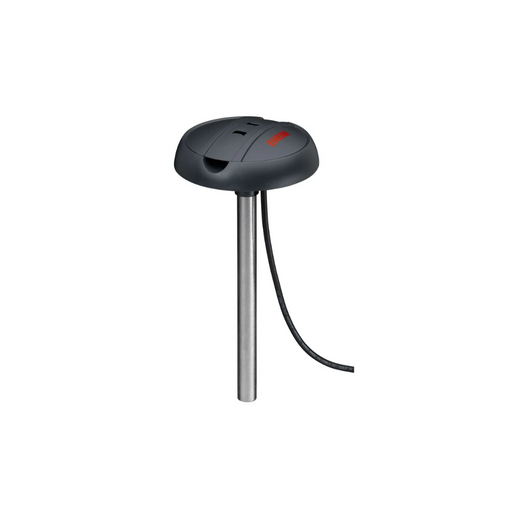
EHEIM thermocontrol aquarium heater, 50 to 300 W
Regular price
2,400.00 RSD
Regular price
Sale price
2,400.00 RSD
Unit price
/
per
800.00 RSD × 3 with no fees
Klarna.
This EHEIM thermocontrol submersible heater comes in eight power ratings, from 50 to 300 W, and is set from 18 to 34 °C using its graduated ring.
Choose the power according to the actual water volume of the tank, then the room temperature.
 Customer support 7 days a week by email
 Delivery within 2 to 15 business days
100 % secure payment
The summary
- What power: from 50 to 300 W, for 25 to 1,000 litres of water depending on the model.
- The setting: a graduated dial from 18 to 34 °C, accurate to 0.5 °C.
- How to choose: by the real volume of water, then by the room temperature at night.
- Where to place it: vertically, in an area where the water circulates.
- How much effort: a thermometer reading each day and a rinse when a deposit appears.
- How it arrives: a light parcel, which ships with the rest of your order.
Submersible thermostat heater, from 50 to 300 W, for aquariums and indoor aquaponics tanks
The EHEIM thermocontrol aquarium heater keeps the water at the set temperature, from 18 to 34 °C, to within 0.5 °C. It comes in eight power ratings, from 50 to 300 W, for tanks of 25 to 1,000 litres. Choose the power rating according to the actual volume of water, then according to the room temperature at night.
The EHEIM thermocontrol heater is submerged in the aquarium and holds the water at the temperature you set, from 18 to 34 °C. It is available here in eight power ratings, from 50 to 300 W, for tanks of 25 to 1,000 litres.
🌡️ An adjustable thermostat
The heating element is housed in a laboratory-grade glass sleeve, which increases the heating surface and spreads the heat along the whole length of the tube. At the top, a graduated ring sets the target temperature between 18 and 34 °C, and the thermostat switches the heating off or on again to hold this value to within 0.5 °C. A red indicator light stays on while the unit is heating, so you can see at a glance whether it is heating. The tube is watertight and can be fully submerged, in freshwater and in seawater alike, and a thermal safety cut-out switches it off if it runs dry. It is attached to the glass by the supplied double suction-cup bracket, and its cable is about 170 cm long.
📐 Power according to volume
Each power rating corresponds to a volume range, from the 50 W for tanks of 25 to 60 litres up to the 300 W for 600 to 1,000 litres. The volume to use is that of the actual water, with decor and grow medium deducted, and not the gross volume of the tank. Next comes the room: a tank in a conservatory, a garage or a room that cools down at night loses its heat much faster than a tank in a living room, and the next model up then gives it some margin. For a 120-litre tank in a living room, the 100 W, intended for 100 to 150 litres, is suitable; if the same tank is in a cool room, the 125 W gives you the margin that the first would lack.
The actual volume
Count the water, not the tank: decor, grow medium and a low water level reduce the stated volume.
The room at night
It is the lowest temperature of the day that determines the power, not the average.
Water circulation
Without circulation, the heat stays around the tube and the areas of the tank furthest away remain a few degrees cooler.
The species kept
It sets the target temperature, and therefore the gap the unit will have to maintain.
A thermometer stuck on the opposite side from the heater
The dial shows the set temperature, but it is the water in the tank that counts. A suction-cup thermometer stuck on the side opposite the heater, where the water is coldest, tells you whether the whole volume has reached the set temperature. If your tank lacks circulation, an aquarium air pump stirs the water around the tube and evens out the temperature while it oxygenates.
Unplug it before taking the tube out of the water
The heater must never run out of the water. Before taking it out, unplug it and let it cool down in the tank water, then place it on a surface that is not damaged by heat. During a water change, the level must always stay above the minimum mark on the unit: unplug it before lowering the level, and plug it back in once the tank is refilled.
A heater that is too small for its tank does not break down: it heats without interruption and the temperature levels off a few degrees below the set point, so that the red indicator light stays on almost permanently. You spot it with a thermometer, by comparing the reading with the one on the dial ring. Conversely, a correctly sized model heats in short bursts, and its light goes out regularly once the set point is reached.
🔧 Fitting, adjustment and maintenance
Fix the heater vertically on the glass, in a well-circulated area, for example near the filter outlet, without going deeper than 50 cm. Before plugging it in, leave it in the tank water for 20 to 30 minutes, unplugged, so that its thermostat reaches the water temperature. Adjustment is always made with the appliance unplugged: you turn the ring to the desired temperature, then plug it back in. Leave a loop in the cord hanging below the level of the socket: any water running down the cable then drips off onto the floor. If, after 1 to 2 days, the graduation does not match the temperature read on an accurate thermometer, you recalibrate it by placing the red arrow on the actual water value.
Clean the unit only when it is unplugged and has cooled down: take out the tube, rinse it under running water and remove any deposits without using a hard object or harsh product, then put it back in the water before plugging it in again. A thick layer of limescale on the sheath hinders the transfer of heat to the water, so you are better off removing it as soon as it appears, at the same time as you clean the filter.
🐟 In aquaponics
In a small indoor aquaponics system, temperature governs the fish's appetite, plant growth and the activity of the biofilter bacteria all at once, and these bacteria slow down markedly in cold water. Warm-water species such as tilapia need water kept close to their optimum all year round, whereas goldfish live in temperate water and mostly benefit from a stable temperature. The guide to choosing your fish for aquaponics gives the range for each species, and it is the species you keep that determines the set point you will choose.
Technical specifications
The essentials
- Power
- 50 to 300 WFrom 25 to 1,000 L of water depending on the model
- Adjustment
- 18 to 34 °C
- Precision
- ± 0.5 °C
- Sleeve
- Laboratory glassWatertight, fully submersible
- Length
- 24.3 to 50.6 cmDepending on the power, 36 mm in diameter
- Cord
- About 170 cm
To budget for separately
- A thermometer
- A reading taken in the waterIt confirms that the whole volume reaches the set temperature
- Circulation
- An air pump or a filterWithout water movement, the heat stays around the tube
In the box
- 1 EHEIM thermocontrol heater in the power you choose, with its cable
- 1 double suction cup holder
Power ratings, volumes, adjustment range, accuracy and dimensions taken on 11/10/2026 from the product page and the EHEIM thermocontrol instruction manual.
Manufacturer and product safety
- Manufacturer
- EHEIM GmbH & Co. KG
- Postal address
- Plochinger Str. 54, 73779 Deizisau, Allemagne
- Contact
- info@eheim.com
- Website
- eheim.com
Information provided under Regulation (EU) 2023/988 on general product safety.
Estimate your
delivery time
Your estimate
Delivery
Estimated time
It covers preparing your order and then the transit time quoted by the carrier, counted in working days.
It is not a guaranteed delivery date: public holidays, peak periods, customs or a carrier delay can extend it. The exact amount, in your currency, is worked out in the cart once your address is entered.
Fragile but light device, packed accordingly, which travels with the rest of your order. Check the tube when you open the parcel, before use. The exact shipping costs are shown in your basket once your address has been entered.
Frequently asked questions
8 questions
6 key questions, 8 in the detailed view
Upkeep and the real cost
An aquarium heater runs all year round and needs little attention, provided you monitor it by the water temperature rather than by the dial ring.
A heater that is only just big enough does not break down: it heats continuously and the water levels off below the set temperature.
The time it takes
9 ha year, that is 10 min a week
- Every day1 min each time 6.1 ha year
- Every month10 min each time 2.0 ha year
- At every water change2 min each time 0.9 ha year
Tap or hover over a frequency to see the tasks it covers.
You may also like




Related articles

Fish
Which fish to choose for aquaponics?
The species sets the temperature to hold, and therefore the power to allow for.
Read the article

Biology
The nitrogen cycle in aquaponics
Why bacteria slow down before the fish start to suffer.
Read the article

Fish
Raising tilapia in aquaponics
A warm-water species, and the gap it requires in winter.
Read the article

Tips

Fish
Let us talk about your project
A question about this product or your setup? Our team will answer and advise you.

Interest-free instalment payments
Offered depending on the cart amount, at checkout.

Delivery in 2 to 15 working days
Depending on the products and shipping sites. Estimate by destination in the estimator on this page.

After-sales service 7 days a week by email or chat
Our team answers all your questions.

Shop responsibly
Become part of the change.
