



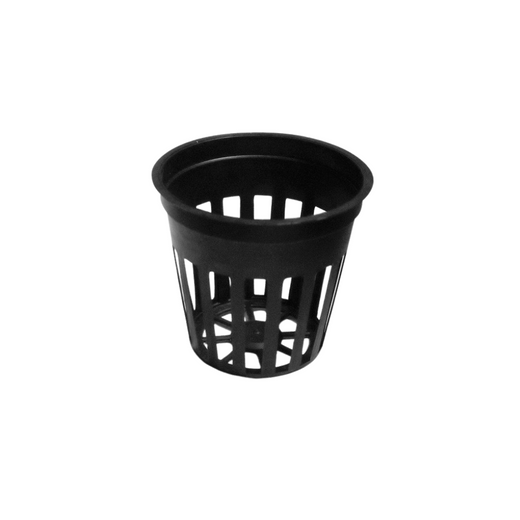


Ebb & Grow flood table, 10 pots, mains or solar
Regular price
28,900.00 RSD
Regular price
Sale price
28,900.00 RSD
Unit price
/
per
9,633.33 RSD × 3 with no fees
Klarna.
The ebb-and-flow table floods and then empties its grow bed at regular intervals. The roots alternate between nutrient solution and air, and the pump is the only moving part in the whole system.
The table comes with its 100 L reservoir and 10 fabric pots of 4 L, in a mains-powered version, run by the timer of your choice, or in a solar version, whose pump has its own built-in timer.
 Customer support 7 days a week by email
 Delivery within 2 to 15 business days
100 % secure payment
The summary
- What it is: a grow bed that floods and then drains in cycles, above a 100 L reservoir.
- What is supplied: the tray, the reservoir, the pump, 10 fabric pots of 4 L and the overflow standpipe.
- Two power options: mains-powered with a timer that you set, or solar-powered with a timer built into the pump.
- How often: around 1 flood per hour during the day, to be spaced out with a grow medium that retains water.
- What you choose to go with it: the grow medium, a complete hydroponic nutrient and something to read the pH.
- Footprint: 95 x 95 cm on the floor, 16.5 kg empty for the mains version, 18.1 kg for the solar version.
Grow bed flooded in cycles, 10 pots, 100 L reservoir
The ebb and flow table floods its grow bed, then lets it drain, several times a day. It is one of the oldest soilless systems, and one of the simplest to run, since the only moving part in the whole set-up is the pump. Here you receive the bed, the 100 L reservoir, the pump and 10 fabric pots of 4 L, to be placed on the floor one on top of the other, with no support to make.
🌊 The flood and drain principle
A submersible pump that you place in the reservoir fills the grow bed, which sits just above it. When the pump stops, the water drains back down on its own through the same pipe, by gravity. There is no siphon, no solenoid valve and no part that could jam. As it withdraws, the water draws fresh air into the grow medium, and this back-and-forth oxygenates the roots on every cycle. An overflow standpipe fixes the water height reached in the bed. The tray and the reservoir are rotationally moulded in France, from food-grade recycled polyethylene, and are completely opaque, since a translucent wall lets light through to the solution, which is enough to trigger algae. The whole unit sits directly on the floor, with the reservoir acting as a base for the tray, so there is no stand to build and no raising up to plan for. Allow for more than 120 kg under load once the reservoir is full and the pots are wet, on a footprint of close to one square metre.
The grow bed
This is the tray on which your pots sit. It measures 95 x 95 cm overall, of which 86 x 86 cm is truly usable, and 36 cm high.
The reservoir
It holds 100 L, with its level tube. This volume stabilises the pH and gives you more time between two refills.
The pump
This submersible pump uses 6.5 W and delivers 600 litres per hour on mains power. It only runs during flooding, a little over a quarter of an hour per cycle.
The pots
This is a set of 10 fabric pots of 4 L. The fabric lets air through the sides, which adds to the oxygenation provided by the flood and drain cycle.
🕒 How often to flood
The starting setting is the one the manufacturer uses in its greenhouses: 1 flood per hour, with the bed staying full for about a quarter of an hour before draining. The timer is therefore set to the filling time, which you time once, plus 15 minutes of high water. The grow medium then decides whether to keep this rhythm: clay pebbles, which hold almost nothing, cope with it easily, whereas coco fibre or rockwool, which hold water for several hours, call for more widely spaced cycles, otherwise the excess water deprives the roots of air. At night, you can stop the cycles on the mains-powered version. Finally, watch the roots during the first week: white fine roots coming out through the bottom of the pots confirm the setting, whereas a medium that never dries on the surface needs the floods spaced further apart. The season also matters, as a plant in the heat of summer consumes far more than in March.
The timer on the mains-powered version
On the mains version, add a timer, because it is what controls the flooding, and its quarter-hour segments are enough for one flood cycle per hour, with the overflow standpipe returning to the reservoir any water pumped beyond the level. The solar version, for its part, has its timer built into the pump. The ebb and flow table pack brings together the system, 50 L of coco fibre and the nutrients in a single order.
What to monitor at every tide
A little solution stays in the tank between cycles. If it receives light, algae will establish within a few days, and the cause is optical before it is chemical: cover the open surface with empty pots or a plate. Then keep the overflow standpipe clear, because it sets the water level and spares you a flood if the timer gets stuck in the on position. Finally, check that the tank is level, as a sloping tray leaves one side dry at every flood.
☀️ Mains or solar
Both versions share the tank, the reservoir and the 10 pots, and the difference lies solely in what circulates the water. The mains version plugs into a socket and needs a timer that you set as you see fit, which leaves you in control of the cycles and allows flooding at night. The solar version has its timer built into the pump, set to run for about 10 minutes per hour, and a battery station powers it at night and in overcast weather. Its pump delivers 300 litres per hour where the mains version's delivers 600, so the tank takes roughly twice as long to fill. In a flood-and-drain system, this makes no difference to the result, since what matters is that the tank reaches its level, then drains. The choice therefore comes down mostly to siting: the mains version requires a socket within reach and suits a greenhouse or an indoor space, whereas the solar version works on a site with no power supply, at the price of cycles set by the pump and not by you.
🌿 And in aquaponics
Flooding followed by draining is also the principle of the grow bed filled with grow medium used in aquaponics, where water from a fish pond alternates with air in a bed of clay pebbles. The difference lies in the source of the nutrition. Here, you prepare the solution from concentrated hydroponic fertilisers, and the reservoir houses the pump. No fish can therefore live in it, especially as the grow bed empties completely several times a day. The article on the difference between aquaponics and hydroponics sets the two systems side by side. That said, nothing prevents you from running this tray as an aquaponics system by connecting it to an existing pond, provided the pump stays in the pond and the bed then works as a standard grow bed.
🧪 pH and water renewal
In a closed loop, the pH drifts, because your plants take up ions unevenly and evaporation concentrates the solution. The working range is 5.8 to 6.2. After a correction, allow at least one full flood cycle, which mixes the solution in the reservoir, before taking the check reading. Replace the entire solution every 2 to 3 weeks, topping up for evaporation with clean water in between. The article on pH regulation explains how to measure and correct it, presented for an aquaponics system. Conductivity should be tracked alongside, because a level that drops while conductivity rises indicates plants drinking more than they take up nutrients, a situation that topping up with clean water corrects better than adding fertiliser.
🪣 How many pots fit on the tray
On the tray, you can fit up to 32 plastic pots of 15 x 15 cm or 22 fabric pots of 3.75 L in place of the 10 pots supplied, provided you group plants at the same stage, since they all share the same reservoir, and therefore the same solution and the same pH. The 10 pots of 4 L supplied make for comfortable growing, with room between the plants and space for staking. A full table with 32 positions suits lettuces, herbs or young plants intended for transplanting elsewhere. Remember to leave a way through to the overflow chimney, otherwise you will have to move wet pots to reach it.
🧱 Which grow medium to choose
The grow medium determines the rest of the setup, and each one has its own logic. Clay pebbles in the 8 to 20 mm size range hold almost nothing, drain instantly and can be reused from one crop to the next after rinsing, but they call for frequent flood cycles. Coco fibre holds water for several hours, tolerates a missed cycle and suits long crops such as tomato; it does, however, compact and needs replacing each season. Rockwool sits between the two, with very consistent behaviour, provided you soak it at a pH of 5.5 before first use. A mix of coco fibre and clay pebbles in equal parts makes a good compromise in a fabric pot, as the fabric itself compensates for excess moisture through its walls. Whichever you choose, rinse the grow medium before the first filling, because the fines it releases end up at the bottom of the reservoir and reach the pump strainer.
🔧 Pump maintenance
The pump is the only moving part in the system, so its upkeep determines everything else. Its strainer should be rinsed in clean water every time you renew the solution, since a partly blocked filter lengthens the filling time without any warning, and the tank eventually stops reaching its level within the time allowed by the timer. Take the impeller apart once a season to remove limescale, using diluted white vinegar if your water is hard. Also keep an eye on the pipe linking the reservoir to the tray, because that is how the water drains back: a section pinched behind the tray slows the draining and leaves the roots submerged for longer than intended.
Technical specifications
The essentials
- Capacity
- 10 pots10 fabric pots of 4 L supplied. The tray accepts other containers, provided they fit within the flood height.
- Principle
- Flood and drain by gravityThe pump fills the bed; when it stops, the water drains back down the same pipe. No siphon, no solenoid valve.
- Reservoir volume
- 100 LEnough water to stabilise the pH and give autonomy between two top-ups.
- Pots included
- 10 of 4 LFabric pots. The fabric lets air through the sides, which adds to the oxygenation.
- Growing area
- 95 x 95 cm overall86 x 86 cm of truly usable space, 36 cm high. On 95 x 95 cm, the tray takes up to 32 plastic pots of 15 x 15 cm.
- Parcel dimensions
- 95 x 97 x 30 cmThe assembled system is taller, with the reservoir and bed stacked.
Mains-powered version
- Pump included
- Submersible, 6.5 WSubmerged in the reservoir, beneath the grow bed.
- Flow rate
- 600 L/hAdjustable. 230 V, 50 Hz, 1.5 m cable, lift height up to 0.85 m.
- Flood frequency
- About 1 per hourBed full for a quarter of an hour, during the day. Longer intervals between cycles with coco fibre or rockwool.
- Setting the cycle
- TimedTimed filling time, plus 15 minutes of high water.
- Consumption
- Very lowThe pump only runs during flooding: at 12 cycles of 18 minutes a day, about 0.02 kWh.
- Empty weight
- 16.5 kgTray and reservoir included.
Solar version
- Pump power
- 5 W5 m pump cable, head height up to 1.2 m.
- Voltage
- 6 to 9 VLow-voltage direct current, powered by the panel and the battery station.
- Flow rate
- 300 L/hAdjustable. It is half the flow rate of the mains pump, which lengthens the filling time without changing the principle.
- Cycle
- around 10 min per hourThe timer is built into the pump, so there is nothing for you to programme.
- Battery station
- SuppliedCharged by the panel, it powers the pump at night and in overcast weather.
- Empty weight
- 18.12 kgThe difference from the mains version comes down to the panel and its battery station.
To budget for separately
- Grow medium
- Coco fibre or clay pebblesThe choice sets the rhythm: shorter intervals between cycles with clay pebbles, longer ones with coco fibre.
- Timer
- Daily timerOn the mains version, it controls the flooding. The timer on the solar version is built into the pump.
- Nutrient solution
- Complete hydroponic nutritionSized for the 100 L reservoir.
14 further specifications are available in the detailed view.
In the box
- 1 growing tray measuring 95 x 95 cm and its overflow standpipe.
- 1 100 L tank with its level tube.
- 10 fabric pots of 4 L.
- The connecting tubes, fittings and sealing gaskets.
- 1 submersible pump of 6.5 W for mains power, or, in the solar version, a 5 W pump with its panel, battery station, assembly instructions and a trio of TriPart fertilisers: Grow, Micro and Bloom.
Volumes, dimensions, flow rates, weights, contents and flood cycle taken from the manufacturer's French pages and its packing list, on 11/10/2026. Tray and reservoir in recycled food-grade polyethylene, rotationally moulded in France.
Mains or solar?
Same bed, same tank, same pots. This table compares only the feeding and its consequences.
The power available comes before ease of adjustment
The solar version needs no mains socket and floods for 10 minutes every hour, day and night, as long as its battery is charged. The mains version can be set to the nearest hour.
| Grow pots | Reservoir volume (L) | Timer supplied | Mains power socket required | Freely adjustable cycles | Floods at night with no reserve | Empty weight (kg) | |
|---|---|---|---|---|---|---|---|
| Recommended MainsYour choice | 10 | 100 L | No | Yes | Yes | Yes | 16.5 kg |
| SolarYour choice | 10 | 100 L | Yes | No | No | No | 18.12 kg |
MainsRecommended
What stays the same
Grow pots10
Reservoir volume (L)100 L
What changes
Timer suppliedNo
Mains power socket requiredYes
Freely adjustable cyclesYes
Floods at night with no reserveYes
Empty weight (kg)16.5 kg
Solar
What stays the same
Grow pots10
Reservoir volume (L)100 L
What changes
Timer suppliedYes
Mains power socket requiredNo
Freely adjustable cyclesNo
Floods at night with no reserveNo
Empty weight (kg)18.12 kg
Dimensions, flow rates and weights of the two versions taken from the manufacturer's page on 10/09/2026.
Help choosing
Mains or solar, depending on your plot
Documents & manuals
Manufacturer's page, flood-and-drain system
System overview by Terra Aquatica, in English.
Document not showing? Some publishers block display inside a frame, so open it in a tab.
Estimate your
delivery time
Your estimate
Delivery
Estimated time
It covers preparing your order and then the transit time quoted by the carrier, counted in working days.
It is not a guaranteed delivery date: public holidays, peak periods, customs or a carrier delay can extend it. The exact amount, in your currency, is worked out in the cart once your address is entered.
A single parcel measuring 95 x 97 x 30 cm and weighing 16.5 kg. The dimensions do not permit delivery to a collection point: please arrange home delivery, ensure clear access and have someone available to receive the parcel. Exact shipping costs and final delivery times are displayed at checkout once the address has been entered. Outside the European Union, import duties and taxes remain the responsibility of the recipient. Delivery times run from the date of dispatch, excluding public holidays.
Frequently asked questions
12 questions
6 key questions, 12 in the detailed view
You may also like




Related articles

Understanding
Soilless growing in hydroponics
The starting point if soilless growing is new to you: what growing in solution changes, and what it asks of you in return.
Read the article

Grow media
Which grow medium to choose in aquaponics
The common grow media, those to avoid and how to maintain them, presented for an aquaponics grow bed.
Read the article

Technique
Regulating pH in an aquaponics system
How to measure, interpret and correct pH, explained for an aquaponic system, where correction is made more gradually than in hydroponics.
Read the article

Crops
What to grow in hydroponics, season by season
Season by season, the crops you can grow in hydroponics, then those that produce all year round.
Read the article

Start-up
Setting up an indoor seedling space
The table takes plants that are already rooted. Here is how to produce them without complicated equipment.
Read the article

Diagnosis
Identifying deficiencies in aquaponics
Iron, manganese, zinc, calcium: the article helps you diagnose a deficiency before correcting any one element.
Read the article

Practical
Going on holiday without losing your crop
The guide prepares you for a two-week summer absence: water level, feeding and temperature.
Read the article

Understanding
Aquaponics and hydroponics — what's the difference?
No fish here, just a mineral solution that you dose yourself. The article places the two families in relation to each other.
Read the article
Let us talk about your project
A question about this product or your setup? Our team will answer and advise you.

Interest-free instalment payments
Offered depending on the cart amount, at checkout.

Delivery in 2 to 15 working days
Depending on the products and shipping sites. Estimate by destination in the estimator on this page.

After-sales service 7 days a week by email or chat
Our team answers all your questions.

Shop responsibly
Become part of the change.
