



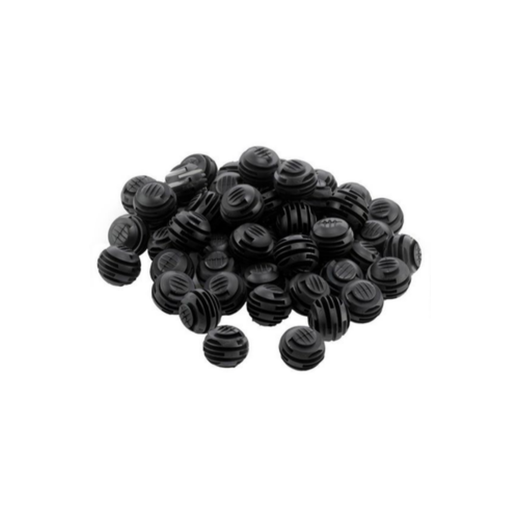

Natural zeolite for grow medium and filtration
Regular price
Dhs. 28.00
Regular price
Sale price
Dhs. 28.00
Unit price
/
per
| Volume | Price | Price per L | vs 1 L |
|---|---|---|---|
| 1 L | Dhs. 28.00 | Dhs. 28.00 | — |
| 5 L | Dhs. 63.00 | Dhs. 12.60 | −55 % |
| 10 L | Dhs. 109.00 | Dhs. 10.90 | −61 % |
| 20 L | Dhs. 197.00 | Dhs. 9.85 | −65 % |
| 33 L | Dhs. 273.00 | Dhs. 8.27 | −70 % |
This chabazite zeolite is a volcanic rock riddled with microscopic cavities, which holds water and nutrient cations before releasing them to the roots. You can mix it in at 10% in a potting compost, grow cacti and bonsai in it neat, or place it in a filter to bind the ammonium in fresh water.
 Customer support 7 days a week by email
 Delivery within 2 to 15 business days
100 % secure payment
The summary
- Mineral: a natural zeolite of the chabazite type, in bags of 1 to 33 L.
- Retention: it holds water and cations, then releases them gradually to the roots.
- In potting compost: 10% of the volume is enough to increase its exchange capacity.
- In the vegetable garden: 600 g to 1 kg per square metre, mixed into the soil.
- In water: it binds the ammonium in a quarantine tank or a new filter.
- Which bag to choose: 1 L for a few pots, 20 or 33 L for a vegetable garden or a greenhouse.
Porous volcanic rock to improve a potting compost and bind ammonium
Guano Diffusion chabazite zeolite is a microporous volcanic rock with a cation exchange capacity of 166 meq/100 g. It amends a potting mix at 10%, can be grown in pure for cacti and fixes the ammonium in soft water, then regenerates in brine. Sold from 1 to 33 L, it stays out of the loop of an aquaponic system.
Zeolite is a microporous rock of volcanic origin, an aluminosilicate whose crystalline structure is threaded with cavities and channels of molecular size. This one belongs to the chabazite type. Its cavities hold water, positively charged ions, trace elements and micro-organisms, then exchange them with the solution that surrounds them. You can use it in two ways that rely on the same property: as a soil conditioner for potting compost or vegetable-garden soil, and as a filter medium in fresh water.
🔬 A rock riddled with cavities
Not all natural zeolites are equal, because their pore volume varies with the mineral species. That of chabazite reaches 47%, against 39% for clinoptilolite, the most widely sold zeolite on the market, 31% for phillipsite and 28% for mordenite. This internal volume determines both the amount of water the grain holds in reserve for your plants and the number of sites where ions can lodge. The cation exchange capacity, or CEC, quantifies this second property: it measures the amount of positive ions a material retains and then releases, and here it stands at 166 meq/100 g. The cations that chabazite binds first are potassium, magnesium and calcium, three major elements of plant nutrition.
In a potting mix
Added at 10% of the volume, it increases the exchange capacity of the mix and limits the leaching of nutrients by watering.
In the vegetable garden
Spread at a rate of 600 g to 1 kg per square metre and then mixed into the soil, it holds a reserve of water and cations close to the roots.
Cacti and bonsai
Plants from arid environments and bonsai receive it pure, as the sole grow medium, with no compost added to the pot.
In soft water
Placed in the flow of a filter, it binds dissolved ammonium and retains particles down to 5 µm, compared with 40 µm for sand.
In a growing mix, zeolite works as a buffer reserve. When you apply a fertiliser, part of the potassium, magnesium and calcium becomes fixed in the cavities instead of leaving with the water that drains through the pot, then these cations pass gradually into the soil solution as your roots take up those that remained there. Feeds are thus spread over a longer period, while the porosity of the grain holds water between waterings. The recommended dose is 10 to 15% of the volume of the mix, and 10% is enough in most cases to achieve this effect without making the pot heavy.
Amending a light compost at 10%
If you are repotting herbs or vegetable plants, mix the zeolite into the light peat-free compost at a ratio of 1 part to 9. This very airy compost gains a reserve of water and cations that sustains the plants between feeds of fertiliser. A 5 L bag is enough to amend the 50 L bag of compost, and the mixture can be prepared in one go, under cover, before filling the pots.
Outside the loop of an aquaponic system
In an aquaponic system, the ammonium excreted by the fish is the nitrogen that the filter bacteria convert into nitrate for your plants. A zeolite left permanently in the loop binds part of this ammonium, as well as potassium, calcium and magnesium, and so deprives the crops of them. Keep it for a separate tank or a limited period, then remove it as soon as the biological filter has taken over.
One litre of this zeolite weighs about 750 g, so the 33 L bag contains 25 kg of mineral and the 20 L bag about 15 kg. To improve 10 m² of vegetable garden at a rate of 600 g to 1 kg per square metre, you need 6 to 10 kg, which is roughly the contents of the 10 L bag, weighing 7.6 kg. The 1 L bag suits a few cactus pots, a bonsai or the media bag of an aquarium filter, the 5 L bag a repotting of several planters, while the 20 and 33 L bags are for the vegetable garden, the greenhouse or preparing large quantities of grow medium.
🌱 Around the aquaponic system
In aquaponics, zeolite belongs around the system rather than inside it. In a quarantine tank or a holding tank, it binds the ammonium produced by newly arrived fish, at a time when no bacterial colony is yet converting it, a period described in the guide to getting an aquaponic system off to a good start. Grow beds connected to the circuit, on the other hand, need an inert medium, such as clay pebbles or pumice, which leaves all the nutrients available to the roots and serves as a support for nitrifying bacteria. The article on choosing a grow medium in aquaponics compares these media. Your pots and planters grown alongside the circuit and watered with pond water, however, benefit fully from its retention capacity.
💧 In a tank or a filter
In soft water, the same exchange capacity allows zeolite to capture dissolved ammonium, which is toxic to fish when it builds up. Its pores also trap particles down to 5 µm, eight times finer than those a sand filter retains, and it effectively retains heavy metals. You place it in a mesh bag, right in the flow of a filter, where the water passes squarely through it rather than around it. Its capacity is not unlimited: saturated zeolite stops binding ammonium and may release some of it back into cleaner water. A drop-based ammonium test therefore tells you when to remove it, or when the filter's bacteria have taken over.
♻️ Regenerating a saturated zeolite
A zeolite saturated with ammonium is regenerated by reverse exchange: the sodium in a brine takes back the sites that the ammonium occupied, and the rock recovers almost all of its capacity. Soak the granules in very salty water, at about twenty grams of salt per litre, for a few hours or overnight, then rinse them thoroughly in clean water before putting them back into service. This brine, loaded with the released ammonium, goes down the sink, never into a pond or an aquaponic system. The binding capacity also drops in hard water, because calcium and magnesium occupy the same sites as ammonium, so your zeolite saturates faster in hard water. For the same reason, it should not be used in salt water, where the sodium would make it release what it has bound.
🪴 Putting it into practice
For a potting mix, first pour the 9 volumes of grow medium into a tub, add the volume of zeolite, then mix until the grains are spread right through the mass before filling your pots. In the vegetable garden, spread the dose over the area to be improved, then work it into the soil by raking or light digging, so that it sits in the zone the roots explore. For a cactus or a bonsai grown in pure zeolite, fill the pot with grains and water until the water runs out of the bottom, then let it dry out between waterings, as with any mineral grow medium. In a filter, rinse the grains in clean water before putting them in place to wash out the fine mineral dust.
Technical specifications
The mineral
- Nature
- Chabazite zeoliteMicroporous volcanic rock, which also retains trace elements and micro-organisms
- Pore volume
- 47%Against 39% for clinoptilolite and 28% for mordenite
- Cation exchange capacity
- 166 meq/100 gPotassium, magnesium and calcium are given priority
- Bulk density
- Approximately 750 g per litreThe 33 L bag weighs 25 kg, the 10 L one 7.6 kg
The doses
- Potting compost
- 10 to 15% of the volume10% is enough in most mixes
- Vegetable garden
- 600 g to 1 kg per m²Worked into the soil by raking
- Cacti and bonsai
- Neat, as a sole grow mediumWatering, then drying out between applications
- Mix
- Potting compost or coir
In the water
- Action
- Binds dissolved ammoniumIn fresh water, in the flow of a filter
- Filtration fineness
- 5 µmCompared with 40 µm for a sand filter
- Other elements retained
- Heavy metals
- In aquaponics
- Separate tank or start-upIn the loop, it retains the nitrogen intended for the plants
- Regeneration
- Very salty brineAbout twenty grams of salt per litre, then rinse
- Hard water
- Reduced capacityCalcium and magnesium occupy the same sites
To allow for in addition
- Monitoring ammonium
- 1 ammonium drop testIt shows when the zeolite is saturated
- Potting compost to amend
- Light peat-free potting compost
8 further specifications are available in the detailed view.
In the box
- 1 bag of granular chabazite zeolite, from 1 to 33 L depending on the size chosen
Type, pore volume, exchange capacity, retained cations, filtration fineness, weight and doses taken from the Guano Diffusion page and a reseller's data sheet. Pore volumes compared according to ASEES 2004, vol. 9, no. 1. Regeneration and effect of hardness: University of Mississippi, measurements on clinoptilolite.
Manufacturer and product safety
- Manufacturer
- Guano Diffusion
- Website
- www.guano-diffusion.com
Information provided under Regulation (EU) 2023/988 on general product safety.
Estimate your
delivery time
Your estimate
Delivery
Estimated time
It covers preparing your order and then the transit time quoted by the carrier, counted in working days.
It is not a guaranteed delivery date: public holidays, peak periods, customs or a carrier delay can extend it. The exact amount, in your currency, is worked out in the cart once your address is entered.
The bag is shipped as a parcel of 0.75 to 25 kg depending on the size chosen. The exact cost is shown in your basket, based on your address and the total weight of the order.
Frequently asked questions
6 questions
6 key questions
You may also like


Related articles

Guide
Getting started with an aquaponic system
This article describes the period when ammonium builds up before the filter has been colonised.
Read the article

Grow media
Which grow medium should you choose in aquaponics?
This comparison of growing media helps separate what goes into the system from what stays outside it.
Read the article

Understanding
The nitrogen cycle in aquaponics
The path of ammonium, which zeolite binds and which bacteria convert into nitrate.
Read the article

Diagnosis
Plant deficiencies in aquaponics
Potassium, calcium and magnesium are covered here, the cations that zeolite also holds on to.
Read the article

Seedling
Setting up an indoor seedling area
Seed and potting grow medium plays a central role here, and zeolite can be used to improve it.
Read the article

Fish
Transporting your fish without stress
Acclimatising new fish, and the point at which a quarantine tank really makes sense.
Read the article
Let us talk about your project
A question about this product or your setup? Our team will answer and advise you.

Interest-free instalment payments
Offered depending on the cart amount, at checkout.

Delivery in 2 to 15 working days
Depending on the products and shipping sites. Estimate by destination in the estimator on this page.

After-sales service 7 days a week by email or chat
Our team answers all your questions.

Shop responsibly
Become part of the change.
