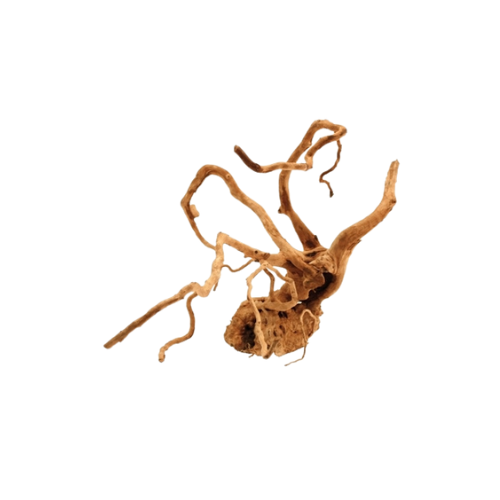
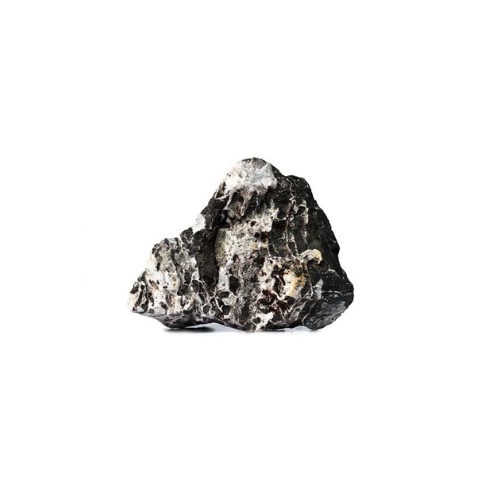
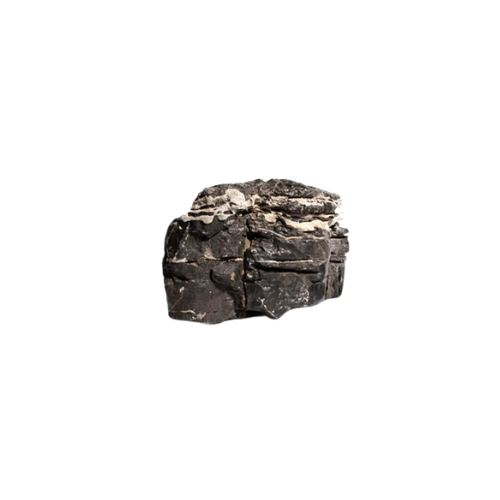
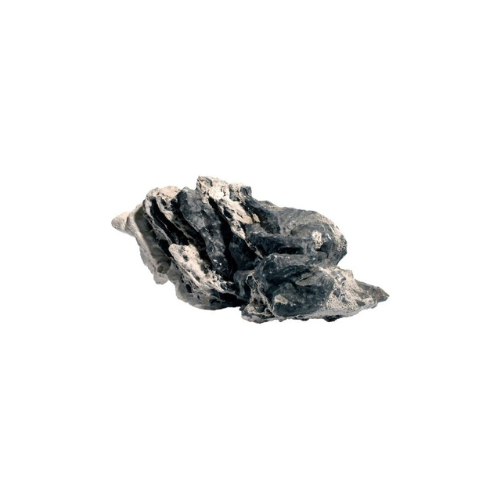
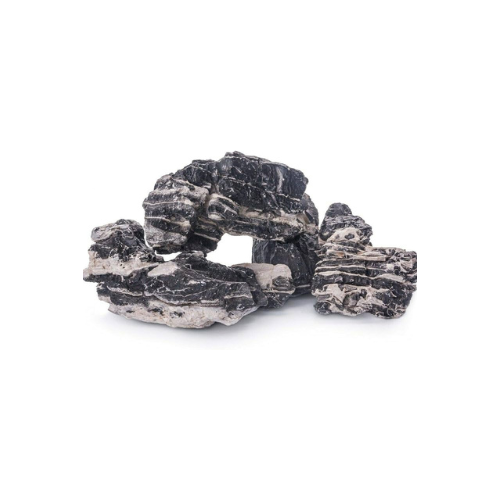
Leopard rock for aquarium, 0.8 to 1.2 kg
Regular price
Dhs. 24.00
Regular price
Sale price
Dhs. 24.00
Unit price
/
per
This speckled natural stone, with its contrasting tones, is sold individually, weighing between 0.8 and 1.2 kg.
The stone structures a tank floor and defines territories. Shape and veining vary from one stone to the next.

7/7 customer service by e-mail

Payment in instalments, free of charge
The summary
- What you receive: a stone weighing 0.8 to 1.2 kg, drawn from the batch — never identical to the photo.
- What it does: breaks up the floor space and gives each territorial fish its own boundary.
- How many to buy: quantities are worked out in kilograms per metre of frontage, not in number of stones.
- Before filling with water: rinse and scrub, then test with vinegar on a dry surface.
- What it supports: mosses and epiphytic plants, tied on with thread or glued.
- Shipping: heavy for its size; can be grouped with the rest of your order.
Speckled stone sold individually, for structuring a substrate and marking out territories.
Each stone in this lot is unique: the shape, veining and distribution of markings vary from one piece to the next. They all weigh between 0.8 and 1.2 kg, and that is the only reliable guide for working out how much you need. Allow roughly 1 kg of rock per 10 litres of water for a bold mineral display, and half that for a simple accent among plants.
This variability is an advantage when setting up a display, as three different stones read as a natural outcrop where three identical ones read as a row of paving slabs. Buy them in odd numbers and group them together, rather than spacing them evenly along the glass. Remember to keep one flat stone for the base, since it will bear the weight of the others, an unstable footing shows itself the moment you first use a net in the tank.
🎨 Dividing the base into zones
Many freshwater fish defend a territory rather than a volume of water, and a broken line of sight is worth more than a large empty space. A low divider of just two stones is enough to separate two territories and reduce tension in a community tank. You will see the difference in behaviour before you see it in the aquascape, and that is one of the points covered in our article on fish welfare.
🍶 The vinegar test
A decorative rock can leach limestone into the water, raising hardness and pH with no visible sign for several weeks. This is a real problem in a shrimp tank or with soft, acidic freshwater species, whereas it goes unnoticed in a Malawi cichlid tank, where hard water is precisely what is wanted. Checking the actual stone you have received is therefore preferable to relying on a stated average, particularly as it takes only a few seconds and requires no special equipment.
Test the stone you have received
Rinse and scrub the stone, leave it to dry, then pour a few drops of white vinegar onto it. If the surface fizzes, the stone contains limestone and will raise the hardness and pH of your tank. If nothing happens, you can use it without any concerns. The test takes ten seconds and applies to your specific stone, not to a production average.
Monitoring hardness after installation
Vinegar gives you a yes or no, whereas only a measurement tells you by how much your water has shifted. The total hardness test and the carbonate hardness test are read from the same sample in a matter of minutes, and a reading before installation followed by a second one a fortnight later is enough to settle the question. This is the most important precaution on a shrimp tank, where moulting is directly dependent on these two values.
🪨 Building a display that holds
A rock placed on sand will eventually sink, and one burrowing fish is enough to dislodge a stack that looked perfectly stable. Lay any load-bearing stones directly on the bottom of the tank before adding the grow medium, or on a thin sheet of foam that distributes the weight and protects the glass. Aquarium-grade epoxy adhesive can then be used to bond the upper elements together, preventing collapse during a clean. Finally, check that every cavity remains accessible to the net and the siphon, otherwise the decoration will become the spot where waste accumulates beyond reach.
Technical specifications
The essentials
- Weight of the piece
- 0.8 to 1.2 kg
- Appearance
- Speckled, rawNo part matches the photo on the product page.
Installation
- Preparation
- Rinsing and brushing
- Support
- On the bottom, beneath the grow mediumA stack placed on soft ground will eventually tip over.
In the box
- 1 leopard rock weighing 0.8 to 1.2 kg
Weight and unit price recorded on 20/09/2026 from the AQUADECO manufacturer's description for the Leopard Rock size S. The vinegar test is the method that same description recommends for identifying a limestone rock.
Estimate your
delivery time
Your estimate
Delivery
Estimated time
It covers preparing your order and then the transit time quoted by the carrier, counted in working days.
It is not a guaranteed delivery date: public holidays, peak periods, customs or a carrier delay can extend it. The exact amount, in your currency, is worked out in the cart once your address is entered.
This stone is dispatched in a reinforced small parcel. Its weight is included in the calculation, which is done at the basket stage based on your destination, and it can be grouped with the rest of your order.
Frequently asked questions
6 questions
6 key questions
Vous aimerez aussi


Related articles

Wellbeing
Is aquaponics suited to animal welfare?
A broken line of sight changes the social dynamic in a tank.
Read the article

Fish
Which fish should you choose for aquaponics?
Territorial species and the space they actually require.
Read the article

pH
Regulating pH in an aquaponics system
What a limestone rock does to pH, and how quickly.
Read the article

Algae

Water
Understanding and fixing cloudy water
The mineral dust from a poorly rinsed stone, and its fallout.
Read the article

Grow medium
Which grow medium should you choose for aquaponics?
The ratio between rock mass and usable water volume.
Read the article
Let us talk about your project
Une question sur ce produit ou votre installation ? Notre équipe vous répond et vous conseille.

Paiement plusieurs fois sans frais
Proposé selon le montant du panier, au moment du paiement.

Livraison sous 5 à 15 jours ouvrés
Selon les produits et sites d'expédition. Estimation par destination dans l'estimateur de cette page.

SAV 7/7 par mail ou chat
Notre équipe répond à toutes vos questions.

Faire un achat engagé
Devenez acteurs du changement.
