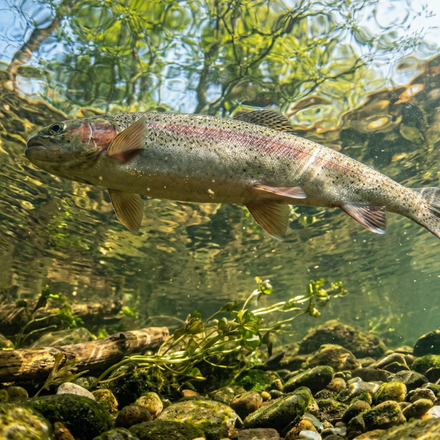
The rainbow trout is prized for its delicate flesh and rapid growth. It requires cool, well-oxygenated water, typically between 10 and 18 °C, making it ideal for systems with precise temperature and aeration control — though it can be challenging to maintain in summer.
The brook char, also known as brook trout, is in fact neither a trout nor a salmon despite its two common names: it is a char, a close relative within the salmonid family. It is somewhat hardier and more tolerant of water quality variation than rainbow trout. It generally performs best between 13 and 16 °C and begins to struggle above 20 °C. Its growth is slightly slower, but it is more forgiving of management errors, making it an excellent choice for a first cold-water fish-keeping project.
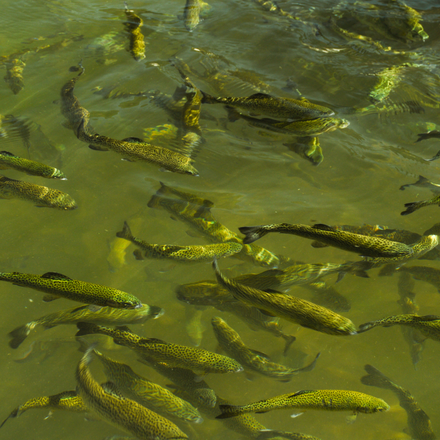
The grayling is the most demanding of the three. This fast-flowing river fish requires cold, highly oxygenated, moving water. It is suited only to very well-equipped systems and is more relevant to river restocking than to domestic aquaponics, but it is part of the fabric of our waterways and well worth knowing about.
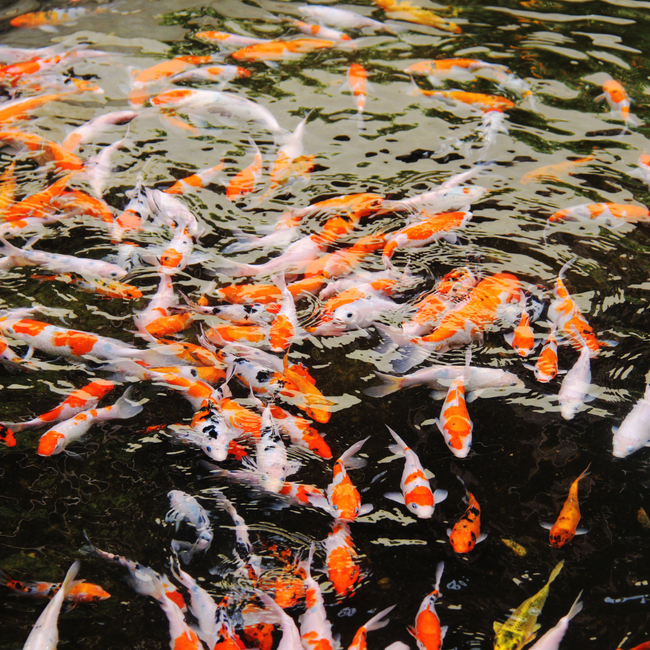
Finally, the common carp, like koi carp, stands out for its robustness. Omnivorous and highly adaptable, it fits well into aquaponic systems and tolerates both warm and cold water. It is ideal for straightforward setups, particularly outdoors or where food self-sufficiency is the goal.
The right choice will depend on your local climate, your objectives, and the technical constraints of your aquaponic system. A useful benchmark is to measure your water temperature at the hottest point of August before ordering anything: it is that figure, not the annual average, that determines what you can realistically keep.