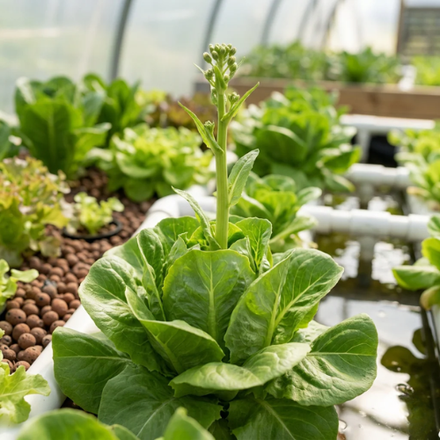
Heating your greenhouse in winter

Written by Tristan Ulrich · October 18, 2026
Serre d'aquaponie chauffée et éclairée sous la neige en hiver

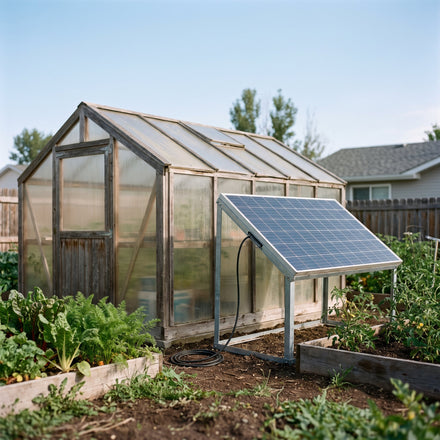
When the frosts arrive, an aquaponic greenhouse cools down quickly and puts the fish, bacteria and crops at risk. Well insulated and well regulated, it gets through the winter without interruption and at a controlled cost.

Heating your greenhouse in winter: a matter of anticipation

As soon as the cold nights set in, an aquaponic greenhouse cools quickly if nothing has been planned. In temperate European climates, keeping the crop frost-free is not automatic; it has to be thought through and prepared before the first frosts.

This guide explains how to heat your greenhouse intelligently: insulating first, making use of the thermal inertia of the fish water, then adding just the necessary extra heat. The aim is to protect fish, bacteria and plants without watching the bill soar, around a well-designed aquaponic system.

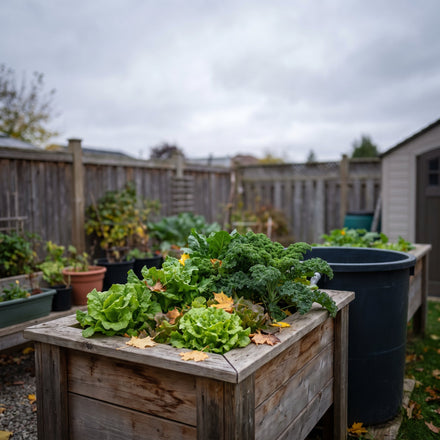
Crops that withstand the cold in a greenhouse in winter

Why heat your greenhouse in winter

Cold affects all three links in the system. According to the FAO guide to aquaponics, nitrifying bacteria work best between 17 and 34°C, slow down below that range and lose half of their efficiency, or even more, below 10°C. The biological filter then idles and ammonia may build up. Plants slow down, some go dormant, others freeze.

Fish depend directly on the water temperature. Each species has its own threshold: a cold-water fish gets through winter at a slower pace, while a tropical species may die. The guide to choosing fish sets out these tolerances in detail.

Heating is therefore mainly about preventing the temperature from dropping below critical thresholds, not about maintaining summer warmth. Properly set up, the heating effort stays modest.

Bubble wrap to insulate a greenhouse in winter Hélio aquaponics greenhouse, 10 m²

Insulating your greenhouse before heating it

Heating a poorly insulated greenhouse amounts to wasting energy. The first step is therefore to limit losses. The University of Connecticut extension services advise lining the inside walls with plastic film or bubble wrap to create a double-wall effect, which lets light through while markedly reducing heat loss. Also target the weak points: the roof, where heat escapes, along with the doors and joints.

The covering material weighs heavily in the balance. The CTIFL uses a heat loss coefficient of 5 to 6 W per m² per degree for glass, against about 3 for polycarbonate, which explains the appeal of an aquaponics greenhouse with polycarbonate glazing such as the Hélio greenhouse. On an existing single-glazed greenhouse, interior insulation partly offsets this handicap.

What temperature to aim for in the greenhouse and in the water

The right target depends on what you are keeping, and it is almost never a matter of aiming for a midsummer temperature. For most systems, the winter goal is to keep the water frost-free and maintain a minimum of biological activity. In practice, keeping the water above 4 to 6°C already protects cold-water fish and prevents the tank from freezing, while water held at around 10 to 12°C preserves a slow but real nitrification.

Here are a few benchmarks taken from the FAO guide to aquaponics.

  • Carp and their relatives such as goldfish or koi carp, which survive down to around 4°C but whose growth drops sharply below 12°C.
  • Rainbow trout, comfortable in cool water at 10 to 18°C, with an optimum around 15°C.
  • Tilapia, which is demanding: it stops feeding and growing below 17°C and dies below roughly 12°C.
  • Biofilter bacteria, effective between 17 and 34°C and clearly slowed by the cold.

Set the target for the most sensitive species in your pond. Keeping the water warm for a tilapia costs far more than simply keeping a carp frost-free. In winter, also cut back on feeding: a fish that has slowed down eats little, which limits the ammonia load while the filter is running slowly.

Black water barrels storing heat in a greenhouse

The inertia of the fish water

Water is your best thermal ally. It stores a great deal of heat, around 1.16 kWh per cubic metre per degree, which follows directly from its heat capacity. The fish pond therefore smooths out temperature swings, cooling slowly overnight and releasing its heat back into the greenhouse. You can strengthen this thermal inertia with dark barrels placed along a sunny wall, which capture heat by day and release it at night.

However, inertia only buffers variations without creating any heat. In a prolonged cold spell, it delays the drop without preventing it, which is why a back-up heat source is worthwhile.

Submersible heater in the tank of an aquaponic system EHEIM thermocontrol aquarium heater, 50 to 300 W

Heating the water in the greenhouse rather than the air

In an aquaponic system, it is the water temperature that matters for the fish and the biofilter. Heating the water directly is therefore often more effective than warming the whole greenhouse. For a small tank, a submersible, thermostat-controlled aquarium heater, such as the EHEIM thermocontrol, adjustable from 18 to 34°C according to its manufacturer, holds a precise set temperature for a tropical species. For a larger volume, an external in-line heater or a heat pump takes over, whereas a floating anti-freeze heater simply keeps a hole open in the ice without warming the pond as a whole. Choose a power rating suited to the volume, cover and insulate the tank to limit evaporation, one of the main causes of water cooling, and consider burying it or semi-burying it, as the ground stays milder than the air in winter.

Supplementary electric heating in a greenhouse in winter

The electric backup heating

When insulation and thermal mass are no longer enough, a supplementary heater takes over to warm the air in the greenhouse. Electric models, whether fan heaters or tubular heaters, are simple and safe, with no combustion and no added humidity, an important point in a greenhouse that is already damp.

The power required is easy to calculate, as taught by the University of Arizona, by multiplying the surface area of walls and roof by the heat loss coefficient of the covering and by the difference between the indoor set point and the lowest outdoor temperature. For a greenhouse of about 10 m² floor area, or nearly 40 m² of walls and roof, keeping 5°C when it is -5°C outside therefore requires in the region of 2.5 kW with single glazing and about 1.4 kW with twin-wall covering, not counting air leaks, which justifies a small margin. Actual consumption then depends on the number of hours of operation, which the thermostat limits to the cold periods only.

Avoid unvented open-flame heaters in enclosed spaces: they use up oxygen and release moisture and gases.

Winter fleece protecting plants from frost in a greenhouse

Winter fleece and second skin

Between permanent insulation and heating, there is a very useful intermediate form of protection. According to the University of Maryland, a light forcing or winter fleece protects by about 1°C, a medium one by 2 to 3°C and a heavy one by up to around 4°C, at the cost of a loss of light that grows with the weight of the fabric. Laid over the most fragile crops at night, it protects the plants without heating the whole greenhouse, and is then removed during the day to let in the light, which is scarce in winter.

On the same principle, an inner second skin, a tunnel of film stretched over the beds, creates a protected microclimate. You concentrate the warmth where it matters, around the roots and foliage, and keep the heating for the harshest nights.

Regulating and securing your greenhouse heating

Heating without regulation wastes energy or, worse, fails at the wrong moment. The centrepiece is the thermostat. Connected to the heater, it switches the appliance on only below a set point, for example water at 6°C or air at 3°C. You therefore heat only what is strictly necessary, which cuts the bill sharply compared with constant heating. A remote thermostat with its probe in the water controls the pond heater as precisely as possible.

Monitoring completes the set-up. A minimum-maximum thermometer reveals the lowest temperature reached overnight, which is valuable for adjusting the set point. Connected probes go further and send an alert to your phone if the temperature drops or the power is cut. In severe cold, an undetected failure can be fatal within a few hours, especially for fish. If possible, provide a safeguard, a second heat source or an alarm, for the most critical nights. A well-regulated and well-monitored system uses little energy and lets you sleep soundly.

Sealing gasket that limits heat loss from a greenhouse

Reducing heat loss from the greenhouse

Before increasing the heating output, track down the heat leaks. Cold draughts from a badly sealed door or a warped skylight ruin the effect of the heating, and foam seal or a door-bottom brush will plug these gaps cheaply. Next, group the crops and the heating together in a smaller area of the greenhouse rather than heating the whole volume. Partitioning off a section with a film curtain reduces the volume you have to keep warm and brings costs down, because a sealed, compartmentalised greenhouse is far easier to heat.

Solutions without electricity

Not everyone can, or wants to, run a power line out to the greenhouse. Several passive approaches then limit the damage, though they work no miracles in very hard frost. The most effective remains the thermal mass already mentioned: water, stones and dark masses that store the day's heat. You can also build the greenhouse against a wall that releases the accumulated heat at night.

Here are a few passive measures to combine.

  • Extra water mass, dark barrels in the sun to store heat.
  • Active compost in a heap or bin inside the greenhouse, whose fermentation gives off gentle heat.
  • Double layer of film or fleece at night to trap the air.
  • Thick mulch around the base of the plants and around the tank to limit losses.

These methods often gain you one to a few degrees, which saves hardy crops and cold-water fish. In a harsh climate or with sensitive species, however, they remain a complement, not a substitute for proper regulated heating.

Frost and frozen plants after a heating failure in the greenhouse 360° digital thermometer and hygrometer

Mistakes to avoid when heating your greenhouse

The first mistake is to heat without insulating: the heat escapes as fast as it is produced. The second is to forget the thermostat and heat continuously, which is costly and rarely necessary. The third pitfall is neglecting monitoring. An undetected heater failure during a frosty night can kill the fish before morning, whereas a simple digital thermo-hygrometer fixed inside the greenhouse lets you check the air temperature and humidity every day.

The fourth mistake is using a sealed-combustion heater, which is dangerous and gives off moisture. Finally, aiming for a temperature too high for the species being kept pushes up the bill with no benefit. A good start avoids many problems, so revisit the basics if needed on how to get an aquaponic system off to a good start.

Heating your greenhouse according to country and climate

Heating needs vary enormously from one European region to another, and your strategy has to adapt to them. In a mild oceanic climate, as along much of the Atlantic seaboard, frosts remain moderate and good insulation combined with the thermal inertia of the water is often enough to get through the winter with minimal extra heating. In central Europe, in continental regions and in the mountains, long spells below zero call for reliable regulated heating and reinforced insulation, otherwise you risk losing the system.

In southern Europe and around the Mediterranean, winter heating is often secondary, a few nights of protection are enough, and the challenge shifts to managing summer heat. In the northern half of the continent, it is wise to prepare the insulation and heating at the start of autumn, as the first frosts can catch you out. As for regulations and grants, the existing schemes mainly target commercial greenhouses. In France, for example, energy-saving certificates support the insulation and thermal screens of market-garden and horticultural greenhouses, and in Switzerland the cantonal recommendations on heated greenhouses only apply to greenhouses kept at 10°C or more, those that are merely frost-free being excluded. Matching the effort to your real climate avoids over-investing in the south as well as underestimating the cold in the north.


Conclusion: heating your greenhouse in winter without waste

Heating your greenhouse in winter is not a race for power, but a series of sound adjustments. First insulate to avoid waste, make use of the thermal inertia of the fish water, target the heating at the volume of water rather than the air, and fine-tune with a thermostat and monitoring. In that order, the extra heating needed often turns out to be modest.

Prepare everything before the first frosts and set the target temperature for the most sensitive species, and your system will stay alive and stable until spring.

Sources

FAO, Small-scale aquaponic food production, Fisheries and Aquaculture Technical Paper 589 (2014), Working temperatures of nitrifying bacteria and the temperature tolerances of tilapia, carp and trout.

FAO, Cultured Aquatic Species Information Programme, Oreochromis niloticus, Lethal low temperatures and preferred range of the Nile tilapia.

CTIFL and Certinergy, Explanatory sheet FE 10, Thermal insulation of greenhouses, Heat loss coefficients of greenhouse coverings and gains from thermal screens, under the energy savings certificate scheme.

Conference of Cantonal Energy Departments, Recommendation EN-131, Heated Greenhouses, Swiss framework for greenhouses heated to 10 °C and above, from which frost-free greenhouses are excluded.

University of Connecticut, John W. Bartok Jr., Greenhouse Energy Conservation Checklist, Quantified savings from double glazing, the thermal screen, insulating the base and lowering the night-time set point.

University of Arizona, Gene A. Giacomelli, Heating Systems, Controlled Environment Systems, Formula for calculating heating power and heat loss coefficients by type of covering.

University of Maryland Extension, Vegetable Garden Weather and Pest Protection, Frost protection and light transmission of horticultural fleeces according to their weight per square metre.

Frequently asked questions

It depends entirely on the species, which is why this choice is made before buying the heater. The FAO species fact sheet puts the lower lethal temperatures of Nile tilapia at around 11 to 12°C, with a preferred range of 31 to 36°C, and the FAO aquaponics guide states that it stops feeding below 17°C.

By contrast, carp survive down to about 4°C according to the same guide. A cold-water species therefore gets through the winter with little or no extra heating, whereas a tropical species requires a reliable heater and an alarm.

A lot less, and sometimes none at all. Digestion slows with the temperature, and uneaten food pollutes the pond while loading a biofilter that is already running slowly. Feed small amounts, watch for a few minutes and remove what is left.

It does pick up again, but more slowly than you would like to feed. The FAO guide to aquaponics puts the ideal range for nitrifying bacteria between 17 and 34°C, with a tolerated pH of 6 to 8.5, and states that their productivity can drop by half or more below 10°C. At the end of winter, the bacterial population is reduced and takes several weeks to regain its full capacity.

So increase the rations gradually and monitor ammonia and nitrite throughout the month following the resumption of feeding.

Yes, and the effect has been measured. The University of Connecticut's energy checklist puts the saving at about 3% of fuel per degree Fahrenheit taken off the night-time setpoint, which is a little over 5% per degree Celsius. A few degrees less, compatible with the species being housed, show up clearly over a full winter.

These are among the best-repaid investments in a greenhouse, according to data from commercial greenhouses.

  • A second layer of film, with the inner side treated to block infrared, saves around 15% on heating, with a payback period of two to three months according to the University of Connecticut
  • A thermal screen drawn across at night saves 20 to 50%, paid back within one to three years according to the same source, and the CTIFL estimates that non-metallised screens reduce heat loss by 35 to 40%
  • On a commercial greenhouse of about 260 m², insulating the base wall with 5 cm of foam saves around 1,500 litres of heating oil a year

On a garden greenhouse, the amounts are smaller, but the proportions remain instructive when set against the price of a more powerful heater.

No, it is the one electricity cost you should never cut back on, even in the depths of winter. Interrupted circulation deprives the biofilter of oxygen and lets waste settle at the bottom of the pond, two causes of losses that are far more costly than a few kilowatt-hours.

Read next

Protecting your aquaponic system in winter

Protecting your aquaponic system in winter

Winter is a critical period for an aquaponic system: the pond may freeze, bacterial activity collapses and the fish's metabolism slows right down. With the right habits and a minimum of equipment, you can

Read the article
Solar aquaponics, a self-sufficient system

Solar aquaponics, a self-sufficient system

The sun can do far more than power a pump: it oxygenates the tank, circulates the water, cooks the fish and dries the herbs from the harvest. Here is how to make a small

Read the article
What to sow in autumn in aquaponics

What to sow in autumn in aquaponics

Autumn is not the end of the growing season, it is the start of the most peaceful one. Here is what to sow, when to do it and how to achieve leaf harvests through

Read the article
Preparing your aquaponic system for autumn

Preparing your aquaponic system for autumn

Autumn is the season that determines the health of your system throughout winter, as the water cools faster than the aquaponist's habits tend to change. Here is how to manage this transition without stressing

Read the article
Beneficial insects against pests

Beneficial insects against pests

In aquaponics, fish and plants share the same water, which makes most insecticides unusable. Beneficial insects and mites, predators and parasitoids, become the only truly sustainable strategy for protecting your crops.

Read the article
Lettuce bolting

Lettuce bolting

Your aquaponic lettuces suddenly start bolting upwards, their leaves turn bitter, and a flower stalk appears : this is bolting, an almost systematic phenomenon in July and August. Good news, understanding its three causes

Read the article

Discover our aquaponics greenhouses and kits:

View all
Produits du rayon Kits d'aquaponie chez Univers Aquaponie

Aquaponics kits

Aquaponics kits ready to install in the garden, on a patio or in a greenhouse, with fish tank, grow beds and pump.

Discover
Produits du rayon Univers Plantes chez Univers Aquaponie

Plants

Seeds, grow media, fertilisers and aquatic plants for successful growing in aquaponics, hydroponics and the vegetable garden.

Discover
Produits du rayon Univers Équipements chez Univers Aquaponie

Equipment Universe

The equipment that keeps a system running: soilless growing, water circulation and aeration, filtration, temperature, plumbing and lighting.

Discover
Produits du rayon Serres d'aquaponie chez Univers Aquaponie

Aquaponics greenhouses

Greenhouses designed for aquaponics, supplied with their fish tank and grow towers.

Discover
Produits du rayon Univers Poissons chez Univers Aquaponie

Fish

Feed, monitor the water and care for your pond, aquarium or aquaponic fish.

Discover
Produits du rayon Univers Formation chez Univers Aquaponie

Learning

Books and practical courses on aquaponics, hydroponics and food self-sufficiency.

Discover