




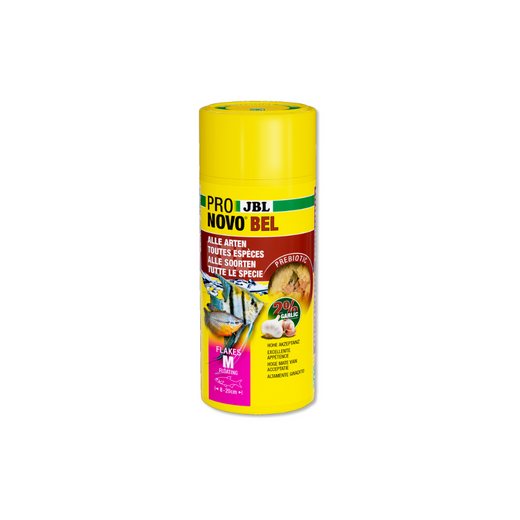


Tropical Goldfish Colour Pellet granules for goldfish
Regular price
$3.32
Regular price
Sale price
$3.32
Unit price
/
per
| Contenance | Price | Price per L | vs 100 ml |
|---|---|---|---|
| 100 ml | $3.32 | $33.20 | — |
| 250 ml | $5.61 | $22.44 | −32 % |
| 1 L | $17.05 | $17.05 | −49 % |
$1.10 × 3 with no fees
Klarna.
Tropical's Goldfish Colour Pellet feeds goldfish and young koi, in aquariums and ponds alike. The pellets float and contain astaxanthin, a pigment that enhances red and orange tones.
In a 100 ml, 250 ml or 1 L tub.
 Customer support 7 days a week by email
 Delivery within 2 to 15 business days
100 % secure payment
The summary
- Which size: 100 ml, 250 ml or 1 L.
- Its composition: 45% protein, with 80 mg/kg of astaxanthin.
- What it looks like: small floating pellets, taken at the surface.
- Who it is for: goldfish and young koi, aquarium or pond.
Floating astaxanthin pellets for goldfish and young koi
The goldfish is an omnivorous cyprinid with no stomach: it digests small, frequent rations better than one large meal, and a suitable food better than a fattier food for tropical fish. Its colour also depends in part on what it eats, since the red and orange pigments are not made in its body but come from its diet. Goldfish Colour Pellet granules meet both needs, with an analysis designed for goldfish and young koi, and a natural pigment, astaxanthin. You feed them on the surface, in an aquarium or a pond.
🎨 What enhances colours
Astaxanthin is a carotenoid, the pigment that also colours prawns and salmon flesh. Provided at a rate of 80 mg per kilo of food and eaten every day, it is deposited in the fish's skin and intensifies the reds and oranges over the following weeks. The food contains 45% protein, 7% fat, 3% cellulose and 10% moisture, and it also contains beta-glucan, vitamin C and zeolite. The pellets are small and floating, which lets you see what your fish are eating and remove any leftovers before they break down.
Adjust the ration to the water temperature
A goldfish's appetite follows the water temperature, so a ration that suits in summer can become excessive in autumn. The JBL Float suction-cup thermometer, graduated from 0 to 40 °C, can be read as you walk past the tank and tells you when to reduce the portions. This helps you avoid uneaten pellets fouling the water when the fish slow down.
🍽️ Feeding without overdoing it
Give small portions, 2 to 3 times a day, that your fish eat within 2 to 3 minutes. As the pellets stay at the surface, any not eaten after that time can be removed with a net, which stops them from rotting among the gravel. In a pond, the ration follows the season: above 15 °C the fish feed readily, whereas below 10 °C their digestion slows markedly and the quantities are reduced accordingly. One day without food per week also eases the load on the water, and a healthy adult fish tolerates it without difficulty.
Soak the pellets for round-bodied fish
Round-bodied varieties, such as the oranda or the ryukin, are prone to swim bladder problems, and the air swallowed when snatching dry food at the surface makes them worse. Soak the pellets for a few seconds in a little tank water before feeding them, and keep to a moderate ration. If a fish swims off balance after a meal, reduce the portions further over the following days.
A goldfish can exceed 20 cm and live for more than 20 years in good conditions, and it produces a lot of waste for its size, so a roomy, well-filtered tank suits it better than a small volume. The pack size is chosen according to this volume and the length of use: the 100 ml tub, about 36 g, is for a small aquarium or a trial, the 250 ml one, about 90 g, for a large aquarium, and the 1 L one, about 300 g, for a pond over a whole season. Close the tub after every feed and keep it dry.
🌱 In aquaponics
Hardy and tolerant of temperature swings, the goldfish is one of the fish most widely used in ornamental aquaponics, in indoor tanks as well as in ponds connected to grow beds. In these systems, the food is the source of the nutrients that the plants receive, and a floating pellet lets you precisely control what goes into the water. The guide to goldfish in aquaponics details their comfortable temperature ranges, and the article on feeding fish in winter explains how to reduce and then suspend rations as the water cools.
Technical specifications
Analysis
- Proteins
- 45%
- Fat content
- 7 %
- Cellulose
- 3 %
- Humidity
- 10%
Use
- Shape
- Small floating pellets
- Pigment
- Astaxanthin, 80 mg/kg
- Fish
- Goldfish, young koi
- Frequency
- 2 to 3 small portions a day
In the box
- 1 box of Tropical Goldfish Colour Pellet granules, in the chosen size
Analysis and additives: Tropical manufacturer data, recorded on 12/10/2026.
What capacity do your goldfish need?
The same pellet in three tubs. The number of fish decides.
Which tub?
Give one answer, and the table highlights the model that suits you.
| For | Weight (g) | Price | |
|---|---|---|---|
| 100 mlYour choice | A small aquarium | 36 g | $3.32 |
| Recommended 250 mlYour choice | A large aquarium | 90 g | $5.61 |
| 1 LYour choice | A pond | 300 g | $17.05 |
100 ml
Use
ForA small aquarium
Weight (g)36 g
250 mlRecommended
Use
ForA large aquarium
Weight (g)90 g
1 L
Use
ForA pond
Weight (g)300 g
Approximate weights of each tub: 36 g, 90 g and 300 g.
Help choosing
A question about your set-up
Estimate your
delivery time
Your estimate
Delivery
Estimated time
It covers preparing your order and then the transit time quoted by the carrier, counted in working days.
It is not a guaranteed delivery date: public holidays, peak periods, customs or a carrier delay can extend it. The exact amount, in your currency, is worked out in the cart once your address is entered.
Delivered to your home by Colissimo or Chronopost, as you prefer at checkout. The exact cost is shown in the basket, according to the total weight of your order.
Frequently asked questions
6 questions
6 key questions
You may also like


Related articles

Fish
Goldfish in aquaponics
A freshwater species, comfortable between 18 and 22 °C, which slows down markedly below 10 °C.
Read the article

Season

Fish
Koi carp in aquaponics
A species whose appetite follows the water temperature directly.
Read the article

Seasons
Preparing your aquaponic system for autumn
Autumn decisions are made on a reading, not on a date.
Read the article
Let us talk about your project
A question about this product or your setup? Our team will answer and advise you.

Interest-free instalment payments
Offered depending on the cart amount, at checkout.

Delivery in 2 to 15 working days
Depending on the products and shipping sites. Estimate by destination in the estimator on this page.

After-sales service 7 days a week by email or chat
Our team answers all your questions.

Shop responsibly
Become part of the change.
