The nitrogen cycle lies at the heart of every aquaponic system. Without it, it is impossible to keep fish healthy or to grow your plants efficiently.
The nitrogen cycle in aquaponics
Written by Tristan Ulrich · May 24, 2025 · min read
The nitrogen cycle lies at the heart of every aquaponic system. Without it, it is impossible to keep fish healthy or to grow your plants efficiently.
One of the cornerstones of aquaponics is the nitrogen cycle. This natural process converts the nitrogen-rich waste produced by your fish into nutrients that plants can absorb directly. In other words, it purifies the pond water by removing toxic compounds whilst simultaneously fertilising your crops.
A well-established nitrogen cycle is therefore essential for keeping your fish healthy and your plants thriving. Here we explain in plain terms what the nitrogen cycle is in aquaponics, why it matters, how it works (the role of bacteria, the chemical stages), and how to monitor it day to day.
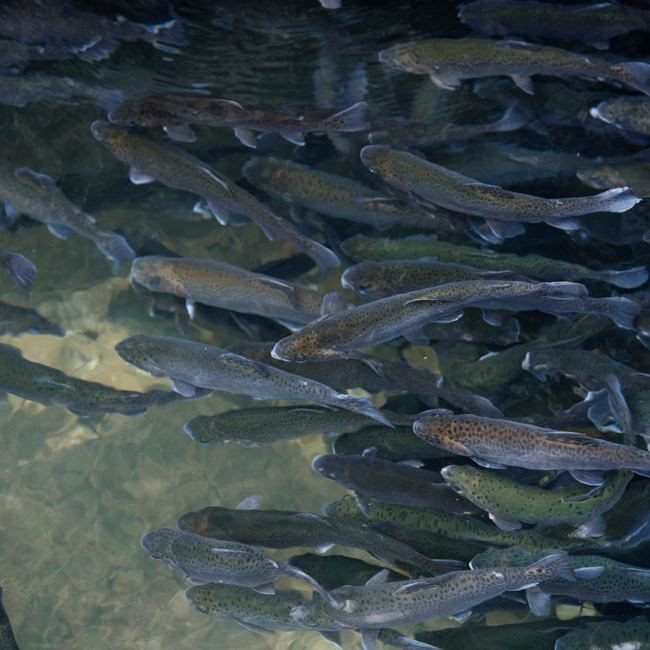
The nitrogen cycle refers to the chain of transformations that nitrogen-rich waste undergoes in the water. Specifically, fish release ammonia and ammonium (NH₃/NH₄⁺) into the water through their excrement and respiration. However, these two compounds are highly toxic to aquatic organisms. Without intervention, they would accumulate and endanger your fish within hours or days, depending on population density.
Fortunately, in a balanced aquaponics system, ammonia and ammonium are gradually converted into less harmful substances through the action of microorganisms. This nitrification cycle results in the formation of nitrates, which are well tolerated by fish and serve as fertilizer for plants.
During this cycle, nitrogen passes through three main chemical forms. Ammonia and ammonium, first, come from fish waste (urine, feces, respiration). Ammonium is less toxic, but both are dangerous at high concentrations. Specific bacteria then oxidize these compounds into nitrites, a second form that is equally toxic to fish.
Finally, other bacteria convert nitrites into nitrates. Nitrates are the end product of the cycle : they are not harmful to fish and become an essential source of nutrients for plants.
This nitrification process in the aquaponic system is carried out by nitrifying bacteria naturally present in the water. In aquaponics, there are mainly two genera of useful bacteria : Nitrosomonas and Nitrobacter .
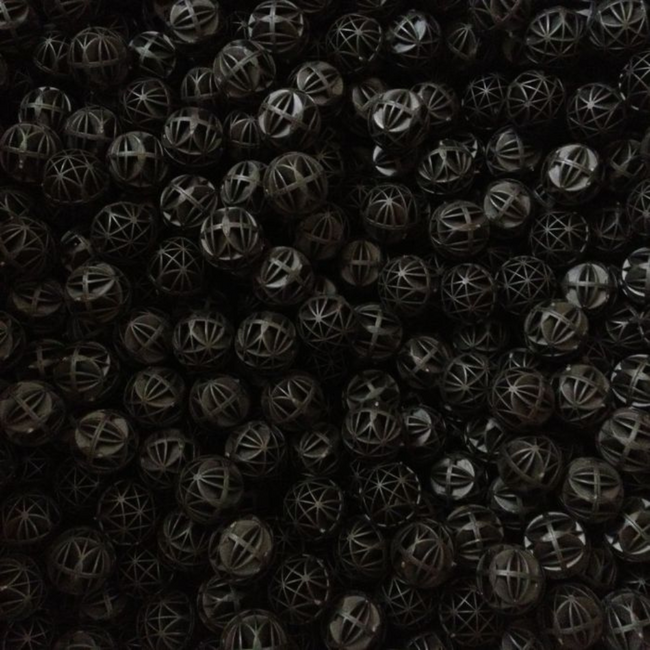
Nitrosomonas oxidize ammonia and ammonium into nitrites, while Nitrobacter converts nitrites into nitrates. They colonize the substrate (culture bed media, bioballs, pozzolan, etc.) and continuously treat the water circulating there.
It is important to understand that nitrifying bacteria need favorable conditions to thrive : dissolved oxygen (since they work by oxidation), a suitable pH (around neutral) and time to establish themselves.
This nitrification (nitrogen) cycle, carried out by beneficial bacteria, is essential for converting fish waste into nutrients that can be used by plants. If you introduce fish too quickly into a new system, ammonia and ammonium can build up to toxic levels due to a lack of sufficient bacteria, leading to fish stress or mortality.
Wait a few weeks for the bacteria colonies to develop. Monitor nitrogen parameters with tests during this break in phase. Only introduce fish once nitrites decrease and nitrates begin to appear, a sign that the cycle is operational.
Even after the initial cycling, an imbalance in the nitrogen cycle can occur and affect your aquaponic ecosystem. It is important to recognise the symptoms of a poorly established or failing cycle. On the fish side, watch for signs of stress : fish gasping rapidly at the surface, becoming lethargic or losing their appetite — these can indicate a nitrite or ammonia spike. On the plant side, yellowing foliage or stunted growth is often a sign of insufficient nitrate (nitrogen deficiency).
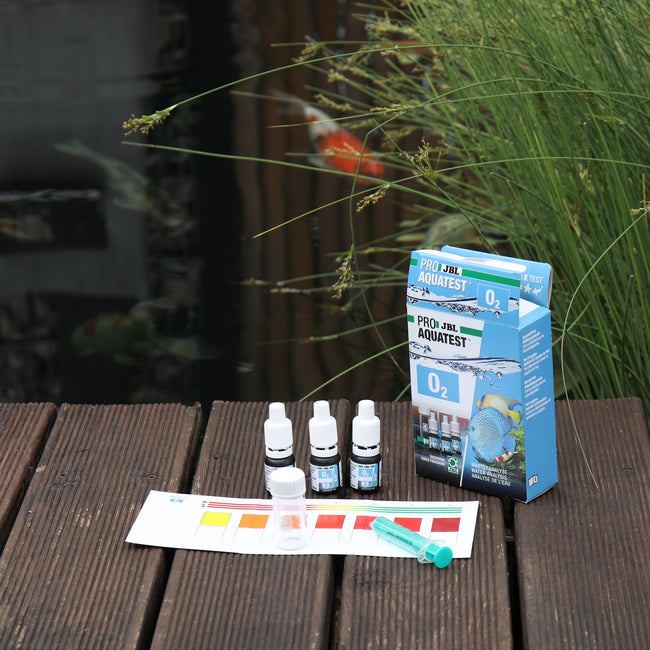
The number one rule is to test your water regularly. Equip yourself with a comprehensive aquarium water test kit, including ammonia, nitrite and nitrate tests. It is the only way to measure these invisible parameters accurately.
Ideally, test weekly and record the results. You should always achieve a maximum of 1 mg/L of NH₃/NH₄⁺, 2 mg/L of NO₂⁻, and a certain level of NO₃⁻ corresponding to your plants' consumption. If ammonia or nitrites rise, don't wait: reduce fish feeding (overfeeding is a common cause of ammonia spikes), temporarily add extra aeration, and do a partial water change if necessary to dilute toxins. Also, remember to maintain the biofilter without sterilizing it; never rinse the filter media with chlorinated tap water, for example, as this will kill your precious bacteria.
Finally, when launching a new system or introducing new fish, take precautions to avoid overloading the nascent cycle. Similarly, you can "pre-cycle" a system by adding a source of ammonia (such as a pond bacteria activator) before adding the fish, which allows good bacteria to establish themselves without risking the animals' lives.
In aquaponics, understanding and mastering the nitrogen cycle is the key to success . This biological cycle ensures the balance between your fish and your plants by continually transforming the waste of one into resources for the other. For a beginner aquaponicist, this may seem technical, but remember that nature works for you. You just need to give it the means and time. By establishing a good cycle from the start, regularly monitoring your parameters (ammonia, nitrites, nitrates) and reacting quickly to the slightest abnormal sign, you guarantee the sustainability of your ecosystem. Your fish will live in healthy, stress-free water and your plants will grow visibly thanks to the nutrients provided.
A well-maintained nitrogen cycle is the assurance of a productive, sustainable and harmonious aquaponic system, enough to launch you serenely into the adventure of aquaponics!
Sources
Oklahoma State University Extension, Nitrification and Maintenance in Media Bed Aquaponics, Cycling duration and the pH and temperature ranges favourable to nitrifying bacteria.
New Mexico State University, Rossana Sallenave, Important Water Quality Parameters in Aquaponics Systems, CR-680, Effect of pH on ammonia toxicity, minimum alkalinity, and nitrate ranges.
Mathilde Eck, Oliver Körner, M. Haïssam Jijakli, Nutrient Cycling in Aquaponics Systems, in Aquaponics Food Production Systems, 2019, The fate of nitrogen from feed, the proportion assimilated by the fish, and the role of mineralisation.
University of Florida IFAS Extension, HS1252, A Practical Guide for Aquaponics as an Alternative Enterprise, Feed rations and the proportion of nitrogen from the feed found in the water.
SMIDAP, Étude de faisabilité technico-économique d'un pilote d'aquaponie en Pays de la Loire (OPRA 2), 2018, Biofilter sizing and water exchange rates recorded on a French pilot system.
Allow two to four weeks under favourable conditions, and often a full month before nitrification is running at full capacity. The duration depends on water temperature, pH, and the quantity of ammonia available at the start.
The cycle is complete when ammonia and nitrites drop to their lowest levels while nitrates rise, and when this result is confirmed on two consecutive days. As long as nitrites remain detectable, the system is not ready, even if the fish appear to be doing well.
Yes, by giving the bacteria what they need. They work through oxidation, so well-oxygenated water matters more than any additive. Water at a moderate temperature, between around 20 and 30 degrees, noticeably speeds up colonisation compared with cold water.
The most effective shortcut is to borrow a handful of already-colonised media from a healthy system, or a little filter sponge from an established aquarium. You introduce the colonies directly rather than waiting for them to develop.
It is never a coincidence. It is almost always a filtration capacity that has become insufficient for the load. Start by looking for what has changed recently: fish added, feeding increased, filter cleaned too vigorously, pump stopped for a few hours, water temperature risen.
Do not clean the filter during the episode — you would be removing the very bacteria you need. Only afterwards should you address the underlying cause, by reducing stocking density, splitting meals, or increasing the biofilter surface area. A temporary spike can be resolved within a few days; chronic undersizing will recur with every new addition of fish.
Because the balance between ammonium, which is relatively harmless, and free ammonia depends on pH and temperature. In neutral or slightly acidic water, almost all the nitrogen is present in its ionised form, which is the least toxic. Around pH 8.5 and in warm water, the genuinely toxic fraction becomes a significant proportion of the total.
In other words, the same total ammonia reading can be harmless at pH 7 and dangerous for fish at pH 8.5. This is also why you should never raise pH quickly when ammonia is still detectable.
Yes, and it is the parameter most commonly overlooked. Nitrification consumes alkalinity, so a well-functioning system will see its pH drift gradually downwards. A buffering capacity of at least around 100 mg/L expressed as calcium carbonate equivalent prevents sudden crashes.
When the pH drops too low, the bacteria slow down, ammonia rises, and the biofilter is wrongly assumed to have died. A gradual addition of calcium carbonate or potassium bicarbonate will generally bring the system back into balance.
No, not within the usual ranges. Nitrates are well tolerated by fish and feed the plants. If they keep rising without ever coming down, plant more.
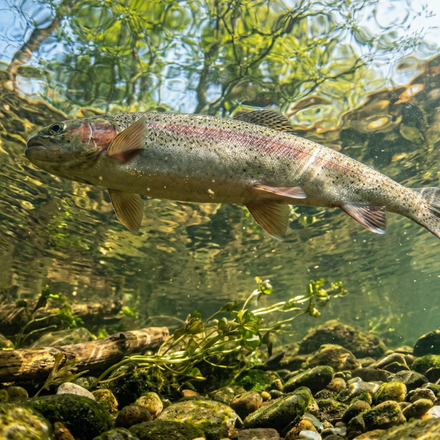
Aquaponics is often associated with pond fish like goldfish and koi. However, there is a variant perfectly suited for our temperate regions, cool climates, and winters : salmoponics. Trout, char, brook trout, these iconic
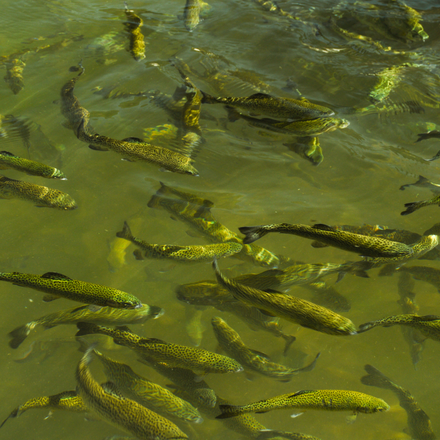
We often talk about what aquaponics produces. But rarely about what the fish that make it work experience. Are they simply tolerated in a system designed for production, or can aquaponics truly respect their
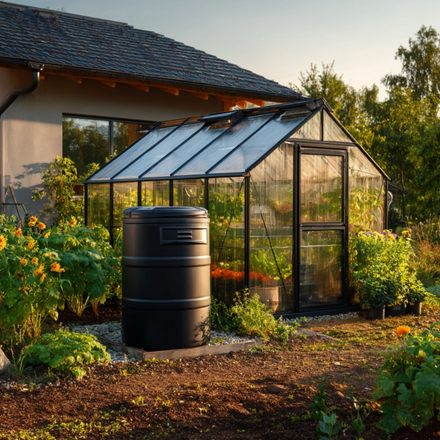
What if your garden became a mini-ecological farm ? Thanks to greenhouses and outdoor aquaponics kits, you can produce your own sustainable food, completely independently.

Aquaponics is far more than a growing method: it is a living ecosystem in which fish and plants grow together in perfect harmony. Inspired by the workings of nature, this sustainable approach is attracting

Soil-free and fed by fish water, strawberries grow clean, fragrant and within easy reach. With the right varieties and a few key conditions, it's one of the most rewarding crops you can grow in
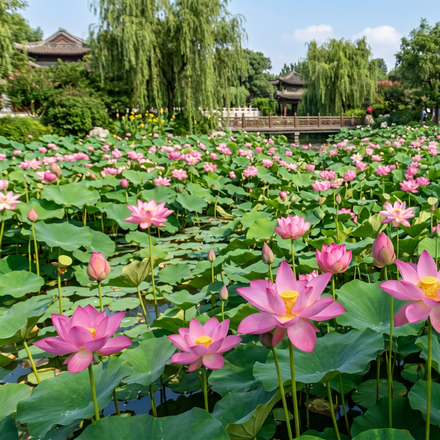
The lotus is an aquatic plant whose flowers are emblematic of the most beautiful ornamental ponds. In aquaponics, in an ornamental system (a pond with goldfish or koi carp) that does not need to
Greenhouses & Aquaponics Kits
Find the greenhouse or aquaponics kit you've always dreamed of ! Turnkey models, for easy entry into aquaponics.
Plant Universe
Seeds, substrates, fertilizers, composts and horticultural accessories to successfully produce vegetables using aquaponics.
Fish Universe
Food, ponds, aquariums, water analysis systems and various accessories for the well-being of your fish.
Equipment Universe
Pumps, filters, air pumps, heaters, lights, pipes and accessories to equip and secure your aquaponics system.
TRAINING Univers
Practical books and training on aquaponics, agroecology, and food self-sufficiency.