





BOYU glass heater with thermostat, 100 to 250 W
Regular price
$17.00
Regular price
Sale price
$17.00
Unit price
/
per
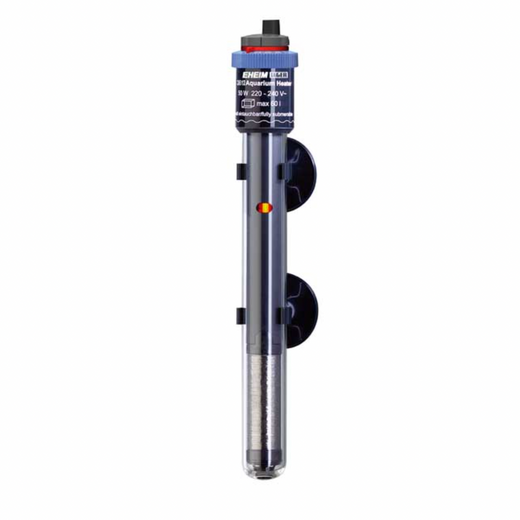
This glass-tube BOYU heater keeps the temperature of an aquarium, a fish tank or a grow sump tank steady thanks to its built-in thermostat, set with the dial on top. It is available in 100, 200 and 250 W, for volumes of around 100, 200 and 250 litres.
100 % secure payment
The summary
- What you receive: a BOYU glass-tube submersible heater, cable fitted, built-in thermostat.
- Which power: 100 W up to about 100 L, 200 W up to about 200 L, 250 W up to about 250 L.
- The setting: the dial on top sets the temperature that the thermostat maintains on its own.
- In aquaponics: it keeps a tank of tilapia or tropical fish within their growth range.
- Safety: overheat protection, and never switch it on out of the water.
- Consumption: from 0.1 to 0.25 kWh per hour of heating, depending on the power.
Submersible thermostat heater for aquariums, fish tanks and sump tanks
A heater combines an element and a thermostat in a single glass tube: you set the temperature with the dial on the top, and the unit then heats as long as the water stays below it and switches off as soon as it reaches it. The BOYU model is installed vertically in the aquarium, tank or sump tank, with the head out of the water, and it is suitable for freshwater as well as hydroponic setups. Overheat protection completes the thermostat, which prevents the element from running out of control.
🌡️ Output by volume
The usual rule of thumb is about 1 W per litre of water, which holds for keeping the water a few degrees above a temperate room. The 100 W model therefore suits tanks of 50 to 100 L, the 200 W model volumes close to 200 L and the 250 W model 250 L tanks. In a garage, greenhouse or conservatory that cools down at night, the gap to be bridged is larger, so it is better to choose the higher power, or to split the heating between two units placed at opposite ends of the tank.
100 W
For an aquarium or a sump tank of 50 to 100 L, in a heated room.
200 W
For a tank of around 200 L, or a smaller bed set up in a cool room.
250 W
For a 250 L tank, or to complement a first unit in a large indoor pond.
Never switch on the submersible heater out of the water
A glass tube that heats in open air overheats within minutes and can crack on contact with cold water. Submerge the heater up to the level mark before plugging it in, and always unplug it before taking it out of the water or emptying the tank. Plug it into a socket protected by a 30 mA residual current device (RCD), and leave a drip loop in the cable below the socket.
🌱 A heated tank in aquaponics
In aquaponics, water heating depends first and foremost on the fish you choose. Tilapia grow fastest in water at 27 to 29 °C, their growth slows markedly below 21 °C and they die below 10 °C, which makes a heater essential as soon as their tank is in an unheated room. Goldfish and koi carp, by contrast, tolerate cold water, and salmonids such as trout live at 13 to 18 °C, with no heating at all. The guide to choosing your fish for aquaponics gives the range for each species, and the one devoted to tilapia in aquaponics details how to manage them through the year.
Check the temperature with a separate thermometer
The thermostat on a submersible heater holds the setting you have chosen, but the markings on its dial are only a rough guide. Place a suction-cup aquarium thermometer on the opposite side of the tank from the heater, and adjust the dial in small steps over two or three days. That way you read the real water temperature where your fish actually live, not the temperature right next to the heating element.
The three power ratings cover volumes from 100 to 250 L, those of small family systems. For a tank of under 500 L, the FAO guide advises staying below 1 kg of fish per 100 L, which means 2 kg in a 200 L tank; fed at 1 to 2% of their body weight, these fish receive 20 to 40 g of feed per day, enough to supply 0.4 to 1 m² of leafy vegetables. In such a set-up, the heated water does not stay in the tank: it flows through the grow beds, often sitting in the open air, and loses part of its heat there before returning. Insulating the tank walls and covering it at night reduce the running time of the heating element, and placing the heater in the fish tank keeps the warmth where it matters. The article on protecting your aquaponic system in winter complements these measures.
Temperature also affects the rest of the system. The nitrifying bacteria in the biofilter work best between 25 and 30 °C, so keeping the water warm supports the conversion of ammonia into nitrates, particularly during start-up. Conversely, warm water dissolves less oxygen than cold water, while fish need at least 5 mg/L. A heated tank therefore calls for generous aeration, for example an air diffuser connected to a pump, and regular monitoring with a dissolved oxygen test. Heating and aeration complement each other, so you will benefit from sizing them together.
🔌 Installation and setup
Place the heater in an area where the water circulates, near the outlet of a pump or an air diffuser, so that the heat spreads throughout the whole volume instead of stagnating around the tube. Leave it in the water for half an hour before switching it on, so that the glass and the thermostat reach the temperature of the tank, then set the dial to the target value. Check your thermometer the next day and adjust by one notch if the difference exceeds one degree.
In hydroponics, the aquarium heater is mainly useful in winter, when a sump tank sitting in a garage or an unheated greenhouse cools the nutrient solution to the point of slowing uptake by the roots. It goes into the tank just as it would in an aquarium, vertically and with its head out of the water, clear of the roots and the net pots. Set it moderately, because a solution that is too warm holds less oxygen and encourages root diseases, which would cancel out the benefit you are after. In a small Kratky method setup, with no pump or air stone, this precaution matters even more, since nothing stirs the solution.
🧽 Tube maintenance
A limescale deposit or a film of algae on the glass slows the diffusion of heat and forces the element to run for longer. When you clean, unplug the unit, wait about ten minutes for the tube to cool in the water, then take it out and wipe it with a soft sponge. Avoid metal scrapers, which scratch the glass and weaken it, and check while you are at it that the cable and the cable gland on the head show no cracks.
Consumption depends on how long the heating element is on, not on how long the heater is plugged in. A 200 W model that heats for a total of 6 hours in the day uses 1.2 kWh, whereas the same heater, in a mild room, only switches on for a few minutes every hour. Out of season, when the tank no longer needs heating, unplug the heater, let it cool in the water, then store it dry and protected from knocks. A cracked tube or a nicked cable should be replaced without delay, because water getting into the tube puts the heating element in contact with the tank.
Technical specifications
Power and volumes
- 100 W
- Up to 100 L50 to 100 L depending on the dispenser
- 200 W
- Up to about 200 LRule of thumb: 1 W per litre
- 250 W
- Up to about 250 LRule of thumb: 1 W per litre
- Power consumption
- 0.1 to 0.25 kWh per hour of heating
Construction
- Tube
- Glass
- Adjustment
- Built-in thermostat, dial on top
- Safety
- Overheating protection
- Fitting
- Vertical, head out of the water
Use
- Water
- Aquarium, fish tank, growing tank
- Weight
- 370 gShipping weight
To allow for in addition
- Thermometer
- Suction-cup thermometerThe opposite of heating
- Electrical protection
- Socket protected by a 30 mA residual current device
4 further specifications are available in the detailed view.
In the box
- 1 BOYU glass-tube submersible heater, cable fitted
Distributor values (power ratings, thermostat, overheating protection, volume of the 100 W). Volumes of the 200 and 250 W calculated on the usual guideline of 1 W per litre.
Manufacturer and product safety
- Manufacturer
- Guangdong Boyu Group Co., Ltd.
- Website
- www.boyuaquarium.com
Information provided under Regulation (EU) 2023/988 on general product safety.
100, 200 or 250 W?
Three BOYU submersible heaters of identical construction, which differ in power and in the volume of water they keep at temperature.
What power do you need?
Enter the volume of your tank, and the table highlights the matching row.
| Power (W) | Recommended volume | Price | |
|---|---|---|---|
| 100 WYour choice | 100 W | Up to 100 L | $17.00 |
| Recommended 200 WYour choice | 200 W | Up to 200 L | $21.00 |
| 250 WYour choice | 250 W | Up to 250 L | $22.00 |
100 W
The power
Power (W)100 W
Recommended volumeUp to 100 L
200 WRecommended
The power
Power (W)200 W
Recommended volumeUp to 200 L
250 W
The power
Power (W)250 W
Recommended volumeUp to 250 L
Volume of the 100 W given by the distributor; volumes of the 200 and 250 W calculated on the rule of thumb of 1 W per litre.
Buying guide
One question to help you choose the power
Estimate your
delivery time
Your estimate
Delivery
Estimated time
It covers preparing your order and then the transit time quoted by the carrier, counted in working days.
It is not a guaranteed delivery date: public holidays, peak periods, customs or a carrier delay can extend it. The exact amount, in your currency, is worked out in the cart once your address is entered.
The exact shipping cost is calculated at checkout, based on the total weight of your order and the destination. Lead times start from dispatch and remain estimates. For a destination not listed here, write to us at contact@univers-aquaponie.com.
Frequently asked questions
6 questions
6 key questions
You may also like





Related articles

Fish
Which fish should you choose for aquaponics?
The temperature range of each species, and which ones need a heated tank.
Read the article

Fish

Season
Protecting your aquaponic system in winter
Insulate the tank and heat it when the room gets cold.
Read the article

Season
Getting your aquaponic system ready for autumn
This article explains how to adjust feeding when the water cools down.
Read the article

Season
Heating your greenhouse in winter
Heat the water rather than the air of a greenhouse that is too large.
Read the article

Hydroponics
Getting started with indoor hydroponics
The sump tank for the nutrient solution and the temperature range that suits it.
Read the article
Let us talk about your project
A question about this product or your setup? Our team will answer and advise you.

Interest-free instalment payments
Offered depending on the cart amount, at checkout.

Delivery in 2 to 15 working days
Depending on the products and shipping sites. Estimate by destination in the estimator on this page.

After-sales service 7 days a week by email or chat
Our team answers all your questions.

Shop responsibly
Become part of the change.
