
Sold out
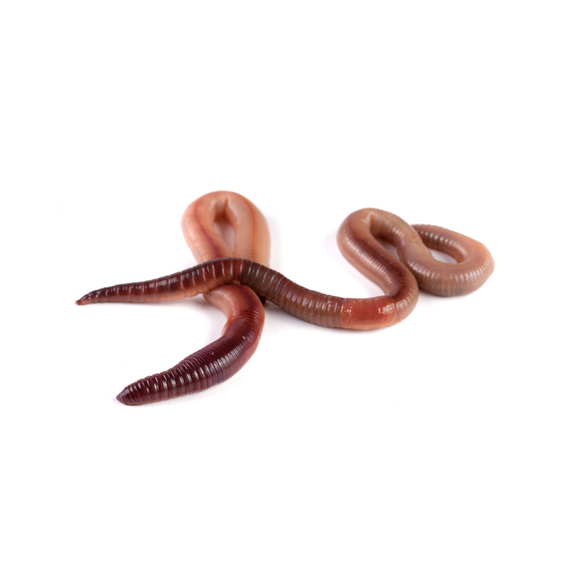
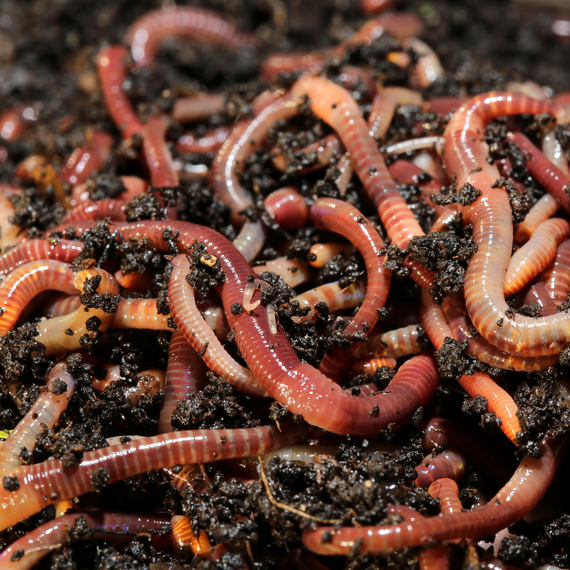
This pack contains Eisenia compost worms of French origin — adults, juveniles, and eggs — delivered in approximately 500 g of compost that feeds them during transit.
It will start a wormery, a buried pot, or a compost garden planter, and will yield the first compost in around 6 months.
 Customer support 7 days a week by email
 Delivery within 2 to 15 business days
Worms of the genus Eisenia, of French origin, make up this compost worm batch, at every stage of development: adults, juveniles, and eggs, along with the soil microfauna that helps a worm composter get established. The worms travel in approximately 500 g of compost, which serves as food during transit, and they can be introduced to your composter on the day you choose to start.
A wormless composter still works, but decomposition remains purely bacterial and takes around twelve months. With a colony, expect roughly 6 months at the start while the worms multiply in line with the available food, then around 3 months once they've colonised the full space. Worms are particularly useful in a composter raised off the ground, on a worktop, balcony, or in a planter, since garden worms cannot find their own way in.
Compost worms are epigeic worms: they live in the surface layer of the soil, in leaf litter and decomposing organic matter, not deep in the ground like the earthworms that burrow through a garden. This is what allows them to thrive in large numbers inside a worm bin where you deposit your kitchen peelings. Two species of this type dominate the practice in France: Eisenia fetida, the brandling worm, banded in reddish-purple and 60 to 90 mm long, and Eisenia andrei, the red wiggler, bright red and 50 to 80 mm long.
Adults
They begin feeding as soon as they are introduced and start to reproduce.
Young plants
They take over as the colony grows.
The eggs
They hatch in the composter and renew the population.
The microfauna
It accompanies the worms and takes part in decomposition from day one.
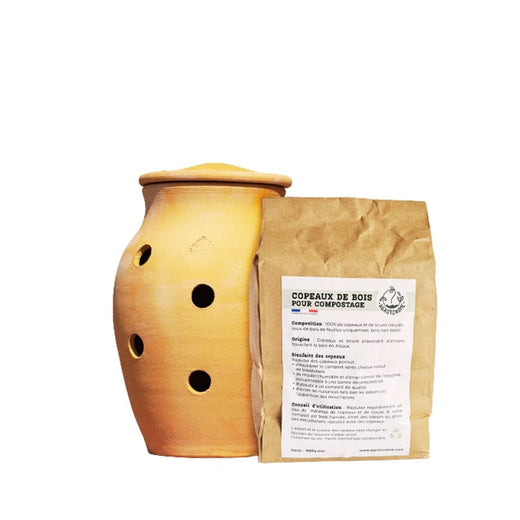
Sawdust from the very first bedding
A bag of wood chips provides the dry matter that early kitchen peel additions require. A handful after each deposit absorbs excess moisture and maintains the aeration your worms need, preventing your still-small colony from ending up in a waterlogged bedding. Ordered alongside the starter kit, it lets you set up the worms and make your first deposit on the same day.
Keep the bag of worms cool and out of direct sunlight
If you are not putting the worms in place on the day of delivery, keep the cloth containing them moist and store it in a dark spot, away from light and heat. Set them up as soon as you start your composter, and never leave the bag in direct sunlight.
Once established, worms feed and breed most actively between 15 and 25 °C, in a medium that is moist like a wrung-out sponge and well aerated. Below 5 °C or above 30 °C, the temperature can be fatal, and they flee light, noise and vibrations. These conditions determine where you place your composter far more than its size: a temperate kitchen, a larder or a planter in partial shade all suit them well, whereas a sunny windowsill or a freezing balcony do not.
A composting worm ingests, on average, its own body weight in organic waste every day. Your starter colony will therefore process only small quantities at first: begin with modest additions, chopped into small pieces, and increase them as the population grows. You can feed them raw or cooked peelings without sauce, coffee and tea grounds, and crushed eggshells; they cannot tolerate garlic, onion, or leek, which act as vermifuges, nor citrus, meat, fish, or dairy products. A handful of sawdust after each addition keeps the balance right.
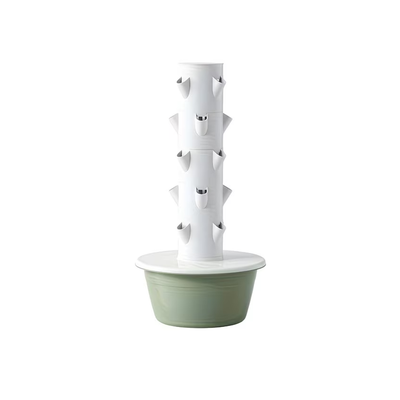
In aquaponics, compost worms also have a role to play directly in grow medium beds, those filled with clay pebbles or gravel that flood and drain cyclically. If you introduce them, they live in the intermediate zone that is neither permanently dry nor permanently submerged, where they help break down solid fish waste as well as dead leaves and roots, reducing clogging of the grow medium. Worms intended for this purpose must never have been fed meat or animal waste. The vermiponics guide covers the conditions for this practice in detail.
The batch is dispatched approximately one week after the order, wrapped in a fabric that keeps the worms and their compost moist during transit. It is suitable for the wormeries in the catalogue, from the indoor terracotta wormery to the pot designed to be buried in the garden or in a planter. On opening, tip the contents of the fabric, worms and compost alike, onto the surface of the material already in the composter, and allow the worms to burrow down by themselves, as the light naturally drives them inward.
The essentials
To budget for separately
In the box
Genus, origin, growth stages and transport compost: values from the manufacturer Agrotonome, recorded on 07/10/2026. Temperatures and consumption: technical sheet 18 from the Réseau Compost Citoyen.
Your estimate
It covers preparing your order and then the transit time quoted by the carrier, counted in working days.
It is not a guaranteed delivery date: public holidays, peak periods, customs or a carrier delay can extend it. The exact amount, in your currency, is worked out in the cart once your address is entered.
A 700 g parcel containing live organisms. Please ensure someone is present to receive the delivery and open the bag on the same day, particularly in warm weather. Exact shipping costs and final delivery times are shown at checkout once your address has been entered.
8 questions
6 key questions, 8 in the detailed view

The finished product, and how it compares to a shop-bought compost.

The patience required in the first few weeks, whether in water or in a worm bin.

Where the worm castings go at the time of the first transplantings.

What worm tea complements, and what it does not replace.

Trying to move too fast at start-up — the mistake common to both worlds.

The daily source of peelings the colony will receive.
A question about this product or your setup? Our team will answer and advise you.

Interest-free instalment payments
Offered depending on the cart amount, at checkout.

Delivery in 2 to 15 working days
Depending on the products and shipping sites. Estimate by destination in the estimator on this page.

After-sales service 7 days a week by email or chat
Our team answers all your questions.

Shop responsibly
Become part of the change.