Which fish to choose for aquaponics ?

Written by Tristan Ulrich · May 22, 2025
Poissons d'eau douce élevés dans un bassin aquaponique

Aquaponics, which combines fish farming and plant cultivation, is gaining increasing interest. If you're looking to embark on this adventure, choosing the right species will be a crucial step in your project.

Criteria for choosing fish in aquaponics

The choice of fish is a key factor in the success of an aquaponics system. Whether you opt for ornamental species or your setup is geared toward food production, the fish you select will have a direct impact on water quality, plant growth, and the overall balance of the ecosystem.

In this article, we help you identify the species best suited to your project, based on your goals, preferences, and the technical specifications of your aquaponic system.

Ornamental fish in aquaponics Goldfish food

Ornamental fish in aquaponics

Goldfish are arguably the most commonly used species in aquaponics. They can live in a small tank and withstand significant temperature fluctuations. Hardy and highly tolerant, they adapt well to temperate or cold waters.

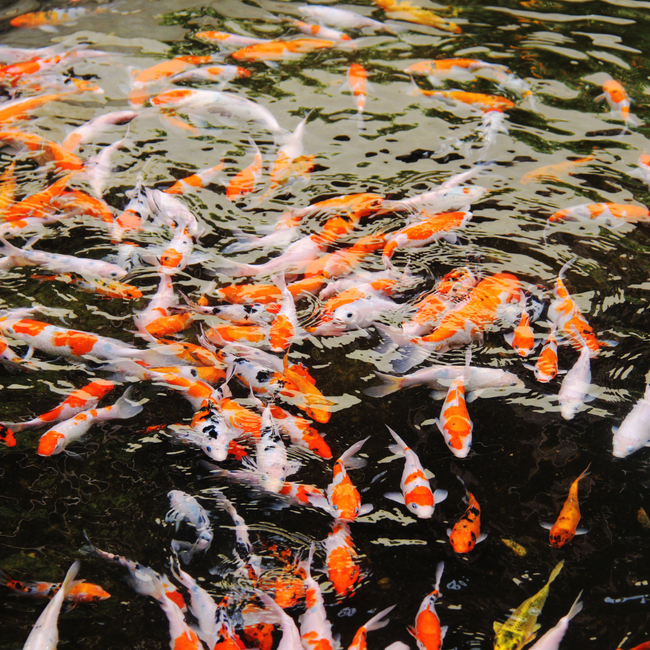
Larger koi are ideal for outdoor ponds and add an aesthetic touch with their vibrant colors. These fish are not intended for consumption, but they effectively contribute to the nitrogen cycle by producing nutritious waste for plants. Just be careful not to overcrowd the pond to maintain clean water (using good filtration and regular water changes helps maintain balance).

Small fish for small aquaponic systems 3 in 1 nest box

Small fish for small aquaponic systems

For very small systems or aquariums dedicated to aquaponics, you can turn to small tropical fish . Guppies, for example, are very hardy and easy to raise livebearers. They reproduce quickly, which can be interesting to observe. These livebearers can adapt to cooler waters and can generally remain outdoors from April to October. However, you will need a fallback solution for the winter.

Although their nutritional impact is less significant compared to plants, they are a fun and educational choice for beginners. Other aquarium fish such as bettas, gouramis, ancistrucs, and some cichlids can also be suitable in this context.

Common species in temperate climates

Species common in temperate climates

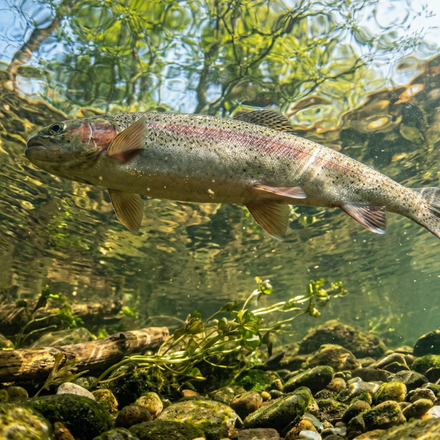
Rainbow trout are prized for their fine flesh and rapid growth. They require cool, well oxygenated water (10 to 18°C), making them ideal for systems with fine temperature and aeration control, but complex to maintain in summer.

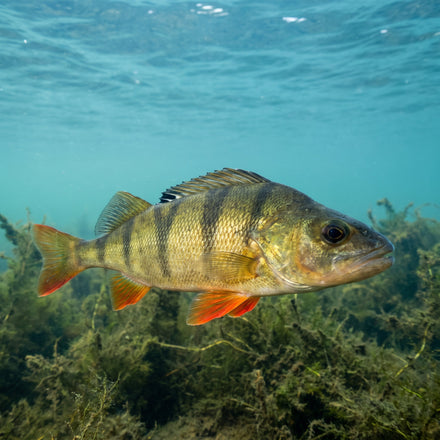
Pikeperch , a noble fish also appreciated in gastronomy, withstands more variable temperatures and remains relatively tolerant. Less common in aquaponics, it represents a great opportunity.

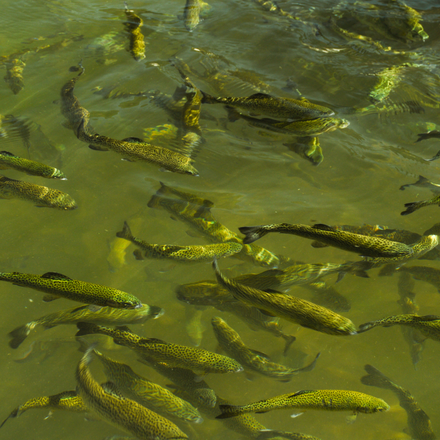
Finally, common carp , like koi carp, are distinguished by their robustness. Omnivorous, they adapt easily to aquaponic systems. They are perfect for simple systems, especially outdoors or for food self-sufficiency.

The right choice will depend on your local climate, your goals, and the technical constraints of your aquaponics system.

Common species in tropical climates Aquarium heater (50-300w)

Species common in tropical climates

Tilapia is the flagship species of tropical aquaponics. Easy to raise, requiring little oxygen, and highly resistant to variations in water quality, it thrives between 22 and 30°C. Its rapid growth and easy reproduction make it a strategic choice for large-scale production.

The African catfish , on the other hand, tolerates extreme conditions, including oxygen-poor waters. It is carnivorous and grows rapidly, making it a profitable species for well-balanced systems.

The Nile perch , which is larger, is suitable for large ponds. It offers highly prized meat, but requires good water management and a specific diet.

Keeping several species in the same system?

Having multiple species in the same system?

Not all species coexist well together : some are aggressive, while others are overly sensitive or stressed in the presence of different species. Additionally, their temperature, oxygen, and food requirements may be incompatible. For example, it's risky to keep goldfish with tilapia, or trout with exotic fish.

If you want to introduce several species, choose fish of similar size, with peaceful behavior, and similar living conditions (example: Koi carp and goldfish).

It is often easier to stick with one species per system to ensure stability and ease of maintenance.

Feeding fish in aquaponics

Feeding fish in aquaponics

Choose a quality fish food that's appropriate for the species you're keeping. For example, protein-rich pellets for carnivores like trout or catfish, and plant-based pellets for omnivores like tilapia or carp.

Generally, it is recommended to distribute small amounts of food once or twice a day, which the fish can consume within a few minutes. Remove any leftovers with a net to avoid polluting the water.

A well-balanced diet promotes fish growth and limits waste production, which relieves the strain on the filtration system and keeps the water cleaner.

Fish density for a healthy balance Essential Pack : Aquaponics water analysis (NH4, NO2, NO3, pH, KH)

Fish density for a good balance

Fish density is a fundamental parameter in aquaponics. Too many fish = excess waste, water pollution, stress, and disease. Too few = lack of nutrients for plants.

In home aquaponics, the balance is often around 15-20 kg of fish per cubic meter of water , but this depends on the type of fish, filtration and the quantity of plants grown.

Always start with a moderate stocking density. Observe how nitrate levels and the condition of the fish evolve. If the plants are lacking nutrients, you can gradually increase the population. When in doubt, fewer healthy fish are better than too many suffering animals.

Conclusion : Good fish makes the difference

The choice of fish for aquaponics is not trivial: it must be consistent with your climate , the specifics of your installation and your production objectives . Tropical species such as tilapia or African catfish excel in warm or heated environments, while local fish such as trout, pikeperch or common carp are better suited to temperate systems.

Beyond the choice of species, the success of your system depends on an overall balance : water quality, waste management, population density, and rigorous maintenance. Suitable equipment and regular monitoring of parameters are essential to maintaining a stable and productive ecosystem.

In other words, each fish you choose is a pillar of your aquaponic ecosystem . Take the time to make an informed choice, as it will not only influence the health of your plants, but also the sustainability and productivity of your entire setup.

Sources

New Mexico State University, Rossana Sallenave, Important Water Quality Parameters in Aquaponics Systems, CR-680, Temperature ranges for warm-water and cold-water species, dissolved oxygen threshold.

University of Florida IFAS Extension, HS1252, A Practical Guide for Aquaponics as an Alternative Enterprise, Stocking densities, tilapia temperatures, and feed rations according to fish size.

ITAVI, Aurélien Tocqueville, Réglementation et aquaponie, premier tour d'horizon, 2020, Species permitted in France and the status of non-native species in closed systems.

SMIDAP, Étude de faisabilité technico-économique d'un pilote d'aquaponie en Pays de la Loire (OPRA 2), 2018, Actual management of trout in winter and pike-perch in summer on a French pilot system.

Mathilde Eck, Oliver Körner, M. Haïssam Jijakli, Nutrient Cycling in Aquaponics Systems, in Aquaponics Food Production Systems, 2019, The proportion of dietary nitrogen actually retained by the fish and made available to the plants.

Frequently asked questions

The question involves two separate obstacles. The first is regulatory: tilapia is not among the species found in French waters, a list that includes carp, trout, perch, zander and tench. An exotic species is only permissible in a fully closed installation with no discharge whatsoever into the natural environment, and any intention to sell the produce opens up a considerably more demanding regulatory chapter.

The second obstacle is thermal. Tilapia requires water close to 28–30 °C, stops feeding at around 15 °C, and cannot survive water temperatures dropping to around 10 °C. In our climate, this means heating for a large part of the year, with the corresponding energy costs.

If your goal is to produce fish for the table without heating costs, trout during the cooler months followed by zander or carp for the rest of the year are far better suited to the purpose, with the added advantage of being among the common species in France. Tilapia remains worthwhile in a heated indoor setup, on small volumes and for experimental purposes.

Think in terms of mass rather than numbers. Field references put a comfortable stocking density for a home system at around fifteen kilograms per cubic metre, which works out to roughly three kilograms of fish per 200 litres. That is intentionally conservative.

When starting out, aim for half that figure with just a few fish. You can increase the population once your ammonia and nitrite readings stay at zero for several weeks running.

It all depends on the species, which remains the primary reason to choose fish according to your climate.

  • Goldfish and koi overwinter outdoors in a pond deep enough not to freeze solid, with very reduced feeding in cold water.
  • Trout, by contrast, thrive in cool, well-oxygenated water — winter is not a problem for them, summer is.
  • Tropical species and small aquarium fish must be brought indoors before the water cools down for any length of time.

Bear in mind that bacteria also slow down in cold water. An outdoor system filters less efficiently in winter, which is not particularly problematic since the fish eat far less anyway.

Too many factors are involved to give an honest figure. In an unheated domestic system, measure growth in seasons rather than weeks.

This behaviour indicates a lack of dissolved oxygen, or water that has become irritating due to an ammonia or nitrite spike. Dissolved oxygen must remain above 5 mg/L, and it becomes depleted precisely when the water warms up or stocking density increases.

Act in order: add aeration immediately, stop feeding, test for ammonia and nitrites, and shade the tank if it is in full sun. If the tests are clear, the problem is thermal and you need to cool the water or increase circulation.

Without fish, the system is no longer aquaponics but hydroponics, since there is no longer anything supplying nitrogen. Some setups use mineralised organic matter, though this requires far more careful management than a tank of goldfish.

A middle ground does exist: a small number of fish, lightly fed, with a modest growing area. The system remains balanced, simply less productive.

Read next

Which substrate should you choose for aquaponics ?

Which substrate should you choose for aquaponics ?

In aquaponics, the substrate not only serves to support the plants, but also plays an essential role in filtering and balancing the water. Choosing the right material is therefore a decisive step in the

Read the article
Salmonponics: aquaponics in cold water

Salmonponics: aquaponics in cold water

Aquaponics is often associated with pond fish like goldfish and koi. However, there is a variant perfectly suited for our temperate regions, cool climates, and winters : salmoponics. Trout, char, brook trout, these iconic

Read the article
Is aquaponics suitable for animal welfare ?

Is aquaponics suitable for animal welfare ?

We often talk about what aquaponics produces. But rarely about what the fish that make it work experience. Are they simply tolerated in a system designed for production, or can aquaponics truly respect their

Read the article
Greenhouses and outdoor aquaponics kits

Greenhouses and outdoor aquaponics kits

What if your garden became a mini-ecological farm ? Thanks to greenhouses and outdoor aquaponics kits, you can produce your own sustainable food, completely independently.

Read the article
What is Aquaponics ?

What is Aquaponics ?

Aquaponics is far more than a growing method: it is a living ecosystem in which fish and plants grow together in perfect harmony. Inspired by the workings of nature, this sustainable approach is attracting

Read the article