



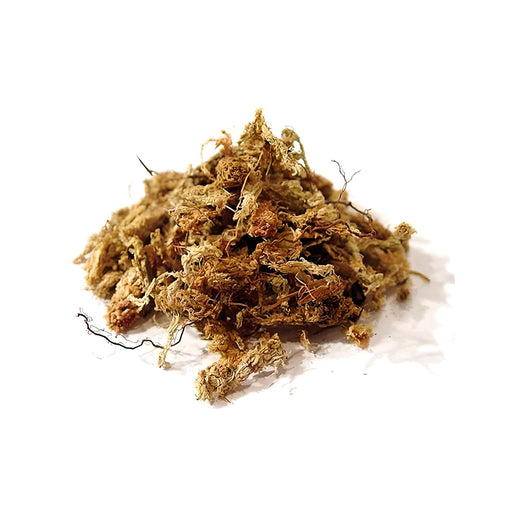


Horticultural perlite to lighten potting compost and seedling mixes
Regular price
1,000.00 RSD
Regular price
Sale price
1,000.00 RSD
Unit price
/
per
| Volume | Price | Price per L | vs 10 L |
|---|---|---|---|
| 10 L | 1,000.00 RSD | 100.00 RSD | — |
| 60 L | 3,400.00 RSD | 56.67 RSD | −43 % |
333.33 RSD × 3 with no fees
Klarna.
Plagron's perlite is an expanded volcanic rock, white, light and sterile, which is mixed into potting compost or coco fibre to aerate and drain them. Virtually free of salts, it adds nothing to the mix and can also be used on its own or with peat for seedlings and cuttings.
 Customer support 7 days a week by email
 Delivery within 2 to 15 business days
100 % secure payment
The summary
- Type of grain: an expanded volcanic rock, sterile and inert, in grains of 0 to 6 mm.
- Uses: aerating and draining potting compost or coco fibre, and housing seedlings and cuttings.
- Proportion: 10 to 35% of the volume of potting compost, more for seedlings.
- Aquaponic nursery: for seedlings and pots next to the system, never in a flooded bed, where it floats.
Air and drainage in pots, for seedlings and cuttings
Plagron horticultural perlite is an expanded, sterile volcanic rock, in grains of 0 to 6 mm, salt-free and with a slightly alkaline pH. Mixed into potting compost or coco fibre at 10 to 35%, it aerates and drains pots, seedlings and cuttings. It floats in a flooded aquaponic bed.
Perlite is a glassy volcanic rock that holds a little water within its structure. When heated suddenly to a very high temperature, this water turns to vapour and makes the rock puff up like popcorn, giving white, very light, porous grains. Plagron perlite is made up of 100% of this material, sold in 10 or 60 litre bags. You use it to improve the structure of a potting compost that tends to pack down, to lighten a seedling mix or to root cuttings.
🪨 What makes a good perlite
This perlite is sterile and inert: it contains no germs, no weed seeds and no nutrients, and it does not react with fertiliser. Its slightly alkaline pH lies between 7.7 and 8.1 depending on the measurement dilution, and its conductivity of 0.0 to 0.1 mS/cm shows that it adds practically no salts to your mix. The grains measure 0 to 6 mm, and dry matter represents 84% of the product's mass. The bag carries the Dutch RHP label, which controls the quality of growing media, and the product falls under the European category of mineral soil improvers.
Mixed into potting compost or coco fibre, the grains create air spaces between the particles. The roots find the oxygen they need to breathe there, excess water drains more quickly towards the bottom of the pot, and the grow medium settles less with each watering. The rough surface of each grain, on the other hand, holds a thin film of moisture, which stays available to the roots without ever saturating the mix. This limits root suffocation, a common cause of decline in a pot that is watered too often.
Potting compost
10 to 20% perlite to lighten a compost that is compacting.
Coco fibre
Up to 30% for a very free-draining mix, run on drip irrigation.
Seedlings and cuttings
A large proportion of perlite with peat or a fine compost, kept moist.
Recommended range
From 10 to 35% of the total volume for most mixes.
Combine perlite and vermiculite for seedlings
Perlite drains and aerates, whereas vermiculite holds water like a sponge. For a seedling mix that must stay moist without suffocating, natural vermiculite for seedlings complements perlite well. You thus obtain a fine, even texture, where seeds sprout without rotting and young roots progress effortlessly.
Pour the perlite into the compost or coco coir, then mix thoroughly before filling your pots, to avoid areas that are too dry or too compacted. Perlite can also be used as a drainage layer at the bottom of a pot, or as a light mulch on the surface that limits crusting and the growth of moss. If you intend to use it in a hydroponic system or with drip irrigation, rinse it beforehand to remove the fine dust, which could block the drippers. Once the crop is finished, it can be reused after the roots have been removed and it has been rinsed.
In soilless growing on pure perlite, such as in a wick-fed tray or a pot watered by drip irrigation, its slightly alkaline pH shows up in the water that drains out during the first few waterings. Measure the pH of this drainage water with a pH and conductivity tester, and adjust your nutrient solution to between 5.5 and 6.5 with a corrector such as pH Min. In a mix with a peat-based compost, however, the perlite remains a minor component, and it is the pH of the compost that dominates.
Dampen the perlite before pouring it
The dry grains give off a fine white dust when the bag is opened and during mixing. Dampen the perlite before handling it, work outdoors or in a well-ventilated room, and wear a dust mask so as not to breathe it in.
🐟 Perlite and aquaponics
An aquaponic grow bed fills and drains with water several times a day, or stays permanently flooded. In these conditions, perlite floats: too light, it rises to the surface, disperses and ends up blocking the drains, siphons and the pump. The FAO aquaponics manual reserves this use for grow media that stay in place under water, such as volcanic gravel and expanded clay pebbles, in grains of 8 to 20 mm, which serve both as support for the roots and as a surface for nitrifying bacteria. Perlite grains, at 0 to 6 mm, are also much finer than this range, and they would clog up with the fish waste. You should therefore not fill your grow bed with perlite, even as part of a mix.
Perlite, on the other hand, is useful right next to the system. In the nursery, a mix of perlite and peat or vermiculite receives the seedlings and cuttings, the latter first dipped in a hormone-free rooting gel, before they move on to the growing baskets. It also lightens the compost in the pots of fruiting vegetables grown around the pond, which you can water with the water removed during water changes, and it suits self-watering planters fed by a wick. The article on choosing a grow medium in aquaponics compares the supports suited to each technique.
📦 Volumes and storage
The 10-litre bag lightens 50 litres of compost at a rate of 20%, enough to prepare a few large pots or a whole series of seedlings. The 60-litre bag, which lightens 300 litres of compost in the same proportions, is suited to completely repotting a greenhouse or preparing many trays. For seedlings, where perlite makes up a larger share of the mix, expect a 10-litre bag to be enough to fill several hundred small pots.
Store the bag dry and resealed, away from dust, so that the grains keep their porosity. Perlite does not break down over time and is not affected by frost, so you can keep an opened bag from one season to the next. Before use, simply check that it has not picked up any dirt, and dampen it to limit dust.
Technical specifications
The product
- Material
- 100% expanded perliteVolcanic rock, sterile and inert
- Particle size
- 0 to 6 mm
- pH
- 7.7 to 8.1Slightly alkaline, depending on the measuring dilution
- Conductivity
- 0.0 to 0.1 mS/cmNo salts added to the grow medium
Usage
- Proportion
- 10 to 35% of the volumeMore in a seedling mix
- Hydroponics
- Pre-rinsing the finesPrevents emitter blockage
- Flooded growing bed
- Not recommended, it floatsClay pebbles replace it
- Reuse
- Possible after rinsing
In the box
- 1 bag of Plagron perlite, 10 or 60 L depending on the volume chosen
pH, conductivity, particle size and proportions: Plagron technical data sheet of 18/11/2024 and plagron.com; RHP label, dry matter and rinsing according to specialist retailers.
Manufacturer and product safety
- Manufacturer
- Bertels B.V.
- Website
- plagron.com
Information provided under Regulation (EU) 2023/988 on general product safety.
Estimate your
delivery time
Your estimate
Delivery
Estimated time
It covers preparing your order and then the transit time quoted by the carrier, counted in working days.
It is not a guaranteed delivery date: public holidays, peak periods, customs or a carrier delay can extend it. The exact amount, in your currency, is worked out in the cart once your address is entered.
The bags are dispatched as parcels from a distributor's warehouse in France. Very light but bulky, they are shipped as they are. The exact shipping cost is shown in your basket.
Frequently asked questions
6 questions
6 key questions
Perlite for your potting compost
Enter the volume of potting compost or coco fibre to be lightened. The calculation gives the perlite to add for a standard mix, then for a very free-draining mix.
L
5 L600 L
0L
of perlite, for 20% of the potting compost volume
Very free-draining mix, 35%
0 L
Moisten the perlite before pouring it, then mix thoroughly before filling the pots.
You may also like


Related articles

Grow media
Which grow medium should you choose in aquaponics?
Clay pebbles, perlite, coconut fibre: which grow medium for which use.
Read the article

Seasons
Getting spring seedlings off to a good start in aquaponics
Well-drained seedlings for vigorous plants.
Read the article

Indoor

Seedling
Germination failure: causes and solutions
A grow medium that is too wet, a common cause of failure.
Read the article

Soilless

Equipment
Let us talk about your project
A question about this product or your setup? Our team will answer and advise you.

Interest-free instalment payments
Offered depending on the cart amount, at checkout.

Delivery in 2 to 15 working days
Depending on the products and shipping sites. Estimate by destination in the estimator on this page.

After-sales service 7 days a week by email or chat
Our team answers all your questions.

Shop responsibly
Become part of the change.
